TL;DR

Get business pricing on tools and workshop supplies
- Business-only prices and quantity discounts
- Tax-exempt purchasing
- Multiple users, one account, clear invoices
For many snowstorms, clearing once during the event and again afterward is more effective than waiting for the final flake. Make the first pass when accumulating snow, traffic, falling temperatures, or drifting threaten access; use the final pass for widening, detailed cleanup, and deicing.
Six inches of snow does not always arrive as one tidy, shovel-ready layer. Let cars roll over the first three inches for four hours, and you may face gray tire-polished hardpack under another three inches of wet snow—a heavier, slicker job than the forecast total suggests.
For many snowstorms, clearing once during the event and again afterward is more effective than waiting for the final flake. That early opening pass protects drive lanes, fire access, steps, ramps, and entrances while the snow still moves with a clean scrape instead of breaking loose in frozen slabs.
You will learn when to dispatch that first pass, when waiting makes sense, and what an active-storm visit should accomplish. You will also see how snowfall rate, pavement temperature, traffic, wind, and snow type change the decision for a two-car driveway, a busy retail lot, or several acres of commercial pavement.
Dispatch an opening pass when snow reaches the contract trigger or when traffic, wet accumulation, drifting, or a falling pavement temperature threatens access.
Prioritize fire routes, entrances, main lanes, accessible paths, slopes, and busy walkways before clearing secondary spaces.
Plow bulk snow before applying deicer; salt works better on thin residue than beneath deep or tire-packed accumulation.
Treat the first pass as functional maintenance and schedule a final visit for widening, parked spaces, municipal-plow windrows, pile placement, and refreeze ch…
Write trigger depths, return rules, priority areas, snow-storage locations, and deicing authority into the service plan before the storm.
Storm Timing: When the First Pass Beats Waiting for the Snow to Stop
Clear for function first, then finish after the storm. An opening pass keeps snow movable, protects critical access, and prevents traffic, falling temperatures, and drifting from turning a manageable layer into frozen hardpack.
Often outperform one late, heavy cleanup.
Open the route before a forecast five-inch snowfall ends in a hard freeze.
Maintain access while accumulation continues.
Rate can matter more than the final total.
Enough time for traffic to polish fresh snow into hardpack.
A long grade benefits from preserved tire grip.
Remove bulk snow before treating thin residue.
Five signals that tell the plow to move
Do not chase every flurry. Dispatch before loose snow becomes blocked access, waterlogged weight, compacted tracks, or a pavement bond that must be broken apart.
Accumulation
Act when measured snow reaches the service threshold. Allow travel time during fast bursts so the site does not double its trigger before arrival.
Traffic
Cars and footsteps compress crystals into slick gray hardpack. Busy entrances and main lanes gain the most from an early opening.
Temperature
Warm pavement may melt the lowest layer. A sharp drop after sunset can lock that moisture to asphalt like cold glue.
Wet snow
Remove damp accumulation before another layer arrives. Smaller pushes reduce strain on augers, belts, hydraulics, and crews.
Drifting
An average of two inches can hide an eight-inch drift. Reopen critical routes even if exposed secondary areas must wait.
Move early when delay multiplies the work
A first pass buys control rather than bare, dry pavement. Waiting is sensible only when the storm, site, and access needs all remain low-risk.
Accumulation is becoming operational
- Snow has reached the contract trigger.
- Business, school, commuting, or delivery traffic continues.
- Wet snow is deepening or a sharp freeze is approaching.
- Fire lanes, slopes, loading areas, or entrances must remain usable.
- Wind repeatedly covers a critical route.
The site remains quiet and stable
- The event is short, light, and likely below the trigger.
- Traffic is minimal and no urgent access is required.
- Temperatures remain safely steady.
- Warm rain may remove a light coating and drainage is open.
- A noncritical drifting area would refill immediately.
Decision pressure is qualitative: site access, contract terms, pavement temperature, and observed conditions remain decisive.
Early first pass or wait?
The same forecast total can produce very different outcomes. Traffic, snowfall rate, surface temperature, wind, and site function change the correct response.
| Site or storm condition | Early first pass | Wait until snowfall ends | Best signal |
|---|---|---|---|
| Busy retail or office lot | ✓Keeps entrances and main lanes usable before tires create hardpack. | ✗Leaves polished tracks and obstructed spaces for the final crew. | ~Traffic volume |
| Long storm above trigger depth | ✓Breaks accumulation into smaller, more manageable layers. | ✗Deep snow slows every push, turn, and relocation. | ~Rate + duration |
| Short one-inch snowfall | ✗May scrape mostly bare pavement and create an unnecessary visit. | ✓Often sensible with steady temperatures and little traffic. | ~Trigger depth |
| Snow before freezing rain | ✓Removes the soft base before ice seals it into a thick layer. | ✗Risks a dense snow-and-ice sandwich bonded to the surface. | ~Temperature trend |
| Light snow before warm rain | ~Useful when slopes, drains, or later refreezing remain concerns. | ✓Natural melting may work if drainage is open and temperatures stay above freezing. | ~Drainage + forecast |
| Exposed area with strong drifting | ✓Maintains critical lanes, even when repeated reopening is needed. | ~Can suit an unused secondary area that would refill within minutes. | ~Route priority |
The first pass is not the finished product
Set expectations before the storm. Active-storm service protects function; the final visit restores width, finishes details, places piles correctly, and manages slippery residue.
Prepare
Inspect equipment, mark curbs and obstacles, stage materials, identify storage, and anti-ice when appropriate.
Open
Clear fire routes, entrances, main travel lanes, accessible paths, slopes, and priority walkways.
Maintain
Reopen routes affected by new snowfall, drifting, tire compaction, or municipal-plow deposits.
Finish
Widen lanes, clear remaining spaces, relocate piles, scrape residue, deice, and inspect for refreeze.
Protect access before polishing details
A disciplined route prevents crews from spending early capacity on secondary spaces while critical lanes, steps, and emergency access become packed or blocked.
First-pass clearing order
Write the rules before dispatch
Define the measured service depth and response lead time.
State when maintenance and final visits are authorized.
Protect hydrants, drains, sightlines, walks, and accessible aisles.
Clarify material authority and apply it after bulk removal.
Watch the pavement, not only the forecast. Snowfall rate and surface temperature can outweigh the headline total.
Keep loose snow loose. Remove it before tires, footsteps, meltwater, and falling temperatures create hardpack.
Separate function from finish. Open essential routes during the storm; widen, detail, relocate, and deice afterward.
Plow before applying deicer. Salt performs more effectively on thin residue than beneath deep or tire-packed accumulation.
Why an Early Pass Can Save Hours of Heavy Cleanup
Storm timing: when the first pass beats waiting for the snow to stop comes down to keeping loose snow from becoming packed, bonded, or waterlogged. An early pass removes bulk accumulation while equipment can still push it cleanly, preserves a usable lane, and leaves less material for the final cleanup.
Fresh powder feels almost weightless as it curls off a shovel. Run a dozen cars over it, though, and those white crystals become ribbed gray hardpack that rattles a plow blade and resists a snowblower scraper bar. Traffic supplies pressure, while warm tires add just enough heat to create a melt-and-refreeze bond.
Consider a small medical office that closes at 6 p.m. Snow begins at noon and falls near 1 inch per hour; waiting until closing leaves six inches across the lot, including four hours of tire tracks near the entrance. A 3 p.m. pass keeps the fire lane and main drive open, then the crew returns after closing to clear empty spaces and treat the thin residue.
An early pass also creates planned snow-storage space. If the operator pushes the first load toward a safe back corner, later piles are less likely to bury a hydrant, narrow an accessible aisle, block a drain, or form a white wall at the exit. That forethought prevents the familiar organized chaos of moving the same pile twice.
The first pass buys control. It protects access and keeps snow movable; it does not promise bare, dry pavement while flakes are still falling.
According to Federal Highway Administration winter-maintenance guidance, anti-icing and timely mechanical removal help prevent snow and ice from bonding to pavement [1]. The practical lesson is simple: move bulk snow before treating residue, because deicer works more efficiently on a thin film than under a deep blanket.
Popular right now

Samsung 48-Inch S90H OLED 4K Smart TV (2026)

De’Longhi Classic Matte Black Espresso Machine with Milk Frother

Ninja Flip Toaster Oven and Air Fryer, 8-in-1, Stainless Steel, SP151
As an affiliate, we earn on qualifying purchases.
Use These Five Signals to Know When the Plow Should Move
Storm timing: when the first pass beats waiting for the snow to stop favors action when accumulation, traffic, temperature, wet snow, or drifting threatens the property’s basic use. You do not need to chase every flurry; you need to act before a manageable layer turns into blocked access or frozen hardpack.
- Accumulation reaches the service trigger. If your contract calls for service at two inches, dispatch around that measured depth rather than waiting for a six-inch storm to finish. During a fast burst, the crew may need lead time so the property does not reach four inches before the blade arrives.
- Snowfall overlaps active hours. A grocery lot receiving steady snow from 2 p.m. to 8 p.m. cannot function like an empty residential driveway. Opening main lanes, loading access, and pedestrian crossings keeps moving vehicles from grinding the entire surface into packed snow.
- Temperatures are about to fall. A pavement surface near 34°F can melt the bottom edge of a snowfall. If the pavement drops below freezing after sunset, that damp layer can lock onto the asphalt like cold glue.
- Wet snow is getting deeper. Three inches of damp, blue-gray snow can load a shovel and make a smaller snowblower crawl. Removing it before another three inches arrive reduces strain on belts, augers, hydraulic systems, operators, and anyone clearing steps by hand.
- Wind keeps building drifts. A lot may average only two inches while a loading-dock corner fills to eight. Maintain the route that matters, then accept that exposed secondary areas may need attention after the wind settles.
Suppose your 400-foot driveway climbs toward the road and the forecast calls for five inches followed by a sharp freeze. A pass at two or three inches preserves tire grip on the grade; waiting for the full depth risks polished tracks beneath a crust. On a flat driveway with no traffic and steady temperatures, the same forecast offers more room to wait.
Snowfall rate often matters more than the headline total. A four-inch storm delivered in two hours can overwhelm entrances faster than six inches spread gently across twelve hours. Watch what is landing on the pavement now, not only the colorful number printed on a weather app.
See When an Early Pass Wins—and When Waiting Costs Less
Storm timing: when the first pass beats waiting for the snow to stop has no universal clock time or depth. An early pass wins on busy, freezing, or fast-loading sites, while waiting can cost less during a short, light event with little traffic, warm pavement, and no immediate access needs.
| Site or storm condition | Early first pass | Wait until snowfall ends |
|---|---|---|
| Busy retail or office lot | Keeps entrances and main lanes usable before tires create hardpack. | Usually leaves polished tracks and blocked spaces for the final crew. |
| Long storm above trigger depth | Breaks the work into smaller, more manageable layers. | Can leave deep accumulation that slows every push and turn. |
| Short one-inch snowfall | May scrape mostly bare pavement and add an unnecessary visit. | Often makes sense if temperatures stay steady and traffic remains light. |
| Snow before freezing rain | Removes the soft base before ice seals it into a thick layer. | Risks creating a dense snow-and-ice sandwich. |
| Light snow before warm rain | Protects access if drains, slopes, or refreezing remain concerns. | May allow natural melting if drainage is open and temperatures stay safely above freezing. |
| Exposed area with strong drifting | Maintains critical lanes, even if they need repeated reopening. | Can suit an unused secondary area that would refill within minutes. |
Take a quiet suburban driveway receiving less than one inch before rain at 38°F. With no planned vehicle movement and a clear drain, waiting for the rain may avoid noisy equipment at midnight. The calculation changes if that driveway slopes toward a public sidewalk where runoff could freeze after the temperature falls.
Now take a distribution yard expecting the same snow depth during a shift change. Forklifts, vans, and tractor-trailers can turn that light coating into a slick brown glaze near dock approaches. There, pass beats waiting because access and compaction carry more weight than the modest forecast total.
Contract terms still matter. A crew may not dispatch below a two-inch trigger unless the agreement grants authority for ice response or requested service. Put trigger depth, priority routes, visit frequency, deicing authority, and return conditions in writing so an early pass does not become a surprise invoice.
Make the First Pass Functional Without Mistaking It for Final Cleanup
A useful first pass opens emergency access, entrances, main drive lanes, slopes, and priority walkways before crews spend time on cosmetic details. It is a working pass during an active storm, so falling snow, parked vehicles, municipal plows, and drifting will change the surface after the operator leaves.
Start with the routes that protect people and keep the property moving. On a three-acre apartment complex, that means opening the fire lane, main entrance, steep exit, accessible route, and one dependable path to each occupied building. Clearing every vacant corner while the only exit narrows under snowfall puts neatness ahead of function.
- Emergency and fire routes: Keep designated access wide enough for the site’s requirements, and never pile snow against hydrants or fire department connections.
- Main entrances and exits: Push snow beyond sight triangles so drivers can see pedestrians and oncoming traffic.
- Slopes, ramps, and loading zones: Remove bulk snow before tires polish it or meltwater runs downhill and freezes.
- Accessible parking and routes: Keep access aisles, curb ramps, entrances, and connecting paths free of plowed piles.
- High-use walkways: Clear steps and door approaches early, then revisit them as roof drip, tracked snow, and new accumulation create slick spots.
The final visit has a different job. Crews widen lanes, clear spaces vacated by cars, pull snow away from corners, clean sidewalk edges, and deal with the dense windrow a municipal plow may leave across the driveway. They also inspect drains and low spots where black ice can form hours later.
Set that expectation before the storm. A tenant who sees two inches remaining in unused parking spaces at 4 p.m. may assume the contractor missed them, when the crew deliberately protected the busy entrance and fire route first. Clear service messages turn an apparently unfinished visit into an understood maintenance pass.
Never place speed above safety. Wear high-visibility clothing, insulated gloves, eye protection, and slip-resistant boots; keep bystanders away from operating equipment. Shut down the engine or disconnect the battery before clearing a clogged chute, and use a cleanout tool—never your hand.
Match Your Timing to Powder, Wet Snow, Ice, and Wind
The right dispatch time changes with snow density, pavement temperature, precipitation type, and wind. Dry powder rewards frequent route opening where drifting matters, while wet snow and falling temperatures reward early bulk removal before the layer gains weight, bonds to pavement, or freezes into ridges.
Cold powder rolls from a plow in a pale cloud, but a 25 mph crosswind can pour it back into a cleared lane within minutes. On a rural property, you may keep the main driveway and gate open during the storm while leaving an exposed side lane for later. Repeatedly polishing a noncritical area offers little value when every gust erases the work.
Wet snow behaves differently. Near freezing, a shovel load lands with a heavy slap, and a snowblower engine or battery pack works harder to feed the auger. If eight wet inches are expected, removing the first three or four inches can reduce clogging, traction loss, and strain during the final pass.
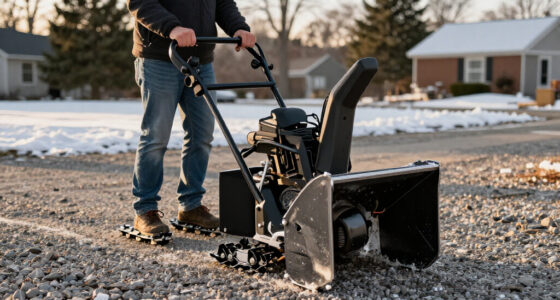
Battery equipment brings quiet starts, low routine maintenance, and no exhaust cloud beside the garage, but cold weather and heavy snow reduce practical runtime. A homeowner who clears a six-car driveway may finish easily with charged batteries; a contractor covering several acres usually needs spare packs, rapid charging, or gas-powered endurance. Gas equipment runs longer between stops but adds fuel handling, noise, exhaust, and more maintenance.
A snow-to-freezing-rain change deserves early action. Remove the snow base before clear ice wraps it into a solid layer, much like taking a sponge off the floor before spilled syrup dries around it. If warm rain follows instead, weigh natural melting, drainage, traffic, and the overnight low before ordering a full scrape.
Pavement temperature tells you more than air temperature alone. According to Federal Highway Administration guidance, pavement conditions play a central role in anti-icing decisions [1]. A sunny asphalt lot may remain above freezing while nearby shaded concrete steps develop a clear, glassy skin, so inspect both surfaces instead of trusting one dashboard reading.
Use Deicer After the Blade Does the Heavy Work
Deicer should manage bonding and thin residue, not replace plowing through deep snow. Mechanical removal moves pounds of material off the pavement; a calibrated salt or brine application then works on the remaining film, packed spots, and refreeze risk without wasting product beneath several inches of snow.
Imagine pouring salt over five inches of fresh accumulation in a parking bay. Much of the material becomes diluted brine inside the snowpack instead of reaching the pavement where bonding occurs. Plow first, then treat the thin white haze and damp scrape marks left behind; you will get better contact with less material.
Pre-storm anti-icing can help when the forecast, pavement temperature, and product match. A light, evenly applied brine may stop the first snow from welding itself to the asphalt, making the blade’s pass cleaner. It is not suitable for every event, especially when rain could wash the treatment away before snow begins.
Ordinary rock salt loses performance as temperatures fall, while other chloride products can work at lower temperatures but cost more and bring their own corrosion and handling tradeoffs. Follow the product label, calibrated application rate, and local rules; more granules do not automatically produce faster melting. According to U.S. Environmental Protection Agency information on road salt, excess chloride can affect freshwater, soil, plants, and infrastructure [2].
A practical sequence is anti-ice when conditions support it, plow bulk accumulation, apply measured deicer to residue, then inspect for refreeze. At a shaded office entrance, for example, meltwater from a sunny pile can cross the walkway at 3 p.m. and freeze into a hard ribbon after dark. That delayed hazard deserves a return check even when the snowfall ended hours earlier.
Store material dry, keep spreaders calibrated, and protect your skin and eyes when handling concentrated products. If an electrical outlet, heated walkway, damaged wiring, or service panel is exposed to snow or meltwater, shut off power from a safe location and call a licensed electrician; do not handle wet electrical equipment while standing on damp pavement.
Build a Two-Pass Plan Before the First Flake Falls
A strong two-pass plan defines when service starts, which routes open first, where snow goes, and what final cleanup includes. Making those choices before the forecast turns red prevents rushed calls, blocked drains, buried markers, and arguments about whether an active-storm visit was supposed to produce bare pavement.
Walk the property in daylight. Mark curbs, drains, speed bumps, decorative edges, gravel boundaries, hydrants, low walls, and raised utility covers with visible snow stakes. On a gravel lane, leave enough packed base to avoid throwing stones; on sound pavement, use properly adjusted equipment and slow down near marked obstacles.
- Set a measurable trigger. Record the depth that starts service, but allow dispatch based on snowfall rate, freezing risk, drifting, or emergency access. A two-inch trigger is clearer when everyone knows where and how that depth is measured.
- Rank the routes. List the fire lane, main drive, accessible route, steep grade, loading area, walks, and secondary spaces in working order. A simple map helps a relief operator follow the same priorities at 2 a.m.
- Choose safe snow storage. Keep piles away from drains, hydrants, signs, intersections, accessible paths, roof exits, and driver sightlines. Leave room for the final accumulation instead of filling the nearest corner on the first push.
- Plan vehicle movement. Ask residents or employees to move cars after the opening pass so the final crew can clear beneath them. Ten parked cars can leave ten frozen islands that leak meltwater across the cleaned lot.
- Define the return visit. State whether the crew returns automatically, at another depth, after municipal plowing, or after a customer request. Include who authorizes deicer and who monitors later refreezing.
For a home, this plan may fit on one note: clear the steep apron at three inches, keep a 4-foot walking path open, move the second car at 7 p.m., and clean the road-plow windrow in the morning. For a commercial site, GPS logs, pavement sensors, weather updates, and time-stamped service records can document each opening, maintenance, and final pass.
Check local snow and sidewalk requirements because deadlines and allowed storage areas vary by municipality. If a job involves rooftop snow, structural loading, overhead electrical lines, or ice near gas equipment, keep people out of the hazard area and use a licensed, properly insured professional; roof and structural work also may involve code or permit rules.
[1] Federal Highway Administration winter-maintenance guidance supports pavement-focused anti-icing and timely treatment decisions. [2] U.S. Environmental Protection Agency road-salt guidance describes chloride impacts and supports careful, measured material use.
Frequently Asked Questions
How much snow should fall before the first pass?
There is no universal first-pass depth. Many contracts use a stated trigger such as two inches, but a fast snowfall, busy entrance, steep driveway, or sudden freeze may justify service sooner; confirm the trigger and dispatch authority in writing.
Is plowing before the storm ends a waste of money?
An early pass is worthwhile when it prevents blocked access, tire-packed snow, or a frozen base. A six-hour storm may require two visits, but pushing two manageable layers can be faster and easier on equipment than attacking one deep, wet slab after midnight.
Should salt go down before or after plowing?
Use anti-icing material before snow only when pavement temperature, forecast, and product instructions support it. During cleanup, plow bulk snow first and apply a measured deicer treatment to the thin residue; dumping salt into deep snow wastes material and raises chloride runoff.
Why is my driveway blocked again after the crew cleared it?
A road plow pushes curbside snow into a dense windrow that can refill a freshly cleared driveway entrance. Coordinate final private cleanup after the municipal route passes when possible, while keeping enough access for urgent travel during the storm.
Can an early pass prevent every patch of ice?
No. It reduces compaction and pavement bonding, but meltwater, shaded pavement, roof drip, residual moisture, and falling temperatures can still create ice. Inspect steps, slopes, drains, accessible routes, and the downhill side of snow piles after temperatures drop.
Conclusion
Do not time snow removal by the final flake alone. Watch the pavement: if snow is piling up quickly, traffic is pressing it flat, wet flakes are gaining weight, or temperatures are falling, make an early functional pass and return for detailed cleanup after the storm.
The right first pass is not glamorous. It is one open lane, one safe entrance, one visible hydrant, and one accessible path cut through the hiss of falling snow. Make that pass before the soft white layer becomes a gray frozen floor, and your final cleanup becomes controlled work instead of a cold wrestling match.