
TL;DR

Get business pricing on tools and workshop supplies
- Business-only prices and quantity discounts
- Tax-exempt purchasing
- Multiple users, one account, clear invoices
Clearing snow on gravel driveways can dislodge stones if done poorly. Using gentle tools like plastic shovels, snow rakes, and specialized blowers, plus early, layered removal, keeps your surface intact. Modern equipment and proactive maintenance make snow removal safer and easier.
Winter’s here, and that means snow. But if you’ve got a gravel driveway, you know it’s not as simple as just shoveling or blasting away. The old-school method risks throwing stones — and that can lead to damage, safety hazards, and costly repairs. You need a smarter approach, one that respects your gravel and keeps it in place.
This guide walks through proven, practical ways to clear snow without displacing stones. You’ll learn what tools work best, the techniques that prevent damage, and the latest innovations that make snow removal safer—and easier—on gravel. Because a driveway that stays even and intact is worth every effort.
Clearing Snow on Gravel Driveways Without Throwing Stones
Protect the driveway beneath the storm. Soft-edged tools, controlled equipment and early, layered passes remove snow while keeping loose aggregate away from cars, lawns and people.
Why aggressive clearing turns gravel into a projectile
Sharp contact catches loose aggregate. High-speed machinery then adds force and direction—creating hazards now and an uneven driveway later.
Metal edges bite
A rigid blade can slip below the snow layer, scoop loose stones and strip gravel from high spots.
Augers accelerate
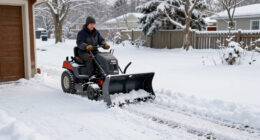
A low-set snow blower may pull stones into its mechanism and launch them toward vehicles or neighboring property.
Low spots multiply
Repeated displacement leaves ruts and shallow hollows where water collects, freezes and develops into potholes.
A gravel-safe equipment matrix
Match the tool to snow depth and driveway scale. Adjustable clearance matters more as machine power increases.
| Tool | Best use | Gravel contact | Stone risk | Essential setup |
|---|---|---|---|---|
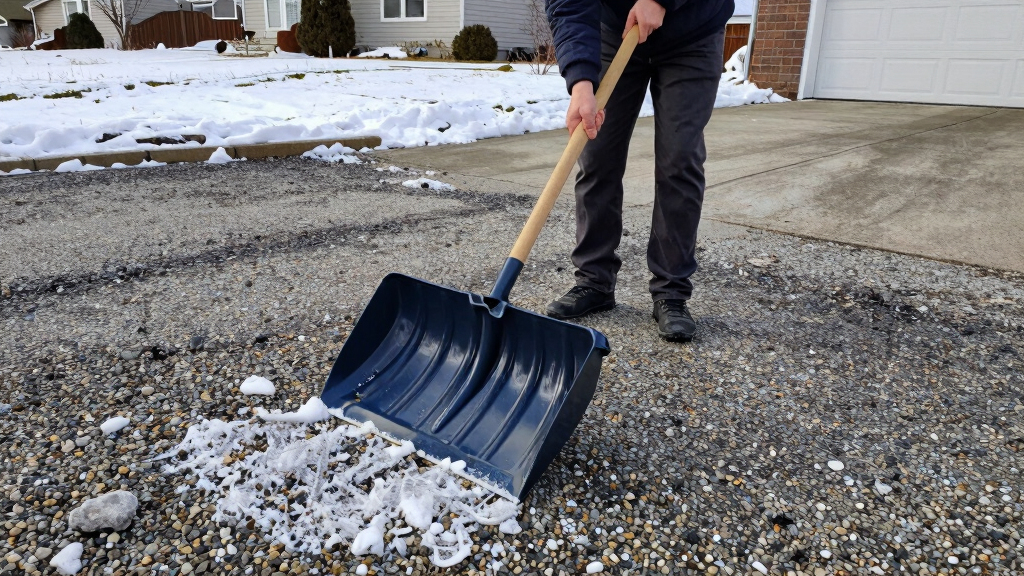
| Plastic shovel | Steps, edges, small drives | ✓Gentle | Low | Tilt slightly; lift thin layers |
| Rubber-edged pusher | Light snow, broad passes | ✓Flexible | Low | Use sweeping—not digging—motion |
| Long-handled snow rake | Loose or shallow snowfall | ✓Minimal | Very low | Pull from above the gravel surface |
| Adjustable snow blower | Medium to heavy snow | ~Controlled | Moderate | Raise skid shoes; aim chute safely |
| Metal-edged shovel | Paved surfaces only | ✗Aggressive | High | Avoid direct gravel contact |
| Fixed low-clearance blower | Not recommended on loose gravel | ✗Uncontrolled | Very high | Do not operate without safe clearance |
Four deliberate passes beat one forceful scrape
The goal is not bare gravel. Leave a thin packed base when necessary, then improve traction without excavating the driveway.
Start early
Move fresh snow before traffic compacts it or temperature cycles bond it to the gravel.
Set clearance
Raise skid shoes or angle the shovel so the working edge glides above loose stones.
Peel layers
Remove shallow amounts with each pass. Avoid loading the tool until it requires heavy force.
Direct safely
Aim discharge away from people, windows, parked vehicles, roads and neighboring property.
Technique changes the risk profile
These relative scores illustrate the practical risk relationship between gentle surface control and aggressive direct contact.
Relative stone-displacement risk
Lower scores indicate less direct gravel disturbance.
The force spectrum
Adjust contact, speed and snow depth together.
Adjustable chutes
Wide-angle and 180-degree controls help place snow without sending debris toward cars or buildings.
Raised skid shoes
Correctly set shoes keep the scraper and auger above loose aggregate while still moving most of the snow.
Radiant heating
Heated driveway systems reduce physical removal, though installation cost and gravel-system suitability require expert review.
The gravel-preservation chain
Your gravel-safe winter checklist
Preparation makes gentle removal possible. Inspect the surface, service the equipment and choose a safe discharge zone before snow hides every hazard.
Why Traditional Snow Removal Can Damage Your Gravel Driveway
When you use a metal snow shovel or a standard snow blower, you risk dislodging gravel stones. The sharp edges and aggressive scraping can lift or throw loose stones onto your lawn or driveway surface. This isn’t just about aesthetics—displaced gravel can create uneven patches, leading to potholes or future maintenance headaches.
Imagine clearing snow after a heavy storm, only to find your driveway looks like a lunar landscape. That’s because stones have been thrown or displaced, often ending up on your neighbor’s property or wrapped around your tires. Proper methods can prevent this chaos.
According to outdoor property-care experts, the key is controlling the force and direction of snow removal, especially on loose surfaces. Gentle, layered removal minimizes the risk of stone displacement and prolongs the life of your gravel.
It’s important to understand that aggressive snow removal techniques not only displace stones but can also cause structural damage to your driveway over time. Repeatedly lifting or throwing gravel can lead to uneven surfaces, potholes, and even compromise the underlying foundation. This means that what seems like a quick fix could result in costly repairs later, making careful, deliberate methods a better investment. The tradeoff is clear: opting for gentler techniques may take more time initially but preserves your driveway’s integrity for years to come.
plastic snow shovel for gravel driveway
As an affiliate, we earn on qualifying purchases.
As an affiliate, we earn on qualifying purchases.
Best Tools That Save Gravel and Keep Stones in Place
The right tools make all the difference. Plastic or rubber-edged shovels slide over gravel gently, reducing the chance of displacing stones. Snow rakes with long handles let you reach over the surface without disturbing the gravel underneath. Specialized snow blowers with adjustable chutes can direct snow away without scattering gravel.
Here’s a quick rundown of effective tools:
- Plastic or rubber-edged shovels: Soft edges prevent scraping and stone dislodging. They allow you to lift snow without applying excessive force that could shift gravel.
- Snow rakes: Long handles enable you to remove snow from a distance, minimizing contact with the gravel surface. This reduces the risk of knocking stones loose, especially when snow is light or loose.
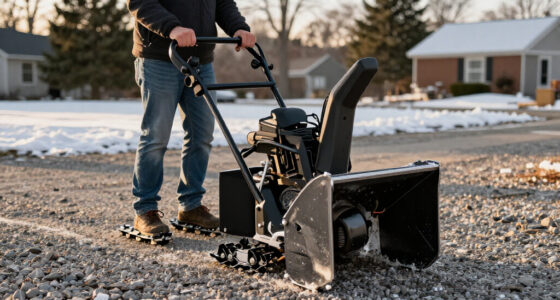
- Adjustable snow blowers: Models with wide, flexible chutes can be directed carefully, reducing impact and scattering of gravel. Some newer models are designed specifically with gravel driveways in mind, featuring softer discharge settings that lessen the force of snow ejection.
Choosing these tools involves understanding their impact — softer edges and adjustable features give you more control, which is crucial for protecting your gravel. Using them correctly can significantly reduce the risk of stones flying loose, saving you time and money on repairs and cleanup. The tradeoff is that these tools often require a bit more deliberate handling, but the payoff in driveway preservation is well worth it.
AmazonAs an affiliate, we earn on qualifying purchases.
Simple Techniques for Snow Removal That Protect Your Gravel
Techniques matter just as much as tools. Clearing snow early prevents it from turning to ice or bonding tightly to the gravel. Work in thin layers—lightly scraping instead of heavy pushes—reduces the impact on loose stones. This layered approach allows you to gradually remove snow without exerting excessive force, which could dislodge gravel or create uneven surfaces.
Use sweeping motions rather than aggressive scraping. Avoid metal blades that can lift stones. Instead, gently tilt your shovel or rake to glide over the surface, lifting snow without disturbing the gravel underneath. This gentle technique minimizes the risk of displacing stones and maintains the driveway’s integrity.
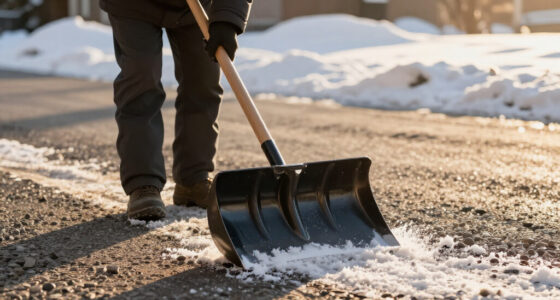
Imagine a homeowner carefully sweeping snow off with a plastic shovel, making slow, sweeping passes. The snow lifts away cleanly, and the gravel remains undisturbed. This approach not only preserves the surface but also reduces the likelihood of creating uneven patches or potholes that could develop over time.
Experts emphasize that layering snow removal and working slowly helps prevent compaction and reduces the force exerted on loose gravel, thus lowering the chances of stones flying loose or being displaced. Patience and gentle motions are key to maintaining a smooth, intact driveway through winter.
AmazonAs an affiliate, we earn on qualifying purchases.
Latest Gear and Tech That Make Snow Clearing Safer for Gravel
Innovation is on your side. Today’s snow blowers feature adjustable chutes and wider clearance options designed to limit stone displacement. Some models even have soft-throw or wide-angle discharge settings that direct snow away without scattering gravel.
For example, a homeowner upgraded to a snow blower with a 180-degree adjustable chute. During a recent storm, snow was directed perfectly off the driveway—no stones flying or hitting parked cars.
Additionally, heated driveway systems are gaining popularity. Radiant heating melts snow on contact, eliminating the need for physical removal and reducing the risk of gravel damage altogether.
Eco-friendly tools like non-abrasive snow brushes and chemical de-icers are also improving safety and protecting gravel surfaces.
Choosing the right gear isn’t just about convenience — it’s about reducing the risk of damage. Modern innovations allow you to control snow ejection more precisely, which minimizes impact on loose gravel and prevents stones from scattering. This technological approach offers a safer, more efficient way to keep your driveway clear while preserving its structural integrity. The tradeoff involves investing in newer equipment, but the long-term savings and driveway health make it a wise choice.
Amazongravel driveway snow removal tools
As an affiliate, we earn on qualifying purchases.
As an affiliate, we earn on qualifying purchases.
What You Can Do Right Now to Protect Your Gravel Driveway
Start early. Clearing snow as soon as it falls prevents it from packing down and turning icy, which can be much harder to remove without damaging the gravel beneath. Early removal also reduces the need for aggressive scraping later, which can displace stones.
Keep tools in good shape. A dull shovel or a damaged rake requires more force to work effectively, increasing the risk of dislodging gravel. Regularly inspecting and maintaining your equipment ensures smooth, safe operation.
Adjust your technique. Use sweeping motions, work slowly, and avoid metal edges that could scrape or lift stones. When using a snow blower, ensure the chute is wide and adjustable to control snow ejection direction and force, reducing the chance of gravel scattering.
Finally, consider installing a gravel-friendly snow removal system, like a heated driveway, if storms are frequent. This proactive solution melts snow on contact, eliminating the need for physical removal and significantly reducing gravel damage risk.
Remember, proactive care isn’t just about convenience — it’s about preserving your driveway’s longevity and avoiding costly repairs. Taking these steps now can save you time, money, and frustration in the long run.
Key Takeaways for Keeping Your Gravel Driveway Safe During Snow
- Use gentle tools like plastic shovels and snow rakes with long handles to minimize impact on the surface.
- Clear snow early, in thin layers, before it compacts or turns icy, which makes removal safer and reduces stone displacement.
- Adjust your equipment: Use wide, adjustable chutes on snow blowers to control snow ejection and prevent gravel scattering.
- Work slowly and smoothly: Gentle, deliberate motions prevent unnecessary force that could dislodge stones.
- Consider modern solutions: Heated driveways or eco-friendly tools can eliminate the problem altogether by reducing or removing the need for physical snow removal.
Frequently Asked Questions
Can I use a regular snow blower on my gravel driveway?
Some snow blowers can be used if they have adjustable, wide chutes designed to direct snow gently. However, gravel-specific models or attachments are preferable to prevent scattering stones.What’s the safest way to clear snow without damaging my gravel?
Use plastic or rubber-edged shovels, work in thin layers, and sweep gently. Snow rakes and adjustable blowers also help keep stones in place.Are there tools designed specifically for gravel driveways?
Yes, gravel-friendly snow rakes, plastic shovels, and specialized snow blowers with adjustable chutes are made to protect loose surfaces.How can I prevent stones from flying when I shovel snow?
Choose tools with soft edges, clear early before ice forms, and avoid aggressive pushes. Gentle, sweeping motions are best.Is installing a heated driveway worth it?
Heated systems melt snow on contact, eliminating physical removal and protecting gravel. It’s a worthwhile investment if you face frequent storms.Conclusion
Keeping gravel driveways intact through winter isn’t about brute force — it’s about smart choices. With the right tools, gentle techniques, and a proactive mindset, you can clear snow without throwing stones or damaging your surface. Your driveway will thank you come spring, looking even and solid.
Remember: early, layered snow removal with soft-edged tools is your best defense. Take control now, and your gravel driveway will stand up to winter’s worst.
FALL Fall Picks
fall essentialsfall essentials
As an affiliate, we earn on qualifying purchases.