
TL;DR
Hunker woodworking writer Rob Johnstone tested a solution made with pre-1982 pennies, white vinegar and hydrogen peroxide to color wood. He reported stronger color changes on oak and cherry than on maple, and notes that the reaction is technically different from a conventional wood stain.
Hunker woodworking writer Rob Johnstone tested a homemade wood-coloring solution made with pre-1982 pennies, white vinegar and hydrogen peroxide, reporting a more pronounced color change on oak and cherry than on maple. The test gives DIY woodworkers a low-cost option to try, but the result depends on the wood and the process is a chemical reaction rather than a conventional pigment stain.

Get business pricing on tools and workshop supplies
- Business-only prices and quantity discounts
- Tax-exempt purchasing
- Multiple users, one account, clear invoices
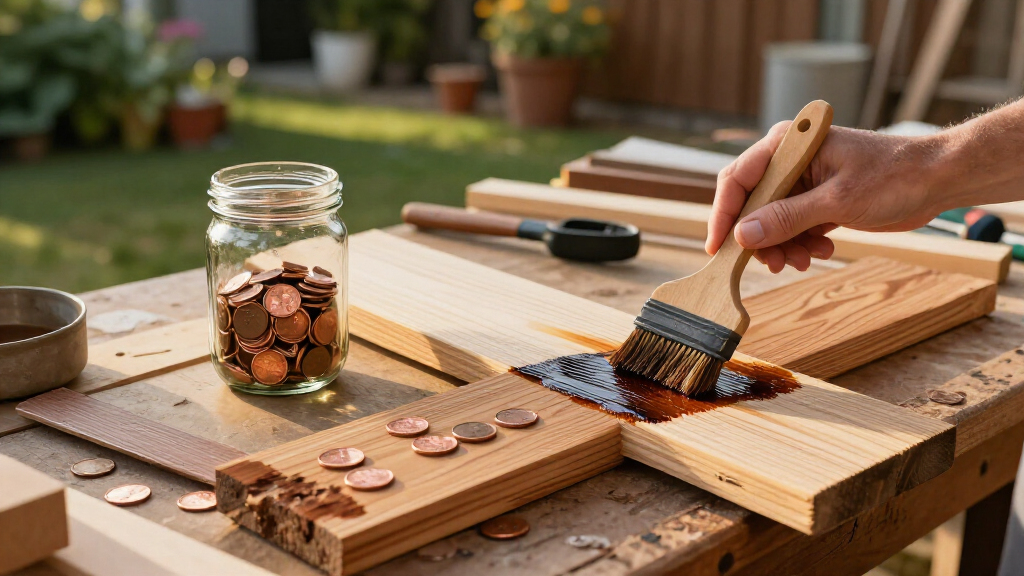
Johnstone described placing older pennies in a glass jar, covering them with white vinegar and leaving them to soak for about an hour. He then added a couple of tablespoons of hydrogen peroxide and let the mixture sit for three days before applying it. His report says the pennies need to predate 1982 because they have enough copper for the process; the source does not give a specific number of pennies or a fixed volume of vinegar.
After preparing the wood surface, Johnstone flooded the solution onto samples of oak, cherry and maple, left it for about 10 minutes, wiped it off and allowed the wood to dry. He then wiped the surface with a water-soaked cloth to remove vinegar residue. Once dry, he used a fine synthetic abrasive pad to smooth raised wood fibers. He recommends applying a sealer, with shellac as his preference, before a clear finish.
In the test, oak and cherry showed stronger color changes than maple. Johnstone said that the solution reacts with wood tannins, which are more abundant in some hardwoods, including oak, cherry and mahogany. Maple reacted less intensely. These are one woodworker’s reported results, not a standardized comparison across wood species, products or application conditions.
The Result Depends on the Wood
The test matters to people considering a simple, inexpensive way to alter the appearance of wood because it suggests that a familiar household material can be part of a coloring process. It also highlights a practical limitation: the wood species affects the outcome. A method that produces a visible change on oak or cherry may produce a subtler result on maple, so the recipe is not a guarantee of a consistent color.
Johnstone stresses that the mixture is not a traditional stain in the technical sense. Conventional stains commonly use pigment suspended in a liquid, while this solution changes color through a reaction involving copper compounds and tannins in the wood. That distinction can matter when choosing a finishing method, but both approaches can change the wood’s appearance. The source does not provide measured color values, durability testing or a comparison with commercial stains.
Popular right now

Dyson Cyclone V10 Origin Cordless Vacuum

Bose QuietComfort Wireless Noise-Cancelling Headphones, Petal Pink

Shark Pet Cordless Stick Vacuum, 40-Minute Runtime, Lightweight, IX141
As an affiliate, we earn on qualifying purchases.
How the Penny Mixture Works
Johnstone framed the piece as a Hunker “We Tried It” test of an online DIY tip. He contrasted the penny method with the more familiar practice of soaking steel wool or nails in vinegar to make a solution that colors wood. In his account, the penny mixture produced a blue liquid, which he applied after preparing the wood surface.
The report attributes the color change to a reaction involving copper in the pennies and tannins in the wood. It says white vinegar supplies the acidic component and hydrogen peroxide helps oxidize the copper. Johnstone also says the peroxide breaks down over time when exposed to air, and that the mixture may need additional peroxide if left longer. The article does not include laboratory analysis or a detailed chemical measurement of the solution.
“The penny thing was new to me, as was the color of the liquid it produced — a lovely blue color.”
— Rob Johnstone, Hunker woodworking writer
Questions the Test Leaves Open
Hunker’s account does not specify the exact number of pennies, the vinegar volume, the concentration of hydrogen peroxide or the precise composition of each wood sample. It also does not report repeat tests, controlled comparisons, measured color changes or how the finish holds up over time. Results may differ with wood preparation, species, tannin content and application conditions.
The article says pre-1982 pennies are needed for sufficient copper, but does not quantify the copper content required or test other copper sources. It mentions copper piping as a possible alternative, but presents that as an untested suggestion. The process uses acidic liquid and hydrogen peroxide; the report does not provide a full safety assessment or guidance for disposal.
Test on Scrap Before Finishing
Johnstone’s report describes a completed test and does not identify a scheduled follow-up or broader study. For anyone considering the method, the immediate next step is to try it on a scrap piece of the same wood before treating a finished project. That can show whether the color suits the material and whether the surface preparation and finishing steps produce the desired appearance.
Readers should follow product labels and handle vinegar and hydrogen peroxide carefully, avoiding contact with eyes and skin. The source does not establish a single reliable recipe for every wood or project. Any further conclusion about repeatability, long-term performance or how the method compares with commercial stain would require additional testing.
Key Questions
What ingredients did Hunker use?
Rob Johnstone used pre-1982 pennies, white vinegar and hydrogen peroxide. He covered the pennies with vinegar, waited about an hour, added a couple of tablespoons of peroxide and let the mixture sit for three days.
Which woods showed the strongest color change?
Johnstone reported stronger results on oak and cherry than on maple. He linked the difference to tannin content, but his report does not provide measured color data or results from a broad set of tests.
Is the penny mixture technically a wood stain?
Johnstone says it is not a conventional pigment-based stain. In his description, the mixture changes wood color through a reaction involving copper and the wood’s tannins.
Can the treatment be used under a clear finish?
Johnstone says he wiped the dried wood with water to remove vinegar residue, smoothed raised fibers with a fine synthetic pad and then applied a sealer before a clear finish. He recommends testing the full process on scrap wood first.
Source: hunker.com