
TL;DR

Get business pricing on tools and workshop supplies
- Business-only prices and quantity discounts
- Tax-exempt purchasing
- Multiple users, one account, clear invoices
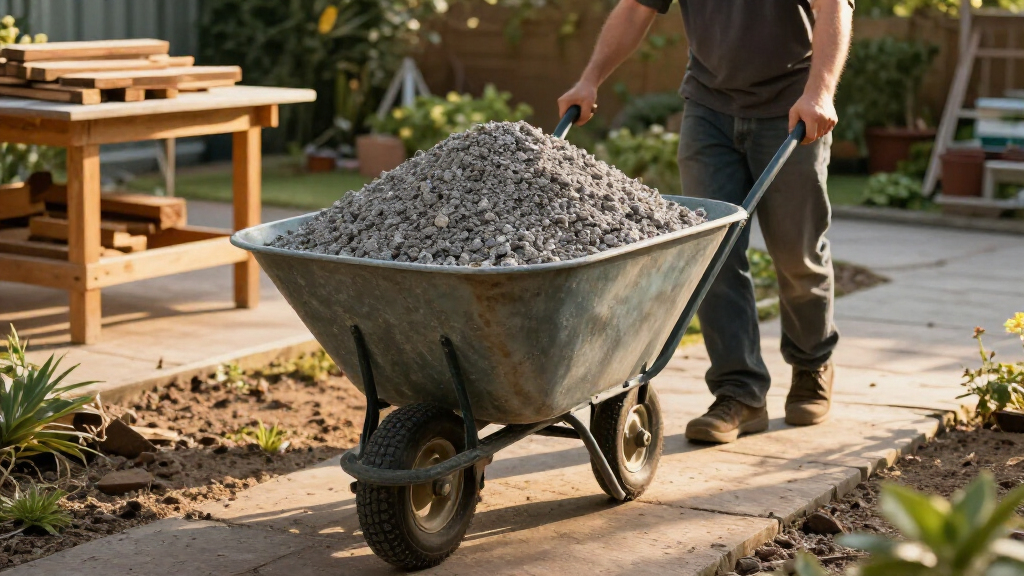
A yard cart can carry gravel and stone safely when you stay within its manufacturer’s weight rating, center and spread the load, and travel slowly over firm ground. Gravel is dense, so estimate weight rather than relying on bucket count, and make several smaller trips if the rating or terrain leaves little margin. Stop if the cart wobbles, drags, or makes unusual noises.
A shallow layer of gravel can weigh more than a yard cart looks ready to carry. That mismatch is where bent axles, buckled frames, and wobbling wheels often begin: the bed still has room, so you add another bucket, even though the cart has already reached its weight limit.
This guide shows you how to haul gravel and stone while protecting your cart’s axle, wheels, and frame. You’ll learn how to check the rating, estimate a load, place material over the axle, and pick a route that avoids punishing jolts.
The practical rule is simple: weight, balance, and impact all matter. A properly loaded cart on firm ground can handle a useful job; an overloaded cart bouncing through ruts can take a beating in a few yards. When the load or terrain exceeds what the cart can manage, choose equipment rated for the job.
Use the manufacturer’s weight rating; a roomy bed does not mean the cart can safely carry a full bed of gravel.
Estimate the material’s weight because stone type, particle size, and moisture change how much a given volume weighs.
Spread gravel across the bed, keep it low and centered near the axle, and prevent large stones from shifting.
Walk slowly on firm ground, take broad turns, and avoid ruts, curb drops, and abrupt twists with a full cart.
Stop and inspect the cart if it wobbles, drags, makes unusual noises, or shows a bent axle.
Hauling Gravel and Stone in a Yard Cart Without Bending the Axle
Protect the axle, wheels, and frame with three habits: respect the weight rating, balance the load, and avoid punishing impacts.
Weight, balance, and impact all matter.
A shallow layer of gravel can weigh more than a yard cart looks ready to carry. Stone type, particle size, and moisture change the weight, so bucket count alone is not a safe guide.
Know the limit
Find the rating in the manual, on the cart, or in the manufacturer’s specifications. If you cannot confirm it, do not guess from appearance.
Keep it balanced
Spread material across the bed. Keep the center of mass low and near the axle to reduce uneven strain on wheels and frame.
Soften the ride
Firm, clear ground reduces drag and sharp jolts. Ruts, curb drops, slopes, and abrupt turns can stress a loaded cart.
When the margin is small, make several lighter trips. Leave room for uneven ground and steering forces. If the load or route exceeds the cart’s ability, choose equipment rated for the job.
Spread the weight across the axle.
Build a shallow, even layer
Add a few shovelfuls at a time, working across the bed instead of piling material in one corner. Keep large stones from rolling or shifting. Recheck the load before moving and stop on stable ground to redistribute it if it shifts.
Keep heavy pieces near the middle, over the axle.
A five-step routine catches trouble early.
Check the cart, estimate the weight, load evenly, clear the route, then move at a controlled pace.
Check for a bent axle, loose fasteners, cracked welds, damaged wheels, and worn bearings.
Find the rating and estimate material weight using a reliable supplier or material reference.
Spread shallow layers across the bed; keep the load low and centered near the axle.
Walk the route first. Note ruts, slopes, soft soil, loose debris, and thresholds.
Walk slowly, take broad turns, and stop if the cart wobbles, drags, or makes unusual noises.
Keep wheels on firm, predictable ground.
Reduce drag and jolts
Soft ground raises rolling resistance; bumps send sharp force through the wheels and axle. Walk rather than run, steer gently, and avoid dropping wheels off curbs or bouncing through ruts.
- Fill small holes and move sticks before loading.
- Choose the flattest practical route.
- Use a suitable ramp at thresholds, or move smaller amounts by hand.
Match tires to the job
Follow the cart maker’s tire recommendations. Pneumatic tires can soften bumps but need specified inflation; solid tires resist punctures but may transmit more shock on rough ground.
- Check tire condition and pressure before loading.
- Do not inflate by appearance alone.
- For steep slopes, deep mud, or rough ground, use suitably rated equipment.
Pneumatic
More cushioning over bumps; punctures and pressure maintenance are considerations.
Solid / flat-free
No puncture-related flats; the ride may be harsher on uneven ground.
Warning signs deserve an immediate pause.
If anything changes during the haul, stop on stable ground. Unload safely and inspect the cart before using it again.
Start with the cart’s rating, not how much fits in the bed
To haul gravel without bending the axle, keep the total load within the yard cart’s manufacturer rating and leave room for uneven ground and handling. Find the rating in the manual, on a label, or in the manufacturer’s specifications; if you can’t confirm it, don’t guess from the cart’s size or appearance.
A deep bed can be misleading. A cart that looks like it could swallow several buckets may reach its weight limit after just a modest layer of dense stone. Gravel weight changes with rock type, particle size, and moisture, so a wet bucket and a dry bucket of the same volume may not weigh the same.
For example, imagine you’re moving a path’s worth of gravel across a quarter-acre lot. Your cart has room for a tall mound, but its published capacity is the boundary—not the mound’s height. Ask your supplier for an estimated weight per bucket, bag, or unit of volume, then compare that estimate with the cart rating. Leave a margin because bumps and steering add stress the static load rating may not capture.
Think of the rating like a speed limit for the cart: a clear road doesn’t make it optional, and rough conditions call for more caution. A “heavy duty” label alone tells you little, since that phrase is not standardized. Compare the published capacity and follow the maker’s guidance for the specific model.
Popular right now

TCL 65-Inch QM6K QLED Mini-LED 4K HDR Smart Google TV, 144Hz

Dyson Big Ball Multi Floor Canister Vacuum, Yellow

eufy C28 Robot Vacuum Cleaner and Mop for Pet Hair, 15,000 Pa
As an affiliate, we earn on qualifying purchases.
Spread the load over the axle to keep the cart balanced
A balanced gravel load keeps its weight centered over the axle and spread across the bed. That placement reduces the extra leverage that a heavy pile at one end or along one side puts on the axle, wheels, frame, and handles.
Load a few shovelfuls at a time, working across the bed rather than building a pyramid in one corner. Keep the material low enough that it cannot slide over the side during a turn. With large or sharp stones, arrange pieces so they sit securely and don’t roll or strike the bed; a sudden shift can throw the cart off balance even if the total weight stays within its rating.
Suppose you’re hauling broken stone to fill a low spot near a gate. If every heavy piece lands on the left side, the cart leans and puts uneven pressure on the wheel and axle. Spread the stones across the bed, keep the heavier pieces near the center, and use several trips when a balanced load is hard to control.
Think of the axle as the middle of a seesaw: weight far to one side makes the whole setup work harder. Keep the load low, centered, and even, and check it again before moving. If it shifts during travel, stop on stable ground and redistribute it before continuing.
Take this five-step loading routine before each haul
To protect the axle, check the cart, estimate the material weight, load it evenly, clear the route, and walk at a controlled pace. That short routine catches the common trouble spots before a full cart is rolling across your property.
- Inspect the cart. Look for a bent axle, loose fasteners, cracked welds, damaged wheels, and worn bearings.
- Confirm the rating. Check the manual or label, then estimate the gravel or stone weight from a reliable supplier or material reference.
- Load in shallow layers. Spread each bucket across the bed and keep the center of mass near the axle.
- Clear and assess the route. Move branches and loose debris. Identify ruts, slopes, soft soil, and thresholds before you set off.
- Walk and steer gently. Take broad turns, avoid bouncing over obstacles, and stop if the cart starts wobbling or dragging.
On a small renovation, this routine might take longer than one quick scoop. It can also spare you from discovering a loose wheel halfway down a gravel lane with a loaded cart. If the inspection shows damage, don’t haul the load until you’ve repaired or replaced the affected part.
A yard cart without a known weight rating is hard to judge by eye. Get the model information or ask the manufacturer before using it for heavy stone. When you can’t establish whether the load is within the rating, smaller loads don’t solve the uncertainty unless you can estimate their weight.
Choose firm ground and avoid the jolts that punish an axle
A firm, clear route helps protect a loaded cart because soft ground increases rolling resistance and bumps can send a sharp force through the wheels and axle. Walk rather than run, use broad turns, and avoid dropping the wheels off curbs or bouncing across ruts.
A cart may roll smoothly across a packed lane but bog down in damp soil beside a garden bed. That extra drag makes steering harder and can encourage you to yank the handles, twist the frame, or rush to get unstuck. Gravel on a slope adds another risk: the load can shift as you try to hold the cart back or turn across the grade.
Before a haul, walk the route while the cart is empty. Fill small holes, move sticks, and choose the flattest practical path. If a threshold or curb can’t be avoided, use a suitable ramp and approach slowly, or unload and carry the material across in smaller amounts.
Ruts act like potholes on a loaded truck: the wheel hits first, then the shock travels into the structure behind it. Even a cart within its rated capacity can take damaging impacts if it repeatedly drops into holes while carrying stone. If your route includes steep slopes, deep mud, or rough ground, use a properly rated trailer, powered cart, or other equipment suited to those conditions.
Choose tires that suit your ground and check them before loading
Pneumatic tires often soften bumps, while solid tires avoid punctures; either type still needs to match the cart and the ground you’ll cross. Follow the manufacturer’s tire recommendations, and inflate pneumatic tires to the specified pressure rather than guessing from appearance.
On a rough garden path, a correctly inflated pneumatic tire can absorb some shock before it reaches the frame. The tradeoff is maintenance: it can lose air or puncture. A solid tire won’t go flat, but may send more of each bump into the axle and cart body on uneven ground.
Before hauling, look for cuts, bulges, loose wheels, and damage around the hub. Check for wobble by turning an unloaded wheel, and listen for grinding or clicking that could point to bearing trouble. If you’re working across an acre or more, a short inspection before each round is easier than nursing a failing wheel back from the far end of the property.
Neither tire style makes an overloaded cart safe. A wider tire or a reinforced frame may improve stability or durability, but those features do not cancel the manufacturer’s rating. If gravel has already started shifting or the wheel no longer tracks straight, unload carefully on firm, level ground and inspect the cart before moving again.
Make smaller trips when the cart or terrain leaves little margin
Several lighter trips are easier to steer and control than one overloaded trip, especially on slopes, soft ground, or a route with tight turns. If the estimated material weight approaches the cart’s limit, reduce the load instead of filling the bed to its brim.
Say you need stone for edging along a long driveway. A full cart may save a few trips on paper, but if the wheels sink into damp ground or the load shifts at every turn, you’ll spend that time fighting the handles. Shorter trips spread the work out and make it easier to stop, adjust, and stay on stable ground.
There is a limit to what smaller trips can fix. A load still needs to be within a known rating, and repeated hauling over a long, rough route may call for a different tool. If you’re moving a large volume, covering long distances, or working on steep slopes, compare a properly rated trailer or powered cart that can safely handle the weight and terrain.
Stone size matters too. A cart can carry gravel and smaller stone when the weight stays within its rating and the material fits securely in the bed. Oversized or sharp pieces can damage the bed or shift unpredictably, so distribute them carefully. For heavy stone on a difficult route, don’t let the convenience of a yard cart make the decision for you.
Stop at the first wobble, scrape, or strange noise
Stop using a loaded cart if it wobbles, drags, makes an unusual noise, or shows a bent axle. Put it on stable, level ground, keep clear of the load’s path, and unload carefully before inspecting the wheels, bearings, frame, fasteners, and axle.
A wheel that suddenly scrapes the frame or a cart that starts veering sideways can signal damage or a shifting load. Don’t try to finish “just one more trip” while the cart behaves differently. Stop, steady the cart, and ask someone to help manage the load if it feels unstable to unload alone.
Look for a wheel sitting crooked, cracks around welds, loose bolts, a visibly bowed axle, or bearings that grind when the wheel turns. Replace damaged parts according to the manufacturer’s instructions, or replace the cart if the frame or axle is compromised. A quick visual check cannot confirm that a bent or cracked part is safe under load.
For instance, after crossing a rut, you may notice one wheel dragging and a new metallic click. That’s a reason to unload and inspect, not a reason to push harder. If damage is uncertain, contact the manufacturer or a qualified repair service before hauling more stone.
Frequently Asked Questions
How much gravel can a yard cart safely carry?
Use the manufacturer’s weight rating for your exact cart. Estimate the gravel’s weight using information from a reliable supplier or material reference, and leave a margin for uneven ground and handling. Volume alone is unreliable because stone type, particle size, and moisture affect weight.
Can gravel bend a yard cart axle?
Yes. Overloading, an off-center load, and wheel impacts can all stress the axle; a cart can also be damaged when its load shifts suddenly. Stop using it if the axle looks bent or the cart starts wobbling or dragging.
How should I load gravel to protect the axle?
Spread gravel evenly across the bed and keep the load low, with its center near the axle. Avoid a heavy pile at one end or side. Use smaller trips when you can’t place the material securely and keep the cart balanced.
Are pneumatic or solid tires better for gravel?
Pneumatic tires can absorb bumps but need the manufacturer’s specified inflation pressure and can puncture. Solid tires can’t go flat, but may transmit more shock on rough ground. Choose the type recommended for your cart and route.
When should I use something other than a yard cart?
Use a properly rated trailer, powered cart, or other suitable equipment when the load exceeds the cart’s rating or the route involves long distances, steep slopes, or very rough ground. A bigger tool only helps if it’s rated for the material and conditions you have.
Conclusion
Protecting a yard cart axle starts before the first shovel: confirm the rating, estimate the stone’s weight, and spread each load low and evenly. Then give the cart a firm route and a steady pace. A little more walking beats a wheel dragging sideways or a bowed axle halfway through the job.
When the cart or terrain can’t handle the load with a safety margin, switch to equipment rated for the work. Let the gravel settle where you want it—not in a pile beside a broken cart.