
TL;DR

Get business pricing on tools and workshop supplies
- Business-only prices and quantity discounts
- Tax-exempt purchasing
- Multiple users, one account, clear invoices
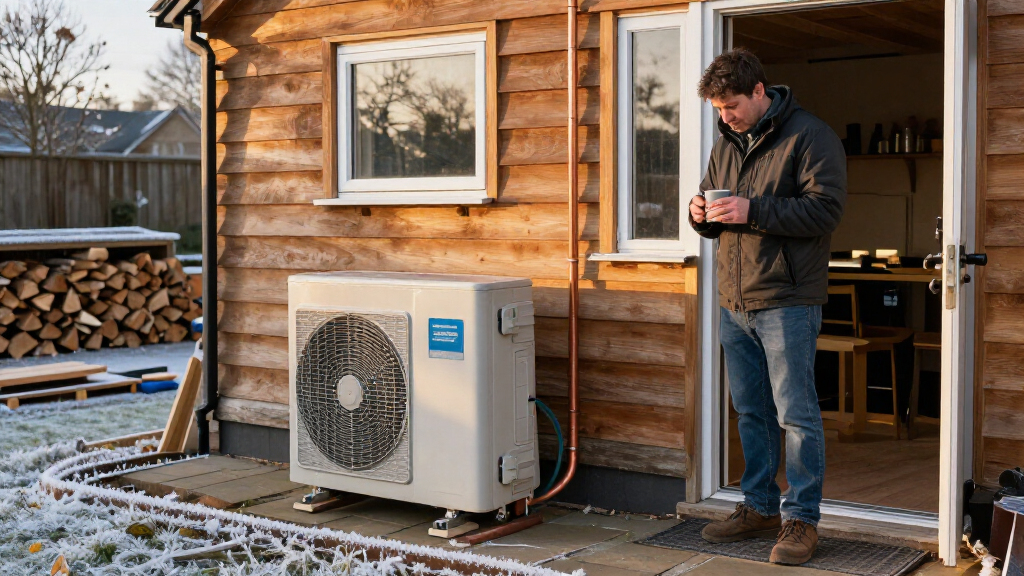
Home renovators David and Andrew Harrison-Colley say their air source heat pump has kept their expanded cottage comfortable through two winters after they removed an oil tank and boiler. They estimate their combined energy spending is now lower, but say they cannot make a fair before-and-after comparison because the house is twice its former size and insulation work has changed.
Home renovators David and Andrew Harrison-Colley, known as The Home Boys, say their air source heat pump has kept their expanded cottage warm through two winters since they replaced an ageing oil boiler and removed the garden tank. Their account for Ideal Home describes a comfortable home and an estimated lower combined energy bill, while stressing that their changed house makes a direct cost comparison impossible.
The couple made the switch while building an extension, when their existing boiler needed replacing. Their builder priced a new oil boiler and an air source heat pump; after the £7,500 Boiler Upgrade Scheme grant, they said the options were only a few hundred pounds apart. The installation also suited the extension’s ground-floor underfloor heating, which they said was easier to incorporate during construction than retrofit later.
They installed 13 larger radiators: six in new upstairs rooms and seven replacing radiators in the original cottage. The extension’s kitchen and living spaces use underfloor heating instead. The couple said the outdoor unit is fairly quiet, but water can be heard moving through some exposed pipework in the older part of the house, where they could not conceal it in floors or walls.
Their approach to heating also changed. They keep the system running at a thermostat setting between 19°C and 23°C, rather than switching it on and off for quick bursts as they did with the oil boiler. They use the Cosy Octopus tariff, which has cheaper rates at set times and a peak period from 4 p.m. to 7 p.m.; they say they simply use less energy during that peak.
The Trade-Offs Behind the Switch
The account offers a household-level view of what an oil-to-heat-pump change involved: the up-front comparison, changes to emitters and pipework, and different day-to-day heating habits. It also shows why a single household’s bill cannot be treated as a reliable forecast for another home. The Harrisons-Colleys were already carrying out a large extension, added underfloor heating, and completed insulation work during the period they describe.
For oil-heated households considering replacement, the reported grant narrowed the price gap between the two systems in this particular project. But the couple’s experience also points to costs and practical details beyond the equipment itself, including appropriately sized radiators and how exposed pipes may look or sound in an older property. Their positive report is personal experience, not an independently measured assessment of performance or savings.
Popular right now

TCL 65-Inch QM6K QLED Mini-LED 4K HDR Smart Google TV, 144Hz

Philips Café Aromis Automatic Espresso Machine with LatteGo Pro Milk System

Sony BRAVIA XR8B 65-Inch 4K OLED Google TV (K-65XR8B)
As an affiliate, we earn on qualifying purchases.
Why the Extension Shaped the Decision
When the couple moved in, an oil tank occupied part of the garden near the outside toilet, and the boiler was nearing the end of its life. The extension meant both the tank and boiler had to be dealt with. The heat pump was installed during the build, alongside underfloor heating across the new ground floor. With the tank and toilet removed, the cleared garden area became a patio.
The couple said they also wanted more garden space, were concerned about rising oil prices, and viewed a heat pump as a more efficient, lower-carbon option for the long term. Those were their reasons for choosing it; their account does not quantify carbon savings or compare their system’s efficiency with a new oil boiler.
Ideal Home’s report says the standard Boiler Upgrade Scheme grant is £7,500, and that eligible homes in England and Wales currently heated by oil or LPG can receive £9,000 until March 31, 2027. Eligibility and the grant available to an individual property should be checked against current scheme rules.
““It’s just quietly warm.””
— David and Andrew Harrison-Colley, writing as The Home Boys for Ideal Home
What the Bill Figures Cannot Show
The couple do not provide a like-for-like total for heating costs before and after installation. They say their current single electricity bill comes in below what their oil and electricity bills would have added up to, but this is their own estimate, not a controlled comparison. The house is now twice as large, insulation work has been completed, and the account does not give bill totals, consumption figures, or the period used for the estimate.
It is also unclear from the report how much of the household’s electricity use is attributable to heating, how the system performed in different weather, or what the installation cost before the grant. The account does not set out an independent evaluation of operating costs, emissions, or the heat pump’s efficiency. Results for other homes will depend on factors including building fabric, system design, energy tariffs and household use.
Their Next Energy Decision
The couple say solar panels are a possibility, but they want to work out whether the investment would pay for itself before proceeding. They do not give a timetable or say that they have decided to install them. For now, their account is a retrospective of two winters with the heat pump and a description of how they use it.
Readers weighing a similar change would need property-specific quotes and grant eligibility information to make a cost comparison. The couple recommend pricing both a replacement oil boiler and a heat pump, allowing for radiator upgrades, and considering where pipework can be routed. Their experience describes one renovation; it does not establish what another household will pay or save.
Key Questions
How long have the Home Boys used the heat pump?
David and Andrew Harrison-Colley say they have lived with it for two winters since replacing their oil boiler during a home extension.
Did the heat pump lower their energy costs?
The couple estimate that their current electricity bill is lower than their former oil and electricity bills combined. They say they cannot make a fair before-and-after comparison because their house is now twice as large and has been fully insulated. They do not provide bill totals or a like-for-like analysis.
What changes did they make to the heating system?
They installed 13 larger radiators in the original cottage and upstairs extension, and underfloor heating across the extension’s ground floor. They also keep the heat pump running steadily instead of switching it on and off for short periods.
What grant amount does the report mention?
Ideal Home’s report says the standard Boiler Upgrade Scheme grant is £7,500. It says eligible homes in England and Wales that currently use oil or LPG can receive £9,000 until March 31, 2027. Applicants should check current rules and eligibility for their property.
Source: idealhome.co.uk