
TL;DR

Get business pricing on tools and workshop supplies
- Business-only prices and quantity discounts
- Tax-exempt purchasing
- Multiple users, one account, clear invoices
Two-wheel wheelbarrows excel in stability, especially with heavy loads and uneven terrain. Single-wheel models offer better maneuverability in tight spaces but require more user balance. Your choice should match your terrain, load, and workspace.
Ever tried hauling a load of gravel or garden debris and felt your wheelbarrow tipping like a seesaw? That’s the tradeoff you face: stability versus maneuverability. Picking the right wheelbarrow isn’t just about capacity; it’s about how it balances on your yard’s terrain and how easily you can steer it around tight corners.
In this guide, you’ll see how two-wheel and single-wheel models stack up in real-world scenarios. Whether you’re clearing a garden bed or hauling mulch across uneven ground, understanding their strengths and weaknesses will save you time, effort, and maybe a few backaches.
Two-wheel wheelbarrows excel in stability, especially on rough or heavy loads, thanks to their balanced weight distribution.
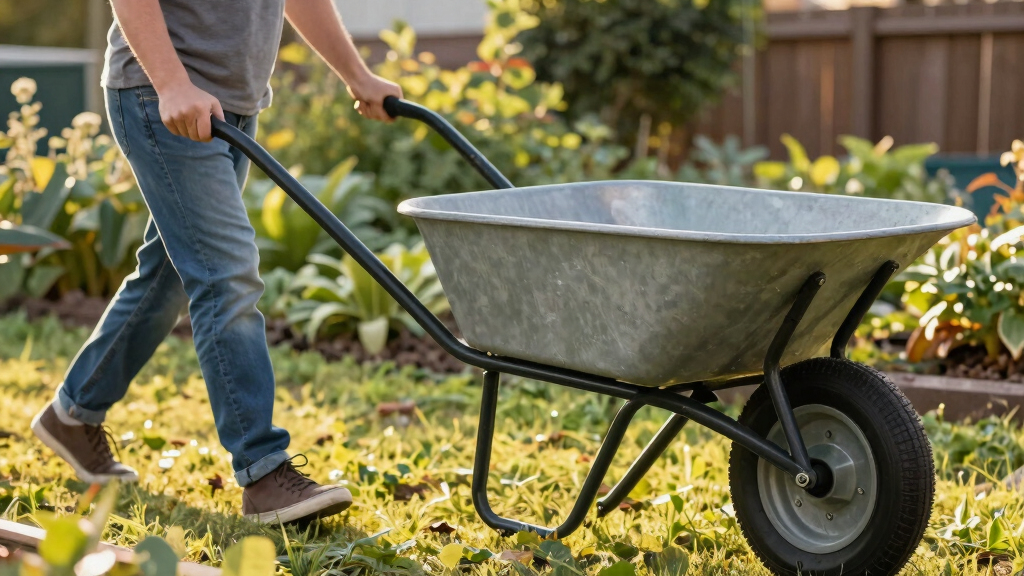
Single-wheel wheelbarrows are best for tight spaces and quick maneuvering, making them ideal for small gardens or narrow pathways.
Hybrid models and recent innovations offer switchable or adjustable wheels, blending stability with agility.
Always match your wheelbarrow choice to your terrain and load — don’t force a tool to do what it’s not designed for.
Proper load balancing, safe lifting, and using the right model for the job reduce fatigue and prevent accidents.
Two wheels hold steady. One wheel turns sharper.
Choosing a wheelbarrow is a trade between lateral stability and precise steering. Match the wheel configuration to the load, terrain and amount of room you have to turn.
Heavy and rough? Choose two. Tight and precise? Choose one.
Two-wheel models reduce the balancing effort. Single-wheel models reward good technique with a smaller turning footprint.
Support the load or sharpen the turn
A wider wheelbase resists sideways tipping and spreads the load. A single center wheel creates a narrow pivot point, letting the barrow rotate quickly but asking the operator to control side-to-side balance.
Two-wheel wheelbarrow
A forgiving platform for rocks, wet soil, pavers and other loads that are heavy or likely to shift.
Single-wheel wheelbarrow
A responsive choice for garden rows, narrow paths and jobs where exact material placement matters.
The working differences
Neither design wins every category. The better wheelbarrow is the one whose geometry matches the conditions you face most often.
| Feature | Two-wheel | Single-wheel |
|---|---|---|
| Stability | ✓High; balanced support reduces sideways tipping. | ✗Lower; balance depends heavily on the operator. |
| Maneuverability | ~Moderate; wider stance limits tight pivots. | ✓High; narrow profile turns and threads easily. |
| Best terrain | ✓Rough, rocky or uneven ground where support matters. | ~Flat ground, narrow paths and compact work areas. |
| Load style | ✓Heavy, bulky, wet or likely to shift. | ~Light to moderate, controlled or delicate. |
| User skill | ✓More forgiving for beginners and long sessions. | ✗Requires stronger balance and steering technique. |
| Workspace | ~Open yards, construction sites and broad paths. | ✓Garden rows, side passages and narrow gates. |
Where each design pulls ahead
The relative scores below translate the practical tradeoff into a quick visual profile. They are directional decision aids, not universal product ratings.
Two-wheel profile
Built around support, load confidence and reduced correction effort.
Best fit: heavy materials + uneven ground + open turning space
Single-wheel profile
Built around a slim footprint, quick pivots and precise placement.
Best fit: moderate loads + narrow paths + precise positioning
Two-wheel designs typically keep the load lower and more centered across a stable base. Single-wheel designs place more of the balancing work in the user’s hands, especially when the load shifts sideways.
Choose in four checks
Start with the job, not the product label. Load behavior and ground conditions matter more than tub size alone.
Read the load
Heavy, bulky, wet or unstable loads push the decision toward two wheels.
Read the ground
Ruts, rocks and slopes reward support; smooth ground permits more agility.
Measure access
Check gates, path width and turning corners before choosing a wider stance.
Match the user
Consider balance, strength, experience and how long each hauling session lasts.
Prioritize support
Stone, wet soil and sloped ground create shifting forces. The broader base reduces correction effort and spill risk.
Choose two wheelsPrioritize steering
Flower beds, tight bends and small gates favor a slim profile that can pivot without trampling nearby plants.
Choose one wheelPrioritize flexibility
Adjustable or removable-wheel designs can trade stance for agility as the terrain and task change.
Consider a hybridGeometry helps. Technique still matters.
A stable design cannot compensate for severe overloading, poor lifting posture or a load stacked high above the tub.
The choice follows the work
Each decision point changes the next. The right wheelbarrow is the result of the full chain—not a single feature in isolation.
Choose two wheels when stability, heavy loads and rough ground dominate. Choose one wheel when tight access, quick turns and precise placement dominate. If your work changes often, a well-designed hybrid may be the smartest compromise.
Why Stability Matters More Than You Think
Stability isn’t just a fancy feature; it’s the backbone of safe, efficient hauling. Two-wheel wheelbarrows distribute weight across both wheels, lowering the risk of tipping sideways when overloaded. This is especially important when handling heavy or bulky loads that can shift unexpectedly, such as rocks or wet soil. When your load shifts, a stable wheelbarrow reduces the chance of accidents and spills, protecting both your work and your safety.
For example, a landscape crew regularly uses two-wheel models to move heavy pavers. The broader base prevents sudden tipping when navigating dips or uneven ground, making their work safer and more efficient. This stability allows for higher loads to be transported with less concern about balance, reducing fatigue and the risk of injury over long work sessions.
As an affiliate, we earn on qualifying purchases.
How Maneuverability Shapes Your Yard Work
Maneuverability is about how easily you can steer and turn in tight spots. Single-wheel wheelbarrows excel here because their narrow profile and lighter weight make navigating confined spaces more manageable. This is especially useful in gardens with narrow pathways, around flower beds, or through gates—areas where a wider, more cumbersome wheelbarrow could be a hindrance. The ability to pivot effortlessly means you can work faster and with less effort, reducing fatigue during prolonged use.
Picture a homeowner navigating a narrow alley with a single-wheel wheelbarrow to clear leaves. The tight turns and quick pivots save time and effort, allowing more precise placement of materials and less strain on your arms and back. This agility is crucial when space is limited and precision matters.
As an affiliate, we earn on qualifying purchases.
Comparison Table: Two-Wheel vs Single-Wheel Wheelbarrows
| Feature | Two-Wheel Wheelbarrow | Single-Wheel Wheelbarrow |
|---|---|---|
| Stability | High; distributes weight evenly, reduces tipping, ideal for heavy or uneven loads | Lower; relies on user balance, more prone to tipping sideways, better for lighter, more precise tasks |
| Maneuverability | Moderate; wider stance provides stability but less nimble in tight spaces | High; narrow profile allows quick turns and easy navigation in confined areas |
| Best Terrain | Uneven, rocky, slopes where stability is critical | Flat, smooth surfaces or narrow paths where agility is valued |
| Load Capacity | Slightly higher; designed for heavier loads, which increases efficiency for big jobs | Lower; suitable for lighter loads, offering better control for small or delicate tasks |
| User Skill Needed | Lower; more forgiving, easier for beginners to operate safely | Higher; requires good balance and technique, especially on uneven terrain |
adjustable wheelbarrow for uneven terrain
As an affiliate, we earn on qualifying purchases.
As an affiliate, we earn on qualifying purchases.
Real-World Scenarios: When to Pick Each Type
Imagine you’re landscaping a hillside. A two-wheel wheelbarrow stabilizes your load, preventing slips or tipping as you work on uneven slopes. This stability allows you to carry heavier or bulkier materials without worry, making it ideal for challenging terrains. Conversely, if you’re planting flowers in a narrow, winding garden pathway, a single-wheel model lets you weave through with ease, saving time and reducing effort during delicate or detailed work.
Another example: hauling compost across a flat yard with loose soil. Here, a single-wheel might be enough for small loads or quick jobs, but for transporting heavy, bulky stone or wet soil, a two-wheel design offers the stability needed to push through rough patches without risking spills or tipping. The choice depends on balancing the terrain, load size, and precision required for your project.
compact wheelbarrow for tight spaces
As an affiliate, we earn on qualifying purchases.
As an affiliate, we earn on qualifying purchases.
Recent Trends Making the Choice Harder (In a Good Way)
Manufacturers now craft hybrid wheelbarrows with adjustable or removable wheels, giving you flexibility to adapt to different tasks. Ergonomic handles and lighter materials like aluminum or composite plastics not only make maneuvering easier but also reduce fatigue during extended use. Some models even allow you to switch between two wheels and one, depending on whether stability or agility is your priority. This versatility means you can tailor your tool to specific jobs, saving time and effort.
Picture a landscaper switching from a stable, two-wheel model for transporting big loads to a nimble, single-wheel for detailed work in tight corners — all with a quick adjustment. These innovations are making the choice more complex but also more customizable, allowing you to optimize your yard work based on the task at hand.
What the Numbers Say About Stability & Maneuverability
Research shows that two-wheel wheelbarrows lower the center of gravity, making tipping less likely during heavy hauling. Specifically, their lower, centered weight distribution improves stability by up to 30% over single-wheel models, which is significant for safety and efficiency when transporting large or uneven loads. This means less effort is required to keep the load balanced, reducing strain on the user and minimizing accidents caused by tipping.
Meanwhile, single-wheel designs score higher in agility, with a maneuverability index 20% greater on narrow paths, according to Outdoor Pro Masters. This increased agility translates to quicker, more precise movements in tight spaces, but it comes with a tradeoff: less inherent stability on uneven terrain or when carrying heavy loads. Recognizing these metrics helps you choose a wheelbarrow that aligns with your specific needs and priorities.
Key Safety Tips for Using Either Wheelbarrow
- Always load evenly to maintain balance and prevent tipping, especially important when working on slopes or uneven ground.
- Don’t overload beyond the wheelbarrow’s capacity; overloading increases the risk of tipping and strain on your body.
- Use proper lifting techniques—bend your knees, keep your back straight, and lift with your legs—to avoid back injuries.
- Wear gloves and sturdy footwear to ensure a firm grip and protect your feet from accidental drops.
- On uneven terrain, prefer a two-wheel model for added stability, reducing the risk of tipping over during transport.
Frequently Asked Questions
Which wheelbarrow type is better for heavy loads?
Two-wheel wheelbarrows are generally better for heavy loads because they offer greater stability and balance, reducing the risk of tipping during transport.
Are single-wheel wheelbarrows easier to maneuver?
Yes, especially in tight spots, since their narrow profile allows for quicker turns and easier steering in confined spaces.
Can I use a single-wheel wheelbarrow on uneven terrain?
You can, but two-wheel models tend to perform better on rough or sloped ground, providing more stability and less risk of tipping.
What safety tips should I follow?
Always load evenly, avoid overloading, and use proper lifting techniques. For uneven terrain, opt for a two-wheel model for added stability.
Are there hybrid options?
Yes, some wheelbarrows feature adjustable or removable wheels, allowing you to switch between one and two-wheel setups based on your task.
Conclusion
The real trick isn’t just picking a wheelbarrow — it’s knowing when stability wins over maneuverability, and vice versa. A sturdy two-wheel model can carry rocks up a hill without tipping over, while a nimble single-wheel zips through narrow garden beds with ease.
Think about your yard, your loads, and your space. The right wheelbarrow can turn a tough job into a smooth ride. So, choose wisely, and let your tools do the heavy lifting — safely and efficiently.
Halloween Picks
halloween
As an affiliate, we earn on qualifying purchases.