TL;DR

Get business pricing on tools and workshop supplies
- Business-only prices and quantity discounts
- Tax-exempt purchasing
- Multiple users, one account, clear invoices
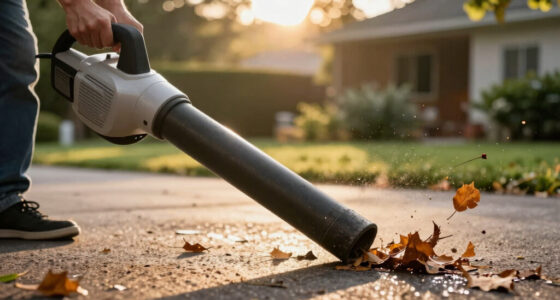
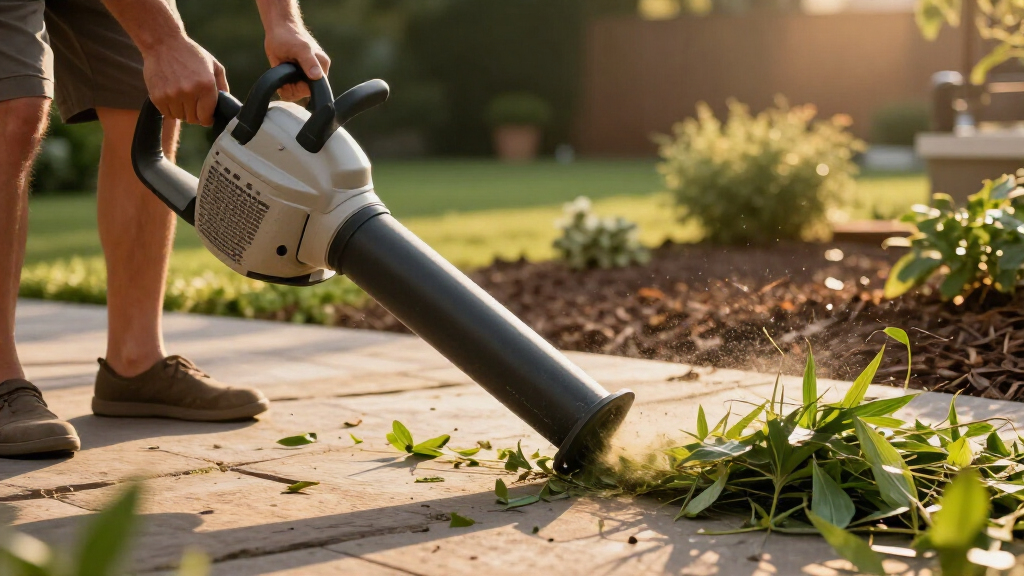
For blowing clippings off hardscape without filling your mulch beds, work from the bed edge toward an open collection area, use the lowest effective blower speed, and keep the nozzle aimed across the pavement rather than into the bed. Dry clippings, short sweeping passes, and a 2- to 3-foot buffer near loose mulch give you cleaner results with less rework.
Full throttle can turn five minutes of cleanup into twenty. One hard blast sends green clippings skittering across the driveway, but it can also fire shredded grass into your mulch beds, expose bare soil, and pepper low flowers with debris. The faster approach is controlled air, a planned route, and a place for the clippings to land.
Hardscape means the solid surfaces around your property: concrete walks, paver patios, asphalt drives, stone paths, and curbs. This guide gives you a practical overview of the route, nozzle position, equipment settings, and timing that keep those surfaces clean without filling nearby beds. You will also learn when a blower is the wrong tool.
The method works on a narrow suburban walkway and on a long drive beside several acres of lawn. The scale changes, but the principle stays put: move debris in stages, like sweeping sawdust into a tidy pile instead of throwing it across the shop. According to Outdoor Pro Masters [1], variable airflow, a focused nozzle, dry debris, and regular cleanup give you better control while reducing disturbance around plants.
Create a 2- to 3-foot low-power buffer beside every mulch bed before using stronger airflow on open pavement.
Hold the nozzle about 6 to 12 inches above the hardscape and aim across the surface at a shallow 20- to 30-degree angle.
Start near 30% to 50% trigger and add power only when the clippings fail to move; full output is rarely needed beside loose mulch.
Work with dry clippings and a helpful breeze, then guide debris toward one lawn, compost, or collection area.
Switch to a broom, vacuum, or hand rake when wet debris, tight spaces, or delicate plantings leave no safe discharge route.
Blowing Clippings Off Hardscape Without Filling Your Mulch Beds
Direction beats raw power. Clear the vulnerable edge first, move dry clippings toward open pavement, then guide them to one deliberate landing zone. A controlled route protects mulch, flowers, soil, and your cleanup time.
The five-pass cleanup route
Work from the bed edge toward open pavement, then advance from the far end toward lawn, compost, or a collection pile.
Pick the landing zone
Choose turf, compost, or one pavement collection point. Avoid doors, vehicles, roads, drains, and neighboring property.
Clear the bed edge
Stand so air travels nearly parallel to the border. Use short trigger taps to separate grass from mulch.
Open the buffer
Nudge clippings 2 to 3 feet into the hardscape before increasing airflow. This becomes the safety lane.
Work from the far end
Use overlapping 2- to 3-foot arcs. Move debris a few feet per pass instead of scattering it in one blast.
Collect, then edge
Disperse light grass thinly on turf or collect heavy material. Finish with one low-speed border pass.
Aim like a putter, not a driver
A shallow, glancing stream rolls clippings across pavement. A steep blast makes them bounce, swirl, and leap over edging.
Nozzle geometry
above surface
Point across the hardscape—not down into joints and never toward the mulch. Lift the tube or reduce power if bark flutters or bed dust rises.
Three power zones
Start near 30% to 50% trigger. Add power only when the clippings fail to move. Full throttle beside loose mulch usually creates more work than it saves.
Equipment fit at a glance
Variable airflow matters more than headline power. CFM measures air volume; MPH measures nozzle airspeed. Neither replaces throttle control.
| Equipment | Control near beds | Best fit | Main tradeoff |
|---|---|---|---|
| Battery blower | Small and medium properties; quick cleanup | Runtime falls quickly at sustained high output | |
| Corded electric | Patios and short walks near an outlet | Cord catches on edging, pots, and shrubs | |
| Gas handheld | Larger properties and longer sessions | Noise, exhaust, maintenance, and easy overkill | |
| Backpack blower | Long drives, large lots, and acreage | High airflow can strip mulch or scatter gravel | |
| Blower-vacuum | Courtyards, corners, and tight planting beds | Slower pace and a bag that requires emptying |
Concentrator nozzles improve precision on damp clumps and paver joints, but the narrow jet can also trench loose mulch. Keep the nozzle moving and test it on open pavement first.
Sometimes the blower is the wrong tool
If there is no safe discharge route, controlled manual cleanup is faster than repairing a disturbed bed afterward.
Use a broom
Wet clippings stick to pavement and demand excessive airflow. Sweep them into a compact pile for compost or collection.
Use a vacuum
Courtyards, corners, pots, and narrow planting gaps may offer nowhere safe to blow. Capture debris at the source.
Use a hand rake
Fresh soil, seedlings, low flowers, bark fines, and lightweight mulch need gentle removal rather than concentrated air.
The chain that prevents rework
Dry material, restrained airflow, and a planned destination turn cleanup into one continuous movement.
Use This Five-Pass Route to Keep Clippings Out of the Beds
Blowing Clippings Off Hardscape Without Filling Your Mulch Beds is easiest when you clear the vulnerable edges first, move the debris toward open pavement, and finish at one collection point. Use low power near mulch, then increase airflow only after the clippings sit several feet from plants and loose bark.
- Pick a landing zone. Choose lawn, a compost pile, or a small collection spot on the pavement. Do not aim toward a street, storm drain, parked vehicle, doorway, or neighboring property.
- Clear the bed edge. Stand so the blower air travels almost parallel to the border. Use short trigger taps to peel clippings away from the mulch without lifting bark chips.
- Open a buffer. Move the debris at least 2 to 3 feet into the hardscape. That strip becomes your safety lane when you use more air.
- Work from the far end. Walk toward the landing zone with controlled, overlapping sweeps. Each pass should move the clippings a few feet, not scatter them across the property.
- Collect or disperse responsibly. Blow light clippings onto turf in a thin layer, or gather heavy, wet material for compost. Finish with one low-speed pass along the edge.
Suppose you have a 40-foot paver walk with shredded hardwood mulch on one side and lawn on the other. Start at the end farthest from the compost bin, nudge the grass toward the middle, then guide it down the walk in small waves. The clippings move like a shallow tide, while the brown mulch stays flat and quiet.
This route feels slower during the first minute because you are not squeezing the trigger to the stop. It saves time at the end, when you would otherwise be picking lime-green strands from black mulch by hand. Direction beats raw power; you are steering debris, not testing the blower.
Never blow clippings into a road or storm drain. Wet grass can create a slick surface for bicycles and motorcycles, while material entering a drain may add to blockages and carry lawn residue into local waterways.
Popular right now

Dyson V8 Cordless Vacuum

Dyson V8 Cyclone Cordless Vacuum

Ninja Foodi 10-Qt DualZone Smart XL Air Fryer, 6-in-1, DZ550
As an affiliate, we earn on qualifying purchases.
Choose the Right Airflow Without Getting Fooled by Big Specs
Blowing Clippings Off Hardscape Without Filling Your Mulch Beds calls for variable control more than maximum output. Start near 30% to 50% trigger, raise the setting only when debris refuses to move, and save full power for open pavement well away from bark, gravel, flowers, and freshly planted soil.
| Equipment choice | Control near beds | Best fit | Main tradeoff |
|---|---|---|---|
| Battery blower | Usually strong with a variable trigger | Small and medium properties, quick cleanup | Runtime drops quickly at sustained high output |
| Corded electric blower | Good when variable speed is provided | Patios and short walks near an outlet | The cord catches on edging, pots, and shrubs |
| Gas handheld blower | Model-dependent; often powerful | Larger properties and longer sessions | More noise, exhaust, fuel care, and easy overkill |
| Backpack blower | Good with a responsive throttle and practice | Long drives, large lots, and acreage | High airflow can strip mulch or scatter gravel fast |
| Blower-vacuum | Very precise when used as a vacuum | Courtyards, corners, and tight planting beds | Slower work and a bag that needs emptying |
CFM describes the volume of air the blower moves, while MPH describes airspeed at the nozzle. Think of CFM as the width of a river and MPH as the current: a wide, fast river moves a lot, but you rarely need all of it beside featherweight mulch. Ignore PSI here; pressure-washer ratings do not tell you how a leaf blower handles clippings.
On a 600-square-foot patio, a battery blower may finish a light cleanup on one charge because you spend most of the job below full trigger. A backpack gas unit makes more sense on a half-mile drive after mowing several acres, but its extra muscle demands a careful throttle hand near beds. Battery tools offer quiet starts and fine control; gas tools give long refueling-based runtimes but bring exhaust, vibration, and more maintenance.
A concentrator nozzle can sharpen the air stream, which helps with damp clumps stuck between pavers. That same narrow jet can carve a trench through loose mulch. Use the nozzle as a precision tool, keep it moving, and test the setting on an open patch before approaching flowers.
Aim the Nozzle This Way for Cleaner Edges in One Pass
Blowing Clippings Off Hardscape Without Filling Your Mulch Beds depends on aiming the nozzle across the pavement, not straight down or toward the border. Hold the tip roughly 6 to 12 inches above the surface, angle it about 20 to 30 degrees, and adjust after watching the first few clippings move.
Your air stream acts like a putter, not a driver. A low, glancing pass rolls the clippings toward your target, while a steep blast makes them bounce, swirl, and leap over edging. If the mulch begins to flutter or you see dust rise from the bed, lift the nozzle, reduce power, or step farther back.
Take a common front-entry setup: a 4-foot concrete walk bordered by black-dyed mulch and small hostas. Stand near the bed with your shoulders facing down the walk, then sweep the tube toward the open concrete at a shallow angle. Once the clippings reach the center, change your stance and move them toward the lawn.
Use compact arcs about 2 to 3 feet wide. Huge windshield-wiper swings waste air beyond the debris and can send clippings behind you, where they settle into the bed you just cleaned. Overlap each arc slightly, much like mowing stripes, so you do not leave thin green lines in control joints.
Watch the debris, not the nozzle. Dry grass should slide in a loose ribbon; spinning clippings mean turbulent air is hitting a wall, planter, step, or opposing breeze. Move your body to change the airflow path instead of twisting your wrists into an awkward position. That small habit improves accuracy and cuts fatigue during a long cleanup.
Pick the Right Time and Let Dry Clippings Do Half the Work
Dry, calm conditions make clippings easier to steer because the pieces stay light and separate rather than sticking in heavy green mats. Clean up soon after mowing, wait for surface moisture to evaporate, and work when the breeze helps carry debris toward your chosen landing zone instead of your mulch beds.
Wet clippings behave like chopped spinach. They cling to textured concrete, pack into paver joints, and demand more air, which increases the chance of shifting mulch. If rain soaked the property overnight, give a sunny walkway an hour or two to dry before reaching for the blower.
Wind changes the route. A steady breeze blowing from the bed toward the lawn is free labor, while a crosswind beside a narrow walkway can undo every pass. For example, if a 10 mph breeze keeps pushing grass into a rose bed, postpone the job or use a broom and dustpan along that exposed edge.
Frequency matters too. A thin dusting after each mow takes a few low-power passes; three weeks of clippings, leaves, seed heads, and grit form a gritty blanket that needs more force. During fast spring growth, a five-minute cleanup after mowing often prevents a much messier half-hour job later.
Morning work can keep noise away from the hottest part of the day, but dew may ruin your control. Late afternoon often gives you drier pavement and softer wind. Local noise rules may limit operating hours, so check your municipality or homeowners association before running gas equipment early or late.
Build a Buffer That Stops Mulch From Becoming Airborne
A clean 2- to 3-foot working buffer, firm edging, and settled mulch give you room to redirect clippings before stronger airflow reaches the bed. Keep loose mulch slightly below the hardscape edge, repair gaps in borders, and reduce blower power whenever bark chips begin moving. The bed should remain still while the grass travels.
Edging works as a curb for lightweight debris. Steel, aluminum, stone, or properly installed plastic edging can interrupt a low air stream, but it cannot stop a full-power blast aimed directly at the bed. A border is a seat belt, not permission to drive carelessly.
Imagine a patio with fresh 2-inch bark nuggets sitting level with the pavers. Even a modest gust can roll those nuggets onto the patio because the material has not knitted together. Rake the mulch back about an inch from the edge, leave its surface slightly lower than the pavers, and use trigger taps until rain and time settle it.
Temporary barriers help around seedlings, annual flowers, and newly mulched corners. Place a wide piece of cardboard or a lightweight garden screen along the edge, clear the nearby pavement on low power, then remove the barrier. Hold or weight it securely; a loose sheet can become a sail and strike plants, windows, or you.
Grass clippings in small amounts are not poison, but thick wet deposits can mat around low plants, hold moisture against stems, and block light from groundcovers. That green felt also looks rough against rich brown mulch. If clippings enter the bed, let them dry and lift them with a small rake or gloved hands instead of blasting the bed and scattering mulch deeper into the shrubs.
Know When a Broom or Vacuum Will Beat the Blower
A blower is not the best choice when clippings are wet, the walkway is narrow, loose mulch sits level with the pavement, or delicate plants crowd the edge. In those cases, use a stiff broom, leaf vacuum, hand rake, or dustpan. A slower tool can finish the whole job faster by preventing repeated cleanup.
- Use a broom for damp grass on concrete, steps, and tight courtyards.
- Use a leaf vacuum where there is no safe direction for discharged debris.
- Use a hand rake for clippings already mixed into mulch or low groundcover.
- Use a tarp as a collection point when the volume is too heavy to disperse thinly on turf.
- Use a blower for dry, loose material with a clear route and enough open pavement for control.
A townhouse courtyard shows the difference. The pavers may sit between a cedar-mulch bed, a glass door, outdoor furniture, and a neighbor’s fence. Air has nowhere useful to go, so a three-minute broom-and-dustpan cleanup beats ten minutes of chasing clippings in circles.
Wear safety glasses, sturdy shoes, and hearing protection when the equipment and exposure call for it. Check the blower’s rated sound level and your manual; according to NIOSH [2], occupational noise exposure should stay below an average of 85 dBA over eight hours. Keep people and pets clear because grit, twigs, and small stones can leave the nozzle fast enough to injure eyes.
Never point the tube at people, pets, vehicles, open windows, HVAC equipment, or electrical panels. Stop the machine and disconnect its battery or spark-plug lead before clearing a jam, following the manufacturer’s procedure. If cleanup exposes damaged outdoor wiring, lighting, gas equipment, unstable masonry, or structural defects, keep clear and call a licensed professional; do not use moving air to probe the problem.
The practical rule is simple: choose the tool that gives you control over the debris from start to finish. Sometimes that means a powerful backpack blower across a long drive. Sometimes it means ten quiet strokes with a broom beside a flower bed.
Frequently Asked Questions
How do I blow grass clippings without moving the mulch?
Use the lowest effective speed, keep the nozzle about 6 to 12 inches high, and aim the airflow parallel to the bed edge. Move clippings 2 to 3 feet onto open pavement before applying more power.
Should I blow clippings toward the lawn or collect them?
Blow a light, dry layer onto healthy turf when the pieces can disappear between the grass blades. Collect thick, wet piles because they can form mats; send them to compost or handle them through your local yard-waste program.
Is a battery blower easier to control near mulch than a gas blower?
A battery blower often gives you responsive variable-speed control, quiet starts, and no exhaust, which suits frequent residential cleanup. A gas blower offers longer work periods through quick refueling, but its higher output can scatter mulch fast if the throttle response is coarse or your technique slips.
Can I use a leaf blower inside the mulch bed?
Avoid blowing directly inside a bed unless you use extremely low airflow on settled, heavy material. For grass wrapped around stems or mixed with loose bark, a small hand rake or gloved hand gives you better control and protects tender plants.
What should I do when clippings are stuck to wet concrete?
Let the surface dry when your schedule and weather allow, then try a concentrator nozzle at moderate speed. If the clumps stay put, use a stiff broom; forcing them loose with maximum airflow can throw grit and send the grass straight into nearby beds.
Conclusion
The habit to remember is edge first, power later. Clear a quiet buffer beside the mulch, watch how the first clippings move, and guide them across the hardscape in short stages. You will spend less battery runtime or fuel, kick up less dust, and avoid the tedious job of plucking grass from bark chips.
On your next mow, resist the urge to hit full throttle at the front walk. Start with a soft sweep and let the green ribbon slide toward open pavement. When the concrete is clean and the mulch still looks freshly raked, you will know the air went exactly where you wanted it.