
TL;DR

Get business pricing on tools and workshop supplies
- Business-only prices and quantity discounts
- Tax-exempt purchasing
- Multiple users, one account, clear invoices
Poly dump carts are lighter and rust-proof, great for wet environments. Steel carts handle heavier loads but require maintenance to prevent rust. Your choice depends on your specific hauling needs and conditions.
When it’s time to haul mulch, dirt, or debris around your property, the choice of a dump cart can feel like a puzzle. Do you go with the lightweight, rust-proof plastic, or the rugged, heavy-duty steel? Understanding how these materials stack up in terms of rust, weight, and payload can save you money and effort in the long run.
In this guide, you’ll see the real-world differences between poly and steel dump carts. Whether you’re a weekend warrior or managing a large acreage, knowing what makes each type tick helps you pick the best tool for the job — avoiding costly mistakes and unneeded hassle.
Poly carts are naturally rust-proof, making them ideal for humid or salty environments, with a lifespan often exceeding a decade.
Steel carts handle higher payloads and rougher materials but require regular rust prevention efforts.
Lighter poly carts are easier to maneuver, especially when fully loaded, reducing fatigue during yard work.
For heavy-duty applications, steel is the better choice, but it comes at a higher initial cost and maintenance effort.
Choosing the right cart depends on your specific needs: environment, load size, frequency of use, and budget.
Poly vs Steel Dump Carts: Rust, Weight and Payload
Poly carts trade maximum capacity for effortless handling and immunity to corrosion. Steel carts deliver serious hauling strength—but their weight and maintenance needs follow them everywhere.
Two materials, two very different strengths
Neither material wins every category. Poly prioritizes corrosion resistance and maneuverability; steel prioritizes load capacity and resistance to abrasive, dense debris.
Wet, humid or salty?
HDPE does not rust, making poly the low-maintenance choice around coastal air, rain, damp barns and wet garden material.
Rocks, bricks or soil?
Steel frames and beds tolerate high payloads and rough materials better, especially when hauling is frequent and demanding.
Push, lift or tow?
A lighter poly cart requires less effort to position, tip and transport, reducing fatigue across repeated trips.
| Decision factor | Poly cart | Steel cart | Practical winner |
|---|---|---|---|
| Rust resistance | ✓ Naturally rust-proof | ✗ Coating required | Poly |
| Empty weight | ✓ Often much lighter | ~ More stable, less nimble | Poly |
| Maximum payload | ~ 300–500 lb typical | ✓ 800–1,500 lb typical | Steel |
| Impact and abrasion | ~ Flexible, may gouge | ✓ Handles rough debris | Steel |
| Routine upkeep | ✓ Wash and store | ✗ Inspect and treat rust | Poly |
| Primary vulnerability | ~ UV and extreme cold | ~ Moisture and salt | Climate dependent |
Moisture changes the ownership equation
Rust is more than a cosmetic issue. Once corrosion penetrates a steel bed or frame, it can weaken load-bearing areas and shorten the cart’s safe working life.
Poly: corrosion is off the list
High-density polyethylene resists water and salt without paint, galvanization or repair. Modern UV-resistant and impact-modified materials also improve outdoor durability.
Steel: protection must stay intact
Paint, powder coating and galvanization delay corrosion, but scratches expose bare metal. Cleaning and prompt touch-ups are part of long-term ownership.
Remove soil and debris that can trap moisture against a steel bed.
Treat scratches, chipped coatings and early surface rust promptly.
Store steel dry; shade or cover poly to reduce long-term UV exposure.
Capacity only matters if you can control the load
Steel can carry far more, but its heavier starting weight adds effort before the first shovel lands. Poly offers less capacity with substantially easier handling.
Empty cart weight
Illustrative weights for similarly sized 10 cu. ft. carts
Typical payload ceiling
Model specifications vary; always follow the manufacturer’s rated limit
Match the cart to the material
Think about density and abrasion—not just how full the cart looks
A comparable steel cart may weigh more than twice as much when empty. On slopes or uneven ground, that difference affects stopping, turning and tipping as much as raw strength.
Choose from the work backward
A cart that fits your real loads and storage conditions will outlast a theoretically stronger cart that is difficult to use or maintain.
Check the climate
Frequent rain, humidity or salt exposure strongly favors corrosion-proof poly.
Name the load
Estimate the weight and abrasiveness of the densest material you regularly move.
Map the route
Consider slopes, soft ground, tight turns and whether the cart will be pushed or towed.
Price the upkeep
Include storage, coating repairs and the time required to keep steel corrosion-free.
Pick poly when…
You haul mulch, leaves, compost or moderate loads; work in wet conditions; value easy maneuvering; or want minimal maintenance.
Pick steel when…
You routinely move stone, dense soil, bricks or debris; need an 800–1,500 lb payload; and can keep the coating maintained.
Why Rust is a Big Deal for Your Dump Cart
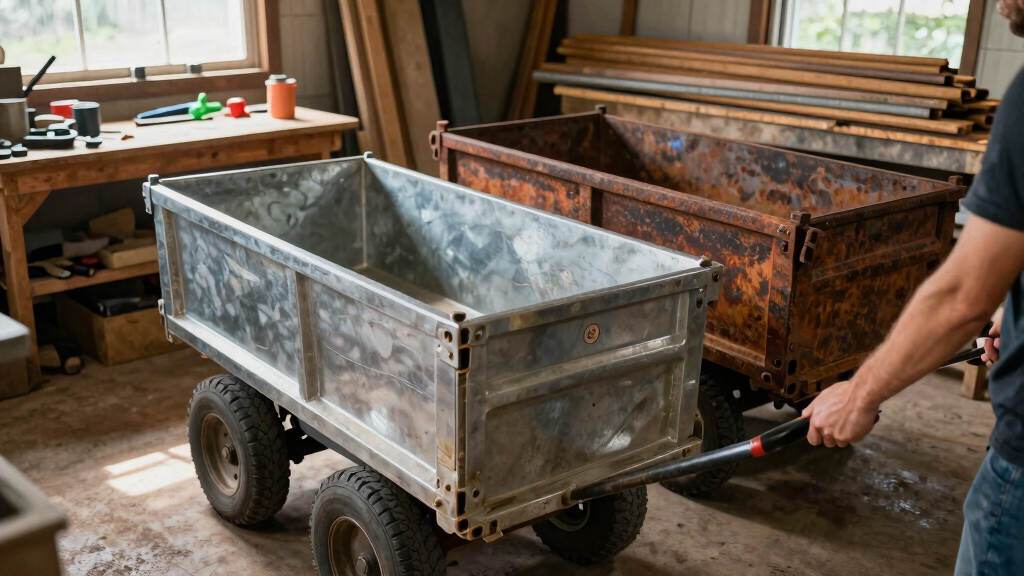
Rust is the enemy of steel dump carts. Over time, exposure to moisture causes the metal to corrode, weakening the structure and shortening its lifespan. Imagine a steel cart left outside in a damp barn for a few years — it can develop surface rust, and if untreated, rust can eat through the metal. This deterioration isn’t just cosmetic; it compromises the cart’s structural integrity, potentially leading to failure during heavy use. Regular maintenance like rust-proofing or painting can mitigate this but adds ongoing effort and costs.
Poly carts, on the other hand, don’t rust at all. They’re made from high-density polyethylene (HDPE) or similar plastics, which resist moisture entirely. This means they maintain their strength and appearance without the need for protective coatings or frequent repairs. In environments with high humidity, salt air, or frequent rain, poly carts stand out as more reliable and lower-maintenance options. The long-term implication is that poly carts can save you money and time, avoiding the hidden costs associated with rust repair and replacement. For example, on coastal properties, a poly cart remains unaffected by salt corrosion, whereas steel carts require diligent upkeep to prevent rust from compromising safety and lifespan.
As an affiliate, we earn on qualifying purchases.
Lighter Means Easier: How Weight Affects Your Load and Handling
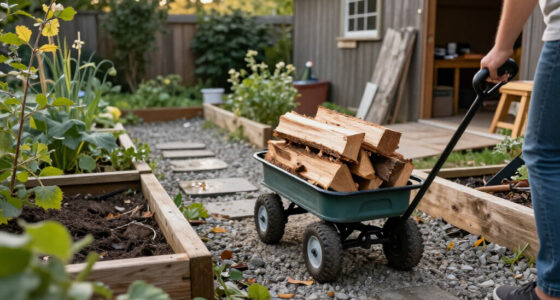
Poly dump carts are significantly lighter than steel, which isn’t just a convenience — it fundamentally changes how you interact with your tools. The lighter weight means less effort to maneuver, especially when the cart is full. For instance, a typical 10-cubic-foot poly cart weighing around 70 pounds allows a homeowner to push, pull, or even lift it into a truck bed with minimal strain. This ease of handling reduces physical fatigue, enabling longer work sessions without soreness or injury risk.
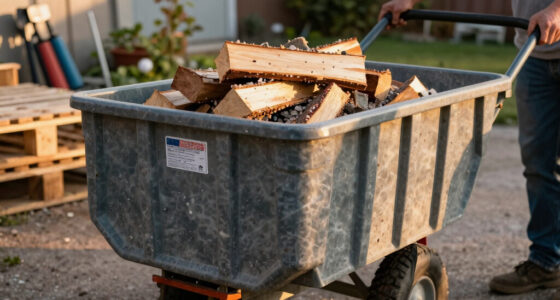
Conversely, a steel cart of the same size can weigh over 150 pounds. This extra weight means more physical effort to move, especially over uneven terrain or slopes common in yard work. It might require additional helpers or mechanical aids, increasing the time and labor involved. Moreover, the heavier weight can cause more strain on your body, particularly your back and knees, which could lead to injury over time.
The implications extend beyond individual convenience. When repeatedly hauling loads, lighter carts translate into faster turnaround times and less fatigue. For example, I’ve observed homeowners easily pushing a poly cart filled with garden waste from the backyard to the driveway, completing multiple trips in less time and with less effort. Steel carts, while more stable and sometimes more resistant to impacts, often demand more muscle power, which can limit productivity and increase physical wear. Therefore, if ease of movement and reducing physical strain are priorities, lighter poly carts offer a tangible advantage—especially for smaller property owners or those with limited strength.
As an affiliate, we earn on qualifying purchases.
Payload Capacity: How Much Can They Really Handle?
Payload capacity isn’t just a number; it reflects the practical limits of what a dump cart can safely carry without risking damage or accidents. Poly carts generally support 300 to 500 pounds, making them suitable for lighter, more frequent tasks like hauling mulch, leaves, or small debris. These capacities are sufficient for most homeowner needs and help prevent overloading, which can cause cracks or structural failure.
Steel carts, designed for heavy-duty use, support 800 pounds or more, making them ideal for demanding tasks such as moving bricks, dense soil, or concrete debris. The robust frame and thicker materials allow for these higher loads without compromising safety or integrity. However, the tradeoff is that steel carts are heavier, which can make them more cumbersome to handle when fully loaded.
Understanding these differences helps you match the cart to your specific tasks. For instance, a landscape contractor handling large, dense loads might prefer steel for its strength and capacity, knowing the extra effort is justified. On the other hand, a homeowner doing yard cleanup with lighter debris might find a poly cart sufficient and easier to operate. Here’s a quick comparison:
| Material | Typical Payload Capacity | Best For |
|---|---|---|
| Poly | 300-500 lbs | Light to medium tasks, wet environments |
| Steel | 800-1500 lbs | Heavy-duty, high-capacity hauling |
Choosing the right capacity involves considering your typical loads and safety margins. Overloading a poly cart can cause cracks or deformation, while underloading a steel cart might not justify its weight and cost. Recognizing these tradeoffs ensures you select a cart that balances capacity with longevity and ease of use.
As an affiliate, we earn on qualifying purchases.
Durability and Long-Term Use: Will It Last?
Steel carts are known for their robustness. When properly maintained, they resist punctures, dents, and impacts better than plastic, especially when handling rough materials like rocks or concrete debris. Their metal structure can withstand significant abuse, and with treatments like galvanization or painting, their lifespan can extend decades. However, this durability comes with the caveat that without regular rust-proofing, moisture exposure leads to corrosion, which can severely compromise the cart’s structural integrity over time. The tradeoff is that steel requires ongoing maintenance to keep it in prime condition, particularly in humid or rainy environments.
Poly carts, made from high-density plastics, are less prone to dents and cracks, thanks to their flexibility. They absorb impacts better, reducing repair needs. Nonetheless, UV exposure accelerates degradation of plastics, causing brittleness, fading, or cracking after several years—especially in sunny climates. Proper storage, such as keeping them indoors during winter or covering them, can extend their service life significantly. The key implication is that both materials can last a long time with proper care, but their vulnerabilities differ: steel needs rust prevention, while poly needs protection from sun and cold.
From a practical standpoint, if you live in a dry climate, steel can be a long-lasting, low-maintenance choice. In wetter or sunnier environments, poly may require more attentive storage, but it still offers a durable, corrosion-free alternative. Recognizing these longevity factors helps you plan maintenance routines and select a cart that will serve you well over the years.
As an affiliate, we earn on qualifying purchases.
Cost: How Much Will It Really Set You Back?
Poly dump carts are generally more budget-friendly, often priced between $150 and $300. This affordability makes them attractive for homeowners or those with lighter, infrequent hauling needs, as the initial investment is lower and maintenance costs minimal. Their lower cost also means that replacing a poly cart after several years is less financially burdensome, especially if stored properly and used within their capacity limits.
Steel carts tend to be pricier, with prices ranging from $300 to over $700. The higher cost reflects their heavy-duty construction, larger load capacity, and longevity potential. For professionals or those who require frequent, demanding hauling, this investment can translate into fewer replacements and lower long-term costs, despite the higher upfront expense. Moreover, steel carts often come with reinforced frames and additional features that justify their price for intensive use.
When evaluating costs, consider the long-term picture: a cheaper poly cart might need replacement sooner if overused or poorly stored, whereas a steel cart, though costly initially, can last many years with proper maintenance. Balancing initial price with expected lifespan and maintenance needs helps you make a more informed decision aligned with your budget and usage patterns.
Frequently Asked Questions
Which dump cart lasts longer: poly or steel?
Steel carts can last many years if properly maintained and stored in dry conditions. Poly carts also last a long time, but UV exposure can cause some plastics to degrade over time. Overall, both can serve well with proper care, but steel tends to be more durable long-term if rust is managed.
Are poly dump carts strong enough for heavy loads?
High-quality poly carts can handle around 300-500 pounds comfortably. For extremely heavy loads, like bricks or dense soil, steel carts are more suitable because of their higher payload capacity and structural strength.
How do I keep my steel cart from rusting?
Regularly clean the cart to remove dirt and moisture. Applying a rust-resistant paint or galvanizing it helps protect the steel. Storing it in a dry, covered area during off-seasons also extends its life.
Is a lighter cart easier to move around?
Yes. Poly carts are significantly lighter than steel, making them easier to push, pull, and maneuver, especially when fully loaded. This can reduce fatigue and improve efficiency during yard work.
Which material is more eco-friendly?
Steel is generally more recyclable and environmentally friendly if recycled properly. Poly plastics are recyclable too, but their environmental impact depends on manufacturing and disposal practices. Consider local recycling options when making your choice.
Conclusion
When it comes down to it, your choice between poly and steel dump carts hinges on your yard’s environment and your workload. Want something light, rust-free, and easy to handle? Poly is your friend. Need serious capacity and durability? Steel has you covered.
Think about what matters most: ease or strength, cost or longevity. Pick wisely — your back, wallet, and yard will thank you.
Columbus Day / Indigenous Peoples' Day Picks
long weekend sales
As an affiliate, we earn on qualifying purchases.