
TL;DR

Get business pricing on tools and workshop supplies
- Business-only prices and quantity discounts
- Tax-exempt purchasing
- Multiple users, one account, clear invoices
Choose deck dimensions around your largest regular load, with room for ramps, attachments, and tie-downs. Axle ratings do not tell you how much cargo you can carry: calculate payload from GVWR minus empty trailer weight, then check tires, wheels, hitch, and tow-vehicle limits. A trailer works safely only when every part of the loaded setup stays within its rating.
A trailer that looks roomy in the driveway can turn into a cramped puzzle when you roll a mower onto it and discover the ramps leave no space for tie-downs. If you are buying a utility trailer for property work, start with the jobs you do most: moving brush across acreage, hauling mulch, carrying lumber, or taking a compact tractor to another site.
This guide shows you how to choose deck size and read axle ratings without treating either number as the whole story. You will also see how GVWR, payload, tires, hitch limits, and tongue weight fit together, so the trailer you choose can make it easier to move equipment and supplies without asking your tow vehicle or trailer to do more than it is rated for.
Measure your largest regular machine with attachments, fenders, ramps, and tie-down space in mind; verify usable deck dimensions.
Calculate rated payload as GVWR minus empty trailer weight, then check whether tires, wheels, coupler, frame, hitch, or tow vehicle impose a lower limit.
Do not treat tandem axles as double capacity; compare each trailer’s documented GVWR and component ratings.
Use roughly 10–15% of loaded trailer weight as a tongue-weight starting guideline only when it fits the manufacturers’ limits.
Check local brake and road requirements, tire pressure, lights, safety chains, and paperwork before hauling.
Choose for the load Check the whole setup
Match usable deck space to your regular equipment, then confirm every loaded component stays within its rating.
Size for real clearance
Measure the load, loading path, and tie-down room on the actual trailer.
Start with your largest regular load
Common lengths run about 8–20 feet. Check usable dimensions around fenders, rails, ramps, and attachments.
Consider sides and containment
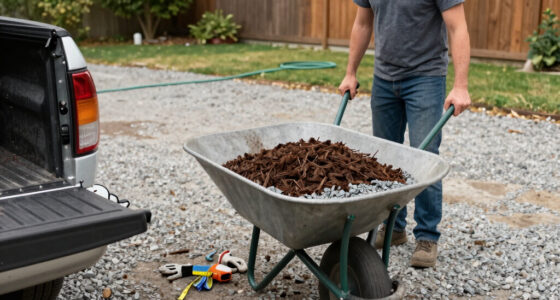
For brush or mulch, side height and mesh or solid sides may matter more than extra floor length.
Calculate rated payload
The trailer’s own weight counts against its GVWR.
Use the trailer data plate and manufacturer documentation.
3,500 lb GVWR minus 1,000 lb empty weight gives about 2,500 lb rated payload.
Tires, wheels, coupler, frame, hitch, and tow vehicle can lower the safe load.
Axle count is not capacity
Use documented ratings to compare trailers.
- Often found on smaller trailers
- Check its GVWR and component ratings
- Does not automatically double usable capacity
- Can add weight and maintenance needs
Match the towing setup
Keep both trailer and tow vehicle within their applicable ratings.
Choose deck dimensions around your largest regular load
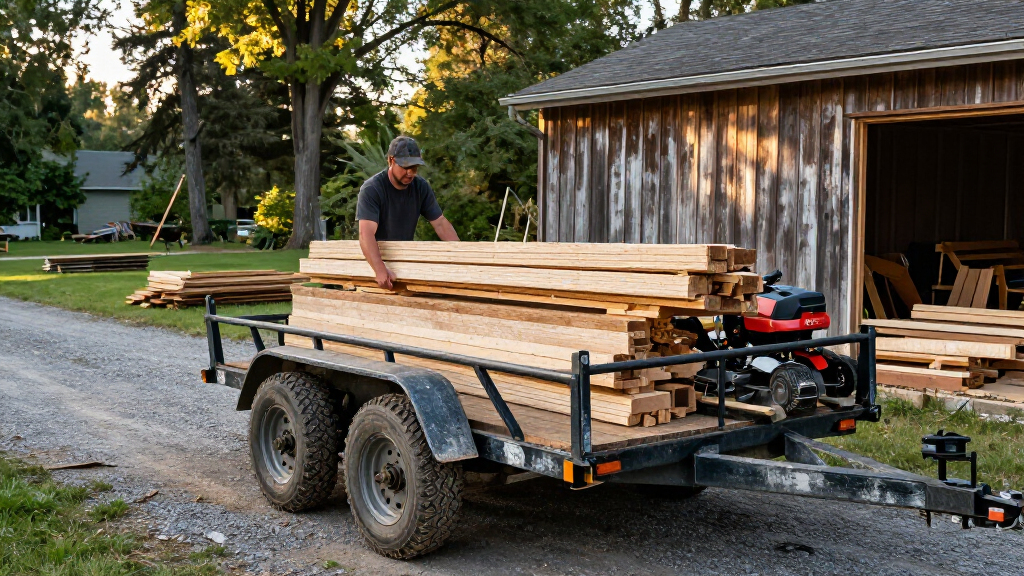
For property work, choose a deck that fits your largest regular item plus the room you need to load and secure it; common utility-trailer lengths run about 8 to 20 feet, with smaller single-axle models often near 4×8 or 5×8 feet. Those are starting points, not guarantees: check the usable deck dimensions on the actual trailer before buying.
Take a riding mower as an example. Its parked length may fit on a short deck, but a rear attachment, front bucket, loading ramps, and tie-down straps all take space. Measure the machine at its widest point, including tires or attachments, then allow room to position it so the load can be secured without straps rubbing sharp edges.
A wider or longer deck gives you options, but it also brings more trailer weight, a higher price, tougher storage, and more work in tight turns. That extra empty weight also uses some of the trailer’s GVWR, leaving less capacity for cargo; a larger deck can therefore solve a fit problem while creating a payload or towing problem. If your normal job is hauling a few bags of feed and a push mower around a small lot, a large deck may be dead weight. For a long board or a wide machine, check local rules for permitted dimensions, lighting, and load securement before taking it on the road.
Loose brush tells a different story. On a cleanup run after pruning, side height and a suitable mesh or solid side configuration may help more than an extra foot of floor length. Taller sides can contain bulky material, but they do not increase the trailer’s rated payload, and loose brush still needs to be contained and secured. Choose a deck for your usual work, then confirm that occasional oversized loads can travel legally and be secured properly.
Popular right now

De'Longhi Rivelia Fully Automatic Espresso Machine with Milk Frother, White

Dyson V15 Detect Cordless Vacuum

Dyson Cyclone V10 Origin Cordless Vacuum
As an affiliate, we earn on qualifying purchases.
Measure your equipment before you commit to a deck
A useful deck measurement includes the cargo’s footprint, loading path, and tie-down room; the manufacturer’s model name alone may not tell you how much usable width and length you have. Check clearances around fenders, gates, ramps, and any fixed rails, since each can reduce the space available to carry an object safely. A load that barely fits on paper may be difficult to position or secure in practice, and straps that cannot be routed cleanly can let equipment shift or put stress on the wrong points.
For example, a 5-foot-wide mower might not sit cleanly on a 5-foot-wide deck if the fenders intrude where its tires need to land. A compact tractor might fit when parked, yet leave no safe route for straps or room to lower an attachment. Measure from the outer edges that actually need to clear the trailer, not from a brochure photo.
Use this quick measuring routine before visiting a dealer:
- Measure the load at its widest and longest points, including attachments and anything that stays on during transport.
- Measure the loading setup, including ramp length, gate position, and the space needed to walk around and attach straps.
- Check clear deck space between fenders and rails, and compare it with the load’s measurements.
- Plan tie-down positions so straps can hold the machine securely without contacting hot, sharp, or moving parts.
That routine can expose a mismatch before money changes hands. If you haul a mower with a bagger only twice a year, you may decide to remove it for transport; if it stays attached every week, buy around its full footprint instead. The choice trades convenience against trailer size and cost: removing an occasional attachment may keep the trailer lighter and easier to store, while repeated removal can make a slightly larger usable deck worthwhile.
Read GVWR and payload before judging axle count
An axle rating is the load an axle is designed to support under specified conditions; it is not the trailer’s cargo capacity. The trailer’s GVWR is its maximum permitted loaded weight, and a practical payload estimate is GVWR minus empty trailer weight. A 3,500-pound GVWR trailer that weighs 1,000 pounds empty therefore has about 2,500 pounds of rated payload. This distinction matters because shopping from an axle figure alone can make a trailer sound capable of carrying more cargo than its complete rating allows.
That calculation includes more than the cargo itself. The trailer’s own weight counts against GVWR, so a load of soil, tools, or equipment cannot use the full GVWR as its allowance. If the trailer weighs 1,000 pounds and you load 2,500 pounds, the total is 3,500 pounds; there is no extra room for a heavier-than-expected attachment or supplies. A payload estimate is also only as useful as the empty-weight figure: optional sides, ramps, spare tires, and other installed equipment can change the actual starting weight. When the margin is small, verify the trailer’s weight instead of relying on a catalog estimate.
Now check the rest of the equipment. Tires, wheels, coupler, and frame can each have limits that are lower than the headline GVWR. Suppose the trailer’s paperwork permits a certain loaded weight but a tire’s load rating is lower for the way it is configured; that lower component limit can constrain the safe setup. Read the data plate and manufacturer documentation, and inspect the ratings on the components themselves. The practical limit is the lowest applicable rating, because exceeding even one component’s limit can compromise the whole setup.
Keep a simple load note for recurring jobs. A mower, fuel, ramps, tools, and a few bags of seed add up faster than a single item’s advertised weight suggests. Weighing the empty trailer and a loaded setup can replace rough guesses with useful numbers, especially when your work changes from a light brush run to hauling equipment. That record helps you see whether a routine load leaves room for small additions or already uses nearly all available payload.
Compare single and tandem axles by the rated trailer
A single axle is often lighter and simpler for smaller loads, while tandem axles are common on larger or higher-rated trailers; neither axle count tells you usable payload by itself. The GVWR and component ratings decide the limit, so confirm them on the data plate instead of assuming two axles automatically mean twice the capacity. Tandem models add tires, wheels, brakes, and maintenance points, and their extra weight can reduce payload if the GVWR does not rise enough to offset it.
Consider a property owner who mostly moves a walk-behind mower, compost, and hand tools on narrow paths. A smaller single-axle trailer may be easier to store and maneuver. Someone moving a heavier mower or compact tractor over longer routes might find a properly rated tandem model suits the load and may offer more stability or redundancy in some situations—but the additional axle also adds weight and maintenance needs. The better fit depends on the particular trailer: a tandem layout can distribute load across more tires, but it does not make an overloaded trailer safe or compensate for a tow vehicle that is undersized.
| Feature | Single axle | Tandem axle |
|---|---|---|
| Common fit | Smaller trailers and lighter work | Larger or higher-rated trailers |
| Weight and upkeep | Often lighter and simpler | More components and maintenance |
| Capacity check | Read the trailer’s GVWR and all component ratings | Read the trailer’s GVWR and all component ratings |
| Buying question | Does the rated payload cover your loaded job? | Does this particular model’s rating cover your loaded job? |
Axles act like the trailer’s legs, but legs do not set the load limit alone; tires, wheels, frame, and hitch must carry their share too. Compare the rating and empty weight of specific trailers. If two axles appeal because your work involves heavy equipment, check the documented capacity and the maintenance requirements rather than shopping by axle count. For lighter, frequent trips on tight property roads, the simpler model may be easier to handle; for heavier loads, the documented ratings and braking equipment matter more than the axle layout’s appearance.
Match trailer capacity to your vehicle, hitch, and tongue weight
A trailer is only a safe match when the loaded trailer and its hitch load stay within the limits of the tow vehicle, hitch, ball, and trailer. Check the vehicle’s towing and payload limits as well as the hitch rating and tongue-weight limits. A vehicle’s ability to pull a trailer does not automatically mean it can carry the downward force placed on its rear end. Towing capacity concerns the load being pulled, while vehicle payload must also accommodate tongue weight plus occupants and anything else carried in the vehicle.
Tongue weight is the downward force the loaded trailer puts on the hitch; a common starting guideline is roughly 10–15% of loaded trailer weight, subject to the vehicle and trailer manufacturers’ guidance. For instance, a 3,000-pound loaded trailer would call for roughly 300–450 pounds at the tongue under that guideline. Keep within the actual ratings, which can set a tighter limit. That force uses part of the tow vehicle’s payload allowance, so a vehicle that can pull the trailer may still exceed its payload or rear-axle limit once people, cargo, and tongue weight are counted together.
Load placement changes how the trailer behaves. If you stack dense pavers behind the axle, the tongue can become too light and the trailer may sway; push too much weight forward and you may overload the hitch or the tow vehicle’s rear axle. Put heavy items low and secure them, then balance the load according to manufacturer instructions. On a sloped gravel drive, a poorly balanced trailer can feel especially unsettled as you pull away. Repositioning cargo can correct balance, but it cannot raise the ratings of the vehicle or trailer.
Before a trip, confirm that the trailer is attached correctly and the safety chains, lights, and any fitted breakaway system are in good condition. If your work involves a heavy load and the setup’s limits are unclear, consult the vehicle and trailer documentation or a qualified trailer professional before towing. The time spent checking each limit can prevent a setup that appears to have adequate towing capacity from exceeding a smaller payload, axle, or hitch limit.
Check brakes, tires, and paperwork before the first haul
Brakes, tires, and required equipment help determine whether the trailer is ready for the road; the exact brake rules depend on your jurisdiction and trailer weight. Check local requirements and the manufacturer’s instructions before you buy or tow. If the trailer needs a brake controller or other vehicle equipment, confirm that your tow vehicle has the right setup. These checks matter both for legal compliance and for control: a heavier trailer takes more effort and distance to stop, especially on a slope or in poor conditions.
A small detail can change a trip. A trailer may have a load rating that looks adequate, yet tires with the wrong rating or inflation pressure can limit what you can safely carry. Verify the tire load rating and specified pressure, wheel rating, bearing condition, lighting, safety chains, and the breakaway system if fitted. Keep the tires at the manufacturer’s stated pressure, not a guess based on how firm they look. Incorrect pressure can affect heat buildup and tire performance under load, while neglected bearings or lights can turn a routine haul into a roadside problem.
Paperwork matters too. Confirm the data plate and manufacturer documents show the trailer’s GVWR and empty weight, and check that the advertised deck dimensions match the clear space you measured. Features such as LED lights, corrosion-resistant finishes, modular sides, integrated tie-downs, and different ramp arrangements can improve daily use or longevity, but they do not change the official ratings. A practical feature may save setup time or help the trailer last longer; it cannot substitute for enough rated payload or compatible tow equipment.
Picture a damp autumn cleanup: wet leaves, muddy ramps, and an afternoon departure. A working light connection, properly inflated tires, and secure chains matter more than a shiny finish. Add registration and local rules to your buying checklist, and ask a qualified trailer professional if the ratings or equipment requirements do not match what you plan to haul.
Use a buying checklist that matches your actual property work
The best trailer for your property is the one whose usable deck and complete ratings fit your regular loads, tow vehicle, storage space, and routes. Write down your heaviest likely load before you shop, including fuel, attachments, ramps, and cargo. That single habit makes dealer comparisons clearer than choosing by the largest-looking deck or the axle count. It also gives you a basis for comparing tradeoffs: a bigger trailer may be more convenient for equipment, but its extra weight, cost, and storage needs should earn their place in your regular work.
Suppose you maintain a two-acre property and move a riding mower, hedge trimmer, and occasional bags of mulch. Your typical load may call for a modest trailer; an annual project with a compact tractor could point to a different capacity or a different transport plan. Include the jobs you truly expect, but do not let a rare, oversized load persuade you to tow beyond a vehicle’s rating every week. If that one project does not fit your regular trailer, renting or arranging separate transport may be simpler than carrying the cost and weight of a larger trailer year-round.
- Load: Estimate the weight of your heaviest likely cargo, including attachments and fuel.
- Space: Check clear deck dimensions, fender clearance, ramps, gates, and tie-down locations.
- Capacity: Compare empty weight, GVWR, payload, axle, tire, wheel, coupler, and frame limits.
- Towing: Check towing, payload, hitch, ball, and tongue-weight limits for your vehicle.
- Use: Consider storage, route conditions, maintenance, registration, and local rules.
Ask for documentation when a sales description says a trailer is “heavy duty” or gives only an axle figure. If the usual job fits a lighter model, that can mean simpler handling and storage. If your loads push the limits, step back and confirm the full setup on paper before you buy. The goal is a trailer with enough margin for the real load and its small additions, without paying to tow and store capacity your property work rarely uses.
Frequently Asked Questions
What size utility trailer do I need for property work?
Start with the largest item you expect to haul, then allow room for attachments, ramps, and secure tie-downs. Check the trailer’s usable deck dimensions and confirm its payload and component ratings fit the loaded weight.
Does a 3,500-pound axle mean I can carry 3,500 pounds of cargo?
No. An axle rating is not cargo payload, and the trailer’s GVWR includes the trailer itself. A trailer with a 3,500-pound GVWR weighing 1,000 pounds empty has about 2,500 pounds of rated payload, subject to lower limits elsewhere in the setup.
Is a single-axle or tandem-axle trailer better?
A single axle is often lighter and simpler for smaller loads, while tandem axles are common on larger or higher-rated trailers. Choose by the specific trailer’s GVWR, component ratings, loaded weight, and towing setup; axle count alone does not establish capacity.
How much tongue weight should a utility trailer have?
A common starting guideline is roughly 10–15% of the loaded trailer weight, but the trailer and vehicle manufacturers’ instructions and ratings control. Poor load balance can contribute to sway or put too much downward force on the hitch or rear axle.
Do I need trailer brakes for property work?
Brake requirements vary by jurisdiction and trailer weight. Check local rules and manufacturer instructions, and make sure your tow vehicle has the required controller or other equipment if the trailer uses brakes.
Can I haul a mower, ATV, or compact tractor?
Often, if the deck dimensions, ramp capacity, trailer ratings, and tow vehicle limits fit the machine and its load. Count attachments and fluids, plan safe tie-down positions, and confirm the complete loaded setup stays within its ratings.
Conclusion
Choose by measured cargo and the lowest applicable rating across the trailer and tow vehicle. The right deck gives your mower or materials room to load and tie down; the right capacity leaves room for the load without pushing a component past its limit.
Before you buy, write down the load, deck clearance, and ratings you need, then verify them on the trailer’s data plate and paperwork. A well-matched trailer should make a brush run feel routine, not like a balancing act on the road.