
TL;DR

Get business pricing on tools and workshop supplies
- Business-only prices and quantity discounts
- Tax-exempt purchasing
- Multiple users, one account, clear invoices
A dump cart has two separate limits: bed volume and rated weight. Bulky, light loads such as dry leaves usually fill the bed first; dense or wet loads such as gravel and soil can reach the weight rating while the bed still looks half-full. Estimate the load’s weight, check the manufacturer’s specifications, and haul smaller loads when material density or terrain is uncertain.
A dump cart can look half-empty and still be carrying too much. That happens when you load dense material such as wet soil or gravel: the weight limit can arrive long before the bed looks full.
To choose and use a cart well, you need to read two different capacity limits: bed volume and rated weight. This guide shows you how to tell which one you hit first, estimate a load without pretending material density is fixed, and account for tires, terrain, towing, and dumping. The practical rule is simple: the cart’s usable capacity depends on what you haul and where you haul it, not just the biggest number on the label.
Volume measures bed space; weight capacity is the manufacturer’s stated load limit. Check both ratings.
Dry leaves and other bulky, light materials usually fill the bed first; gravel, stone, and wet soil can hit the weight limit first.
Estimate load weight by multiplying loaded volume by the material’s weight per unit of volume, but account for moisture, compaction, and material variation.
A heaped or uneven load can exceed the stated bed volume and become unstable, even if the cart’s printed weight limit seems adequate.
Match the cart to the route and towing vehicle, and make smaller trips when material weight or handling is uncertain.
Know the Two Limits Before You Load the Bed
Dump cart ratings describe two separate limits: volume tells you how much space the bed holds, while weight tells you how heavy a load the manufacturer says it can carry. You need to check both, because one number cannot stand in for the other.
Volume usually appears in cubic feet, cubic yards, or gallons. Weight capacity usually appears in pounds. A cart listed as 10 cubic feet tells you about its bed space, not that it can safely carry 10 cubic feet of every material. That distinction is the whole game.
Think of the bed as a bucket and the weight rating as the strength of its handle. Dry leaves can fill the bucket while barely testing the handle; gravel can strain the handle when the bucket is nowhere near full. A gardener moving two loads of fallen leaves may run out of room first, while a property owner hauling wet soil may need to stop loading much earlier.
Check the specification sheet and manual rather than relying on a listing headline. Manufacturers do not all present capacity the same way, and there is no universal convention that makes every cart’s advertised number directly comparable. A useful set of dump cart ratings includes both the bed’s stated volume and its maximum rated load.
Popular right now

Vitamix 5200 Professional-Grade Blender, 64 oz. Container, Black

Dyson Airwrap i.d. Multi-Styler for Straight and Wavy Hair

De'Longhi Dinamica Plus Fully Automatic Espresso Machine
As an affiliate, we earn on qualifying purchases.
Find Out Which Limit You Hit First
Dump cart ratings tell you which limit you reach first only when you match the cart’s volume and weight limits to the material. Bulky, light material usually fills the bed first; dense or wet material usually hits the weight limit first. Estimate the load’s weight, then compare it with the cart’s stated rating.
The basic calculation is estimated load weight = volume loaded × material weight per unit of volume. If a material weighs 20 pounds per cubic foot and you load 5 cubic feet, the estimate is 100 pounds. Compare that estimate with the manufacturer’s weight limit. Treat this as a planning tool, not a promise: soil, mulch, and gravel vary with moisture, composition, and compaction.
Here is a practical example. Suppose your cart holds 10 cubic feet and has a 300-pound rating. A fluffy load of dry leaves may fill the bed without reaching 300 pounds. But if wet soil in that same amount weighs more than 300 pounds, the load is over the rating even though the bed is full only to its sides—or not even that full.
When you do not know a material’s density, weigh a representative sample or start with a smaller load and check how the cart behaves on the route. Unknown weight calls for less material, not a guess based on appearance. If you cannot estimate with confidence, make several trips rather than treating the bed’s volume as a weight gauge.
Compare Volume and Weight Before You Choose a Cart
Volume limits favor bulky loads, while weight limits matter most for dense loads. A side-by-side comparison makes the difference easier to spot: dry leaves take up room quickly, while stone and wet soil can put heavy strain on the cart before the bed looks full.
| Material or situation | Limit you are more likely to reach first | Why it matters in practice |
|---|---|---|
| Dry leaves or empty containers | Volume | Low-density items fill the bed before they reach the weight rating. |
| Dry mulch | Often volume | It can be bulky, but moisture and material type change its weight. |
| Wet soil | Weight | Water adds load; a partly filled bed can still be heavy. |
| Gravel, sand, or stone | Weight | Dense material can reach the rating well before the bed is full. |
| Firewood | Depends | Wood species, moisture, and the size of the pieces change both weight and packing. |
Consider two different capacity labels while shopping: one cart may advertise a large bed, while another highlights a high pound rating. Neither number alone tells you which cart fits your work. If you clear a few acres of leaves each fall, bed volume may save trips. If you move gravel for a path repair, a load’s weight and the cart’s frame, axle, and tires deserve more attention.
Also check what the listed volume measures. It may describe nominal bed dimensions rather than the amount you can load level with the sides. A mound over the rim adds material and raises the load, which can make it shift or tip. Compare the same kind of rating, and match it to the material you actually expect to move.
Read the Fine Print Behind the Capacity Number
A cart’s advertised capacity is not a guarantee that every load filling the bed is safe. A volume figure describes space; a weight figure describes the manufacturer’s stated load limit. Some listings show both, some emphasize one, and specifications vary by model.
For example, a “10 cubic feet” label can sound generous when you are looking at a cart for garden cleanup. Ten cubic feet of dry leaves and ten cubic feet of saturated soil are not equivalent loads. If you judge by the rim alone, the wet soil may exceed the weight rating while the bed still looks orderly and level.
Look for the rated weight in the manufacturer’s specifications and read how the manual defines loading and dumping. Check bed dimensions, too, especially if the product page gives only a capacity volume. Do not assume a heaped load counts as part of the listed capacity: material above the sides may exceed the stated volume and can slide during a turn or dump.
When product features catch your eye, keep their limits in perspective. Larger or puncture-resistant tires, a sturdier-looking bed, and a pivoting dump mechanism can improve convenience, but they do not automatically raise the safe load rating. Use the stated limit for that exact model, and follow any lower limit the manual gives for a particular condition.
Check the Route, Wheels, and Dump Before You Haul
A cart’s weight rating does not guarantee that a full load is safe on every route. Slopes, soft ground, uneven terrain, tire condition, and load placement all affect how much control you have. A cart that rolls easily across a flat driveway can become hard to steer and stop on a damp slope.
Picture a load of wet garden soil pulled across a lumpy lawn. The soil presses down on the tires, the wheels sink into soft patches, and the cart can tug sideways when one wheel crosses a rut. That is why tire type and size, frame, axle, and hitch all matter alongside the printed weight limit. Check the manufacturer’s instructions for how the cart is meant to be used and what conditions change its limits.
Balance material across the bed instead of piling all the weight at one end or against one side. A high, uneven load can shift when you turn or raise a pivoting bed to dump. The dump mechanism makes unloading easier, but it does not make an unstable load predictable. Keep the load low and level, and do not stand where shifting material or the bed could put you at risk.
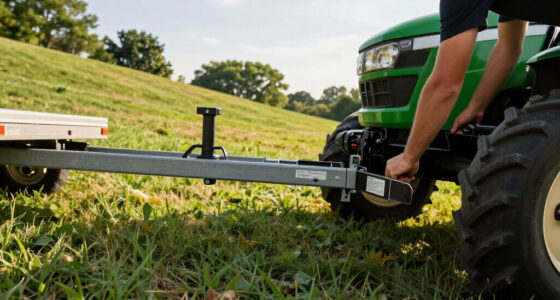
If you tow the cart with a lawn tractor or ATV, the cart rating does not tell you what the towing vehicle can safely handle. Check the vehicle’s towing limits, hitch compatibility, slope guidance, and braking capacity. Cart capacity and towing capacity are separate limits; the safer combination follows whichever applicable limit is lower.
Choose a Cart That Fits Your Actual Hauling Jobs
Choose a dump cart for the heaviest or bulkiest material you regularly move, not for its largest headline number. A roomy bed can cut trips for leaves but be a poor match for dense gravel if the load reaches the weight rating early. Work backward from your material and route.
- Name your regular loads. Separate bulky jobs, such as dry leaves, from dense jobs, such as wet soil, sand, or stone.
- Estimate the amount and likely weight. Use the material’s approximate weight per unit of volume when you have a reliable figure. If not, weigh a representative sample or plan smaller loads.
- Check both capacities. Read the manufacturer’s weight limit, bed dimensions, and explanation of how it defines capacity.
- Match the cart to the route. Consider soft or uneven ground, slopes, tires, handle or tow setup, and the method you will use to dump.
- Leave room for uncertainty. If material is wet, compacted, or unfamiliar, haul less per trip instead of loading to the apparent maximum.
For instance, a homeowner clearing leaves from a quarter-acre lot may value a wide bed because leaves are bulky. A person moving gravel across a sloped yard should put more weight on the load limit, tires, stable handling, and the towing vehicle’s ability to control the cart. The article is that the right capacity is job-specific: the cart that saves trips for leaves may not be the safest choice for stone.
Battery-powered and gas-powered equipment can differ in runtime and pulling capability, but do not assume either automatically makes an overloaded cart safe. Check the tow vehicle’s specifications and account for the terrain. A larger towing machine does not change the cart’s own stated weight limit.
Make Smaller Loads When Weight or Stability Is Unclear
If you cannot tell how heavy a load is, reduce the load rather than relying on how full the bed looks. This is the practical fallback when material density is unknown, moisture has changed, or your route makes a full cart difficult to control. Several manageable trips beat one overloaded trip that strains the cart or shifts on a slope.
Wet mulch is a good example. A cart that handles a full bed of dry mulch may feel sluggish and harder to steer after rain has soaked the pile. The material has changed, even though the bed dimensions have not. Start with a smaller amount, keep it level, and pay attention to whether the wheels roll freely and the handle or hitch stays under control.
Stop if the cart becomes difficult to pull, steer, or dump. Those signs do not give you a precise weight reading, but they tell you the job is demanding more than expected. Unload some material and split the next trip. Never treat a struggling cart as proof that you are just a little below its rating.
Safety rule: Follow the manufacturer’s stated weight limit and manual. If the material or route makes safe handling uncertain, carry less.
That approach matters most on uneven ground, near slopes, and while dumping. Keep people clear of the cart’s path and moving bed, and do not use a cart feature as a reason to exceed its load rating. Conservative loading protects control, not just the cart’s frame.
Frequently Asked Questions
Is a dump cart’s capacity measured by volume or weight?
It depends on the manufacturer: some list both, while others emphasize one. Check the product specifications and manual for bed volume and maximum weight; do not treat one as a substitute for the other.
Which limit will I hit first?
Bulky, light material such as dry leaves usually fills the bed first. Dense or wet material such as gravel or soil is more likely to reach the weight rating before the bed is full.
How much does a cubic foot of soil, mulch, or gravel weigh?
There is no single fixed figure that applies to every load. Moisture, material composition, and compaction change the weight, so use a suitable estimate for the specific material, weigh a representative sample, or load conservatively.
Can I fill a dump cart above the sides?
Only if the load remains within the weight rating and stays stable during transport and dumping. A heap adds material beyond the bed’s stated volume and can shift, so a level, balanced load is usually the safer choice.
Does a higher weight rating mean a cart is better?
Not necessarily. A higher-rated cart may have a smaller bed, take more effort to pull when loaded, or be a poor fit for your terrain or towing vehicle. Choose based on the job, route, and both capacity limits, not one number alone.
Can I tow a cart at its full rating with a lawn tractor or ATV?
Not automatically. Check the towing vehicle’s limits and the cart manual, and account for hitch compatibility, slopes, braking, and ground conditions. The cart rating does not establish the towing vehicle’s safe capacity.
Conclusion
When you compare dump carts, do not let a large volume figure or impressive pound rating make the decision for you. Match both limits to your material, route, and towing setup; then leave room for moisture, uneven ground, and the occasional load that weighs more than it looks.
If you are unsure, make one smaller trip. A steady cart on the path is worth more than a bed piled high and fighting you all the way back.