TL;DR

Get business pricing on tools and workshop supplies
- Business-only prices and quantity discounts
- Tax-exempt purchasing
- Multiple users, one account, clear invoices
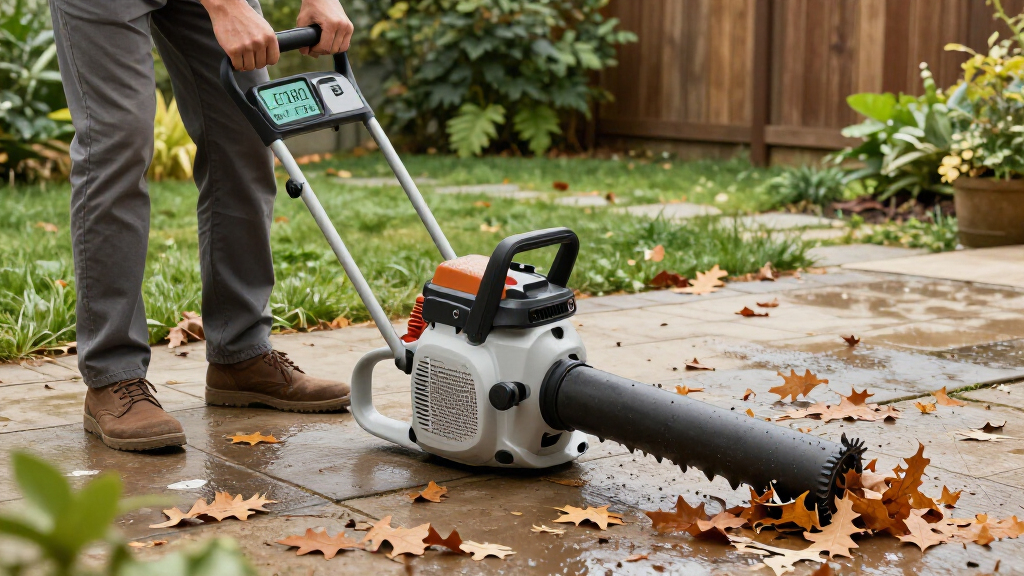
CFM measures volume, MPH measures speed—both influence leaf-blowing. Wet oak leaves are heavy and sticky; for them, CFM matters more, but a high-force blower (measured in Newtons) is the real key. Battery models now match or surpass gas units for wet-leaf duty, especially with recent tech advances.
Prioritize *blowing force* (Newtons) over CFM or MPH alone when dealing with wet oak leaves.
Aim for at least 15 N for handheld blowers and 25 N for backpack units to move stubborn, soaked leaves.
High CFM and MPH are helpful, but force is what really breaks the grip of wet leaves.
Nozzle design impacts performance: wide for volume, narrow for speed—choose based on your needs.
Battery blowers now match or beat gas units for wet-leaf work, especially with recent tech advances and regulations.
What CFM and MPH Actually Measure — And Why They Matter
CFM, or cubic feet per minute, measures the *volume* of air your blower moves. Think of it as the size of the broom—how much space it sweeps with each pass. MPH, or miles per hour, gauges the *speed* of that air at the nozzle tip. It’s how hard the air hits, like pressing a broom faster versus wider.
Understanding these metrics is crucial because they influence how effectively you can move different types of leaves. A high MPH creates a fast, focused jet of air that can lift leaves off the ground, especially when they’re dry or loosely packed. Conversely, high CFM delivers a larger volume of air that can push and carry bigger, wetter, and more stubborn piles. When dealing with wet oak leaves, which are dense and resistant, neither number alone guarantees success. Instead, it’s the combination of volume and speed that determines how well you can break through the sticky barrier and move the leaves efficiently. For example, a blower with high CFM but low MPH might push a large volume of heavy leaves slowly, whereas a high MPH but low CFM might blow a narrow jet of air fast enough to lift but not move large piles effectively. The key is balance—enough volume to carry the leaves once loosened, and enough speed to dislodge them initially. Recognizing this helps you choose a blower that’s truly suited for heavy-duty wet-leaf cleanup, rather than just looking at flashy specs.
best leaf blower for wet oak leaves
As an affiliate, we earn on qualifying purchases.
As an affiliate, we earn on qualifying purchases.
Why Moving Wet Oak Leaves Is a Force Game — Not Just Speed or Volume
Wet oak leaves are like waxy, damp blankets—heavy and resistant. Simply blowing them with high MPH or CFM often isn’t enough because these numbers don’t account for the actual effort needed to dislodge and move them. The real challenge lies in overcoming the physical resistance of the saturated leaves. This is where *force* becomes critical. The force exerted by the blower must be sufficient to lift, break up, and push the mats of wet leaves, which are often stuck to the ground or each other due to their moisture content.
Research and practical experience show that the *blowing force*, measured in Newtons, is a more reliable predictor of a blower’s ability to handle wet leaves. Handheld blowers typically generate 5–17 N, while backpack models can produce 20–40+ N. For wet oak leaves, aiming for at least 15 N on handhelds and 25 N on backpacks is advisable. This force translates into the actual physical push needed to break the grip of the wet leaves and get them moving. Without enough force, even a blower with impressive CFM and MPH ratings will struggle—wet leaves are stubborn, and their resistance requires a forceful push to overcome. Recognizing this helps you avoid overestimating a blower’s capabilities based solely on speed or volume metrics. Instead, focusing on force provides a clearer picture of real-world performance, especially when dealing with the densest, dampest piles. This understanding guides you toward choosing a blower that can deliver the necessary punch to move even the heaviest, wet oak leaves efficiently.
powerful cordless leaf blower with high Newtons
As an affiliate, we earn on qualifying purchases.
As an affiliate, we earn on qualifying purchases.
How CFM and MPH Combine to Handle Wet Oak Leaves — The Real Numbers You Need
When tackling wet oak leaves, understanding the interplay between CFM, MPH, and force is essential. While high CFM helps generate the volume of air necessary to carry large, wet piles, high MPH provides the speed needed to lift and loosen these stubborn leaves initially. However, the real measure of effectiveness is how these numbers translate into actual force—how hard the blower can push against the resistance of the wet leaves.
For example, a blower with 500 CFM and 150 MPH might seem impressive, but if it only generates 10 N of force, it may struggle with dense, soaked piles. Conversely, a blower with slightly lower CFM and MPH but a force output of 15+ N is more likely to succeed. Therefore, when selecting a blower for wet oak leaves, aim for a balanced combination: at least 400–600+ CFM, 130+ MPH, and, most importantly, 15+ N of blowing force for handhelds or 25+ N for backpacks. These figures ensure you have enough volume, speed, and physical pushing power to break through the resistance of wet leaves and move them effectively across your yard. Remember, nozzle design also influences these numbers—narrow nozzles increase speed but reduce volume, while wide nozzles push more volume at the expense of speed. Striking the right balance based on your specific needs is key to efficient wet-leaf removal.
gas or battery leaf blower for heavy wet leaves
As an affiliate, we earn on qualifying purchases.
As an affiliate, we earn on qualifying purchases.
Frequently Asked Questions
Is CFM or MPH more important for moving wet oak leaves?
For heavy, soaked leaves, neither alone is enough. Force (measured in Newtons) is the best predictor of success. High CFM helps transport loosened leaves, while MPH helps lift and break them loose. Focus on force for stubborn, wet piles.What CFM do I need for wet oak leaves?
Aim for at least 400 CFM on handheld blowers, but 500–600+ CFM is better for large or particularly wet piles. Backpack models with 600+ CFM are even more effective for heavy-duty wet-leaf cleanup.Why do some blowers with lower MPH outperform others with higher MPH?
Because nozzle design and actual CFM matter. Narrow nozzles increase speed but reduce volume, while some brands measure specs differently. Always check the blowing force in Newtons for real power.Can battery blowers really move wet leaves?
Yes. Recent 56V+ battery blowers produce enough force and volume to handle wet oak leaves, especially with turbo modes and larger batteries. They’re a viable alternative to gas for most residential needs.What’s the best way to blow wet oak leaves without scattering them everywhere?
Blow downhill, keep the nozzle low and shallow, and aim underneath the mat to lift and loosen leaves. Use quick bursts and work from under the pile for best results.leaf blower with high CFM and MPH for wet leaves
As an affiliate, we earn on qualifying purchases.
As an affiliate, we earn on qualifying purchases.
Conclusion
Moving wet oak leaves demands more than just blowing fast or pushing lots of air. Strength, force, and technique matter. With the right specs—especially force—you can clear the heaviest, dampest piles efficiently. Don’t fall for flashy MPH or CFM figures alone; check the actual force and nozzle design before buying.As battery tech keeps improving, your next blower might be quieter, cleaner, and just as effective as gas—without the fumes or noise. Think about your yard size, leaf wetness, and what you want to achieve. When you choose the right machine, clearing wet oak leaves becomes simply another task you handle with confidence.
Halloween Picks
halloween
As an affiliate, we earn on qualifying purchases.