TL;DR

Get business pricing on tools and workshop supplies
- Business-only prices and quantity discounts
- Tax-exempt purchasing
- Multiple users, one account, clear invoices
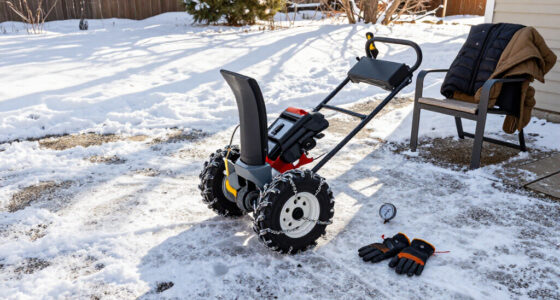
For most 200-foot driveways with a three-car apron, choose a 28- to 30-inch two-stage snow blower with power steering, strong traction, and enough reserve capacity for the road-plow berm. Move down to 26–28 inches for light snow or tight storage, and move up to 30–32 inches for wet storms, drifting, wide pavement, or frequent packed berms.
At 6:15 on a January morning, a homeowner reached the street after clearing a long ribbon of powder, only to meet a gray, waist-high plow ridge packed like wet concrete. The little blower that sounded lively near the garage began coughing, crawling, and spilling snow over its housing. That last 20 feet of frozen rubble took nearly as long as the rest of the drive.
A 200-foot driveway plus a three-car apron is not a small residential cleanup. It is a substantial clearing job, often covering 2,600–3,300 square feet before you count walkways, turnouts, or the space beside parked vehicles [1]. Buy too small and you spend the morning making extra passes; buy too large and every apron turn feels like steering a loaded wheelbarrow through a kitchen.
This guide shows you how to match clearing width, snow-processing capacity, traction, and runtime to the property you actually own. You will also see where gas and battery machines earn their keep, why the apron changes the sizing decision, and which safety and storage checks belong on your list. The goal is simple: a machine that clears the drive at a steady working pace, including the ugly ridge at the road.
Choose a 28- to 30-inch two-stage snow blower for the best balance on most 200-foot drives with a three-car apron.
Move toward 30–32 inches when wet snow, drifting, a wide drive, or packed road-plow berms are routine rather than rare.
Compare intake height, impeller design, low gearing, traction, and steering—not clearing width by itself.
Use wheels on most level paved drives; pay for tracks when steep grades, ice, gravel, or uneven ground create a real traction problem.
Plan battery capacity and snow placement around a heavy normal storm, leaving reserve for the apron and road entrance.
Sizing a Two-Stage for a 200-Foot Drive and Three-Car Apron
This is a substantial residential clearing job: roughly 2,600–3,300 square feet before walkways or turnouts. The right machine must clear the long run efficiently, turn cleanly across the apron, and retain enough capacity for the compacted road-plow berm.
Pair the width with power steering, strong traction, low gearing, and reserve throughput for dense roadside snow.
Choose for the hardest routine storm
The apron limits maneuverability while the long driveway rewards capacity. The practical answer is usually the middle of the range, not the widest housing available.
24–26″
Technically capable when snowfall is modest, storage is tight, or narrow gates control access.
Expect more passes and less reserve in wet snow or packed berms.26–28″
A sound fit for level pavement, prompt clearing, and predominantly light-to-moderate snowfall.
Easy to turn and store, but slower when snow becomes dense.28–30″
The best balance of intake capacity, maneuverability, traction, and storage for most properties.
Add power steering and low gearing for the strongest all-round result.30–32″
Worth the extra size where wet storms, deep drifting, wide pavement, or plow berms are routine.
More capacity, with wider turns and greater storage demand.Buy the system behind the bucket
Clearing width is only the doorway. Engine or electric output, intake height, auger and impeller design, low-speed control, and traction determine whether dense snow keeps moving through it.
Heavy-snow specification check
Useful for deep accumulations and wind-loaded drifts.
Lets the auger and impeller process dense snow without rushing.
Moves snow beyond the drive edge before banks become restrictive.
Favor a steady working tone over impressive no-load speed.
Match width, traction, and handling
Two machines with the same housing width can behave very differently. Grade, surface, snow density, and the apron turning pattern should determine the final configuration.
| Property and snow conditions | Suggested width | Best traction choice | Primary advantage | Main compromise |
|---|---|---|---|---|
| Level pavement, light-to-moderate snow | 26–28 inches | ✓Wheels | Easy turning and compact storage | More passes and less roadside reserve |
| Regular 6–12-inch storms, occasional wet snow | 28–30 inches | ✓Wheels | Balanced capacity and maneuverability | More weight than a compact machine |
| Frequent wet snow, drifting, or packed berms | 30–32 inches | ✓Wheels or tracks | Greater intake capacity and working reserve | Wider turns and more storage demand |
| Steep, icy, gravel, or badly uneven ground | 28–32 inches | ✓Tracks | Positive grip and stable housing control | Heavier handling and slower apron pivots |
| Severe snowbelt or commercial-style workload | 32–36 inches | ✓Condition dependent | Fewer passes across open pavement | Awkward near cars, walls, and garage bays |
The practical sizing spectrum
Plan the snow before moving it
A disciplined route reduces chute changes, prevents re-clearing, and preserves capacity for the hardest material at the road entrance.
Read the wind
Choose the side that keeps discharged snow away from the house, vehicles, road, and neighbors.
Open the drive
Make a central reference pass, then work outward with controlled overlap.
Shape the apron
Use short, deliberate lanes around garage doors, parked cars, walls, and landscaping.
Break the berm
Use the lowest practical speed and take partial-width bites through compacted roadside snow.
Keep reserve
For battery power, preserve energy for the apron and entrance; for gas, avoid rushing the final load.
Use half-width bites at the road-plow ridge. Let the impeller clear before advancing into the next section of frozen rubble.
Highest-load zoneChoose the Width That Fits the Whole Property
Sizing a Two-Stage for a 200-Foot Drive and Three-Car Apron starts with a 28- to 30-inch machine for most paved, fairly level properties. That range gives you useful intake capacity without turning every maneuver near parked cars into a wrestling match. Move toward 32 inches when wet snow, drifting, or plow berms dominate.
A drive measuring 200 feet long and 10–12 feet wide covers about 2,000–2,400 square feet. Add a three-car apron of roughly 600–900 square feet, and you reach 2,600–3,300 square feet of working area [1]. At that scale, every unnecessary overlap becomes another long walk behind the machine.
The three-car apron is where an oversized housing can punish you. Imagine two vehicles outside, a garage door behind you, shrubs on one edge, and a stone wall on the other. You will turn repeatedly, back up, swing the chute, and feather the drive controls, so power steering and balanced weight may save more time than two extra inches of width.
A 24-inch blower can finish the job when snow stays light, the drive is narrow, or storage space is tight. You will make roughly 17 percent more passes than with a 28-inch housing before allowing for overlap, and dense snow can widen the time gap. Width is only the front door, though; the machinery behind that opening decides whether snow moves cleanly or piles up at your boots.
Popular right now

LG C2 Series 65-Inch OLED evo 4K Smart TV (OLED65C2PUA, 2022)

Samsung 42-Inch S90H OLED 4K Smart TV Bundle

Samsung 48-Inch S90H OLED 4K Smart TV (2026)
As an affiliate, we earn on qualifying purchases.
See Which Size Matches Your Snow in One Glance
Sizing a Two-Stage for a 200-Foot Drive and Three-Car Apron comes down to matching width with your worst routine snow, not the soft two-inch coating used in a showroom demonstration. A 28-inch model suits most owners, while a 30- or 32-inch model earns its space in heavy, wet, or wind-loaded conditions [1].
| Property and snow conditions | Suggested width | What you gain | What you give up |
|---|---|---|---|
| Level pavement, light to moderate snow, prompt clearing | 26–28 inches | Easy turning and compact storage | More passes and less reserve at the road |
| Regular 6–12-inch storms with occasional wet snow | 28–30 inches | Balanced capacity and maneuverability | More weight than a compact unit |
| Frequent wet snow, drifting, or large plow berms | 30–32 inches | Higher intake capacity and stronger traction | Wider turns and greater storage demand |
| Severe snowbelt exposure or commercial-style clearing | 32–36 inches | Fewer passes across open pavement | Heavy handling and awkward apron work |
Suppose your area usually receives six inches of dry snow, and you clear it before work. A 26- or 28-inch two-stage snow blower can maintain a brisk pace, especially on smooth pavement. If the same storm often ends with sleet and a dense roadside windrow, a 30-inch machine with low gearing brings more useful reserve.
A 200-foot driveway plus a wide apron can tempt you toward a 36-inch housing. That makes sense when most of the property is open, flat, and buried by repeated deep storms. On a tight apron, however, the wider bucket can clip snowbanks, crowd parked cars, and turn a quick direction change into a three-point machine shuffle.
Size for the hardest repeatable condition, not a freak once-in-20-years storm and not the easiest dusting. Your machine should handle the usual plow berm without spending the other 95 percent of winter feeling oversized.
Buy Snow-Processing Muscle, Not Just a Wider Bucket
Sizing a Two-Stage for a 200-Foot Drive and Three-Car Apron requires more than reading the housing width on a sales tag. Compare engine displacement or electric output, intake height, impeller design, low-speed control, and traction. A wide housing with weak throughput becomes a snow scoop that cannot swallow what it collects.
Think of clearing width as a doorway and the impeller system as the hallway behind it. A 32-inch doorway with a cramped hallway creates a traffic jam in wet snow, while a strong 28-inch system keeps material moving. Two machines with equal width can behave very differently when the snow turns heavy enough to squeak beneath your boots.
For drifting areas, look for an intake height near 20 inches or more, drift cutters, aggressive tires, and a genuinely slow first gear [1]. During a 14-inch storm with a 24-inch drift across the garage, you may still need partial-width bites. The right gearing lets the auger work without forcing you to ride the clutch or ram the housing forward.
The road-plow pile tells the truth about capacity. Approach that dirty, salt-streaked ridge at the lowest practical speed, take half-width bites, and let the impeller clear before advancing. If a machine races through powder but stalls in the berm, you bought speed without working reserve.
Manufacturer snow-processing and throwing claims can help only when test conditions are comparable. Wet slush, a headwind, low impeller speed, and a partly filled housing all shorten the throw. Favor a machine that can hold a steady tone under load rather than one that wins on width alone.
Pick Wheels or Tracks Without Regretting Every Turn
What good is a wide blower if it spins at the bottom of your hill or fights every turn? Choose large wheels for level or moderately sloped pavement and choose tracks for steep, icy, gravel, or badly uneven ground. Traction needs to solve a real property problem because tracks add weight and slower handling.
On a flat asphalt drive, a wheeled machine usually moves faster between snow loads and pivots more easily on the apron. Picture clearing around three garage bays: you finish one pass, squeeze a steering trigger, and swing smoothly into the next lane. With deep tread and differential steering, wheels give most owners the best mix of grip and agility.
Tracks earn their keep on a steep approach where gravity pulls the machine toward a ditch or garage door. They also hold a chosen scraping angle well on packed snow and rutted gravel. The tradeoff arrives when you must reposition the machine in a tight corner; a tracked 32-inch unit can feel like turning a small safe on rubber belts.
Surface setup matters just as much as the drive system. On pavement, set the scraper close without grinding hard against the surface, and use adjustable skid shoes to protect the housing. On gravel, raise the scraper above loose stone until the base freezes, because an impeller can fire a fist-sized rock toward a window, car, or person.
Power steering becomes especially useful above about 28 inches of clearing width. Try the steering action in person if you can: some systems pivot sharply, while others merely lighten the turn. A long straight drive hides poor steering, but the apron exposes it within five minutes.
Get an Honest Runtime Plan for Gas or Battery Power
Choose gas when you need fast refueling and dependable long-duration output; choose battery when you value quiet operation, low routine maintenance, and instant starting. Either power source can serve this property, but a battery setup needs enough installed energy for heavy snow plus a reserve—not merely a powder-day runtime claim.
A gasoline machine remains the familiar workhorse for repeated wet storms. You can finish one tank, let the hot machine cool, refuel safely, and return to work without waiting for batteries. In exchange, you accept engine oil, stabilized fuel, exhaust, noise, and seasonal service, along with the possibility of a stubborn cold start.
Modern battery units use brushless motors, multiple battery bays, power-assisted controls, heated grips, and bright LEDs [2]. Their low-speed torque can feel strong, and the quiet whir is far easier on your ears and neighbors than a hard-barking gas engine. Yet deep wet snow, low temperatures, fast travel, and long throws all draw energy faster.
For example, a battery machine that clears the full property in eight inches of dry powder may run short in ten inches of wet coastal snow. Plan around the heaviest normal storm, keep batteries in a dry space within the maker’s temperature limits, and have a second charged set when the first set offers little reserve. Never assume two storms with equal depth require equal energy.
- Choose gas when storms are frequent, wet, or long enough to demand refueling during the job.
- Choose battery when the installed capacity covers the full clearing area under realistic load and you can store batteries correctly.
- Favor local parts support for either type; a rare shear pin or failed drive belt can park an expensive machine during the season’s worst week.
If a battery charging setup requires a new receptacle, circuit, or panel work, hire a licensed electrician. The electrician should shut off power, verify the circuit is de-energized, use proper PPE, and follow local electrical code and permit rules. A snow blower purchase is no reason to gamble with a live panel.
Clear Faster by Putting Every Load of Snow in the Right Place
You clear a property this size faster by planning snow placement before the first pass. Start on the upwind side or near the center when the layout allows, throw early-season snow well beyond the pavement, and keep discharge away from vehicles, doors, windows, neighbors, and the road. Good placement prevents expensive rework.
- Walk the route first. Remove newspapers, toys, branches, extension cords, stones, and frozen garden hoses before the auger finds them.
- Choose the final snow-storage zones. Leave room for later storms, especially near the street and both sides of the apron.
- Open the long drive with steady passes. Overlap enough to avoid ridges, but do not waste a quarter of the housing on clean pavement.
- Finish the apron with shorter controlled runs. Rotate the chute before each turn so snow does not pepper a car, garage door, or shrub bed.
- Attack the plow berm in partial bites. Use low speed and let the impeller recover instead of forcing the housing into frozen chunks.
Early in winter, throw snow farther than seems necessary. A two-foot strip beside the pavement can disappear after three storms, leaving a hard white wall that catches every later discharge. Snowbanks work like closing theater curtains: each storm narrows the stage until your machine must throw higher and farther.
Wind changes the plan. A strong crosswind can turn a 40-foot advertised throw into a glittering cloud that lands back on your coat and the freshly cleared lane. Aim the chute lower, work with the wind, and use shorter controlled throws near buildings or traffic.
A capable 28- to 32-inch unit may clear this property in roughly 30–60 minutes under typical conditions [1]. Parked cars, drifting, wet snow, repeated reversing, and a frozen berm can stretch that time sharply. A larger machine cuts pass count, but it cannot erase the minutes spent turning, aiming, backing, and cleaning tight corners.
Check the Features, Storage, and Safety Details Before You Buy
Before buying, verify that the machine fits through every opening, turns comfortably on the apron, and includes the controls you will use during a 30- to 60-minute clearing session. Then check the shutdown and clog-clearing procedure. A powerful blower that cannot fit the shed or be handled safely is the wrong size.
Measure the garage or shed doorway, narrow gates, space between parked vehicles, and storage depth with the handle folded. A 30-inch housing needs clearance beyond its advertised width for skid shoes, cables, and your knuckles. One homeowner-sized mistake is measuring a 30-inch gate for a 30-inch machine and discovering that the actual outer hardware will not pass.
- Power or differential steering reduces fatigue during apron turns.
- Multiple forward speeds and reverse let you slow down for wet snow and back out of tight corners.
- Remote chute and deflector controls help you place snow without stopping every pass.
- Electric start, heated grips, and LEDs matter more when you are working before sunrise in blowing snow.
- Accessible shear pins, belts, and service points shorten downtime after a jam or impact.
- Adjustable skid shoes and a clearing tool protect the surface and keep your hands away from the impeller.
Never clear a chute or intake housing by hand. Shut the machine down, remove the key or disconnect the battery, disconnect the spark-plug lead when directed, wait for every moving part to stop, and use the supplied chute-clearing tool [2]. Packed snow can hold the auger or impeller under tension, and it may snap forward after a blockage shifts.
Wear eye protection, hearing protection, gloves, and high-traction footwear. Keep loose clothing away from moving parts, point the chute away from people and glass, and let gasoline equipment cool before refueling. If you work near the road, stay visible and never throw snow into traffic.
The safest machine is one you can control without fighting it. Reserve capacity, clean controls, predictable steering, and a disciplined shutdown routine matter more than a flashy feature list.
The sizing and clearing-area figures cited here follow Outdoor Pro Masters property guidance [1]. The operating, battery-development, and shutdown guidance follows Outdoor Pro Masters safety research and manufacturer procedures [2]; your machine’s manual remains the final word for its controls and service steps.
Frequently Asked Questions
Is a 24-inch two-stage blower large enough for a 200-foot driveway?
A 24-inch two-stage blower can complete the job when snowfall is modest, storage is tight, and you clear promptly. Expect more passes, more walking, and slower progress through wet snow or the road berm. For recurring 6- to 12-inch storms, a 28- to 30-inch model is usually the better working fit.
Is a 32-inch snow blower too large for a three-car apron?
A 32-inch blower is not automatically too large, especially when the drive is wide and storms are heavy. It becomes awkward when cars, pillars, landscaping, or narrow storage openings restrict turning room. Test the steering feel and map the apron before trading maneuverability for fewer passes.
How much engine power does this clearing area need?
There is no universal horsepower number because manufacturers publish different ratings and use different impeller, gearing, and housing designs. Compare displacement, intake height, low-speed behavior, traction, and documented performance in wet snow. The goal is steady throughput under load, not the largest engine label.
Can a battery two-stage machine clear the whole property?
A properly sized premium battery machine can clear the full area when its installed battery capacity matches the snow load. Judge runtime using cold, wet, or deep conditions rather than shallow powder, and keep a charged reserve set when one set leaves little margin. Store and charge batteries within the manufacturer’s temperature guidance.
Should you clear twice during a large storm?
Yes, two lighter sessions often beat one battle with deep, water-heavy accumulation. Clear before the snow reaches the top of the intake or forms dense drifts, especially when temperatures may rise and make it wetter. The second session then feels like routine clearing instead of pushing through cold cement.
What is the best way to clear a packed road-plow pile?
Use the lowest practical forward speed, take partial-width bites, and give the impeller time to discharge each load. Break frozen chunks carefully without striking them at speed, and point the chute away from traffic. Never use your hands on a blockage; shut down, isolate the power source, and use the supplied clearing tool.
Conclusion
Your best default is a 28- or 30-inch two-stage machine with power steering, solid low-speed control, and enough muscle for the plow ridge. Choose 26–28 inches when storage and nimble handling lead your list; choose 30–32 inches when wet snow, drifting, or steep terrain regularly slow the work.
Before spending money, measure every doorway, walk the clearing route, and study where the snow can live by February. Buy for the hardest condition you meet repeatedly, not the widest housing that fits the budget. When the next storm turns the driveway white from garage to road, the right machine should sound steady, track straight, and leave one clean dark ribbon behind you.