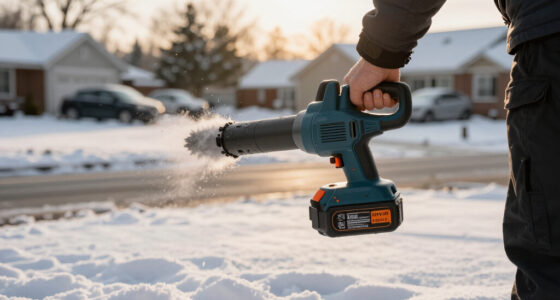

TL;DR

Get business pricing on tools and workshop supplies
- Business-only prices and quantity discounts
- Tax-exempt purchasing
- Multiple users, one account, clear invoices
Battery snow gear in deep cold still works below 20°F (−7°C), but rising internal resistance causes voltage sag, shorter runtime, weaker heat, and early shutdowns. Start with warm packs, carry insulated spares, use the lowest comfortable heat setting, and never charge a cold lithium-ion battery until it reaches the maker-approved charging range.
Your heated gloves can show 40% charge, shut off on a windy chairlift, then come back to life beside the lodge radiator. That feels like a faulty gauge, but it often reveals what lithium does below 20°F: the battery still holds energy, yet cold chemistry and rising resistance make that energy harder to deliver.
The phrase below 20 degrees should be stated precisely. For snow gear, it usually means 20°F, or −7°C, rather than 20°C, which is a mild 68°F. Rechargeable lithium-ion packs commonly operate well below that mark, but runtime, voltage stability, and peak heater output can fall as the mercury slides.
You will learn why a cold pack acts tired, why high heat drains it faster than expected, and how battery location can decide whether your toes stay warm for one hour or four. You will also learn the firm safety line: cold discharge is usually temporary, while charging below the approved temperature can permanently damage a pack. The goal is simple—more dependable warmth without asking a small battery to perform a summer test in a frozen field.
Treat 20°F (−7°C) as a performance warning point, not a hard shutdown temperature; cold raises resistance and makes stored energy harder to use.
Begin with a warm, fully charged pack, keep it in an approved body-adjacent pocket, and run the lowest heat setting that keeps you comfortable.
Let a cold lithium-ion battery warm naturally into its approved charging range before connecting the charger; charging below 32°F may damage conventional cells.
Compare battery capacity in watt-hours, and demand separate temperature limits plus runtime figures for each heat setting.
Use heated clothing as a supplement to dry insulation, wind protection, and emergency backups, especially on remote or safety-sensitive trips.
Battery Snow Gear in Deep Cold: What Lithium Does Below 20 Degrees
Below 20 degrees means 20°F (−7°C), not 20°C. Lithium-ion packs still hold energy in deep cold, but rising internal resistance makes that energy harder to deliver—causing weaker heat, shorter runtime, voltage sag, and early shutdowns.
A pack that “dies” on the chairlift may appear charged again after it warms.
Why “empty” may not mean empty
Cold slows lithium-ion movement and raises resistance. Under a heavy heater load, voltage can fall below the protection circuit’s cutoff even while stored energy remains. Warming lowers resistance, allowing voltage—and the charge estimate—to rebound.
Ion movement slows
Lithium ions move less readily through the cold electrolyte, limiting the pack’s ability to respond quickly.
Voltage sags
Internal resistance rises, so voltage drops more sharply when a heater demands substantial current.
Cutoff arrives early
The controller interprets low voltage as depletion and shuts the pack down before all energy is accessible.
Warmth restores access
After warming, resting voltage rises. The pack did not recharge; previously hidden energy became usable again.
Warning point, not an on-off boundary
Pack placement, wind exposure, battery age, cell chemistry, wiring, insulation, and heater demand all shape performance. There is no honest universal runtime-loss percentage.
Cold-performance spectrum
Lower temperatures progressively reduce usable output and voltage stability.
| Battery condition | What you may notice | Useful response |
|---|---|---|
| Around 20°F | ~Shorter runtime, fast gauge movement, reduced heat on high | Insulate the pack; use medium or low heat |
| Around 0°F | ~Hard starts, sudden shutdowns, large voltage drops | Begin warm; carry a protected spare |
| Well below 0°F | ✗Weak output, brittle cables, sluggish controls | Follow the rated operating limit; rely on insulation |
| Below charge limit | ✗Charging may be refused—or may damage cells | Warm naturally before connecting the charger |
Five moves that stretch heated-gear runtime
The biggest gains often come from battery placement and the lowest comfortable heat setting. Lower demand saves energy and reduces the voltage sag that can trigger an early cutoff.
Cold discharge is temporary. Cold charging can be permanent.
Ordinary cold use usually causes reversible performance loss when the pack stays within its rated operating range. Charging a conventional lithium-ion battery below its approved limit can cause metallic lithium plating and permanent damage.
Cold discharge
Reduced runtime, weak heat, voltage sag, and temporary shutdown may resolve when the pack warms.
Cold charging
Charging below 32°F may cause lithium plating in conventional cells, permanently reducing capacity and increasing safety risk.
Rated limits
Operating and charging limits are different. Consult the battery or garment manual for both temperature ranges.
Compare the whole power chain
Battery capacity is only one part of reliability. The weakest component—pack, wiring, connector, controller, display, or protection circuit—may determine whether the gear works in bitter weather.
| What to compare | Weak product information | Useful product information |
|---|---|---|
| Capacity | ✗Milliamp-hours alone | ✓Watt-hours, voltage, and compatible load |
| Runtime | ~One “up to” claim | ✓Separate estimates for low, medium, and high |
| Temperature | ✗No distinction between use and charge | ✓Independent operating, charging, and storage limits |
| Placement | ~Exposed cuff or outer pocket only | ✓Approved insulated or body-adjacent compartment |
| System durability | ✗Battery specification only | ✓Cold-rated cables, connectors, controls, and protection |
Test before the storm
Wear the complete setup outside for one controlled hour. Your own winter log is more useful than an all-day runtime claim measured in a warm room.
Why Your Battery Acts Empty When It Still Has Energy
Battery Snow Gear in Deep Cold loses usable output because cold slows lithium-ion movement and raises internal resistance. Under a heavy heater load, voltage drops until the protection circuit shuts the pack down, even though stored energy remains. Warm the battery, and its voltage may rebound enough to run again [1].
Think of the pack as a water tank feeding a hose. The tank still holds water, but cold squeezes the hose until only a weak stream gets through. Your jacket controller sees that weak stream as low voltage and closes the valve, creating the temporary finality of a dead battery that is not truly empty.
You may notice a charge display falling from 55% to 12% during a hard climb, especially if your heated vest sits in an exposed outer pocket. Back at the truck, the pack warms for 20 minutes and reads 31%. No new energy entered it; lower resistance allowed the resting voltage to rise, which changed the gauge estimate.
According to the lithium-ion research summarized by Outdoor Pro Masters [1], cold reduces ion mobility and causes a sharper voltage drop under load. Age, cell chemistry, wiring, controller design, and battery insulation all shape the result, so there is no honest universal runtime-loss percentage. Two packs with the same label can behave differently after several seasons of use.
Cold usually hides usable energy rather than erasing it. A shutdown followed by recovery after warming points to voltage sag, but repeated shutdowns at mild temperatures can signal battery aging or damage.
Popular right now

Vitamix 5200 Professional-Grade Blender, 64 oz. Container, Black

Shark Navigator Robot Vacuum with Self-Empty Base, Dark Grey (RV2120AE)

iRobot Roomba 105 Vac Robot Vacuum
As an affiliate, we earn on qualifying purchases.
What Changes at 20°F, 0°F, and Colder
Battery Snow Gear in Deep Cold usually delivers less runtime and less peak power as temperature falls, but 20°F is not an on-off boundary. A protected pack near your body may outperform an exposed pack at the same air temperature because placement, wind exposure, load, and battery age shape the outcome.
| Battery condition | What you may notice | Useful response |
|---|---|---|
| Around 20°F (−7°C) | Shorter runtime, faster gauge movement, or reduced heat on high | Keep the pack insulated and use medium or low heat |
| Around 0°F (−18°C) | Hard starts, sudden shutdowns, and large voltage drops under load | Begin with a warm pack and carry a protected spare |
| Well below 0°F | Weak output, brittle cables, sluggish controls, or operation outside the rated range | Follow the operating limit and rely on conventional insulation |
| Below the charging limit | The charger may refuse to start, or an unprotected pack may accept unsafe current | Warm the pack naturally before connecting the charger |
Imagine clearing a 300-foot driveway at 8°F. A vest battery tucked under your shell stays close to body temperature, while a glove battery mounted on the cuff sits in roaring airflow. The cuff pack reaches ambient temperature faster and may quit first, even when both started with the same charge.
Wind chill does not lower a battery below the actual air temperature. Batteries do not feel wind chill as skin does. Wind simply strips away retained warmth faster, which can turn a warm pocket into a cold pocket during a long snowmobile run or open-field plowing job.
The pack itself is only part of the chain. Connectors, displays, wiring, and protection circuits can become stiff, brittle, or unreliable in bitter weather. When one boot insole cuts out while the other keeps heating, swap packs only if the manual permits; that simple test can separate a battery problem from a damaged lead.
5 Moves That Stretch Heated-Gear Runtime
You can stretch runtime by starting warm, reducing electrical demand, and slowing the battery’s heat loss. The biggest gains often come from battery placement and the lowest comfortable heat setting, not from buying the pack with the largest milliamp-hour number. Use this field routine before a long shift or backcountry day.
- Charge and warm the pack indoors. Begin within the maker-approved temperature range, then install it shortly before you head out.
- Preheat briefly. Run high heat for a few minutes while dressing, then turn it down before the pack becomes cold.
- Use low or medium heat. Lower demand reduces energy use and limits the voltage sag that can trigger an early shutdown.
- Insulate the battery. Put it in the designated inner pocket or approved pouch, close to your body and away from exposed airflow.
- Carry a warm spare. Cover its contacts and keep it away from keys, coins, tools, and other metal objects.
Suppose your heated socks claim six hours on low and two hours on high under mild test conditions. At 5°F, running high from the parking lot can pull hard on already sluggish cells. A short preheat followed by low may keep warmth around your toes through the morning instead of producing blazing heat followed by silence before lunch.
Lower settings can extend runtime by more than their simple wattage difference suggests. They consume less energy while also asking the cold battery for less current, which reduces voltage sag and early cutoff. It is a two-sided win: the heater sips more slowly, and the battery keeps a steadier grip on its voltage.
Here is your direct challenge: before the next storm, wear your full setup outside for one controlled hour. Record air temperature, heat level, battery location, and ending charge. That small test gives you better planning data than an all-day marketing claim measured in a warm room.
Why Warming Before Charging Protects the Battery
Battery Snow Gear in Deep Cold can usually discharge safely within its rated range, but charging a cold conventional lithium-ion pack carries a different risk. Below 32°F (0°C), charging may deposit metallic lithium on the anode, cutting capacity and creating an internal safety hazard [2]. Warm the pack naturally before charging.
That distinction matters after a long day clearing wet, heavy snow. Your jacket battery may feel like a smooth block of ice when you enter the mudroom. Plugging it in immediately because tomorrow’s forecast calls for another six inches trades quick convenience for possible permanent cell damage.
Keep the pack disconnected while it warms to the charging range listed in its manual. If it is dry and undamaged, place it in a sealed bag during warm-up so condensation forms on the outside of the barrier rather than across contacts and electronics. Once the pack has warmed naturally, inspect it and use the specified charger.
Do not rush the process with a stove, hair dryer, heating pad, boiling water, or direct contact with a chemical hand warmer. Those methods create hot spots that the case can hide from your fingers. Body warmth and room air provide a slower, gentler path back to a safe charging temperature.
Do not assume the battery-management system will save you. Some packs block low-temperature charging, but others lack reliable sensing or protection. The manufacturer’s charging range remains the controlling specification.
Stop using a pack that is swollen, cracked, punctured, leaking, unusually hot, or wet inside. Move away from combustible material if you can do so safely, keep people clear, and follow the maker’s disposal guidance. Never open or repair a lithium pack yourself; damaged high-energy cells call for trained service or approved recycling.
Which Specifications Predict Better Cold-Weather Performance
The most useful snow-gear specifications are separate charging and operating temperature ranges, runtime by heat setting, battery energy in watt-hours, and protected battery placement. A claim such as “works to −20°F” does not promise full heat or normal runtime at that temperature; it may only mark the lowest permitted operating point.
- Temperature limits: Look for separate numbers for discharge, charging, and storage.
- Watt-hours: Compare total energy across packs with different voltages.
- Replaceable packs: Confirm that replacements are available without replacing the entire garment.
- Protected placement: Favor an inner pocket or insulated compartment over an exposed cuff or strap.
- Runtime by setting: Look for separate high, medium, and low figures plus the test temperature.
- Electrical protection: Check for recognized safety certification, sealed controls, and water-resistant connectors.
- Cold-friendly controls: Buttons should work through gloves without forcing you to expose bare fingers.
Milliamp-hours alone can fool you because voltage changes the amount of stored energy. Use watt-hours = volts × amp-hours. A 7.4-volt, 3-amp-hour pack holds about 22.2 watt-hours, while a 5-volt, 3-amp-hour pack holds only 15 watt-hours despite sharing the same 3,000-milliamp-hour label.
More watt-hours usually buy more potential runtime, yet size is not the whole story. A large pack using poor cold-weather cells can stumble under load, while a smaller, insulated pack with capable cells may hold voltage better. Cell design, current rating, insulation, and control electronics all matter alongside capacity.
Take a heated jacket advertised for eight hours. If the label omits the heat setting and test temperature, that number floats like fresh powder over a hidden ditch. Ask for low-setting runtime, battery watt-hours, cold test conditions, and replacement cost before treating the claim as a plan for an eight-hour property shift.
When Battery Heat Helps—and When You Need a Backup Plan
Battery Snow Gear in Deep Cold works best as an added comfort layer, not your only defense against exposure. Heated gloves or a vest can help circulation and comfort, but insulation, wind protection, moisture control, and dry backup layers must still protect you after a connector breaks or the battery shuts down.
A dead vest during a two-hour driveway job is irritating. A dead avalanche transceiver, satellite communicator, navigation device, or emergency light miles from the trailhead carries far greater consequences. Treat comfort equipment and life-safety electronics as two separate risk classes, even when both use batteries that look similar.
For critical equipment, use only the battery type approved by its manufacturer. Begin with fresh disposable cells or fully charged approved packs, check status during the trip, and carry a suitable backup. Some disposable lithium primary cells perform very well in severe cold, but they are not rechargeable and must match the device’s required chemistry and voltage.
Consider a fence-repair job across 40 windy acres at 2°F. A heated jacket may reduce the bite while you work, but your real safety margin comes from a dry base layer, lofted insulation, a windproof shell, spare gloves, and a route back to the truck. Electricity adds warmth; fabric keeps working when electricity does not.
This calls back to the glove battery that seemed empty and woke up indoors. That recovery is useful evidence, but it is not a rescue plan. In remote terrain, a warm spare, scheduled battery checks, and nonpowered insulation turn an unpredictable pack into a manageable tool rather than a single point of failure.
Heated apparel supplements winter layering; it never replaces it. Plan for the moment when the tiny red controller light goes dark and the only warmth left is what your clothing can hold.
Frequently Asked Questions
Do lithium batteries stop working below 20°F?
Most lithium-ion batteries keep operating below 20°F, but they deliver less usable energy and show more voltage sag under heavy loads. An exposed glove or boot battery may shut down while a matching pack near your body continues running because pack temperature and current demand matter more than one air-temperature threshold.
How much heated-gear runtime will I lose in deep cold?
There is no reliable universal percentage. Runtime depends on cell chemistry, battery age, insulation, wind exposure, heater setting, and the protection circuit. Test the gear at a known temperature; a one-hour trial at 10°F tells you more than a runtime label based on mild indoor conditions.
Why does my battery percentage rise after I bring it indoors?
Warming lowers internal resistance, allowing resting voltage to rebound. The gauge reads that voltage and may report more remaining charge, but the pack did not recharge itself. The energy was temporarily difficult to access while the cells were cold.
Can I charge a battery that feels frozen?
Do not charge it yet. Let the pack warm naturally into the manufacturer-approved charging range, which for many conventional lithium-ion batteries starts at or above 32°F (0°C). Keep it away from hair dryers, stoves, heating pads, and direct chemical hand-warmer contact.
Should I keep spare batteries in an inside pocket?
Yes, when the product instructions allow it. An inside pocket slows heat loss and keeps a spare ready for high current demand. Cover the terminals and separate the battery from coins, keys, tools, or foil wrappers that could bridge the contacts and cause a short circuit.
Are lithium-polymer packs automatically better in cold weather?
No. Lithium-polymer often describes the electrolyte format and flexible pouch construction, not guaranteed cold performance. The specific cells, current rating, battery-management system, insulation, and placement tell you more than the broad LiPo label.
Does a larger battery always perform better below 20°F?
A larger pack usually holds more total energy and may face less strain at the same heater load, but capacity alone does not prove cold capability. Compare watt-hours, temperature ratings, cell design, current output, and battery placement before assuming that a heavier pack will stay stronger.
Can heated snow gear replace normal winter layers?
No. Batteries empty, controllers fail, and cables can break when they become stiff in deep cold. Wear moisture-managing base layers, real insulation, and wind protection so your clothing still protects you when the heater becomes nothing more than cold wire.
Conclusion
Your best move is simple: keep the battery warm, keep the electrical load moderate, and warm the pack before charging. Cold-weather runtime depends on chemistry, age, exposure, and heater demand, so test your own setup before a long shift and plan around the result rather than the brightest claim on the box.
When snow squeaks under your boots and the wind combs white ribbons across the driveway, your battery is working through thickened chemistry. Give it an inside pocket, a sensible heat setting, and a protected spare. Then build the rest of your cold-weather plan around layers that never need a charge.