TL;DR

Get business pricing on tools and workshop supplies
- Business-only prices and quantity discounts
- Tax-exempt purchasing
- Multiple users, one account, clear invoices
Single-stage snow blowers work best on smooth pavement under roughly 6–8 inches of ordinary snow. Dense plow berms, loose gravel and wind-packed drifts expose their low intake, limited traction and close-contact auger, so you should clear early, use narrow bites and move to a two-stage machine when hard conditions are routine.
The road plow rolled past at 5:40 a.m., leaving a gray, waist-wide ridge across the end of the driveway. Your compact blower had handled the overnight powder with a clean rubber-on-pavement hiss, but now its auger bounced off the berm, the chute coughed out a wet clump, and the machine shoved itself backward. Same storm, completely different snow.
You will learn why plow berms, loose gravel and deep drifts defeat machines that look capable on a specification sheet. The answer is not simply weak power. Snow density, intake height, machine weight, traction and ground clearance work together, and a limit in any one of them can stop the job cold.
This guide also shows you how to get better results from the blower you already own without ramming it, showering the yard with stones or reaching into a plugged chute. You will see where narrow passes buy useful capacity, when manual breakup makes sense, and when a two-stage snow blower saves enough time and wear to justify its larger footprint.
Treat roughly 6–8 inches of ordinary snow as a practical comfort zone for many single-stage blowers, not a promise for wet snow or drifts.
Clear a road-plow berm while it is fresh, using quarter-width or half-width bites rather than ramming the compacted face.
Do not use a traditional close-sweeping single-stage blower on loose gravel unless the specific operator’s manual explicitly approves that surface.
Remove tall drifts in layers and stop when repeated stalls, overload trips, belt odor or loss of control shows that the machine is undersized.
Choose a two-stage blower when gravel, 8–10-inch storms, steep grades, long driveways or dense plow berms occur regularly.
Know the Mechanical Limit Before the Snow Gets Heavy
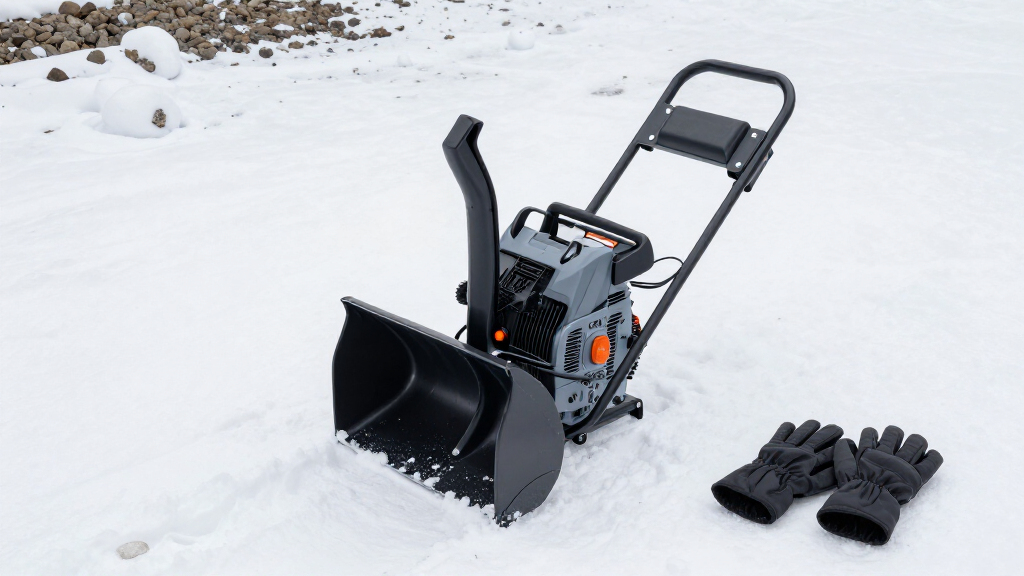
Single-stage snow blowers fail when the auger must ingest more dense material than one rotating system can gather and throw. Their low intake, limited weight and lack of a separate impeller make them fast pavement cleaners, but poor excavation machines when snow is deep, compacted or loaded with debris.
A traditional single-stage design uses one rubber-tipped auger to scrape, collect and accelerate snow through the chute. The paddles may touch the pavement, giving you a little forward pull and leaving a crisp black strip behind. That close sweep is the machine’s sharpest strength on smooth asphalt, yet it becomes its weakest point over stones, ruts and frozen chunks.
Think of the auger as a cook working one busy counter. It pulls ingredients in, processes them and sends them out, all in one motion. A two-stage machine divides the work: its auger feeds snow inward while a separate high-speed impeller throws it, giving the machine more breathing room when the intake fills with heavy material.
Depth ratings can mislead you because an intake opening does not measure real working capacity. A housing that stands about 12 inches high may swallow six inches of cold powder at walking pace, yet bog in four inches of rain-soaked slush. Snow density matters more than depth once the chute begins packing like a pipe full of wet cement.
For instance, an eight-inch fall at 15°F may drift from the chute in a pale, dusty arc. The same depth near 32°F can slap the chute walls, shorten throwing distance and make the motor hunt under load. Manufacturer operating guidance also tells you to match feed speed to conditions rather than treating rated depth as a guarantee [2].
single-stage snow blower for deep drifts
As an affiliate, we earn on qualifying purchases.
As an affiliate, we earn on qualifying purchases.
Beat a Plow Berm Before It Becomes Concrete
Single-stage snow blowers fail at plow berms because road plows compress snow, slush, grit and ice into a mass far denser than the snowfall on your driveway. A fresh berm may yield to small bites, while a refrozen berm can make the auger ride upward, stall or throw snow only a few feet.
The ridge at the curb is snow’s version of reinforced concrete. Tires knead salt, road grit and brown slush into the pile; then cold air locks the mixture together. One section may feel like oatmeal while the next hides a blue-white ice block hard enough to chip a paddle or jam the housing.
Attack that ridge as soon as the plow passes, before the wet face freezes. Approach squarely, take roughly one-quarter to one-half of the housing width, and let the auger clear before feeding the next bite. If the engine note drops sharply or an electric model’s overload protection trips, back away and reduce the load.
A homeowner with a 20-inch blower might face a berm 30 inches deep and four feet across at the driveway mouth. Trying to swallow the whole face makes snow roll over the housing and pushes the lightweight machine sideways. Cutting six-inch slices turns one brutal pass into several controlled passes, slower on paper but faster than stopping for repeated clogs.
Never ram a frozen berm. Shut the machine down before inspecting a jam, remove the key or battery or disconnect the spark-plug lead as the manual directs, and use only the supplied cleanout tool. The U.S. Consumer Product Safety Commission warns that stored energy can make the auger or impeller move after a blockage releases [1].
When a shovel or ice chopper cannot break the berm without heavy blows, the practical answer is a heavier two-stage machine or manual breakup before blowing. Wear eye protection, insulated gloves and boots with aggressive tread. Road debris can hide nails, wire and stones inside what looks like harmless snow.
two-stage snow blower for gravel driveway
As an affiliate, we earn on qualifying purchases.
As an affiliate, we earn on qualifying purchases.
Keep Gravel on the Driveway, Not in the Air
Single-stage snow blowers fail on loose gravel because traditional rubber paddles sweep close to the surface and can feed stones directly into the chute. Tilting the machine back may leave a protective snow layer, but it cannot reliably remove projectile risk or prevent rapid wear to paddles and scraper bars.
On pavement, close contact produces that satisfying scraped-clean finish. On gravel, the same action turns the chute into a pitching machine. A thumb-sized stone can crack a window, dent siding or strike someone standing well beyond the strip you are clearing, so keep people, pets and vehicles away from the full discharge path.
| Condition | Single-stage result | Two-stage result |
|---|---|---|
| Smooth paved surfaces with 4–6 inches of powder | Fast, clean sweep with easy turning | Capable, but heavier than the job requires |
| Loose gravel before a packed snow base forms | High stone pickup and wear risk | Skid shoes can raise the housing above stones |
| Frozen ruts or uneven pavers | Paddles and scraper can strike high spots | More clearance, weight and controlled wheel drive |
| Mixed paved and gravel driveway | Useful only where the manual approves each surface | Usually easier to configure for both surfaces |
For instance, a 200-foot rural driveway may look firm after the first snowfall, yet its crown still holds loose pea gravel. If you scrape it bare, the chute can pepper a parked truck with stones. A two-stage unit set on skid shoes can leave an inch or so of snow, allowing traffic to build a packed base without digging into the aggregate.
Some newer machines marketed as single-stage models use metal or reinforced augers and do not mimic the old pavement-sweeping layout exactly. The label alone does not grant gravel approval. Read the operator’s manual for an explicit surface statement, because a metal auger may cut hard snow better while still striking and throwing stones [2].
If your only option is a traditional single-stage blower, avoid loose areas and use a shovel or another approved tool there. Tilting backward reduces cleaning quality and demands constant wrist pressure, and one dip in the driveway can drop the paddles into gravel. Leave a base, mark driveway edges and never aim the chute toward glass, roads or neighboring property.
snow blower accessories for plow berms
As an affiliate, we earn on qualifying purchases.
As an affiliate, we earn on qualifying purchases.
Cut Deep Drifts in Layers Without Wrecking the Machine
Single-stage snow blowers fail in deep drifts because wind packs snow into dense, uneven layers that can rise above the intake. The machine may tunnel into the bottom, lose throwing distance and leave an overhanging wall that collapses back into your path. Layered removal keeps the auger load manageable.
A drift is not simply a taller version of fresh snowfall. Wind sorts and presses the crystals, sometimes building a pale crust over softer snow underneath. Your housing bites the soft lower layer, the hard cap hangs for a moment, then drops across the handles and boots like a slab sliding from a roof.
- Test the drift with a shovel. Check its depth, crust and hidden obstacles before starting the blower.
- Remove the upper layer. Use a shovel where the drift stands above the intake rather than lifting a running machine into it.
- Take half-width passes. Give the auger and chute room to clear each load before feeding more snow.
- Work with the wind. Throw downwind so fine snow does not blow back into the cleared lane or your face.
- Stop after repeated stalls. Overload shutdowns, belt smell or constant chute plugging mean the machine has crossed its practical limit.
Suppose a fence funnels a 20-inch drift across one corner of a driveway after only eight inches fell. A blower advertised for 12 inches cannot treat that bank like ordinary snow. Shovel the top eight inches aside, then make partial-width passes through the lower section while keeping the chute aimed away from the remaining wall.
Many single-stage machines feel comfortable in roughly 6–8 inches of ordinary snow, though model design and snow type move that line. They struggle when snow is dense, wet or mixed with a wind crust. An advertised capacity near 12 inches does not promise steady progress through a 12-inch drift [2].
Do not lift, buck or ram the blower. Those moves shift your weight onto slick footing and can produce sudden kickback when the auger catches a hard layer. If the drift returns after every storm, a machine with powered wheels, more intake height and greater weight gives you safer, more repeatable control.
heavy-duty snow blower for dense snow
As an affiliate, we earn on qualifying purchases.
As an affiliate, we earn on qualifying purchases.
Read These Seven Warning Signs Before Something Breaks
Your blower is undersized for the job when it repeatedly stalls, loses throwing distance or needs constant lifting and pushing. One brief slowdown in a heavy patch is normal; repeated overloads, belt odor and violent vibration tell you that snow conditions have exceeded the machine’s safe working pace.
- Auger stoppages: The snow load or a hidden object is blocking rotation.
- Overload shutdowns: An electric motor controller is protecting the battery or motor from excess heat and current.
- Hot rubber smell: A slipping belt may be heating under a stalled or overloaded auger.
- Short throws: Wet buildup, worn paddles, low speed or an overfilled intake is stealing discharge energy.
- Snow over the housing: The intake is too short for the pass you are attempting.
- Constant lifting or ramming: Low weight and weak traction are forcing your body to replace powered wheel drive.
- Sideways sliding: The machine lacks directional control on the slope or uneven surface.
For instance, a cordless blower may throw cold powder 25 feet at the garage, then drop wet berm snow three feet at the curb before shutting off. That change does not automatically mean the battery is defective. The berm demands more torque, and a cold pack may deliver less usable energy while sticky snow loads the chute.
Treat the machine’s sound like a pulse. A steady engine or motor note means material is moving through; a repeated growl, sag and recovery means you are feeding snow too fast. Back off, let the chute clear and reduce pass width instead of leaning harder into the handles.
Before maintenance, stop the machine, remove its battery or safety key, or disconnect the spark-plug lead according to the manual. Wear eye protection and gloves, but never place a hand in the chute or auger housing, even with the power off. Stored belt tension can move parts when a packed clog releases [1].
Inspect paddles, scraper bars and belts at least once each season and whenever cleaning quality drops. Replace wear parts at the manufacturer’s indicator or specified limit. A fresh scraper will not turn a pavement blower into a berm cutter, but worn parts can make a manageable six-inch snowfall feel much harder.
Choose the Machine That Fits Your Worst 30 Minutes
A two-stage blower is the better choice when your hardest half-hour regularly includes loose gravel, more than roughly 8–10 inches of snow, large plow berms, steep grades or wind-packed drifting. Buy for the worst recurring condition, not the easy powder that covers most of the driveway.
Single-stage machines still earn their place. They are compact, quick to turn and excellent on paved surfaces with light-to-moderate snowfall. On a 40-foot suburban driveway, clearing four inches before breakfast may take less effort with a small cordless unit than wrestling a 250-pound gas machine out of storage.
Now change the scenario to a 300-foot gravel lane with a steep apron and a plow ridge found in plow routes after every storm. Low weight becomes poor traction, close scraping becomes stone pickup, and compact intake geometry becomes a bottleneck. A two-stage model’s skid shoes, driven wheels and separate impeller address all three conditions at once.
Battery versus gas adds another layer. Modern brushless cordless machines can deliver strong peak power, instant starting and low routine maintenance. Yet runtime depends on watt-hours, battery temperature, snow density, pace and clearing width; a maximum-voltage badge or advertised clearing area cannot predict how long the machine will work through wet berm snow.
Gas models offer quick refueling and sustained work for long driveways, but you accept fuel storage, oil service, exhaust, noise and more seasonal maintenance. Cordless units avoid gasoline fumes and start cleanly after months in storage, though extra high-capacity batteries can cost hundreds of dollars. Warm and charge packs indoors only within the temperature range stated by the manufacturer.
Your buying checklist should start with the surface, normal storm depth, snow moisture, driveway length, slope and throwing distance. Then ask whether you can clear during a storm or must wait until accumulation ends. Frequent short clearings favor a single-stage machine; one late attack on deep, compacted snow favors a heavier platform.
Machine labels do not settle every choice. Some newer stage snow blowers blur old categories with steel augers, variable speed and auger-assisted movement. Read the manual, check gravel approval, price replacement belts and batteries, and compare intake height and drive system rather than choosing by voltage or stage count alone.
Frequently Asked Questions
Can a single-stage snow blower clear a plow berm?
It can clear a fresh, soft plow berm when you take narrow bites before the ridge freezes. Dense berms containing ice, road grit and refrozen slush often exceed the machine’s traction and throwing capacity, so break them up manually or use a two-stage blower.
Can I use a single-stage snow blower on gravel?
Traditional paddle-style models are poor matches for loose gravel because their augers work close to the ground and can throw stones. Use the machine only if its manual explicitly approves the surface, and never assume a metal auger makes gravel safe.
How deep is too deep for a single-stage blower?
There is no universal cutoff, but 6–8 inches of ordinary snow is a useful working range for many models. Wet snow, wheel-packed tracks and hard drifts can overwhelm a machine at much lower depths, while light powder may remain manageable closer to the intake rating.
Why does my blower push snow instead of throwing it?
The intake may be overfilled, the chute may be packed with wet snow, or the paddles and belt may be worn. Reduce your feed speed, take a partial-width pass and shut down safely before checking a clog; repeated poor discharge points to excessive snow density or a maintenance problem.
Will a higher-voltage cordless blower handle deep drifts?
More available power helps, but voltage cannot replace intake height, machine weight, traction or a separate impeller. A strong cordless single-stage model may outperform an older gas unit in ordinary snow while still stalling in a wind-packed drift or scraping dangerously over gravel.
Should I remove a deep snow drift in layers?
Yes. Remove the section above the intake first, then clear the lower layer with half-width passes while throwing downwind. This method keeps snow from spilling over the housing and reduces the urge to lift or ram the machine.
Are two-stage snow blowers always better?
No. A two-stage machine brings more traction, clearance and throwing capacity, but it also costs more, occupies more storage space and takes greater effort to maneuver. A compact single-stage blower remains the quicker tool for smooth pavement and frequent light snowfalls.
Conclusion
Your smartest move is to match the blower to the hardest snow you face repeatedly. Keep a single-stage machine for quick, clean work on smooth pavement, clear early, and feed difficult patches in narrow bites; choose a two-stage unit when gravel, packed berms or deep drifting make every storm a wrestling match.
Do not let a tall intake rating talk you into forcing the machine. The moment you smell a belt, lose control or spend more time clearing clogs than clearing snow, stop and change the method. A driveway should end with clean tracks and a steady machine, not scorched rubber hanging in the cold air.
Halloween Picks
halloween
As an affiliate, we earn on qualifying purchases.