
TL;DR

Get business pricing on tools and workshop supplies
- Business-only prices and quantity discounts
- Tax-exempt purchasing
- Multiple users, one account, clear invoices
Single-stage paddle and scraper bar wear reduces surface contact, forward pull, snow intake, and throwing distance before the parts fail outright. Inspect both components together, follow the model-specific wear marks and clearances, and replace matched paddle sets before the housing begins contacting pavement.
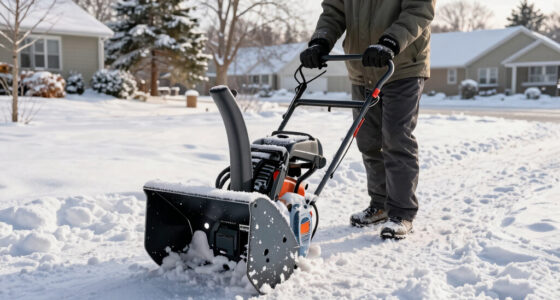
Your snow blower can sound perfectly healthy while its clearing ability slips away one storm at a time. The motor still hums or the engine still barks, yet throwing distance shrinks, the machine stops pulling forward, and a thin white film remains on the driveway.
The usual suspects get blamed first: heavy snow, a tired battery, stale fuel, or a belt beginning to slip. Often, the real problem sits at pavement level. Single-stage machines depend on two closely related wear parts—the spinning paddles and the scraper bar—and losing only a few millimeters of working material can change how the entire housing meets the ground.
This guide shows you how to spot single-stage paddle and scraper bar wear, separate it from powertrain trouble, and inspect the machine without putting your hands near an active auger. You will also learn when to replace one part, when to replace both, and why rough concrete can chew through rubber like coarse sandpaper.
Inspect paddle wear and scraper-bar wear together because both parts control the housing’s working height, surface contact, and snow intake.
Use molded wear indicators, minimum dimensions, and model-specific clearances instead of replacing parts by age alone.
Replace paddles as a complete matched set when the manual calls for it; mixing new and heavily worn paddles can create vibration and uneven clearing.
Disconnect the battery or spark-plug lead, remove the key, wait for all movement to stop, and use a clean-out tool before working near the auger.
Reduce wear by avoiding loose gravel, bare-pavement operation, excessive handle pressure, and long exposure to heat, oil, chemicals, or sunlight.
Single-stage maintenance field guide
When Performance Quietly Drops
Single-stage paddle and scraper bar wear can reduce surface contact, forward pull, snow intake, and throwing distance long before either part fails. A healthy-sounding powertrain may be masking a geometry problem at pavement level.
Paddles and the scraper bar establish the same narrow working zone.
Follow model-specific indicators, minimum dimensions, and clearances.
Grinding can turn routine wear-part service into housing or auger damage.
The engine or motor can remain strong.
Small dimensional changes alter contact.
Matched replacement protects balance.
Rough concrete acts like coarse sandpaper.
01 / Working geometry
Power is only half the equation
The paddles sweep, collect, accelerate, and often help pull the machine forward. The scraper bar loosens packed snow and establishes the housing’s lower edge. Wear either component and less power reaches the snow.
Paddles
Loss of diameter and edge definition reduces intake volume, pavement contact, forward assistance, and discharge energy.
Watch for rounded edges, cracks, fraying, scalloping, missing chunks, and uneven wear.Scraper bar
A shortened or rounded edge enlarges the floor gap, changes housing angle, and allows packed snow to remain underneath.
Watch for grooves, bowing, cracks, uneven ends, loose bolts, and wear near fasteners.Housing stance
The two parts determine how the clearing path meets pavement. Replacing only one may correct a symptom without restoring the intended geometry.
If both are near their service limits, replace them during the same maintenance session.02 / Symptom decoder
Which part is speaking?
Symptoms overlap, so treat this matrix as a starting point rather than a substitute for measurement. Inspect every paddle, the full scraper edge, and all related fasteners.
| What you notice | Paddle clue | Scraper-bar clue | Priority check |
|---|---|---|---|
| Shorter throwing distance | ✓Reduced diameter or damaged edges move less snow. | ~A larger floor gap can weaken clean intake. | Compare paddle edges with molded wear indicators. |
| Thin snow film remains | ~Paddles may no longer sweep close enough. | ✓A rounded or short edge misses packed snow. | Check edge shape and specified housing clearance. |
| Machine needs more pushing | ✓Loss of paddle-to-pavement pull is common. | ~An incorrect housing angle can add drag. | Inspect both components as one contact system. |
| One side clears worse | ~Uneven wear or installation may be present. | ✓Crooked adjustment or uneven edge wear is likely. | Compare the center and both ends; check bolts. |
| New vibration or thumping | ✓Look for a split, missing chunk, or mismatched set. | ~Loose hardware or pavement contact can contribute. | Stop operation and inspect before further use. |
| Harsh metallic rasp | ✗Not a normal wear sound to ignore. | ✓Housing or fasteners may be reaching pavement. | Stop immediately to prevent structural damage. |
✓ Strong association ~ Possible or secondary association ✗ Stop and investigate another contact point
03 / Safe inspection
Hands never enter the active zone
Complete shutdown is the first inspection step. Snow-contact parts can retain stored motion, and a blocked auger can move unexpectedly when obstruction pressure is released.
Isolate all power
Remove the key. Disconnect the battery or spark-plug lead according to the machine’s manual.
Wait for complete stillness
Confirm every moving component has stopped before approaching the housing.
Clear with the correct tool
Use a clean-out tool for packed snow. Never use hands or feet near the auger or chute.
Measure the full system
Check molded wear marks, minimum dimensions, scraper clearance, hardware, shaft supports, belt, pulleys, and housing.
04 / Wear profile
Friction writes the service schedule
These relative bars visualize typical wear pressure, not universal service-life percentages. Surface abrasiveness, operating technique, adjustment, storage, and replacement-part dimensions all influence the rate.
Relative wear pressure
Longer bars indicate conditions that generally accelerate paddle and scraper wear.
Repair decision guide
Always confirm the exact procedure and specifications in the model manual.
The quiet performance-loss chain
Abrasive contact
Concrete, grit, debris, and excess pressure remove working material.
Geometry shifts
Paddle reach declines and the housing gap or angle changes.
Snow contact falls
Less material is collected, accelerated, and cleanly scraped.
Operator compensates
More pushing, slower travel, and repeat passes hide the decline.
Damage risk rises
Fasteners or housing may eventually contact the pavement.
05 / Extend service life
Preserve the contact zone
Wear cannot be eliminated, but correct operation and storage can keep the paddles, scraper, and housing aligned for longer.
Avoid loose gravel
Pavement-oriented single-stage machines can throw stones and suffer rapid abrasive wear.
Stop on bare pavement
Once snow is cleared, continued operation converts useful contact into unnecessary friction.
Use neutral handle pressure
Forcing the housing downward accelerates scraper and paddle wear without adding motor power.
Keep hardware secure
Loose or incorrectly installed paddles can wear unevenly and produce imbalance or vibration.
Store rubber carefully
Limit prolonged exposure to oil, chemicals, heat, sunlight, and ozone-producing equipment.
Use model-correct parts
Dimensions and rubber hardness affect clearance, contact behavior, balance, and service life.
Inspect as a system
Check every paddle, mounting hardware, scraper bar, fasteners, side components, shaft supports, belt, pulleys, and housing whenever either wear part reaches its limit.
Trust dimensions over sound
A smoothly running engine or fully charged battery cannot restore missing paddle diameter or a scraper edge that has worn round. Measure before blaming the powertrain.
Why a Strong-Running Snow Blower Can Still Clear Poorly
Single-stage paddle and scraper bar wear quietly changes the machine’s working geometry. Smaller paddles collect less snow and provide less forward pull, while a worn scraper opens a larger gap under the housing. The drive system may still produce full power, but less of that power reaches the snow.
The paddles do several jobs during every revolution. They sweep snow from the pavement, carry it into the housing, accelerate it toward the chute, and, on many pavement-oriented designs, lightly touch the ground to help tug the machine ahead. A fresh paddle edge acts like the tread on a winter tire; a rounded, shortened edge acts more like a smooth shoe on wet tile.
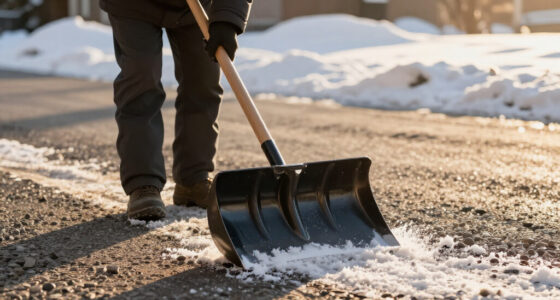
The scraper bar sets the lower edge of the clearing path. Its square edge loosens packed snow and holds the housing at the intended angle. When scraper bar wear shortens that edge, snow slips underneath, the machine rides differently, and even healthy paddles may no longer reach the surface as designed.
Imagine clearing a 60-foot driveway after four inches of dry snow. Last winter, the machine threw a clean ribbon 20 feet and pulled itself forward. This winter, it leaves a pale layer behind and needs two passes, even though the engine note has not changed. That is a classic example of when performance quietly drops because wear has altered contact, not power.
Power is only half the equation. A strong motor cannot replace missing paddle diameter or restore a scraper edge that has worn round.
According to Outdoor Pro Masters [1], performance can fall well before a paddle tears or a scraper looks completely spent. That slow decline explains why owners often adapt by pushing harder without realizing the machine needs service.
snow blower paddle replacement kit
As an affiliate, we earn on qualifying purchases.
As an affiliate, we earn on qualifying purchases.
The Warning Signs That Tell You Which Part Is Worn
Single-stage paddle and scraper bar wear produces different clues, but the symptoms often overlap. Worn paddles usually reduce snow intake, forward assistance, and throw distance. A worn scraper more often leaves a layer behind, changes the housing angle, or lets the machine scrape unevenly.
| What you notice | Likely paddle clue | Likely scraper-bar clue |
|---|---|---|
| Shorter throwing distance | Reduced diameter or damaged edges move less snow | A larger floor gap may reduce clean intake |
| Thin snow layer remains | Paddles no longer sweep close enough | Rounded or shortened edge misses packed snow |
| Machine needs more pushing | Loss of paddle-to-pavement pull | Incorrect housing angle adds drag |
| One side clears worse | Uneven paddle wear or installation | Crooked adjustment, loose bolts, or uneven wear |
| New vibration | Chunk missing, split rubber, or mismatched paddles | Loose hardware or pavement contact |
A paddle deserves close attention when its edge looks rounded, cracked, frayed, or scalloped. Missing chunks matter even if the remaining rubber looks thick. Many paddles also have molded holes, grooves, or marks that become the replacement limit; follow those marks rather than guessing from age alone.
A scraper bar should have a reasonably straight working edge. Deep grooves, a bowed shape, wear near the mounting bolts, or one end shorter than the other points to service. For example, if the right side leaves a quarter-inch ridge on every pass, check for uneven scraper adjustment, loose hardware, and a habit of leaning on that side.
Listen as well as look. A rhythmic thump can come from a torn paddle, while a harsh metallic rasp may mean the housing or fasteners are reaching the pavement. Stop immediately if you hear metal grinding; continued use can turn a modest wear-part replacement into housing and auger damage.
single-stage snow blower scraper bar
As an affiliate, we earn on qualifying purchases.
As an affiliate, we earn on qualifying purchases.
How Paddles and the Scraper Bar Wear Each Other Out
Single-stage paddle and scraper bar wear works as a system because both parts control the same narrow contact zone. New paddles cannot clear properly if a badly worn scraper holds the housing at the wrong height, and a new scraper cannot restore the reach of paddles that have lost too much diameter.
Think of the housing as a scoop balanced just above the pavement. The scraper defines the scoop’s leading edge, while the paddles sweep material through it. Change either dimension and the whole scoop tilts or opens, much like a door that no longer meets its frame after one hinge sags.
Suppose you install a fresh scraper under a machine with heavily rounded paddles. The clean new edge may shave packed snow, but the undersized paddles still cannot grab and accelerate enough material. You get a cleaner front edge yet keep the same weak discharge—a repair that fixed one symptom, not the geometry.
The reverse happens when you bolt new paddles above a scraper worn close to its fasteners. Those paddles may sit farther from the pavement than the design calls for, so their extra diameter never delivers the expected pull. They can also experience uneven loading if the scraper holds one side higher than the other.
- Inspect every paddle, including its bolt holes and reinforcement.
- Check the scraper edge and fasteners at the center and both ends.
- Look at side plates, bushings, bearings, the auger shaft, belt, and pulleys.
- Check the housing for cracks, bends, polished pavement marks, or worn bolt heads.
This is why stage snow blowers depend on two closely related wear components rather than one isolated consumable. If both sit near their stated limits, replacing them during the same service session often restores the intended stance and saves you from opening the housing again after the next storm.
As an affiliate, we earn on qualifying purchases.
How to Inspect the Wear Parts Without Risking Your Hands
- Shut the machine down completely. Remove the ignition key, disconnect the spark-plug lead on a gas model, or remove the battery on a cordless model. Wait until every moving part stops.
- Clear the auger area safely. Use the supplied clean-out tool for packed snow and ice. Never reach into the housing, even when the machine appears off.
- Inspect three zones. Compare the left end, center, and right end of each paddle and the scraper bar. Uneven wear can hide when you look from only one angle.
- Find the model’s wear limit. Check molded paddle indicators, minimum dimensions, scraper position, and clearance specifications in the owner’s or service manual [2].
- Check hardware and movement. Look for loose, bent, missing, or corroded fasteners. After any service, rotate the auger by hand only while the power source remains disconnected and confirm that nothing rubs.
A safe inspection starts with physical power isolation, not trust in a switch. A cordless machine can respond instantly if a control is bumped, while a gas engine can move unexpectedly during handling. Wear eye protection and cut-resistant gloves, but treat PPE as backup rather than permission to touch a connected mechanism.
Use bright light and get low enough to see the working edges squarely. On a wet January morning, black rubber coated with gray slush can look normal from above. Wipe it clean, then look for exposed reinforcement, cracks around mounting holes, shiny rubbing marks, and differences in paddle length.
For a real-world check, place the disabled machine on a flat garage floor and compare both scraper ends with the center. A bar that looks straight in your hand may show a clear bow against smooth concrete. Do not rely on a random gap measurement from another model; paddle contact and scraper clearance vary by design.
According to manufacturer service guidance [2], model-specific wear marks and dimensions control the replacement decision. Age does not. A three-year-old machine used on smooth concrete may have healthy paddles, while a one-season machine run across rough aggregate can already be at its limit.
Never inspect, unclog, or rotate the auger while the battery, spark-plug lead, or ignition key remains connected.
snow blower paddle and scraper bar set
As an affiliate, we earn on qualifying purchases.
As an affiliate, we earn on qualifying purchases.
The Habits and Surfaces That Consume Wear Parts Fastest
Single-stage paddle and scraper bar wear accelerates fastest on abrasive or debris-covered surfaces. Rough concrete, loose asphalt grit, gravel, and bare pavement grind away rubber and polymer with every revolution. Extra downward pressure makes that grinding action harder and faster.
Exposed-aggregate concrete is especially hungry. Each small stone stands proud of the slab like a tooth on a file. A machine that clears 2,000 square feet of rough driveway several times a week can show more wear than one covering twice that area on smooth, sealed pavement.
Running after the snow is gone creates another problem. Snow provides lubrication and resistance; dry pavement gives the paddle edge direct, hot friction. If you keep the auger spinning while walking the machine back across a cleared driveway, you spend paddle life without moving a single pound of snow.
- Do not press down hard on the handle to scrape cleaner; correct the worn or misadjusted parts.
- Avoid loose gravel unless the manufacturer specifically approves the machine for it.
- Remove stones, construction debris, and branches before snowfall when practical.
- Stop the auger before crossing long stretches of bare pavement.
- Store paddles away from oil, strong chemicals, direct sun, heat, and ozone-producing equipment.
One common scenario happens at the curb. The driveway is smooth, but the final six feet contain gritty plow debris and frozen road sand. The operator leans down on the handle to break the ridge, and the paddles chew through that abrasive mix at full speed. A few curb-clearing sessions can create uneven, rapid wear that the rest of the driveway never would.
Loose gravel presents a safety hazard beyond shortened part life. Paddle-to-ground machines can collect stones and fire them through the chute at speed. Keep people, pets, windows, and vehicles out of the discharge path, and choose equipment specifically approved for that surface.
When Replacing One Part Works—and When You Need Both
You can replace one wear part when the other remains within its manufacturer limit, sits straight, and shows no damage. Replace both when paddle diameter and scraper height are near their limits, when uneven wear affects the machine’s stance, or when one worn component would prevent the new part from working correctly.
Start with the exact model and serial number. Original-equipment parts usually offer predictable diameter, rubber hardness, hole spacing, and balance. Aftermarket parts can work well, but a black rubber paddle that looks close on a screen may differ by several millimeters or use reinforcement that bends differently under load.
Replace paddles as a complete matched set unless the manufacturer provides different instructions. A single fresh paddle beside several worn ones can load the shaft unevenly, create vibration, and produce a pulsing clearing pattern. It resembles replacing one shoe on a runner: the new part is fine, but the mismatched pair throws off the stride.
Scraper bars need the specified position, washers, bolt direction, and tightening torque. Some models offer reversible bars with a second working edge. Flip one only when the manual identifies it as reversible; matching bolt holes alone do not prove the unused edge has the correct profile.
Imagine installing a matched paddle kit before a six-inch storm. With the battery removed or spark-plug lead disconnected, you rotate the auger through one full turn and hear a soft rub at the right side. Do not assume it will wear in. Recheck orientation, bolt seating, scraper position, and housing shape before applying power.
Seek professional service when bolts are seized, the housing is bent or cracked, the shaft has side play, or the auger keeps rubbing after correct installation. Forcing a rusted fastener beside thin sheet metal can tear the housing, while running an interference point can damage a belt, bearing, motor, or engine-driven pulley.
Why Battery and Gas Models Can Hide the Same Wear Problem
Battery and gas single-stage machines can hide the same worn-parts problem because motor sound does not measure snow engagement. A brushless motor may maintain steady speed through electronic control, while a gas engine may hold its familiar exhaust note. Neither sound proves the paddles still reach or the scraper still sits correctly.
A modern cordless unit can feel especially deceptive. Strong low-speed torque and overload protection may keep the rotor turning smoothly even after the paddles lose useful diameter. You finish the driveway with charge remaining, yet the machine throws wet snow only eight feet and leaves a slick white skin behind.
A gas model may send you toward fuel and belt checks first. Those checks make sense when the engine surges, bogs, or the auger slows. If the engine remains steady and the rotor speed looks normal, inspect paddle reach, damaged edges, and scraper height before opening the fuel system or replacing drive parts.
The tradeoff is simple. Cordless drivetrains offer quiet starts, low routine engine maintenance, and immediate torque, but replacement batteries add cost and cold weather can reduce available runtime. Gas machines often support longer sessions with quick refueling, but they bring fuel storage, oil, noise, exhaust, and more engine service. Both still grind the same wear parts against the same driveway.
For example, two neighbors may clear equal 3,000-square-foot paved areas, one with battery power and one with gas. If both press down on rough concrete, their scraper bars and paddles face similar abrasion. The power source changes runtime and maintenance; the pavement controls much of the wear rate.
Frequently Asked Questions
How long do single-stage snow-blower paddles usually last?
There is no reliable calendar interval for paddle life. Smooth pavement and light use may preserve a set for several seasons, while rough aggregate, road grit, and bare-pavement running can consume one much faster. Use the model’s wear indicators or minimum measurements rather than age.
Should single-stage paddles touch the pavement?
Many pavement-oriented machines use light paddle contact to sweep clean and help pull the unit forward, while other designs specify a small gap. Follow your owner’s manual because excess contact speeds wear, and too much clearance weakens cleaning and forward assistance.
Why does my snow blower leave a thin layer behind?
Common causes include worn paddles, a rounded scraper bar, the wrong operating angle, excessive walking speed, or uneven pavement. If the motor holds speed but the machine has lost its forward tug, inspect paddle diameter and scraper position first.
Can I replace one damaged paddle instead of the full set?
A complete matched set is usually the safer choice because every paddle then has similar weight, reach, and flexibility. One new paddle beside worn pieces can create imbalance, vibration, uneven shaft loading, and a pulsing clearing pattern. Follow the model’s service instructions.
When should I take the snow blower to a service shop?
Get professional help when vibration persists, the auger rubs after correct installation, the housing is bent or cracked, the shaft has play, or fasteners cannot be removed safely. Stop using the machine if metal contacts pavement or a paddle begins shedding material.
Conclusion
The best time to replace paddles or a scraper bar is at the stated wear limit, not after rubber tears or the housing starts throwing sparks. Check both parts before the season, inspect them again during heavy use, and investigate any steady loss of pull, surface cleaning, or throwing distance while the powertrain still sounds healthy.
A five-minute look beneath a safely disabled machine can save repeated passes, wasted battery runtime, extra fuel, and a scarred housing. Keep the working edges within specification, and your snow blower will leave behind dark, clean pavement instead of a pale trail that freezes into glass overnight.
Columbus Day / Indigenous Peoples' Day Picks
long weekend sales
As an affiliate, we earn on qualifying purchases.