
TL;DR

Get business pricing on tools and workshop supplies
- Business-only prices and quantity discounts
- Tax-exempt purchasing
- Multiple users, one account, clear invoices
A Hunker home-improvement report recommends letting paint dry on French-door glass and scraping it away with a sharp razor scraper, rather than taping around every pane. The method may save masking time, but the report advises careful blade handling and removing the paint before it hardens too much.
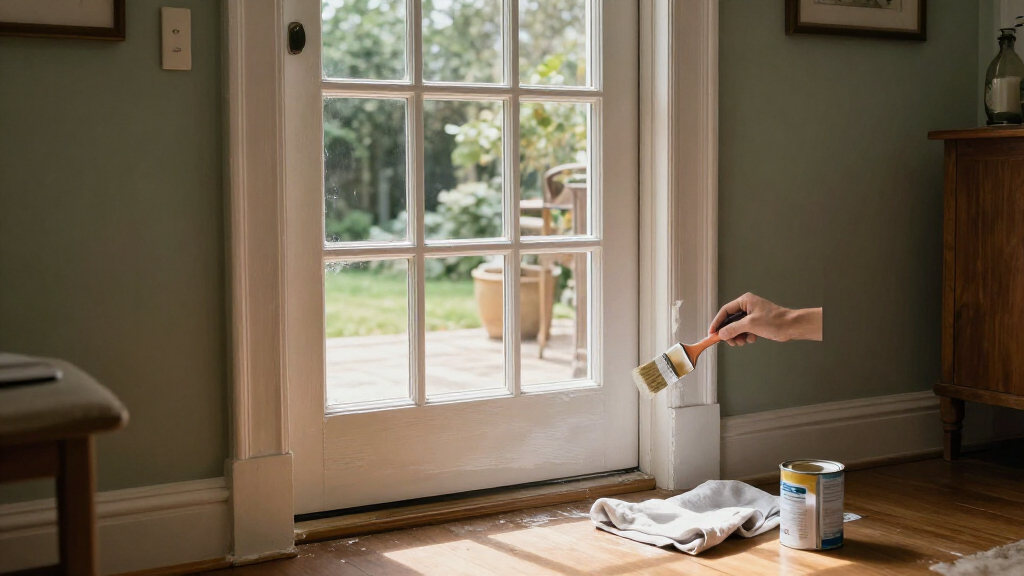
Hunker has described a way to paint French doors without masking every glass pane with painter’s tape: allow stray paint to dry, then remove it from the glass with a sharp razor scraper. The report says the approach can cut preparation time, though it requires careful handling to avoid scratching or cracking the glass.
French doors often have narrow muntin bars—the dividers between panes—that make painting around the glass time-consuming. Hunker says tape is a common way to protect the glass, but applying it around each edge takes time and may not prevent paint from seeping underneath. The alternative is to paint the door and clean any paint on the glass afterward.
The report recommends waiting until the paint is dry but not leaving it too long; it says usually no more than 24 hours is preferable because paint becomes harder to remove as it dries further. It attributes the method’s usefulness to the fact that many house paints and primers do not bond strongly to smooth glass. The article identifies razor scrapers as suitable tools and mentions both a small scraper set and a longer-bladed tool as examples, rather than establishing that a particular product is required.
For cleanup, Hunker instructs readers to hold the scraper at a 45-degree angle or shallower and gently push the blade against the paint, not down into the glass. Once an edge lifts, the paint can be peeled away by hand or scraped onward. The blade can be guided toward the glass-and-mullion edge to remove the remaining strip. The report advises using a sharp blade, then cleaning any haze from the glass after scraping.
Less Masking, Careful Cleanup
The method offers a practical trade-off for homeowners: it may reduce the time spent applying tape across many small panes, but shifts part of the work to cleanup after painting. That could be useful on doors with numerous muntins, where repeated taping and cutting in around each pane add up. Hunker also presents scraping as an alternative to liquid masking products, which it says may damage a wooden frame.
The technique is not risk-free. A razor blade can injure the user or damage the glass if handled carelessly, and the report specifically warns against pressing down into the pane. Readers should follow the scraper maker’s instructions, keep hands clear of the blade’s path, and avoid scraping if the glass is damaged or its condition is uncertain. The source does not provide comparative testing of time, cost, or damage rates, so its description of the method as faster or more effective should be understood as the report’s recommendation, not a measured result.
Popular right now

eufy C28 Robot Vacuum Cleaner and Mop for Pet Hair, 15,000 Pa

Shark AI Ultra Robot Vacuum, Black/Silver, AV2511AE

Philips Café Aromis Automatic Espresso Machine with LatteGo Pro Milk System
As an affiliate, we earn on qualifying purchases.
Why French-Door Panes Need Care
The article addresses a familiar painting problem: French doors combine wood or other frame material with multiple glass panes, so a brush can leave paint where it is not wanted. Muntins create many narrow borders to protect. Painter’s tape can cover those edges, but it must be applied and removed around each pane, and paint may still get beneath it.
Hunker’s suggested sequence reverses that approach: paint first, then scrape paint from the glass after it dries. The report also notes that paint should not be left until it has become especially difficult to lift. Its practical advice is limited to cleanup from glass; it does not give detailed instructions on paint selection, door preparation, ventilation, or how to handle specialty coatings.
““For best results, and the least amount of headache, you’ll want to let the paint dry, but not too long — usually no more than 24 hours.””
— Hunker
Limits of the Scraping Advice
The source does not identify which paint formulations, glass types, or coatings might respond differently to scraping. It also does not report controlled comparisons between razor scraping and painter’s tape, including how much time either method takes or how often glass is scratched. The recommendation to clean up within about 24 hours is presented as general guidance, not a guarantee that every paint will lift easily in that window.
Hunker mentions specific scraper products, but the report does not establish that they have been independently tested or are necessary. Readers should check product instructions and take care with blades; if the glass is coated, damaged, unusually fragile, or part of a specialty door, the safest cleaning method may depend on its manufacturer’s guidance.
Before the Next Door Painting
For anyone using the approach, the immediate next step is to prepare the scraper and plan to remove stray paint soon after it dries. Hunker recommends a sharp blade, gentle pressure, and a shallow angle, followed by cleaning the glass to remove any leftover haze. The report also cautions against cleaning windows in direct sun, though it does not explain that point further.
No follow-up testing or additional product guidance is included in the supplied report. Homeowners should assess the condition of their glass and frame before choosing between masking and scraping, and stop if the blade catches or the pane appears at risk of damage.
Key Questions
What is the alternative to painter’s tape?
Let paint dry on the glass and scrape it off with a razor scraper, following the blade maker’s safety instructions.
When should paint be scraped from the panes?
Hunker advises scraping after the paint dries but says not to wait too long, suggesting usually no more than 24 hours. The exact timing may vary by paint and conditions.
How should the razor be held?
The report recommends a 45-degree angle or shallower, with gentle pressure against the paint rather than downward pressure into the glass.
Can the blade damage the glass?
Yes. Hunker warns that pressing into the pane can scratch or crack it and says a dull blade can make the task harder and increase injury or damage risk. Use caution and stop if the scraper does not move smoothly.
Source: hunker.com