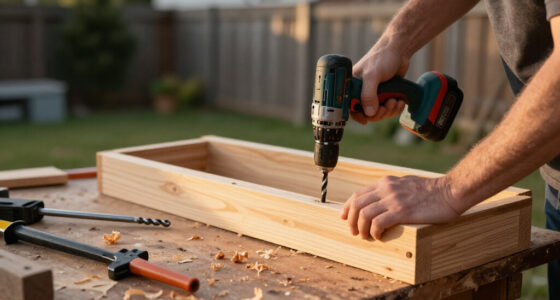

Choosing a cordless drill set is less about picking the biggest number on the box and more about matching the tool to the jobs you actually do. A compact 12V kit is designed for control and convenience: it is lighter, often less expensive, and well suited to furniture assembly, small repairs, pilot holes, and routine household tasks. An 18V kit is the more capable choice for sustained drilling, larger bits, dense materials, and regular project work, though the extra power usually comes with more weight and a higher upfront cost.

Get business pricing on tools and workshop supplies
- Business-only prices and quantity discounts
- Tax-exempt purchasing
- Multiple users, one account, clear invoices

BLACK+DECKER 20V MAX Cordless Brushless 1/2-Inch Drill Driver Kit with 30-Piece Bit Set, 2Ah Battery and Charger
- ✔ Voltage: 20V MAX (18V nominal)
- ✔ Motor: Brushless
- ✔ Maximum torque: 486 in-lb
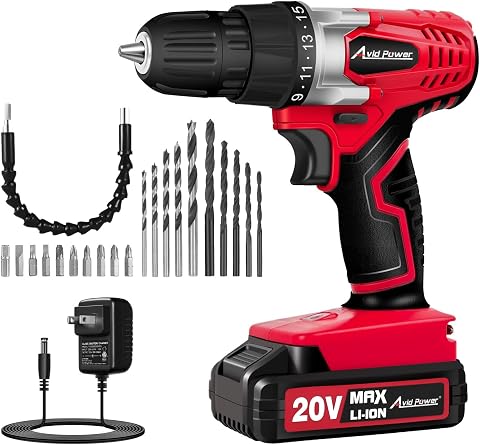
AVID POWER 20V Cordless Drill Set with Battery, Charger, and 22 Bits
- ✔ Voltage: 20V
- ✔ Maximum torque: 280 in-lb
- ✔ Speed: Variable, up to 550 RPM
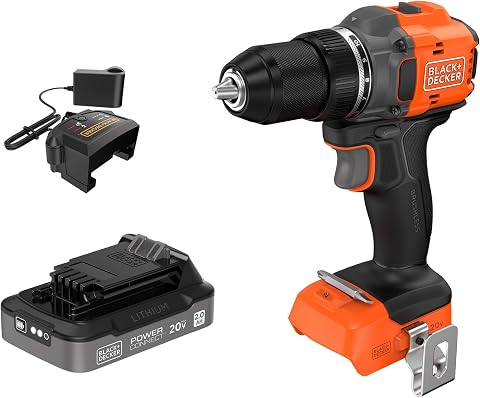
BLACK+DECKER 20V MAX POWERCONNECT Brushless Cordless Drill/Driver with 2Ah Battery and Charger
- ✔ Model: BLD782D1
- ✔ Voltage: 20V MAX (18V nominal)
- ✔ Motor: Brushless
These categories overlap. A well-made 12V drill can handle many home jobs, and an 18V drill can be used for delicate work when its clutch and speed settings are adjusted. The practical difference appears when a job becomes demanding or lasts long enough for weight and battery capacity to matter. This comparison covers power, handling, runtime, versatility, control, kit contents, cost, and long-term value. Choose 12V if you prize comfort and occasional-use value; choose 18V if you want headroom for tougher jobs or expect to use the drill often.
At a Glance
| Criteria | Compact 12V cordless drill set | 18V cordless drill set | Winner |
|---|---|---|---|
| Power and demanding tasks | Enough for routine household drilling and fastening; less suited to sustained heavy work | More headroom for larger holes, tougher materials, and demanding fastening | B |
| Weight and handling | Usually lighter and easier to use overhead or in tight spaces | Typically heavier, especially with larger batteries | A |
| Battery runtime | Lower overall capacity is common, but modest jobs may use little charge | Often higher-capacity batteries support longer work between charges | B |
| Versatility and tool ecosystem | Compact platforms cover common home tools, though selection varies by brand | Usually broad tool selection across a shared battery platform | B |
| Control for light work | Often easier to maneuver for small fasteners and delicate assembly | Capable, but bulk and extra torque can be less convenient for delicate jobs | A |
| Typical kit value | Typically lower entry cost; check whether batteries and charger are included | Costs more upfront, with value improving when the kit includes useful batteries | Depends |
| Long-term capability | Good for light and occasional tasks; may reach its limits as projects grow | Better suited to frequent use and expanding project needs | B |
BLACK+DECKER 20V MAX Cordless Brushless 1/2-Inch Drill Driver Kit with 30-Piece Bit Set, 2Ah Battery and Charger
This kit is our best overall choice because it balances capable drill specifications with the most substantial accessory bundle in this lineup. Its brushless motor, up to 486 in-lb of torque and 1/2-inch chuck give us more headroom for routine drilling and fastening than the AVID POWER’s 280 in-lb, 3/8-inch setup. Two speeds—0–450 and 0–1,900 RPM—and 10 clutch positions also make it easier to adjust the tool for slower screwdriving or faster drilling.The set’s 30-piece assortment includes drill and screwdriver bits, nut drivers and a magnetic bit holder, so we can start common household jobs without immediately assembling a separate accessory kit. That is a meaningful advantage over the POWERCONNECT drill, which includes only a double-ended screwdriver bit. Its LED, soft-grip handle and belt clip add practical convenience, though they do not change the central limitation: the included battery is 2Ah, so demanding or extended work may call for pauses to recharge or a compatible spare.We would choose this version for a household that wants one ready-to-go drill set, rather than for someone who already owns all the bits and only needs a drill. The 30-piece count is useful but should not be read as proof that every piece suits every material. As with the other models, this is a drill/driver rather than a masonry tool, and battery runtime depends on the job. Compared with AVID POWER, it provides more torque and speed; compared with the POWERCONNECT version, it is the stronger out-of-box package.
Pros:
- Brushless motor and up to 486 in-lb of listed torque.
- 1/2-inch chuck, two speed ranges and 10 clutch positions support varied drilling and fastening.
- Includes battery, charger and a 30-piece assortment with nut drivers and a magnetic bit holder.
- Built-in LED and soft-grip handle help with routine work in dim or confined areas.
Cons:
- The included 2Ah battery may require recharge breaks during sustained or demanding work.
- Other-tool use depends on owning compatible BLACK+DECKER 20V MAX batteries and equipment.
- Performance and claimed hole counts depend on materials and test conditions.
Best for: DIY households that want a brushless drill, a 1/2-inch chuck and a broad set of everyday drilling and driving accessories in one kit.
Not ideal for: Buyers who need a hammer drill for concrete, expect long sessions from a compact 2Ah battery, or already have a complete compatible bit collection.
Bottom line: We recommend this as the most versatile ready-to-use set here, provided a 2Ah battery and non-masonry scope fit our work.
“We recommend this as the most versatile ready-to-use set here, provided a 2Ah battery and non-masonry scope fit our work.”
AVID POWER 20V Cordless Drill Set with Battery, Charger, and 22 Bits
For smaller household jobs, AVID POWER makes a different case from the two brushless BLACK+DECKER drills: it prioritizes low weight and straightforward screwdriving control over higher speed and torque. At a specified 2.5 pounds, it is the lightest option in this comparison. Its 15+1 torque settings give us a range of adjustment for furniture assembly and ordinary repairs, helping reduce the chance of driving a fastener too far when a task calls for a gentle touch.The 22-piece kit includes 10 drill bits, 10 driver bits, a flexible shaft and an extension bar, alongside a battery with a charge-level display and charger. That combination is practical for a new DIYer who wants to handle common indoor jobs without choosing accessories separately. The display can also make it easier to notice a low charge before starting a task. In contrast to the 30-piece BLACK+DECKER kit, this drill offers less torque, a smaller 3/8-inch chuck and a much lower maximum speed of 550 RPM. It is the sensible pick for lighter work, not the one we would choose for more demanding drilling.Its stated maximum torque is 280 in-lb, and the manufacturer describes it as unsuitable for concrete and masonry. Buyers should also factor in the brand-specific battery compatibility: the included battery is not a universal 20V pack. The guidance to recharge every three months when the battery is unused adds a small maintenance consideration. Compared with the POWERCONNECT drill, AVID POWER is lighter by the supplied weight figure and has more accessories in the box, but it gives up the brushless motor, higher torque and broader speed range.
Pros:
- Specified weight of 2.5 pounds makes it the lightest option in this lineup.
- 15+1 torque settings support controlled screwdriving for furniture and household repairs.
- 22 accessories include a flexible shaft and extension bar as well as drill and driver bits.
- Battery charge display and built-in LED add practical visibility during routine projects.
Cons:
- Lower listed torque and 550 RPM maximum make it less suited to demanding drilling than either BLACK+DECKER.
- 3/8-inch chuck is smaller than the 1/2-inch chucks on both alternatives.
- Not suitable for concrete or masonry, and the battery is compatible only with AVID POWER products.
Best for: First-time or occasional DIY users handling furniture assembly, light repairs and everyday drilling in wood or thin steel.
Not ideal for: People drilling masonry, tackling sustained heavy work, or seeking a battery platform shared with a broad set of other tools.
Bottom line: We would choose AVID POWER for lighter, occasional household jobs where low weight and a useful accessory bundle matter more than extra drilling capacity.
“We would choose AVID POWER for lighter, occasional household jobs where low weight and a useful accessory bundle matter more than extra drilling capacity.”
BLACK+DECKER 20V MAX POWERCONNECT Brushless Cordless Drill/Driver with 2Ah Battery and Charger
The POWERCONNECT model is the better match for buyers who already own compatible BLACK+DECKER 20V MAX POWERCONNECT equipment. Its brushless motor, 486 in-lb maximum torque and two-speed transmission put its core drilling and fastening specifications on a similar level to our top-ranked 30-piece kit. A 1/2-inch keyless chuck accommodates the same general class of bits, while 10 clutch positions and a separate drilling position offer useful control across common tasks.Where it differs is not chiefly in stated drill performance but in what arrives in the box. This set includes a 2Ah battery, charger, belt clip and one double-ended screwdriver bit, compared with the 30-piece accessory bundle in our Best Overall pick. That makes it a more compelling choice when our compatible batteries and bits are already on hand; as a first drill set, it is less complete. Its shared battery platform can reduce duplication across tools, but only if our existing or planned equipment genuinely belongs to POWERCONNECT.The compact design, LED work light and soft-grip handle suit ordinary DIY tasks, while the 2Ah battery keeps the package relatively simple rather than providing a high-capacity runtime solution. Compared with AVID POWER, this drill offers substantially higher listed torque, a faster top speed of 1,900 RPM and a larger chuck, but it is not the lighter, accessory-rich option. Buyers should also remember that claimed runtime and hole counts vary with material and technique, and this drill is not described as suitable for masonry. We rank it third because its strongest advantage—battery sharing—is valuable to a narrower group than the broader out-of-box utility of the 30-piece kit.
Pros:
- Brushless motor with up to 486 in-lb of listed torque and speeds up to 1,900 RPM.
- 1/2-inch metal keyless chuck and 10 clutch positions plus a drilling position.
- 2Ah battery works with compatible BLACK+DECKER 20V MAX POWERCONNECT devices.
- LED work light, soft-grip handle and belt clip support day-to-day usability.
Cons:
- Only one double-ended screwdriver bit is included, so most buyers will need a separate accessory set.
- The included battery is 2Ah, which may be limiting for extended work.
- Battery-platform benefits apply only to compatible POWERCONNECT tools.
Best for: BLACK+DECKER 20V MAX POWERCONNECT owners who want a brushless drill/driver to add to their existing battery-compatible tools.
Not ideal for: New DIYers who need a complete set of drill and driver bits, buyers outside the POWERCONNECT ecosystem, or anyone seeking a masonry drill.
Bottom line: This is the brushless drill to favor when we already own compatible POWERCONNECT batteries and accessories, not when we need the fullest starter kit.
“This is the brushless drill to favor when we already own compatible POWERCONNECT batteries and accessories, not when we need the fullest starter kit.”
As an Amazon Associate we earn from qualifying purchases.
Key Differences
The clearest split is capability versus ease of use. An 18V drill generally has more reserve power, so it is less likely to feel strained when drilling larger holes or working in harder material. That reserve is useful, but it does not make every task faster or better: for hanging a shelf, assembling a cabinet, or driving small screws, a compact 12V drill may be easier to control and less tiring. For occasional household use, the lighter tool can be the one that actually gets picked up more often.
Battery capacity and platform choices also affect the decision. 18V kits often pair a higher-capacity battery with a wider family of compatible tools, which makes the system attractive to people who expect to add a saw, sander, or impact driver. But platform breadth is brand-specific, and a bare tool is not a complete bargain if you still need batteries and a charger. Compare the exact kit contents, battery capacity, warranty, and compatible tools rather than relying on voltage alone.
For most buyers, the right choice follows workload. A homeowner doing occasional light repairs can save money and reduce wrist fatigue with 12V. Someone renovating, drilling frequently, or uncertain what projects are coming will usually benefit from 18V headroom. Paying extra for 18V makes sense when that added capability will be used; if the drill will spend most of its life driving short screws and making small holes, the premium may buy weight and unused power rather than practical value.
Detailed Comparison
Power and demanding tasks (18V cordless drill set wins — major)
The 18V set wins, with a moderate-to-major practical advantage as tasks get tougher. More power reserve helps with larger drill bits, longer fasteners, and repeated work in dense wood or other demanding materials. A 12V model remains capable for typical repairs and smaller holes, but may work more slowly or feel strained when pushed. For concrete or masonry, check whether the kit includes a hammer-drill mode; voltage alone does not make a standard drill the right tool.
Weight and handling (Compact 12V cordless drill set wins — moderate)
The 12V set wins by a moderate margin for comfort and access. Its compact body is easier to hold overhead, fit between shelves, and use for extended assembly. An 18V drill is not automatically unwieldy, and a smaller battery can reduce bulk, but the typical kit is heavier. If you have limited grip strength or often work in cramped spaces, the lighter tool’s advantage is more meaningful than its lower power ceiling.
Battery runtime (18V cordless drill set wins — moderate)
The 18V set generally wins, though the size of the advantage depends on the batteries supplied and the work. Higher-capacity packs can support longer sessions and demanding loads. A 12V battery may last through many small household jobs because those jobs draw less power and take little time. Compare amp-hour ratings and whether the kit includes a spare: a second battery can matter more on a long project than the voltage label.
Versatility and tool ecosystem (18V cordless drill set wins — moderate)
The 18V category usually wins for buyers building a larger tool collection. Many manufacturers offer a broad set of saws, lights, sanders, and other tools that share the same battery platform. That can lower future costs if you already own compatible batteries. Compact 12V lines also offer useful add-ons, but their selection can be narrower. This difference varies by manufacturer, so check the specific platform before treating ecosystem size as a deciding factor.
Control for light work (Compact 12V cordless drill set wins — minor)
The 12V set has a small-to-moderate advantage for furniture, fixtures, and small fasteners because its lighter frame is easier to position precisely. A drill’s clutch, variable-speed trigger, and low-speed setting matter just as much: a poorly controlled 12V tool can still strip a screw, while a careful user can handle delicate work with an 18V model. The 12V advantage is mainly about handling, not a guarantee of better control.
Typical kit value (moderate difference)
This is a tie because the better value depends on what the box includes and how the tool will be used. A lower-priced 12V kit is a strong buy when it includes a battery and charger and will cover the expected jobs. An 18V kit costs more, but a spare battery, useful accessories, or compatibility with tools you already own can justify the difference. Compare complete kits, not bare-tool prices or headline discounts.
Long-term capability (18V cordless drill set wins — moderate)
The 18V set wins by a moderate margin for people whose projects may expand. Its extra power and often broader platform are useful when occasional repairs turn into regular renovation or workshop jobs. The 12V set remains a sensible long-term tool for someone with stable, light needs, and its smaller form can make it preferable for routine use. Buy for plausible work ahead, not imagined tasks that are unlikely to happen.
Compact 12V cordless drill set: Pros and Cons
Pros:
- Lighter and easier to handle overhead or in tight spaces
- Typically costs less to enter the platform
- Well suited to furniture assembly and common household repairs
- Compact size can make precise positioning less tiring
Cons:
- Less reserve for large holes and sustained demanding work
- Battery capacity and compatible tool selection may be more limited
- May need an upgrade if project demands grow
18V cordless drill set: Pros and Cons
Pros:
- More power headroom for demanding drilling and fastening
- Often paired with higher-capacity batteries and longer runtime
- Commonly offers a broad shared-battery tool platform
- A stronger fit for frequent projects and changing workloads
Cons:
- Usually heavier and bulkier for prolonged or overhead work
- Higher upfront cost can be wasted on occasional light tasks
- Extra torque calls for care with small screws and delicate materials
Who Should Choose What
Choose Compact 12V cordless drill set if:
- You mainly assemble furniture, hang shelves, install fixtures, and handle routine repairs.
- You value a lighter drill for overhead work, tight spaces, or reduced hand fatigue.
- You use a drill occasionally and would rather keep the initial kit cost down.
- You have no clear need for larger holes, frequent heavy work, or a wide battery platform.
Choose 18V cordless drill set if:
- You expect to drill often or take on renovation, workshop, or larger outdoor projects.
- You regularly work with larger bits, tougher materials, or longer fasteners.
- You already own compatible 18V batteries or plan to add other tools on that platform.
- You would rather pay more now for extra capability than risk outgrowing a lighter kit.
Skip both if: You mainly need to drill masonry: look for a suitable hammer drill or rotary hammer instead. If the work is limited to very small electronics or delicate craft assembly, a precision screwdriver may be easier to control.
Value for Money
The 12V set is better value for occasional light-duty users because it can cover common home tasks without paying for power they rarely use. Its lower cost is meaningful only if the kit includes the essentials: at least one battery and a charger, unless you already own compatible equipment. A very cheap bare tool can become a poor deal once those parts are added.
Pay more for 18V when the extra capability has a real job to do: repeated drilling, larger bits, tougher materials, longer work sessions, or future purchases on the same battery platform. A higher-capacity battery or second pack can add more practical value than a bundle of accessories you will not use. If you will mostly drive small screws and drill modest holes a few times a year, the 18V premium is rarely justified. If you work regularly or want one system for a growing tool collection, the added cost can pay off through capability and shared batteries.
Final Verdict
For most occasional household users, choose the compact 12V set: it is easier to handle, usually costs less, and is capable of routine repairs and assembly. Choose the 18V set if you expect frequent use, demanding projects, or a growing collection of compatible tools. The deciding factor is not whether 18V is more powerful—it is—but whether you will use that reserve enough to justify the added weight and cost. Do not pay extra for capability that will sit idle, but do not buy 12V if heavy work is already on your list.
Frequently Asked Questions
Is an 18V drill always better than a 12V drill?
No. An 18V drill typically has more power reserve, but a 12V model can be a better fit for light repairs because it is often lighter and less expensive. The better choice depends on the work, the kit contents, and how often you will use it.
Can a 12V drill handle home projects?
Yes. A 12V drill is usually suitable for furniture assembly, pilot holes, hanging shelves, and routine repairs. It is less appropriate for sustained heavy drilling or jobs requiring large bits, where its limits can become apparent.
Does a higher voltage mean longer battery life?
Not by itself. Runtime depends on battery capacity, tool efficiency, and workload. 18V kits often include higher-capacity batteries, but compare the battery ratings and included packs rather than assuming voltage guarantees longer use.
Is it worth paying more for an 18V kit?
Pay more if you drill frequently, tackle demanding projects, or plan to use other tools on the same battery platform. For occasional light tasks, a complete 12V kit is usually the better value; compare batteries and charger inclusion before buying.
Halloween Picks
halloween
As an affiliate, we earn on qualifying purchases.