
TL;DR

Get business pricing on tools and workshop supplies
- Business-only prices and quantity discounts
- Tax-exempt purchasing
- Multiple users, one account, clear invoices
Storing a gas chainsaw correctly prevents carburetor gumming, rust, and chain damage. Whether you drain or stabilize fuel, clean parts, and store it dry, your saw will be ready when spring arrives.
Imagine firing up your chainsaw after months in storage — only to find it sputters, stalls, or refuses to start. That’s usually because of overlooked storage steps that let fuel varnish, rust, or chain rusting set in. You don’t want to spend your first weekend back in the woods troubleshooting a stubborn saw.
In this guide, you’ll learn how to prep your gas chainsaw for the off-season. From managing fuel to protecting the chain and choosing the right storage case, these steps keep your saw healthy and ready to roar when spring hits. Think of it as giving your tool a winter nap, with a few simple rituals to keep it sharp and safe.
Always choose between draining fuel and stabilizing it—stabilizers extend fuel shelf life for up to 24 months.
Fog the cylinder with oil before long storage to prevent internal rust and piston sticking.
Loosen the chain tension to prevent stress on the bar and crankshaft during months of inactivity.
Store your saw in a dry, ventilated case away from direct sunlight to prevent rust and UV damage.
Follow a simple spring-start checklist to ensure your chainsaw fires up quickly after months of rest.
Off-season field guide · fuel / chain / case
Put Your Gas Chainsaw to Bed Properly
A few deliberate storage rituals prevent carburetor gum, internal rust, chain damage and spring-start frustration. Treat fuel, protect bare metal and choose a dry resting place so the first pull next season is a productive one.
Typical degradation window before varnish and moisture become serious risks.
Potential storage life when fresh fuel is treated and circulated correctly.
A preventable shop bill when tiny carburetor passages become clogged.
Drain it—or preserve it. Never ignore it.
Ethanol absorbs moisture. Over time, water-laden ethanol can separate and settle into a corrosive layer that the engine draws through its smallest passages first.
Drain & Run Dry
Empty the fuel tank, start the saw and let it idle until it stalls. This clears most residual fuel from the carburetor before varnish can form.
Fill & Stabilize
Add stabilizer to fresh mix, fill the tank to roughly 95%, then run the saw for 5–10 minutes so treated fuel reaches the carburetor and fuel lines.
Fuel freshness: the off-season gap
E15 is not approved for small engines. Pre-mixed ethanol-free canned fuel costs more, but it sharply reduces storage uncertainty. *Opened-product life varies by brand; follow its label.
Oil inside. Clean air outside.
Moisture attacks unseen surfaces while packed sawdust restricts cooling. Fogging and cleaning address both threats before months of inactivity begin.
Fog the cylinder
Remove the spark plug and add about one teaspoon of 2-stroke or fogging oil. Pull the starter slowly several times to coat the piston and cylinder walls.
Seal at compression
Reinstall or replace the plug. Pull the starter until compression resistance is felt; this helps close the ports and limit moisture entry.
Clear heat paths
Clean the air filter, cooling fins, cylinder area and spark-arrestor screen. Inspect for cracks, loose fasteners and damaged fuel lines.
Clean, sharpen, oil—and release the tension.
Clean the guide-bar groove and oil holes, remove burrs and flip the bar to even out wear. Sharpen the chain, coat it with bar oil or a light rust preventive, then loosen its tension before temperatures fall.
| Storage action | Short pause | Full off-season | Risk prevented |
|---|---|---|---|
| Clean bar groove | ✓ Do it | ✓ Essential | Oil starvation |
| Coat chain with oil | ✓ Do it | ✓ Essential | Surface rust |
| Loosen chain tension | ~ Helpful | ✓ Essential | Bar and shaft stress |
| Remove bar and chain | ✗ Usually no | ~ Optional | Long-term corrosion |
| Drain bar-oil tank | ✗ Usually no | ~ Consider | Seepage and puddles |
| Leave chain fully tight | ✗ Avoid | ✗ Avoid | Cold contraction damage |
Give the saw a dry, stable winter home.
The best storage case cannot compensate for damp concrete, direct sun or an ignition source. Control the surroundings as carefully as the machine.
Elevate it
Use a shelf or platform rather than a damp concrete floor, where condensation encourages corrosion.
Let air move
Choose a dust-free location with airflow. Avoid sealing residual moisture inside a wet case.
Block UV
Direct sunlight degrades plastic housings, primer bulbs and flexible fuel lines over time.
Avoid ignition
Keep gasoline equipment away from furnaces, heaters, sparks and other ignition sources.
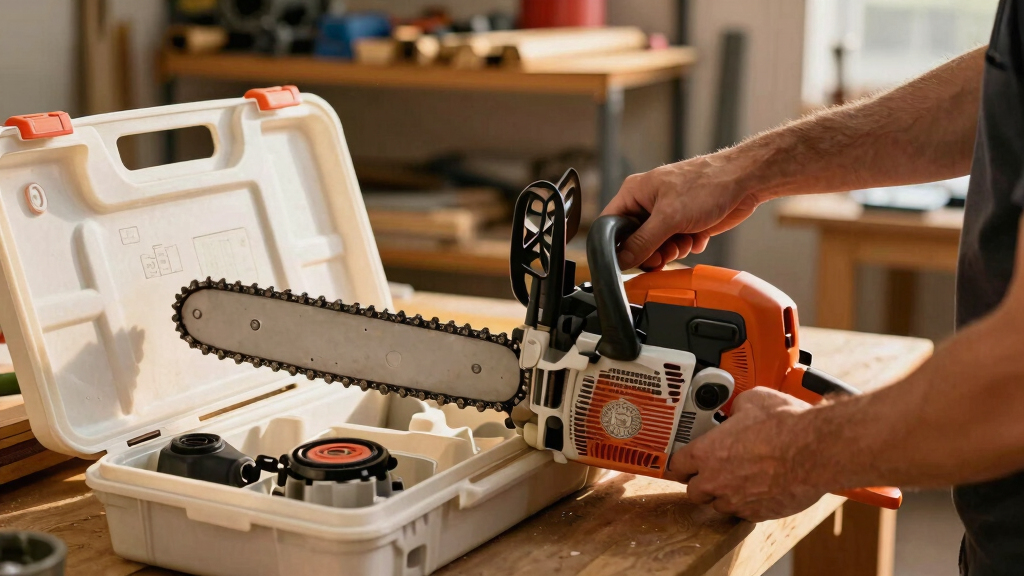
Rest the saw level inside a case with a bar scabbard. Use an absorbent liner if minor oil seepage is possible.
Months of hanging can allow oil to migrate and leak. It may also place unnecessary load on the handle assembly.
Spring-ready in five checks.
Reverse the storage steps methodically. Never cut until lubrication, tension and controls have been checked.
Add fresh correctly mixed or ethanol-free fuel.
Inspect, sharpen and re-tension the chain.
Inspect or replace the spark plug as needed.
Clean or replace the air filter.
Confirm bar oil flow, then test-run briefly.
Verify brake, throttle lockout and stop control.
Treat the fuel + fog the cylinder + clean the cooling system + oil and loosen the chain + store level, dry and shaded.
How to Make Sure Fuel Won’t Ruin Your Chainsaw Next Year
Fuel system prep is the most common cause of post-storage headaches. Gasoline with ethanol absorbs moisture, causing phase separation that leads to corrosion inside the carburetor. If you leave untreated fuel in the tank, you’re risking a gummed-up carb and expensive repairs.
Here are your two options:
- Drain and run dry: Empty the tank, then start the saw and let it idle until it stalls. This process helps clear residual fuel, preventing varnish and gum buildup that can clog jets or cause the carburetor to stick. Think of it as flushing out a sink drain; leaving old, sticky fuel in the system is like leaving food scraps that attract pests or cause blockages later.
- Stabilize: Fill the tank nearly full with fresh, ethanol-treated fuel plus a stabilizer like Sta-Bil. Run the saw for 5–10 minutes so the additive circulates through the entire fuel system, coating the inside of the carburetor and fuel lines. This method preserves the fuel’s quality for up to 24 months, making it ideal if you want to leave fuel in the saw over winter. The tradeoff is that stabilized fuel is more expensive but offers peace of mind for long storage.
Choosing between draining and stabilizing depends on how long you plan to store the saw and the quality of your fuel. If you’re using old or ethanol-laden gasoline, stabilization is usually the better choice, much like adding antifreeze to your car’s radiator before winter — it prevents damage rather than just removing the problem.
Always avoid storing with untreated pump fuel; it’s the leading cause of carburetor failure after winter because varnish and gum can harden and clog jets, making the saw difficult to start in spring.
As an affiliate, we earn on qualifying purchases.
Protect the Cylinder and Ignition to Prevent Rust and Starting Woes
Corrosion and piston sticking are common if you don’t protect the internal parts. Remove the spark plug, then add a teaspoon of 2-stroke oil or fogging oil into the cylinder. Pull the starter cord slowly a few times to coat the piston and cylinder walls with oil. Reinstall or replace the spark plug.
This oil coating acts like a rust-proof shield inside the cylinder. Think of it as winterizing a boat engine or bike chain — applying oil creates a barrier that repels moisture and prevents rust from forming during months of inactivity. Without this step, moisture can settle in, especially in humid environments, leading to rust that can seize the piston or cause it to stick when you try to start the saw in spring. For instance, a homeowner in a coastal area found that fogging the cylinder saved hours of troubleshooting because rust had seized the piston in the spring, requiring a costly repair. Fogging might seem simple, but it’s a critical step in maintaining internal integrity and ensuring reliable startups after storage.
As an affiliate, we earn on qualifying purchases.
Clean and Inspect to Keep Your Saw in Top Shape
A dirty saw is a hot mess waiting to happen. Clean the air filter, cooling fins, and muffler screen — packed sawdust leads to overheating and reduced performance. Use compressed air to blow out debris and check for cracks or damage.
Don’t forget to flip the bar to even out wear and clean the oil holes. A tidy saw runs cooler, lasts longer, and starts easier next season. Think of it like maintaining your car: a clean engine runs more efficiently and is less likely to break down. For example, neglecting to clean the cooling fins can cause overheating, which might warp the cylinder or damage the piston. Similarly, clogged oil holes can starve the chain of lubrication, leading to premature wear or failure. Regular inspection and cleaning are simple steps that extend your saw’s lifespan and prevent costly repairs, especially after long storage periods when dirt and debris tend to accumulate unnoticed.
As an affiliate, we earn on qualifying purchases.
How to Preserve the Chain and Bar for Long Storage
Keeping your chain sharp and rust-free is crucial. Clean and sharpen the chain, then coat it with bar oil or a light rust-preventive oil. Loosen the chain tension — chains contract in cold and tight tension stresses the bar and crankshaft during long storage. For example, a homeowner stored the chain too tight over winter, and when he tried to use the saw in spring, the chain was so tight it snapped during the first cut. Loosening the chain prevents this, as it allows the metal to relax and reduces stress on the components. Some owners remove the chain and bar entirely, storing them in oil or a rust inhibitor, which is like putting your tools in a protective bubble. Drain the oil tank if the saw will sit for months — oil left in the tank can seep and cause puddles, attracting dirt and causing potential leaks or messes when you finally use the saw again. Proper preservation ensures the chain remains sharp, rust-free, and ready to cut when spring arrives, saving you time and money on repairs or replacements.
ethanol-free pre-mixed chainsaw fuel
As an affiliate, we earn on qualifying purchases.
As an affiliate, we earn on qualifying purchases.
Choosing the Best Storage Spot and Case for Your Chainsaw
Store your saw in a dry, well-ventilated spot away from direct sunlight. UV rays degrade plastics and fuel lines. Keep it off concrete floors in damp sheds to prevent rust, and away from heat sources like furnaces or water heaters. For example, a homeowner stored his saw on a concrete basement floor, resulting in rusted components after a few months. Using a shelf or elevated platform can prevent this. A case or scabbard protects the chain from damage and prevents oil leaks onto your floor. For long storage, lay the saw horizontally—hanging by the rear handle can cause oil to migrate and leak over time, similar to how hanging a wet towel causes it to drip. This prevents corrosion and keeps your saw in good shape. Practical storage choices, like a plastic case or wall-mounted hook, help maintain your saw’s condition and make it easier to find and use when needed.
Quick-Start Checklist: Spring Ready or Not?
- Replenish fuel with fresh mix or ethanol-free fuel.
- Check and re-tension the chain if loosened.
- Inspect and replace the spark plug if needed.
- Clean or replace the air filter.
- Start the saw and let it run briefly to check performance.
If you followed proper storage steps, your saw should fire up with just a few pulls. Otherwise, expect a carburetor cleaning or minor repairs. Think of this as a spring tune-up; a little prep now ensures your saw is ready to work without delay, saving time and frustration when the job calls for it.
Frequently Asked Questions
Should I drain the fuel or just add stabilizer? Which is better?
If you plan to store your chainsaw for more than a month, stabilizer is the best choice. It keeps the fuel fresh for up to two years. Draining the tank and running the saw dry is better for storage over 1–3 months, especially if you use fuel with ethanol or it’s near expiry. Consider this like storing perishable food: stabilizer acts as a preservative, maintaining fuel quality over time, while draining is like removing leftovers to prevent spoilage but requires re-fueling later.
My chainsaw won’t start after sitting all winter — is the carburetor ruined?
Most often, it’s simply varnish buildup or gummed jets. A thorough carburetor cleaning usually fixes the issue. Proper storage steps, like draining or stabilizing fuel and fogging the cylinder, prevent this problem. Think of it as cleaning the filters or jets in a coffee machine; neglect leads to clogs that stop the machine from functioning properly, just like a gummed carburetor.
Can I leave bar and chain oil in the saw during storage? Why is there oil under my saw?
Yes, leaving oil in the reservoir prevents rust and keeps the chain lubricated. Oil leaks happen if the saw is stored at an angle or if the oil tank isn’t sealed well, similar to how a tipped-over bottle leaks. For long-term storage, draining the oil tank prevents puddles and reduces mess, just like emptying a leaky container. Proper oil management ensures your chain stays lubricated and rust-free, ready for immediate use when you need it.
Should I remove the chain, and should it be stored in oil?
Removing the chain and storing it in oil prevents rust and keeps it sharp longer. Think of it as storing your knives in a protective sheath to prevent dulling and rust. Make sure the chain is clean and well-lubricated before storage. Reinstall and re-tension the chain before your first cut in spring, much like sharpening and tuning a guitar before a performance — it ensures optimal performance and longevity.
Do I really need to loosen the chain tension for storage?
Yes, loosening the chain tension prevents stress on the bar and crankshaft, especially in cold temperatures where metal contracts, similar to how a bicycle chain slackens in winter. Over-tightening during storage can cause the chain to stretch or the bar to warp, leading to issues when you start cutting again. Loosening the chain is like giving your saw a gentle stretch — it preserves the components and makes re-tensioning easier when you’re ready to work.
Conclusion
Proper storage isn’t just about keeping your chainsaw clean — it’s about protecting the engine, chain, and components from damage during the off-season. A little effort now saves you hours of troubleshooting and repairs in spring.
Think of proper winterizing as giving your saw a hibernation that preserves its power. When spring rolls around, you’ll be ready to cut, clear, and conquer with confidence.
Fall Picks
fall essentials
As an affiliate, we earn on qualifying purchases.