
TL;DR

Get business pricing on tools and workshop supplies
- Business-only prices and quantity discounts
- Tax-exempt purchasing
- Multiple users, one account, clear invoices
Seasoning firewood depends heavily on the species. Hardwoods take longer to dry, typically 1-2 years, while softwoods often need 6-12 months. Accurate moisture measurement and proper storage are key for effective seasoning.
Burning green or unseasoned firewood is like pouring water on your fireplace. It smokes, produces creosote, and wastes heat. But not all wood dries the same or on the same schedule. Knowing how species affect drying times turns a guessing game into a science. This guide cuts through the fluff to give you clear, actionable insights about seasoning firewood by species, moisture targets, and timelines.
If you’ve ever stacked a fresh load of pine next to oak, you’ve noticed the difference. Pine dries fast—sometimes in just six months—while oak might need two years or more to reach that sweet spot below 20% moisture. Your goal is to hit around 15%, which makes the wood burn hot, clean, and safe. Let’s get into what influences these timelines and how you can make your firewood season faster and better.
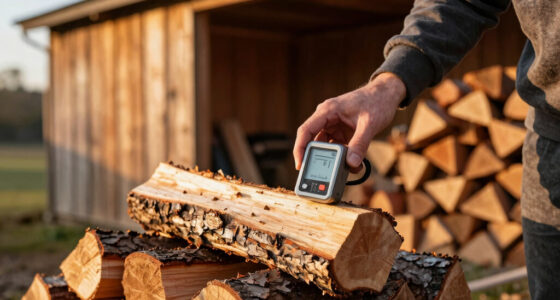
Always measure moisture content with a reliable meter; visual cues are unreliable for dense hardwoods.
Hardwoods like oak and hickory need 1-2 years to dry properly, while softwoods like pine can be ready in 6-12 months.
Proper stacking—elevated, well-ventilated, partially covered—accelerates drying and reduces mold risk.
In humid climates, expect longer seasoning times and plan accordingly, especially for dense species.
Don’t rush the process; patience and correct storage make the difference between good and poor-quality firewood.
Seasoning Firewood by Species
Moisture targets and realistic timelines for cleaner fires, stronger heat output, and safer chimneys. Species sets the pace—but splitting, airflow, climate, and accurate measurement decide when the wood is truly ready.
Density determines how patiently you wait.
Dense hardwoods hold moisture tightly and often have thicker bark. Lighter softwoods release water faster, but still need proper airflow and a verified meter reading before burning.
Oak & Hickory
Slow moisture release, substantial density, and thick bark create the longest seasoning window. Humid or shaded storage can push the timeline beyond two years.
18–24+ monthsMaple
A practical middle ground: generally quicker than the densest hardwoods but still dependent on split size, sun exposure, and ventilation.
12–18 monthsPine, Spruce & Cedar
Lower density helps moisture escape sooner. Fast does not mean immediate—green softwood still smokes, wastes heat, and contributes to creosote.
6–12 monthsA realistic planning table.
These ranges assume split firewood stored off the ground with good airflow. Add time for humid climates, shade, oversized rounds, or poorly ventilated stacks.
| Species group | Density pattern | Typical timeline | Moisture target | Storage priority | Readiness |
|---|---|---|---|---|---|
| Oak | Very dense | 18–24+ months | Ideally 15%; below 20% | Small splits, maximum airflow | Meter first |
| Hickory | Very dense | 18–24+ months | Ideally 15%; below 20% | Long dry cycle, rain protection | Meter first |
| Maple | Medium to dense | 12–18 months | Ideally 15%; below 20% | Split early, stack loosely | Verify core |
| Pine | Light | 6–12 months | Ideally 15%; below 20% | Sun and cross-ventilation | Fast cycle |
| Spruce | Light | 6–12 months | Ideally 15%; below 20% | Keep elevated and open-sided | Fast cycle |
| Cedar | Light | 6–12 months | Ideally 15%; below 20% | Protect top from rainfall | Fast cycle |
Timeline guide—not a substitute for a fresh-split moisture-meter test.
The meter decides. Appearance only suggests.
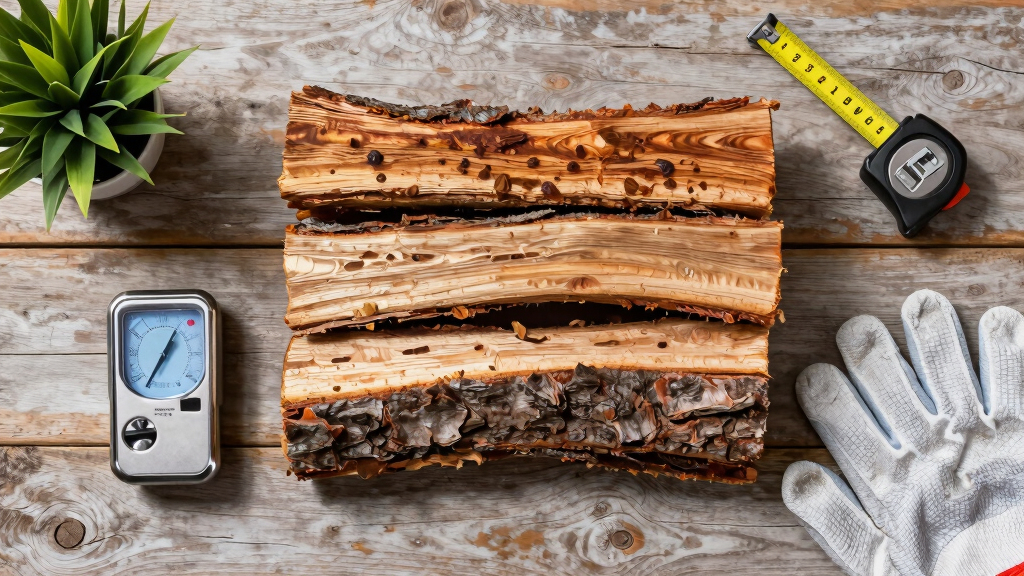
End cracks, lighter weight, and a dull surface are useful clues. Dense logs may look dry outside while retaining significant moisture at the center.
From efficient heat to smoky fuel
From fresh split to clean flame.
Seasoning succeeds as a connected system. Weakness at any stage—especially airflow, rain protection, or measurement—can delay the entire stack.
Split
Reduce diameter early to expose more surface area.
Elevate
Keep wood off soil and away from ground moisture.
Ventilate
Leave gaps and orient the stack toward prevailing wind.
Cover
Shield the top from rain while leaving the sides open.
Measure
Test the freshly exposed center before moving wood indoors.
Control the variables you can.
Species cannot be changed after cutting, but preparation and storage can dramatically improve the consistency of the drying cycle.
Split smaller
Smaller pieces expose more wood fiber to moving air and usually dry more evenly.
Choose sun and wind
A bright, breezy location removes moisture faster than a shaded, enclosed corner.
Keep sides open
Wrapping the entire stack traps humidity and can encourage mold or decay.
Adjust for climate
Humid regions require more airflow, more patience, and often a longer seasoning window.
Questions before the first fire.
When the calendar, visual clues, and moisture reading disagree, trust the moisture meter.
How do I know the wood is seasoned?
Split a representative piece and test the newly exposed center. A reading below 20% is the practical target; around 15% is ideal.
Can I burn it early?
It is not recommended. Green wood produces less heat, more smoke, and more creosote while making the stove work harder.
Can the process be sped up?
Yes. Split smaller, elevate the stack, maximize sun and airflow, and protect only the top from rainfall.
Why is my timeline longer?
High humidity, shade, limited wind, large splits, thick bark, and dense species can all extend the drying period.
Plan by species. Store for airflow. Burn by measurement.
Softwoods may be ready within one season; dense hardwoods often require two. Patience and proper storage turn fresh-cut logs into hotter, cleaner, safer fuel.
Why Moisture Content Matters More Than You Think
Moisture content (MC) is the key to a good burn. Wood with more than 20% moisture burns poorly—smoke, creosote, and wasted heat. Properly seasoned wood has an MC around 15%, which ensures a hot, clean burn. The significance of moisture levels extends beyond just burning efficiency; it directly impacts safety and maintenance. Excess moisture in wood leads to increased smoke and creosote buildup inside your chimney, raising the risk of dangerous fires. It also reduces the heat output, making your stove work harder and less efficiently. Understanding how different species retain moisture helps you make smarter decisions about when to burn and how to store your wood. For example, dense hardwoods with thick bark can trap moisture longer, requiring more patience and proper storage strategies. Relying solely on visual cues can be misleading—many dense woods may look dry on the outside but still harbor internal moisture. Using a moisture meter provides an accurate assessment, ensuring you burn only when the wood is truly ready. This attention to detail minimizes environmental impact, enhances safety, and ensures you get the most heat from your firewood. Ultimately, the goal is to balance drying time with storage conditions, knowing that rushing the process can lead to costly problems and inefficient heating.
As an affiliate, we earn on qualifying purchases.
How Different Tree Species Affect Seasoning Time
Not all wood is created equal when it comes to drying. Hardwoods—like oak, hickory, and maple—are dense and have cellular structures designed to hold moisture tightly. Their bark and cellular makeup act like natural sponges, trapping water inside. This means they require significantly longer to dry—often 1 to 2 years—especially in humid climates where moisture takes longer to escape. If not properly seasoned, burning hard woods can lead to excessive smoke, creosote buildup, and inefficient heat output, risking chimney fires and damage over time. Conversely, softwoods—like pine, spruce, and cedar—are lighter with less dense cellular structures. They dry faster, often within 6 to 12 months, and are more forgiving if you need quick firewood. However, they also tend to produce more creosote when burned green or partially seasoned. The difference in drying times is not just academic; it affects your planning, storage, and safety practices. For example, rushing to burn hardwoods that aren’t fully seasoned can cause smoky fires and increased creosote, risking dangerous chimney fires. On the other hand, softwoods can be used sooner but may produce more soot if not properly dried. Recognizing these differences helps you plan your stacking and storage strategies more effectively, reducing waste and enhancing safety. It’s also helpful to understand how to identify when your wood is properly seasoned—visual cues such as cracks in the ends, weight reduction, and a dull appearance, combined with moisture meter readings below 20%, indicate the wood is ready to burn. By understanding these species-specific timelines and moisture targets, you can optimize your firewood preparation, ensuring safer, cleaner, and more efficient heating for your home.
As an affiliate, we earn on qualifying purchases.
Frequently Asked Questions
How do I know when my firewood is properly seasoned?
Use a reliable moisture meter; a reading below 20% indicates proper seasoning. Look for cracks in the ends, a noticeable weight reduction, and a dull, dry appearance—these are good visual cues, but testing is your best bet.
How long does it take to season different types of wood?
Softwoods like pine and spruce generally take 6-12 months, while hardwoods like oak or hickory need 1-2 years or more, especially in humid climates. Climate and storage conditions can accelerate or delay these timelines.
Can I speed up the seasoning process?
Yes, split the wood small, stack in a sunny and breezy spot, and elevate the stacks for airflow. Using a fan or wind can help, but avoid covering all sides completely to prevent trapping moisture or encouraging mold.
Is it OK to burn green or unseasoned wood?
It’s not recommended. Green wood produces more smoke, creosote, and less heat. It also burns inefficiently, which can lead to chimney fires and damage your stove over time.
How does species affect storage practices?
Some species are more prone to mold or decay, so proper stacking, ventilation, and covering are vital. Hardwoods with thick bark need more drying time and protection from rain, while softwoods dry faster and can be stored in less sheltered spots.
As an affiliate, we earn on qualifying purchases.
Conclusion
Understanding how species influence seasoning timelines transforms your firewood game. When you know what to expect and how to store your wood, you burn safer, hotter, and with less smoke. Take the time to measure, stack smartly, and wait for that perfect moisture level—your stove and chimney will thank you.
Because in the end, well-seasoned firewood isn’t just about heat; it’s about doing the job right. Think of it as investing in your home’s heart—your fireplace or stove. Clear, dry, ready-to-burn wood is the key to a cozy, safe winter.
As an affiliate, we earn on qualifying purchases.
Halloween Picks
halloween
As an affiliate, we earn on qualifying purchases.