
TL;DR

Get business pricing on tools and workshop supplies
- Business-only prices and quantity discounts
- Tax-exempt purchasing
- Multiple users, one account, clear invoices
Reading chain pitch, gauge, and drive link numbers accurately prevents mismatches that can cause safety hazards or damage. Match the chain specs to your equipment for optimal performance and longevity.
Ever tried fitting a chain onto your saw or splitter, only to find it doesn’t quite fit? That frustrating moment often comes down to misunderstanding the numbers stamped or measured on the chain itself. These numbers—pitch, gauge, and drive links—are more than just technical jargon; they’re your best guide to picking the right chain and avoiding costly mistakes.
In this guide, you’ll learn how to decode those numbers, what they mean in real-world terms, and how to make sure your chain matches your equipment perfectly. Get it right, and your saw will cut smoother, last longer, and stay safer.
Always verify your chain’s pitch, gauge, and drive links before ordering.
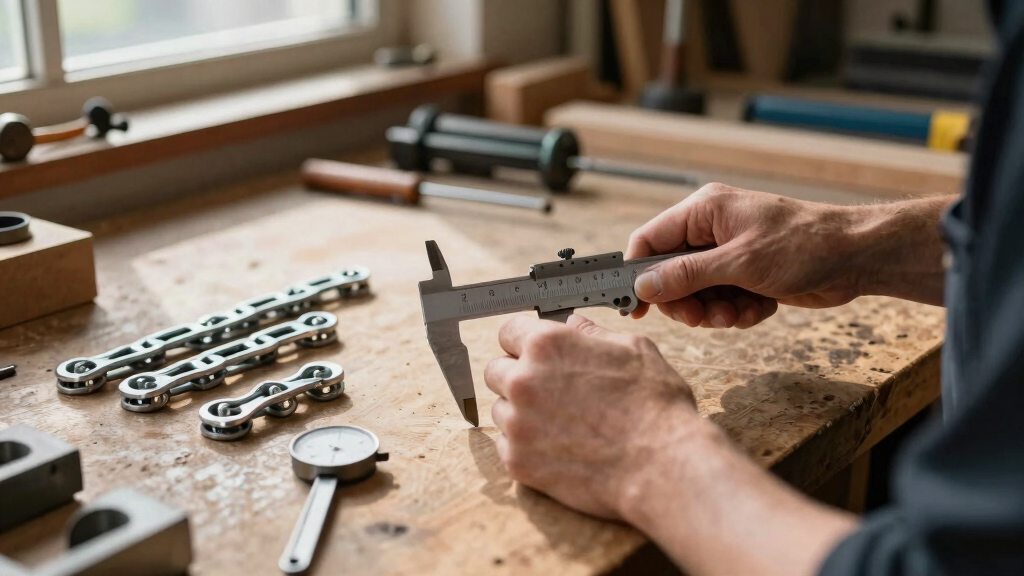
Use a caliper or ruler to measure your current chain if markings are worn off.
Mismatched chain and sprocket sizes cause wear, safety hazards, and poor performance.
Match the drive link count with your bar length for proper fit.
Consult your equipment manual or a professional if uncertain.
Fit before force · Chain identification guide
Chain Pitch, Gauge & Drive Links
Three numbers determine whether a chain will mesh with the sprocket, sit securely in the guide bar and tension correctly. Read them before ordering to prevent poor cuts, rapid wear, derailment and avoidable safety risks.
Three numbers, three different jobs
These measurements describe separate interfaces in the cutting system. Pitch governs how the chain meshes, gauge governs how it sits in the bar, and drive link count determines the finished loop length.
Pitch
The spacing of the chain’s rivets. It must correspond with the sprocket and guide-bar nose. Common sizes include 1/4″, .325″, 3/8″, .404″ and .50″.
Gauge
The thickness of each drive link where it enters the bar groove. Examples include .050″, .058″ and their metric equivalents.
Drive links
The inward-facing tabs that travel through the bar groove. Their exact count—not bar length alone—determines whether the loop will tension correctly.
From marking to safe cut
Start with the equipment, confirm the physical chain, then compare the full specification on the replacement package. If any one value differs, stop and recheck.
When the markings disappear
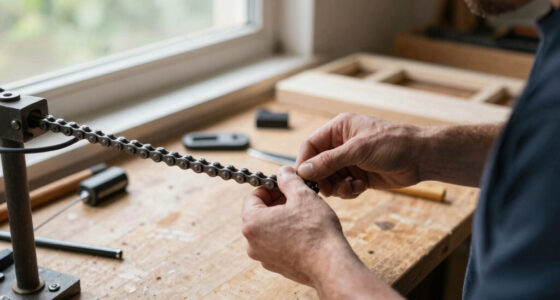
Clean the chain, place it on a stable surface and use a caliper where possible. A ruler may identify pitch, but gauge requires greater precision. Disconnect power and remove the battery or spark-plug lead before handling the cutting system.
Measure pitch across three rivets
What happens when a number is wrong?
A chain can appear almost correct and still be unsafe. Do not force a chain into the groove, compensate with extreme tension, or assume another brand’s similarly named product uses identical dimensions.
| Specification | Correct match | Too small / too few | Too large / too many | Primary risk |
|---|---|---|---|---|
| Pitch | ✓Meshes evenly with sprocket teeth | ✗Incorrect tooth engagement | ✗Incorrect tooth engagement | Vibration, derailment, sprocket damage |
| Gauge | ✓Runs securely in the bar groove | ~Side play and unstable tracking | ✗Will bind or fail to enter groove | Kickback, bar wear, poor cutting |
| Drive links | ✓Fits within tensioner range | ✗Loop will not mount correctly | ~Excess slack may remain | Over-tension, derailment, chain loss |
Compatibility result: ✓ correct · ~ unsafe or unreliable fit · ✗ incompatible
The five-point order check
Bar length is a useful equipment description, but it does not replace the chain’s exact measurements. Two bars with the same nominal length may require different drive link counts.
Confirm before you buy
- 01Verify the pitch against the sprocket and guide-bar specification.
- 02Verify the gauge against the bar groove width or stamped marking.
- 03Count every drive link and compare the exact total.
- 04Check the equipment model, bar mount and manufacturer documentation.
- 05Choose OEM or quality aftermarket only when all specifications match.
Frequently asked questions
When information conflicts, prioritize the equipment manual and current bar specification. A qualified dealer or service professional can confirm uncertain measurements.
Can brands be mixed?
Yes, only when pitch, gauge, drive link count and equipment compatibility all match. Brand alone does not determine fit.
What if the gauge is too thin?
The chain can move laterally in the groove, producing unstable tracking, uneven wear and a greater risk of malfunction.
When should a chain be replaced?
Replace it when damaged, excessively stretched, cracked, unable to hold an edge or worn beyond the manufacturer’s service limits.
Are OEM chains always required?
OEM offers straightforward model matching. Quality aftermarket chains can also work when every specification and safety requirement is verified.
What is Chain Pitch—and why does it matter?
Chain pitch is the distance between the centers of two rivets, divided by the number of links in that length. It’s usually expressed as a fraction or decimal—like 3/8″ or .325″. Think of pitch as the chain’s skeleton—it dictates the size of the chain, the sprocket it runs on, and how much power it can handle.
Choosing the correct pitch ensures the chain meshes properly with the sprocket and guide bar. If the pitch is off, even slightly, it can cause uneven wear, increased vibration, or even chain derailment, which compromises safety. For example, a chain with a 3/8″ pitch is designed for a specific sprocket size; using a smaller or larger pitch can lead to mechanical failures or dangerous kickbacks. The implications of mismatched pitch extend beyond performance—they can cause rapid wear, reduce the lifespan of your equipment, and pose safety hazards to the operator. Therefore, understanding and matching pitch is crucial for optimal and safe operation.
Knowing your chain’s pitch isn’t just about compatibility; it influences how efficiently your machine cuts and how long parts last. Proper matching minimizes unnecessary stress on your equipment, reduces maintenance costs, and ensures safer operation.
As an affiliate, we earn on qualifying purchases.
Decoding the Chain Gauge—what width fits your bar?
The chain gauge is the thickness of the drive link that slides into your guide bar. It’s measured in inches or millimeters—like .050″ or 1.3mm. Think of it as the width of a key that fits into a lock; if it’s too narrow or too wide, it won’t fit or will slip.
Using the correct gauge is vital because it ensures the chain seats properly in the guide bar’s groove, which directly impacts cutting efficiency and safety. If the gauge is too narrow, the chain might slip out of alignment, increasing the risk of kickback or uneven wear. If it’s too thick, it won’t fit into the bar at all, preventing your equipment from functioning correctly. The gauge also affects how the chain distributes power; an improper fit can cause excessive vibration, uneven cuts, or premature wear on the bar and sprocket. Therefore, matching the gauge precisely to your guide bar’s groove width is essential to maintain smooth operation, extend the life of your chain, and ensure operator safety.
Measuring or verifying the gauge isn’t just about fit—it’s about maintaining the integrity of your cutting system. Proper gauge matching reduces unnecessary stress on components, prevents dangerous malfunctions, and optimizes cutting performance. When replacing or upgrading chains, always cross-reference the gauge with your equipment’s specifications or markings to avoid costly mistakes.
As an affiliate, we earn on qualifying purchases.
Understanding Drive Link Count and Length
Drive links are the individual tabs that fit into the guide bar’s groove and sprocket. The number of drive links must match your bar’s length and sprocket’s teeth. Usually, you check the chain or the equipment manual for this number.
Beyond just the count, the length of the chain measured in inches or centimeters is equally important. Ensuring the chain length corresponds to your bar length guarantees proper tension and safe operation. A chain that is too long may cause slack, leading to derailment or dangerous kickbacks, while a chain that is too short won’t fit securely or may cause excessive wear.
Understanding both the drive link count and the overall chain length helps you select the correct chain for your equipment, ensuring smooth operation and safety. Always verify these measurements before purchasing or replacing a chain, especially if you’re switching bar sizes or brands.
As an affiliate, we earn on qualifying purchases.
Frequently Asked Questions
How do I find the chain pitch on my existing chain?
Measure the distance between the centers of two rivets, then divide by the number of links in that segment. Using a caliper gives the most accurate reading, typically in fractions or decimals like 3/8″ or .325″.Can I mix chain pitch and gauge from different brands?
It’s not recommended. Mismatched pitch or gauge can cause the chain to slip, wear unevenly, or damage your sprocket and bar. Always match these specs precisely for safety and performance.What’s the biggest mistake beginners make when choosing a chain?
The most common mistake is ignoring the measurements or assuming all chains are interchangeable. Double-check the pitch, gauge, and drive link count before buying to avoid costly errors.How often should I replace my chain?
Replace your chain when it shows signs of excessive wear, stretching, or damage. Regular inspection—every few cuts or after heavy use—can save you from breakage or safety issues.Are OEM chains better than aftermarket options?
OEM chains are designed specifically for your equipment, ensuring perfect fit and performance. High-quality aftermarket chains can work too, but always verify they meet your specs first.As an affiliate, we earn on qualifying purchases.
Conclusion
Knowing how to read the numbers on your chain is a small act with big consequences. It’s the difference between a smooth, safe cut and a frustrating, potentially dangerous malfunction.
Take the time to measure, compare, and confirm. Your equipment, your safety, and your wallet will thank you. So next time you’re ready to replace or buy a new chain, remember: those numbers are your best guide. Read them right, and keep cutting like a pro.
Columbus Day / Indigenous Peoples' Day Picks
long weekend sales
As an affiliate, we earn on qualifying purchases.