
TL;DR

Get business pricing on tools and workshop supplies
- Business-only prices and quantity discounts
- Tax-exempt purchasing
- Multiple users, one account, clear invoices
Choosing the right tarp size, securing it with sturdy grommets, and using proper drag techniques can make yard work safer and more efficient. Recent innovations boost durability and environmental friendliness of tarps.
Ever tried covering a muddy compost pile or protecting a freshly laid sod, only to have your tarp flap wildly or tear apart? That frustration ends when you choose the right tarp, secure it properly, and know how to move it without damage. These simple steps can save you time, money, and headaches.
In this guide, you’ll learn how to pick the perfect size for your yard task, understand the importance of sturdy grommets, and master drag techniques that keep your tarp intact. Whether you’re covering a load of firewood or creating a temporary shade, these tips will make your yard work safer and more effective.
Always choose a tarp size slightly bigger than your measurement for flexibility and security.
Use stainless steel or reinforced grommets spaced every 2-4 feet for the most secure attachment.
Proper tension and even pulling prevent tears and flapping in windy conditions.
Modern tarps with UV-resistant coatings and reinforced edges last significantly longer—up to 5 years of outdoor abuse.
Dragging large tarps requires handles, ropes, or drag bars—avoid pulling from corners directly to prevent damage.
Tarps for Yard Work: Sizes, Grommets & Drag Techniques
Choose enough coverage, distribute tension through strong attachment points, and move loaded tarps without concentrating force. Three practical decisions can prevent flapping, pooling, torn corners, and needless replacements.
With UV-resistant coatings, reinforced edges, careful use, and routine inspection.
Between reinforced grommets to distribute tie-down tension more evenly.
Possible lifespan for quality tarps compared with lightweight alternatives.
Match the tarp to the exposure
The right material balances weather protection, breathability, weight, and handling. Prolonged outdoor exposure calls for more reinforcement than a one-day cleanup.
Polyethylene
Best for: leaf piles, compost, firewood, temporary rain protection, and general cleanup. Lightweight, waterproof, affordable, and commonly UV treated.
Canvas
Best for: tools, equipment, shade, and loads that need airflow. Heavier to drag and typically water-resistant rather than fully waterproof.
Vinyl
Best for: demanding outdoor use and heavy loads. Excellent tear and weather resistance, but its extra weight and cost can be unnecessary for light jobs.
Coverage without excess sail
A tarp that is too small exposes the load. One that is far too large creates loose material that catches wind, pools rain, and becomes difficult to handle.
Common sizes by relative area
The sizing rule
Example: An 8×8 ft firewood pile benefits from roughly a 10×10 ft tarp, allowing useful overhang and room for tie-downs.
Measure height and contours as well as footprint when wrapping equipment or irregular loads. Choose the nearest practical size above the calculated coverage.
Choose by task, not habit
Performance varies by grade and coating. This comparison reflects the typical strengths of common yard-tarp materials.
| Material | Water protection | Breathability | Drag handling | Long exposure | Typical fit |
|---|---|---|---|---|---|
| Polyethylene | ✓ Strong | ✗ Low | ✓ Light | ~ Grade dependent | General yard work |
| Canvas | ~ Resistant | ✓ Strong | ~ Heavy | ~ Needs care | Equipment and shade |
| Vinyl | ✓ Excellent | ✗ Low | ~ Very heavy | ✓ Excellent | Heavy-duty protection |
✓ Strong fit ~ Consider the tradeoff ✗ Not a primary strength
A five-step setup that resists wind
Smooth material and balanced tension reduce concentrated stress. The goal is a firm cover without overstretching individual grommets.
Lay flat
Center the tarp and remove folds that could create tension lines.
Thread
Run weather-resistant rope or bungee through sound grommets.
Set corners
Secure corners first without pulling one corner excessively tight.
Balance
Work around the perimeter and increase tension gradually.
Ground
Add stakes or broad weights, then eliminate sagging and flapping.
Grommets carry the load
Stainless steel or reinforced composite grommets resist weather and help preserve secure anchor points. Inspect every attachment before tensioning.
Spacing spectrum
The practical target is one secure grommet every 2–4 feet around the usable edge.
Pre-tension inspection
Replace or bypass any weak attachment point before wind or load amplifies the damage.
Pull across a line, never one corner
Dragging changes a tarp from a cover into a load carrier. Distribute the pulling force, reduce friction where possible, and use steady movement without sudden jerks.
Rope handles
Thread sturdy rope through two or more reinforced grommets. Pull from the center of the rope to share force between attachment points.
Drag bar
Attach a wood or metal bar across the leading edge. The wider contact line reduces stress and helps keep the tarp tracking straight.
Team pull
Use several balanced handles, coordinate the start, and maintain a slow pace. Remove obstacles rather than forcing the tarp over them.
Never pull directly from a single corner
A corner concentrates the entire drag force into one seam and grommet. That stress spike is a common cause of ripped edges and failed eyelets.
Modern upgrades worth looking for
Durability features can raise the purchase price, but longer useful life reduces replacement costs, material waste, and mid-project failures.
UV-resistant coating
Slows fading, brittleness, and cracking during prolonged sun exposure.
Reinforced perimeter
Supports grommets and helps resist tears where tension is highest.
Integrated handles
Creates safer grip points and distributes force during repositioning.
Recycled materials
Emerging options reduce virgin-plastic use while maintaining utility.
The yard-tarp success chain
How to Pick the Perfect Tarp Size for Your Yard Job
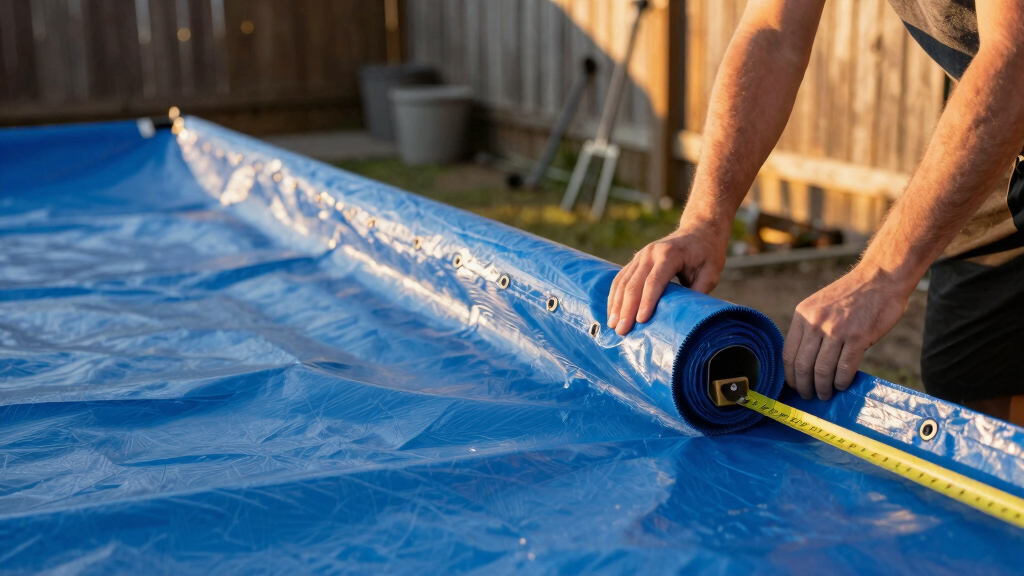
Choosing the right tarp size can feel like a puzzle, but it’s straightforward once you understand your needs. Measure the area or object you want to cover. Add at least 2 feet on each side for overhang if you want extra protection or to tie down securely. For example, if your firewood pile measures 8×8 feet, a 10×10 ft tarp provides enough coverage and slack for securing.
Common sizes include 5×7 ft for small tasks, up to 20×30 ft or larger for big projects like covering a boat or large equipment. Custom sizes are often available if standard options don’t fit. Always opt for a slightly larger tarp than your measurement for flexibility and better security.
Why does size matter so much? An appropriately sized tarp ensures full coverage, preventing exposure to elements and reducing the risk of damage. Too small, and water or debris can get in; too large, and securing it becomes more challenging, increasing the chances of flapping or tearing. Balancing size with ease of handling is key for efficient yard work.
heavy-duty outdoor tarp 10×12 feet
As an affiliate, we earn on qualifying purchases.
As an affiliate, we earn on qualifying purchases.
Why Grommets Are the Key to Secure, Safe Tarp Setup
Grommets are not just metal or plastic rings; they are critical reinforcements that turn a simple tarp into a reliable barrier. Proper spacing—every 2 to 4 feet—distributes tension evenly across the tarp’s surface, which is essential because uneven tension can cause localized stress points leading to tears. Choosing high-quality, rust-proof grommets like stainless steel ensures longevity, especially in harsh weather conditions. When tension is evenly spread, the tarp resists wind uplift, rain pooling, and tearing, making it safer and more durable.
Using inferior grommets or improper placement can compromise the entire setup. For example, rusted or weak grommets may fail when tension is applied, causing the tarp to come loose at critical moments—like during storms. Hence, investing in quality grommets and proper placement is a tradeoff that pays off in increased security and lifespan of your tarp.
stainless steel grommet tarp tie-downs
As an affiliate, we earn on qualifying purchases.
As an affiliate, we earn on qualifying purchases.
How to Properly Attach Tarps for Maximum Security
- Lay your tarp flat over the area or object. Ensuring it is smooth and free of folds will make securing more effective and reduce the risk of tears caused by tension points.
- Thread a rope or bungee cord through the grommets, starting from one corner. Use high-quality, weather-resistant cords to withstand tension and environmental exposure.
- Secure each corner tightly, then work your way around, pulling evenly. This even tension prevents sagging, pooling, or flapping, which can accelerate wear.
- Use stakes or weights at the edges if wind is a concern. Weights like bricks or specialized tarp weights distribute pressure and keep the tarp grounded, reducing the risk of it catching wind and tearing.
- Check tension—nothing should sag or flap. Adjust as needed. Proper tension not only prolongs tarp life but also ensures safety by preventing loose edges that can become hazards.
For example, when covering a compost pile, securing the tarp tightly with ropes through the grommets prevents water from seeping in and keeps the cover in place during storms. Proper tension ensures the tarp functions as intended, providing reliable protection and avoiding the need for frequent adjustments or replacements.
UV resistant yard tarp for compost pile
As an affiliate, we earn on qualifying purchases.
As an affiliate, we earn on qualifying purchases.
Mastering Drag Techniques to Move Tarps Safely and Efficiently
Dragging a tarp without risking tears or damage requires understanding how to distribute force and control tension. Never pull from a corner alone; instead, attach a handle, rope, or drag bar across the surface for balanced force. For large tarps, create handles by threading a sturdy rope through reinforced grommets or attach a wooden or metal bar—this spreads out the pulling force, reducing stress on any one point and minimizing the risk of tears.
For example, if you need to reposition a large tarp covering a trailer, attaching a durable rope to two opposite grommets allows you to pull steadily and evenly. Maintaining tension with controlled, steady pulls prevents sudden jerks that can cause weak spots to rip, especially when the tarp is under load or tension from wind. Learning these techniques makes moving heavy or large tarps safer, easier, and less damaging.
As an affiliate, we earn on qualifying purchases.
Recent Innovations That Make Yard Tarps Last Longer and Work Smarter
Newer tarps now feature UV-resistant coatings that actively block harmful rays, preventing cracking, fading, and brittleness over years of exposure. Tear-resistant materials, often with reinforced edges and built-in handles, are designed to withstand the rigors of outdoor use, reducing the likelihood of tears and simplifying handling. Stainless steel grommets resist rust and corrosion, maintaining secure attachment points even after months of rain or snow. These innovations mean your tarp can handle harsher conditions without frequent replacement, saving money and effort.
Eco-friendly options are also emerging, made from recycled or biodegradable plastics. These materials reduce environmental impact and align with sustainable practices. The tradeoff often involves slightly higher costs or different handling characteristics, but the benefits—longer lifespan, better performance, and environmental friendliness—make these innovations worth considering for any serious yard project.
Conclusion
Getting your yard tarp setup right isn’t magic—it’s about choosing the right size, securing it well, and moving it carefully. A little prep and technique keeps your coverings intact longer and makes yard work safer.
Next time you cover a compost pile or haul debris, remember that a durable tarp, tied tight with the right grommets, and moved with care, can save you hours and hassle. Your yard will thank you with better protection and less stress.
Halloween Picks
halloween
As an affiliate, we earn on qualifying purchases.