TL;DR

Get business pricing on tools and workshop supplies
- Business-only prices and quantity discounts
- Tax-exempt purchasing
- Multiple users, one account, clear invoices
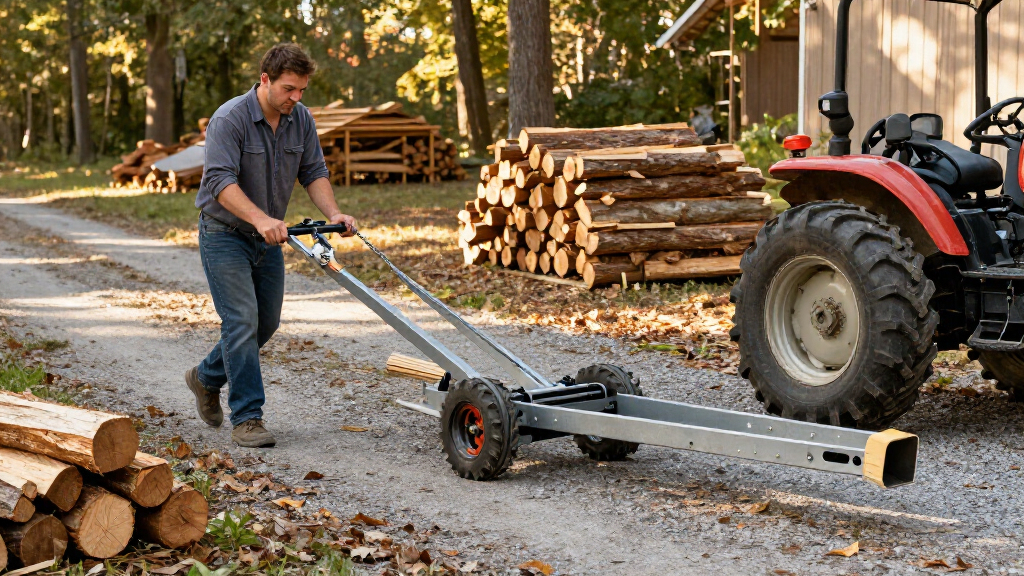
Move a log splitter at a walking pace around private property when conditions allow, and follow the exact model’s manual for towing speed, hitch setup, tongue load, and travel position. A splitter with wheels is not automatically roadworthy; before using public roads, check the manufacturer’s instructions and local rules for approval, equipment, and speed.
A log splitter can look ready to roll, then start bucking across a rutted lane as soon as you pull away. Wheels do not make it roadworthy, and a loose or poorly loaded tongue can turn a short trip between wood piles into a dangerous one.
This guide explains how to move a splitter around your property, what to check at the hitch, and why a safe speed depends on more than the machine’s tires. You’ll also learn when public-road towing calls for a manual and a check of local rules. Think of the hitch as the handshake between tow vehicle and splitter: secure, correctly matched, and steady through every turn.
Whether you’re shifting a gas splitter across several acres or repositioning a battery model near a shed, use the same basic discipline: prepare the machine, choose firm ground, clear the route, and move slowly enough to stop smoothly. The quieter the move feels, the more control you have.
Follow the exact splitter manual for towing speed, hitch setup, tire pressure, approved travel position, and road use.
Treat a splitter with wheels as not roadworthy until the manufacturer and local rules support road towing.
Use a matching, latched coupler and the specified tongue load; check the splitter, hitch, and tow vehicle ratings together.
Before moving, inspect tires, wheels, hitch pin, chains, lights where applicable, travel locks, loose items, and the route.
Move slowly on firm, level ground, keep people clear, never carry a rider, and chock the splitter as appropriate before unhitching.
Moving a Log Splitter Tow Speed and Tongue Safety
Move slowly on private property, and follow the exact model’s manual for speed, hitch setup, tongue load, and travel position. Wheels alone do not make a splitter roadworthy.
Private property or public road?
The safe approach depends on where you tow and what the splitter is designed to handle.
- Use a slow, controlled pace, often walking pace where conditions allow.
- Choose firm, level ground and slow further near people, turns, and rough spots.
- Keep bystanders clear; never carry a rider.
- Check the exact model’s manual for road approval and towing limits.
- Verify local rules for speed, registration, lights, and safety chains.
- If approval or speed guidance is unclear, contact the manufacturer.
Prepare before moving
A quick inspection can catch loose connections, damaged tires, and parts that may shift.
Choose firm, level ground and move people, pets, branches, and loose firewood out of the way.
Use the manual’s travel position; lock the beam and secure the jack, tools, and loose parts.
Check for damage, loose hardware, and the tire pressure specified for your model.
Match the ball and coupler, confirm the latch and hitch pin, and attach required chains to designated points.
Keep the hitch stable
The tow vehicle, hitch, and splitter must all be within their stated ratings.
Match and latch
A compatible coupler should seat securely. Safety chains are a backup, not a replacement for a latched hitch.
Follow both manuals
The tongue should press down on the hitch. Too little or too much load can compromise stability or overload equipment.
Check the full setup
Use the splitter, hitch, and tow vehicle specifications; there is no universal tongue-load percentage.
Park with control
Before unhitching, use firm, level ground where possible, lower the jack as instructed, and chock the wheels as appropriate.
- Avoid steep side slopes, sudden turns, and hard braking.
- Stop and recheck the connection if anything may have shifted.
- Never leave a splitter where it can roll.
Set a safe speed before the wheels start rolling
Moving a log splitter around the property calls for a slow, controlled pace, often a walking pace where conditions allow, while public-road speed must follow the machine’s manual and local law. There is no universal speed limit that makes every splitter safe to tow. Tires, frame, hitch, terrain, load, and stopping distance all affect the answer.
Read the manual for the exact model, not one that merely looks similar. Check whether the manufacturer allows towing, the maximum speed if listed, the approved hitch arrangement, and tire pressure. If the manual gives no towing speed or says the machine is not intended for road towing, contact the manufacturer before taking it onto public roads. Local requirements can also cover registration, lights, safety chains, and other equipment [1]. A speed limit is only one part of the decision: a splitter may be stable at that speed on a smooth road but unsafe on a broken shoulder or in a sharp turn. Follow the lowest applicable limit and reduce speed further when the conditions leave less room to recover.
On private land, a short driveway move is different from towing down a public road, but private land does not make speed harmless. A smooth patch beside the woodshed may invite a faster pull; a hidden rut or a child stepping near the route can erase your margin in seconds. Use the slowest practical speed, and slow further near people, turns, rough ground, and blind spots. Going slowly takes longer, but it reduces bouncing and gives both the driver and anyone nearby more time to respond.
For example, if you need to shift a splitter from the barn to a wood pile across a bumpy lawn, a walking pace gives the tires time to roll over shallow dips without bouncing the frame. A faster tow can make the splitter sway or push the tow vehicle into a rough stop. Low speed gives you time to notice trouble and stop before it grows.
Popular right now

De'Longhi La Specialista Arte Evo Espresso Machine with Grinder

Hisense 43-Inch E6SR Series Hi-QLED 4K UHD Smart Roku TV (2026 Model)

Bose QuietComfort True Wireless Earbuds with Active Noise Cancellation, Black
As an affiliate, we earn on qualifying purchases.
Match the hitch, tongue load, and tow vehicle
Moving a log splitter safely starts with a compatible hitch and a tongue that presses down on the hitch when coupled. The coupler must fit the ball, latch completely, and stay within the ratings of the splitter, hitch, and tow vehicle. Too little downward force can make the combination unstable; too much can overload the hitch or vehicle. This balance matters because the tongue is what helps keep the splitter tracking behind the vehicle. If it lifts or shifts easily, small steering inputs or bumps can turn into sway; if it bears too much weight, steering, braking, or the tow vehicle’s rear suspension may be compromised.
Use the specifications for both machines instead of relying on a universal tongue-weight percentage. The splitter manual and tow vehicle guidance are the authorities for that combination. After coupling, look for a securely seated coupler and a tow vehicle that does not sag excessively at the rear. If the tongue pulls upward, sits awkwardly, or makes the vehicle squat, stop and resolve the loading or compatibility issue before moving. Visual checks can reveal an obvious mismatch, but they do not replace stated ratings or the manufacturer’s prescribed loading method.
Imagine towing with a compact utility tractor across a sloping orchard. The splitter’s tongue can press hard into the hitch when the wheels drop into a dip, even if the unit felt balanced on flat ground. A hitch rating that seems adequate in the driveway may not cover the actual load or terrain. Keep the full combination within every listed rating, and use only the attachment points specified by the manufacturers. That may mean choosing a different tow vehicle or route; convenience does not compensate for a connection that is overloaded.
When required by the manual or local law, attach safety chains to the tow vehicle’s designated points. Leave enough slack for turns, while keeping the chains from dragging. A chain should not be looped casually around a bumper or hitch ball; use the proper points so it can help restrain the splitter if the coupler separates. The chains are a backup, not a substitute for a properly latched, compatible coupler. A secure latch and correctly attached chains work together.
Use this quick check before every move
A pre-move check catches loose connections, low tires, and unsecured parts before they become problems along the route. Take a minute beside the splitter before starting the tow vehicle; a quick look is cheaper than chasing a detached machine across a yard. Follow your manual’s specific preparation instructions, including the approved travel position for the beam. Each check addresses a different way the move can go wrong: tires and wheels support the load, the hitch keeps it attached, and the travel lock prevents heavy parts from shifting.
Work through these checks in order. For example, before moving a splitter from a gravel drive to a back lot, you can spot a coupler that did not latch fully or a tool still resting on the frame. Checking before departure is easier than diagnosing a problem after a bump has loosened a connection or sent an object toward the wheels.
- Check the route: Choose the firmest, most level path you can, and clear people, pets, branches, and loose firewood from it. A clear route reduces the need for sudden steering or braking.
- Check the tires and wheels: Look for damage, loose wheel hardware, and the pressure specified by the manual. Underinflated or damaged tires can flex and overheat, while incorrect pressure can affect stability and handling.
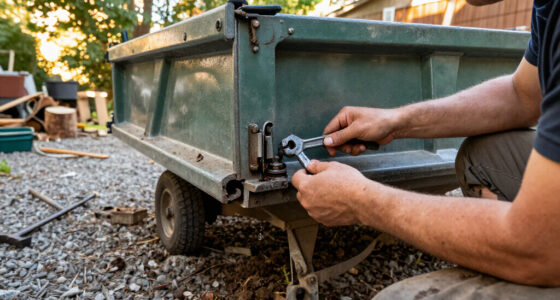
- Check the hitch: Confirm the ball and coupler match, the latch is secure, and the hitch pin is in place if the setup requires one. A visual confirmation helps catch a missed latch before the splitter is moving and pulling against the connection.
- Check chains and lights: Attach required chains to their designated points and confirm required lights work before road use. Chains may help restrain a detached splitter; lights help other road users see your movements.
- Lock down the splitter: Secure the beam in its specified travel position, secure the jack and loose parts, and remove tools or firewood that could shift. A moving beam or loose item can change the load or strike a person, wheel, or vehicle.
Move a short distance, then stop where safe and recheck if anything could have shifted. A new rattle or a change in tracking is a reason to stop and inspect, not a sound to ignore over the engine. Never let anyone ride on the splitter; it is not a passenger carrier, and a bump can throw a rider into a wheel, beam, or hitch.
Choose a route your splitter can handle
A firm, level route gives you more control than a shortcut across a soft patch or side slope. Avoid sudden turns, hard braking, and steep cross slopes, which can make the tow vehicle or splitter slide, tip, or swing wide. A slow tow cannot make unstable ground safe; the route still matters. A longer route on firm ground may take more time, but it preserves traction and leaves more room to correct a small problem before it becomes a loss of control.
Walk the path first if you cannot see the whole route from the driver’s seat. Look for muddy tire tracks, hidden holes under grass, narrow gates, and places where the splitter could meet a person coming around a shed. If the only route crosses a steep hill sideways, pick another route or move the splitter in a way approved by the manual. Do not improvise a steep downhill tow with a light vehicle just to save a few minutes. Walking the path helps identify hazards the driver may see too late to avoid while towing.
For instance, a yard tractor may pull a splitter easily across a dry lawn, then lose traction when one wheel enters a damp rut beside the wood lot. The splitter can push or swing as the tractor slows. On soft ground, even a gas-powered machine with a strong engine cannot make up for weak traction; a battery-powered tow vehicle may have its own limits. Match vehicle, hitch, splitter, and terrain ratings to the actual move. More pulling power does not necessarily mean more control, especially when the ground cannot support the vehicle’s braking or steering.
Use a spotter only when you can keep clear communication and the spotter stays out of the tow path and pinch points. When reversing, stop if you lose sight of the route or the spotter. Speed should match visibility and stopping room, not the length of the property or the time you hope to save.
Keep private moves separate from public-road towing
Private-property towing and public-road towing have different checks. A splitter that rolls across your own yard may still lack approval or required equipment for road use. The tires, hitch, lights, and frame may not be designed for highway travel, and the law varies by location [1]. Check the exact model’s manual and current local requirements before entering a public road. A short distance does not reduce the consequences of an equipment failure or make road rules irrelevant.
A comparison helps keep the decision clear:
| Move | What to verify | Practical pace |
|---|---|---|
| Across private property | Manual limits, hitch match, tire pressure, route, travel lock, and clear path | Walking pace where practical; slower on rough ground or near people |
| On a public road | Manufacturer approval, local rules, required registration or equipment, and stated speed limits | Only the speed allowed by the manual and applicable law |
Suppose you split wood behind a detached garage and need to cross a short strip of road to reach the next lot. The distance may be only a few metres, but it is still a public-road move if the route uses the road. Check the rules before you go; a short crossing does not automatically waive requirements for lights, chains, registration, or approval. If you cannot confirm that the splitter and setup are permitted, use a route that stays off the road or another transport method.
If the manual does not say the splitter is road-approved, do not treat a hitch and a set of wheels as proof. Ask the manufacturer what the model supports and check local requirements. Verify the machine and the jurisdiction together before planning road travel; a legal speed in one place may not apply in another. This check can rule out road towing entirely, so make it before relying on a public road to connect two parts of your property.
Park and unhitch it so it stays put
Park a splitter on firm, level ground whenever possible, then follow the manual’s unhitching procedure and chock the wheels when appropriate. A splitter can roll independently after you disconnect it, especially on a slope or loose gravel. Set the jack as instructed and keep feet and hands clear of pinch points while the tongue settles. The tow vehicle may have been holding the splitter in place without it being obvious, so treat uncoupling as a separate stability check rather than a routine final step.
Before unhitching, stop the tow vehicle, secure it against movement, and choose a place where the splitter will not block a path or roll toward a building. If you cannot find level ground, do not disconnect on a slope unless the manual gives a safe procedure for that situation. Use wheel chocks as directed, and verify the splitter stays planted before you release the coupler. A chock can help prevent rolling, but it cannot make every slope or soft surface safe for unhitching.
Consider a late-afternoon move when the grass is damp and the ground near the wood shed slopes toward a drainage ditch. Even if the tow vehicle seems steady, the splitter can creep once uncoupled. Take it back to a flatter patch instead of trusting the jack to hold the whole unit on slick ground. A few extra minutes now can prevent a runaway machine and damaged equipment.
After parking, secure the splitter against unauthorized use and keep children away from the hitch, wheels, and beam. Put tools away rather than leaving them on the frame for the next trip. A parked splitter should be stable without the tow vehicle attached, not balanced on a slope with nobody watching.
Frequently Asked Questions
How fast can I tow a log splitter?
Follow the exact model’s manual and applicable law; there is no single safe speed for all splitters. If the manual gives no speed or the splitter is not approved for road towing, contact the manufacturer and keep private-property moves slow.
Can I tow a splitter with a lawn tractor, ATV, or UTV?
Only if the vehicle, hitch, splitter, and terrain are within their ratings and the manufacturers allow that setup. Move slowly, avoid steep slopes, and do not make sudden turns or stops.
Can I tow a log splitter on public roads?
It depends on the model and local law. Check the manual and current requirements for road approval, registration, lighting, safety chains, tires, and speed before using a public road.
How can I tell whether the tongue is too heavy or too light?
Use the splitter and tow-vehicle specifications for the correct tongue load rather than guessing from a universal percentage. The coupler should seat securely, the combination should track steadily, and the vehicle should not sag excessively at the rear.
Do I need safety chains?
Follow the manual and local law. When chains are required, attach them to the tow vehicle’s designated points and leave enough slack for turns without letting them drag.
Can someone ride on the splitter while it is being moved?
No. A log splitter is not a passenger carrier, and a bump or sudden stop can throw a rider into the wheels, beam, or hitch. Keep everyone clear of the tow path and pinch points.
Conclusion
Before moving a splitter, check its manual, hitch, tongue, tires, travel lock, and route. Keep yard moves slow and deliberate; use public roads only when the model and local rules allow it. Control comes from preparation and a pace that leaves room to stop.
That’s how you get the splitter to the next wood pile without a lurch, a runaway wheel, or a story you’d rather not tell at the shed.