TL;DR

Get business pricing on tools and workshop supplies
- Business-only prices and quantity discounts
- Tax-exempt purchasing
- Multiple users, one account, clear invoices
NRR (Noise Reduction Rating) is a laboratory number that overestimates real-world protection. To estimate your actual exposure with a loud saw, subtract 7 from the NRR, divide by 2, then subtract that from the tool’s decibel level — so NRR 30 muffs at a 110 dB chainsaw drop you to roughly 98 dB, not 80 dB. Fit and full-time wear matter as much as the number on the box.
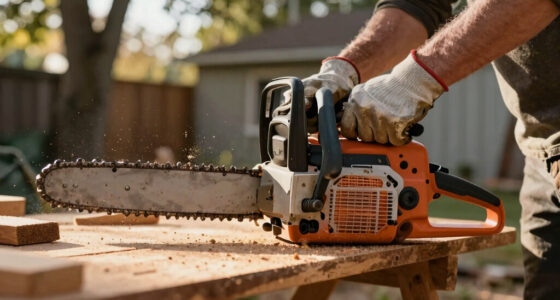
Your chainsaw doesn’t care about your ears. A gas saw ripping through oak runs 105 to 115 dB — loud enough to damage hearing in under two minutes of unprotected exposure. That foam plug or set of muffs you grabbed off the shelf is the only thing standing between you and permanent hearing loss. And the number printed on the package? It’s lying to you. Not on purpose. But it’s lying.
NRR — the Noise Reduction Rating you see on every box of earplugs and earmuffs — comes from laboratory testing with trained subjects under perfect conditions. You work outside, in humidity, with sawdust in your hair and safety glasses breaking the seal on your muffs. Real-world performance runs 50 to 70% of the lab rating, sometimes worse.
In this guide, you’ll learn the simple derating math that safety pros actually use, how to match protection to your specific saw, and when to double up. Five minutes of arithmetic beats a lifetime of asking “what?”
NRR is a lab number — real-world protection runs roughly 50–70% of the rating, so plan on half.
Use the OSHA derating formula: (NRR − 7) ÷ 2 = estimated dB reduction. NRR 30 at a 110 dB saw leaves you at ~98.5 dB.
Doubling up (plugs under muffs) adds about 5 dB over the higher-rated device — not the two ratings combined.
Fit failures (half-inserted plugs, glasses breaking muff seals, beards) and 5 minutes of unprotected time can halve your effective protection.
A 110 dB gas saw allows roughly 2 minutes of unprotected exposure — proper protection stretches that window to an hour or more.
NRR Ratings in the Real World: Hearing Protection Math for a Loud Saw
A gas saw ripping through oak runs 105–115 dB — loud enough to damage hearing in under two minutes unprotected. The number on the box of earplugs came from a laboratory. Your worksite is not a laboratory. Here’s the derating math safety pros actually use.
You paid for NRR 30. At a 110 dB chainsaw, you’re getting roughly 98.5 dB at your ear — not 80 dB.
OSHA’s derating method treats real-world performance as about 50% of the lab NRR. Fit and full-time wear matter as much as the number on the box.
The 3-Step Math That Tells You Your Real Exposure
This is the derating formula OSHA uses: subtract 7 from the NRR, divide by 2, then subtract the result from your tool’s noise level. Twenty seconds of arithmetic — here it is with NRR 30 muffs at a 110 dB gas chainsaw.
Subtract 7
The 7 dB correction converts the lab’s protected-exposure method to a rough dBA equivalent. Skip it and you overestimate protection by 20% or more.
Divide by 2
Halving accounts for real-world fit, movement, humidity, sawdust, and safety glasses breaking the seal. Half the corrected number is what your ear actually gets.
Subtract from Noise
Still well above the 85 dB OSHA action level. A full day of cutting with “30 dB muffs” can still cost you hearing.
Lab Number vs. Your Ears
NRR is measured per ANSI S3.19 protocols — trained subjects, acoustic chambers, perfect fits. NIOSH research shows real-world attenuation often falls to half or less of the label. Think of NRR like a truck’s tow rating: the brochure says 10,000 lbs, but that’s a stripped chassis in perfect weather.
Exposure at a 110 dB Saw (dB at your ear)
Real-World Attenuation as % of Lab NRR
How Loud Is Your Saw Really?
Most saws land between 100 and 115 dB. Type matters less than how hard you’re working it: a battery saw bucking softwood hovers near 100 dB; the same saw buried in a maple crotch climbs past 110. Chain brake, bar length, and a dull chain all shift the number. Don’t know yours? Check the manual — many manufacturers publish it — or use a free sound-meter app.
| Tool / Source | Typical Level (dBA) | Protection That Works (derated) | Clears 85 dB Bar? |
|---|---|---|---|
| Electric chainsaw, light load | 95–100 | NRR 25+ plugs or muffs | ~ borderline |
| Gas chainsaw, full throttle | 105–115 | NRR 30+ or double protection | ✗ single plug fails |
| Chop saw / miter saw (metal) | 100–110 | NRR 30 muffs | ~ marginal |
| Circular saw ripping plywood | 95–105 | NRR 25–30 | ✓ with good fit |
| Leaf blower (backpack) | 95–105 | NRR 25+ | ✓ with good fit |
The Mistakes That Quietly Cost You Hearing
The best-rated protection on the shelf performs like a screen door if it doesn’t fit or stays in your pocket. Hearing damage is dose-based: remove your muffs for just 5 minutes out of an 8-hour day and you can cut your effective protection nearly in half — like sunblock you wipe off after lunch.
Foam plugs halfway in
Roll them tight, pull the ear up and back, insert deep, and hold until they expand. A plug sitting in the outer ear does almost nothing. Compress foam plugs once or twice, max — crusty, stiff plugs belong in the trash.
Muffs over safety glasses
Thick temple arms break the cushion seal and can cost you 5–10 dB. Use thin-stemmed glasses or a strap-style pair that sits close to the head.
Beards vs. muff cushions
A heavy beard keeps the cushion from sealing against the skin. A plug + muff combo solves it — the plug carries the protection the seal loses.
The poor man’s fit test
Put your protection on in a quiet room, then cup your hands over your ears. If things get noticeably quieter, your fit is leaking. Re-fit until cupping makes no difference.
Plugs Plus Muffs for the Loudest Work
Anytime your derated math leaves you above 85 dB, double up — earplugs under earmuffs. But stacking protection doesn’t stack ratings.
Doubling up adds about 5 dB over the higher-rated device — not the two ratings combined. NRR 30 muffs over NRR 32 plugs behave like roughly NRR 35, derated.
A 110 dB gas saw allows roughly 2 minutes of unprotected exposure. Proper derated protection stretches that safe window to an hour or more of cutting time.
Five Numbers to Remember
NRR is a lab number — real-world protection runs roughly 50–70% of the rating, so plan on half.
Use the OSHA derating formula: (NRR − 7) ÷ 2 = estimated dB reduction. NRR 30 at a 110 dB saw leaves you at ~98.5 dB.
Doubling up adds about 5 dB over the higher-rated device — not the two ratings combined.
Fit failures and just 5 minutes of unprotected time can halve your effective protection.
A 110 dB gas saw allows roughly 2 minutes of unprotected exposure — proper protection stretches that window to an hour or more. Five minutes of arithmetic beats a lifetime of asking “what?”
What NRR Actually Means (and Why It’s a Lab Number, Not a Promise)
NRR is a standardized decibel rating that tells you how much noise a hearing protector blocks under ideal laboratory conditions — that’s it. It’s measured per ANSI S3.19 protocols, using trained test subjects in acoustic chambers who fit the device perfectly and sit perfectly still. Your sawyer reality looks nothing like that chamber.
Here’s what’s on the box versus what’s in your ear. A pair of NRR 30 earmuffs blocked 30 dB in the lab. On your head, over safety glasses, with a helmet strap competing for space, you might get 15 to 20 dB of actual reduction. According to NIOSH research, real-world attenuation often falls to half or less of the labeled NRR — a gap big enough to matter when you’re already at the edge of safe exposure.
Think of NRR like a truck’s tow rating. The brochure says 10,000 pounds, but that’s a stripped chassis, one driver, perfect weather. Load it the way real people load it and you plan for less.
The number isn’t useless. It’s a starting point for comparison — NRR 32 beats NRR 22, all else equal. But you never plan your hearing safety around the full lab number. You plan around the derated one, which brings us to the math.
Popular right now

Bose QuietComfort Wireless Noise-Cancelling Over-Ear Headphones, Black

Apple AirPods Pro 3 Wireless Earbuds with Active Noise Cancellation

Bose QuietComfort True Wireless Earbuds with Active Noise Cancellation, Black
As an affiliate, we earn on qualifying purchases.
The 3-Step Math That Tells You Your Real Noise Exposure
Here’s the derating formula OSHA uses to estimate real-world exposure: subtract 7 from the NRR, divide by 2, then subtract the result from your tool’s noise level. It sounds fussy, but it’s 20 seconds of arithmetic that tells you whether your ears are actually protected.
Let’s run it with a real scenario — a gas chainsaw at 110 dB and muffs rated NRR 30:
- Subtract 7: 30 − 7 = 23
- Divide by 2: 23 ÷ 2 ≈ 11.5 dB of estimated real-world reduction
- Subtract from the noise level: 110 − 11.5 ≈ 98.5 dB at your ear
Read that again. You paid for NRR 30. You’re getting maybe 11.5 dB of it. And 98.5 dB is still well above the 85 dB threshold where OSHA requires hearing protection in workplaces — meaning a full day of cutting with “30 dB muffs” can still cost you hearing.
The quick-and-dirty shortcut, if you hate math: figure on half the NRR. NRR 30 gives you about 15 dB. Same ballpark, same conclusion.
Rule of thumb from Outdoor Pro Masters: whatever the box says, plan on half. If half isn’t enough for your saw, you need more protection — not more optimism.
Why the 7 dB subtraction? It converts the lab’s protected-exposure method to a rough dBA equivalent, since noise levels for tools are usually quoted in dBA. You don’t need the physics — just don’t skip the step, or you’ll overestimate your protection by 20% or more.
How Loud Is Your Saw Really? Matching Protection to the Source
Most saws land between 100 and 115 dB, and the type of saw matters less than how hard you’re working it. A battery saw bucking softwood logs might hover near 100 dB. The same saw buried in a maple crotch, or a gas saw at full throttle under load, climbs toward 110 and beyond. Chain brake, bar length, and even a dull chain all shift the number.
Here’s a quick reference for common property-care noise sources:
| Tool / Source | Typical Level (dBA) | Protection That Works (derated) |
|---|---|---|
| Electric chainsaw, light load | 95–100 | NRR 25+ plugs or muffs |
| Gas chainsaw, full throttle | 105–115 | NRR 30+ or double protection |
| Chop saw / miter saw (metal) | 100–110 | NRR 30 muffs |
| Circular saw ripping plywood | 95–105 | NRR 25–30 |
| Leaf blower (backpack) | 95–105 | NRR 25+ |
Notice the pattern: for anything gas-powered or cutting dense material, a single NRR 25 plug doesn’t clear the bar once you derate it. The key aspects of choosing protection are source loudness, exposure time, and fit — in that order.
Don’t know your saw’s number? Check the manual first — many manufacturers publish it. If not, a free sound-meter app on your phone gets you within a few dB, which is close enough for this math. Better an approximate number than a guess.
Fit, Wear Time, and the Mistakes That Quietly Cost You Hearing
The best-rated protection on the shelf performs like a screen door if it doesn’t fit or stays in your pocket. Fit and wear time — not the NRR number — are what separate protected ears from damaged ones. The best hearing protection is the one you actually wear for every minute of exposure, not the highest number you wore for half the cut.
Here’s the brutal math on wear time: hearing damage is dose-based. Remove your muffs for just 5 minutes out of an 8-hour day and you can cut your effective protection nearly in half, because every unprotected minute dumps a huge dose into your daily total. It’s like sunblock you wipe off after lunch.
Common fit failures we see constantly:
- Foam plugs halfway in. Roll them tight, pull the ear up and back, insert deep, and hold until they expand. A plug sitting in the outer ear does almost nothing.
- Muffs over dirty safety glasses. Thick temple arms break the cushion seal and can cost you 5–10 dB. Use thin-stemmed glasses or a strap-style pair.
- Beards and muffs. A heavy beard keeps the cushion from sealing. Plug + muff combos solve it.
- Degraded foam. Compress foam plugs once or twice, max. Crusty, stiff plugs belong in the trash.
The test is simple: put your protection on in a quiet room, then cup your hands over your ears. If things get noticeably quieter, your fit is leaking. Re-fit until cupping makes no difference. That’s a poor man’s fit test and it takes ten seconds.
When to Double Up: Plugs Plus Muffs for the Loudest Work
Anytime your derated math leaves you above 85 dB, you double up — earplugs under earmuffs. With a 110 dB gas saw and NRR 30 muffs, you estimated 98.5 dB earlier. That fails the test. Adding NRR 30 foam plugs underneath doesn’t give you 60 dB of protection (protection doesn’t add), but it adds roughly 5 dB on top of the higher-rated device — enough to pull that saw work down near the safe zone.
How to combine ratings properly:
- Take the higher NRR of the two devices (say, NRR 30 muffs).
- Apply the derating: (30 − 7) ÷ 2 = 11.5 dB.
- Add 5 dB for the second device: 11.5 + 5 = 16.5 dB.
- Subtract from the source: 110 − 16.5 ≈ 93.5 dB.
Better — and combined with limiting continuous cut time, workable for property-care duty. If you’re running a saw all day, professionally, that’s when you look at higher-NRR combinations (NRR 33 plugs under NRR 31 muffs) and mandatory break rotation.
One more option worth knowing: electronic earmuffs in the NRR 25–26 range. They clip the gunshot-level impulses and amplify conversation, so you can hear a coworker or a “timber” call while the saw noise stays squashed. For property crews, they’re worth the money purely because people keep them on.
What 85 dB Means for Your Daily Cutoff Time
85 dBA is the level at which OSHA requires hearing protection in workplaces — but damage is about dose, not a single threshold. The louder the source, the shorter your safe exposure window, and the drop-off is steep. Every 3 dB increase roughly halves your safe time.
The exposure clock looks like this:
- 85 dB: ~8 hours safe
- 94 dB: ~1 hour
- 100 dB: ~15 minutes
- 110 dB (your gas saw): ~2 minutes unprotected
- 115 dB: ~30 seconds
Two minutes. That’s one pass through a thick log with no protection. Meanwhile, with the plugs-plus-muffs combo from the last section dropping you to roughly 93 dB, your safe window stretches from 2 minutes to over an hour — that’s the entire practical value of doing the math right.
Hearing loss from noise is permanent and cumulative. There’s no surgery, no hearing aid that gives it back — the hair cells in your cochlea don’t regrow. The muffled, ringing ears you notice after a cutting session? That’s your ears filing a damage report. Recover it once or twice, sure. Repeat it weekly for a decade and the ringing moves in permanently.
Frequently Asked Questions
How accurate is an NRR rating in real-world conditions?
Not very, on its own. NRR is measured in labs with trained subjects and perfect fits, and NIOSH research shows real-world users typically get 50–70% of the labeled rating, sometimes less. Poor fit, safety glasses interfering with muff seals, and inconsistent wear time are the biggest culprits. Treat NRR as a comparison number, then derate it before trusting it.
What NRR do I need for a chainsaw or circular saw?
For gas saws running 105–115 dB, use NRR 30+ protection, and ideally double up with foam plugs under muffs since derated single protection often leaves you above 85 dB. For electric saws and lighter cutting near 95–100 dB, NRR 25–30 plugs or muffs are usually sufficient — as long as they fit well and stay on the whole time.
Can I just add NRR ratings together when wearing plugs and muffs?
No. Combining an NRR 30 plug with an NRR 30 muff does not give you NRR 60. The accepted method is to use the higher-rated device, derate it, and add about 5 dB for the second device. You gain meaningful protection — enough to bring loud saw work near the safe zone — just not double.
Do electronic earmuffs protect as well as regular muffs?
Yes, when the NRR is comparable. Electronic muffs in the NRR 25–26 range block passive noise the same way standard muffs do — the electronics only amplify safe sounds like speech between cuts. Their real advantage is that people keep them on because they can communicate, which often makes them safer in practice than a higher-NRR muff that gets removed.
How often should I replace earplugs and earmuffs?
Foam plugs are disposable — replace them after one or two uses, or immediately if they’re dirty, stiff, or won’t compress. Earmuff cushions and foam liners should be replaced every 6–12 months, since cracked cushions break the seal and quietly cost you 5–10 dB. Inspect the headband and cushions before each season; if you can feel sound leaking, the fit test (cupping your hands over the muffs) will confirm it.
Conclusion
Do the math before the next cut. Find your saw’s dB number, derate your protection with (NRR − 7) ÷ 2, and if the result is above 85 dB, add plugs under your muffs. It’s 20 seconds of arithmetic against a lifetime of “sorry, say that again?”
Your ears are the only tool you can’t replace — no warranty, no rebuild kit, no second-hand market. Protect them like the 110 dB saw is trying to take them. Because it is.