
TL;DR

Get business pricing on tools and workshop supplies
- Business-only prices and quantity discounts
- Tax-exempt purchasing
- Multiple users, one account, clear invoices
A string trimmer can maintain a driveway edge but cannot create or restore a crisp, deep line. For professional-quality edges, a blade edger wins due to its rigid steel blade that cuts soil and turf cleanly and deeply.
Picture a driveway with a clean, sharp line where concrete meets grass. Now imagine that same edge, overgrown, uneven, and crumbling after a season of neglect. The difference lies in your tool’s ability to cut deep and true.
If you’re tired of wavy, ragged edges that never quite match the curb, understanding why your string trimmer falls short is key. This article breaks down the physics behind edging tools, showing why a blade edger creates that perfect, professional finish — and why a string trimmer can’t.
A steel blade edger cuts soil and turf up to 2.5 inches deep, creating a crisp, professional edge.
A string trimmer only skims the surface, making it unsuitable for establishing or restoring deep driveway edges.
Use a blade edger periodically to create a clean trench, then maintain with a trimmer for weekly touch-ups.
Modern battery-powered edgers and multi-head systems make deep edging easier and more accessible for homeowners.
Safety gear and proper technique are essential to achieving a safe, clean, and lasting driveway edge.
Why a Blade Edger Slices Deep and Straight Every Time
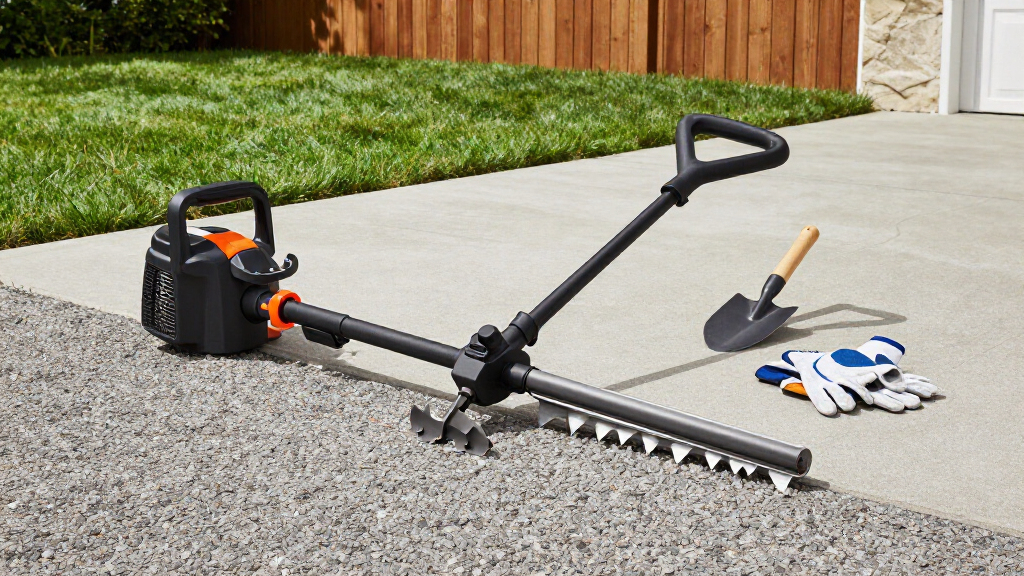
A blade edger uses a rigid steel blade spinning vertically at 3,000+ RPM, slicing into soil and turf with precision. It plunges 1.5 to 2.5 inches deep, carving a clean trench along your driveway.
Imagine pressing a sturdy knife into soft butter — that’s how a steel blade cuts through turf and soil. This rigid, deep cut helps prevent grass from creeping over the edge again and keeps your driveway looking sharp all season.
An example: after a heavy rain, grass often overflows the concrete lip. A blade edger shears the overgrowth off in one pass, leaving a crisp, defined line.
As an affiliate, we earn on qualifying purchases.
Why a String Trimmer Can’t Match the Depth or Precision
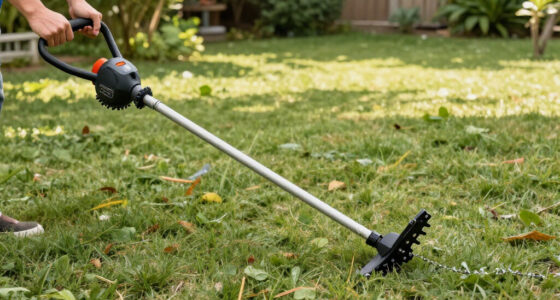
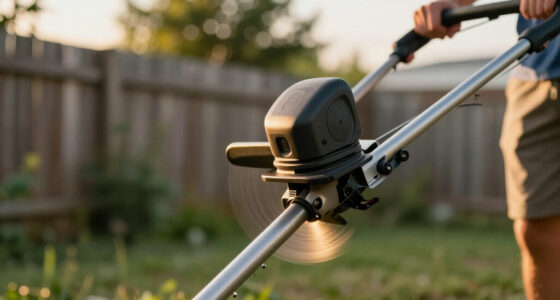
A string trimmer’s nylon line whips around at high speed, designed to cut grass at the surface. It only skims the turf, rarely penetrating past 0.5 inches.
Think of trying to carve a trench with a whip — the nylon line flaps and shreds grass, but it can’t push through compacted soil or dense root mats. It leaves a soft, crumbling border that quickly erodes or overgrows.
For example, when turf has grown over the concrete lip by half an inch or more, a string trimmer just tears at it, leaving ragged, uneven edges that require frequent touch-ups.
As an affiliate, we earn on qualifying purchases.
How the Physics of Cutting Makes a Difference
| Feature | Blade Edger |
|---|---|
| Cutting Mechanism | Rigid steel blade spinning vertically |
| Cut Depth | 1.5–2.5 inches deep |
| Control & Precision | High — guided by wheel, stays on concrete |
| Waviness & Wandering | Minimal — straight cut |
| Soil & Turf Penetration | Yes — slices through turf and soil |
In contrast, a string trimmer’s nylon line is flexible, flapping, and only skims the surface. It lacks the rigidity needed to push through soil or dense roots, resulting in uneven, shallow edges and frequent overgrowth.
Understanding these physics differences is crucial because it highlights why a blade edger provides a consistent, deep cut that maintains a sharp boundary over time. The rigid blade’s ability to cut deeply and stay aligned ensures a clean, professional-looking edge. Conversely, the flexible nylon line’s inability to exert sufficient force limits it to surface-level trimming, which can lead to a soft, overgrown boundary that needs frequent rework.
As an affiliate, we earn on qualifying purchases.
When a Trimmer Works Well — And When It Doesn’t
Trimmers excel in tight spots: around trees, fence posts, or curved flower beds. They’re handy for finishing or shaping after an edger has done the heavy lifting.
But for establishing a new edge, or fixing overgrowth that has crept onto the pavement, a string trimmer simply can’t cut deep enough. You end up tearing turf instead of shaping it, leaving a ragged, soft boundary that won’t last.
For example, after a season of neglect, grass can spill over the concrete by half an inch or more. String trimmers won’t cut it — literally. You need a blade to restore that sharp line.
steel blade edger for soil and turf
As an affiliate, we earn on qualifying purchases.
As an affiliate, we earn on qualifying purchases.
The Modern Toolbox: Multi-Head Systems and Battery Edgers
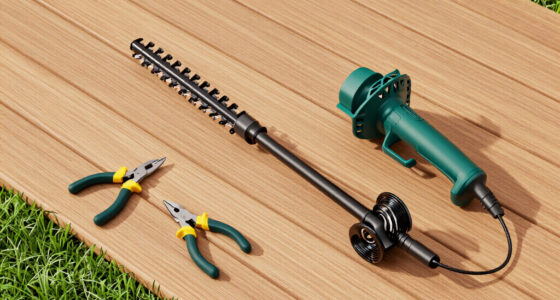
Today, many homeowners are turning to multi-head systems. Attach a blade or edger head to a versatile power station — like ECHO PAS or Ryobi Expand-It — and you get one motor, multiple tools.
Battery-powered edgers, especially with brushless motors, now rival gas engines for performance. They’re quieter, cleaner, and easier to handle, making the deep edge more accessible for casual users.
Example: a homeowner with a 50-foot driveway can switch between trimmer, edger, and blower attachments, saving space and money. Plus, newer battery platforms mean no more fumes or tangled cords.
Safety and Technique Tips for the Perfect Edge
Safety first — always wear eye protection and sturdy footwear. Steel edgers can chip concrete or kick stones, so keep the guard in place and work slowly.
For the best results: set the blade to 1.5–2 inches deep, walk slowly along the edge, and overlap each pass slightly. Use a guide wheel to keep the cut straight, especially on uneven pavement.
And don’t forget: after deep edging, use a trimmer or hand tool to taper the top, blending the new edge into the lawn for a natural look.
Frequently Asked Questions
Can I use my string trimmer to edge my driveway?
You can, but only for light maintenance. Most trimmers can flip to an edging position and trim overgrown grass, but they won’t create or restore a true, deep edge. For that, a blade edger is necessary.
Is it worth buying a dedicated edger if I already own a trimmer?
Yes. A dedicated edger slices soil and turf cleanly and deeply, producing a crisp, professional line. It saves time and effort, especially on overgrown or uneven edges.
How often should I edge my driveway?
Deep, professional edges should be cut once or twice a season, typically in spring. Use a trimmer to maintain the edge weekly or biweekly during peak growth.
Are battery-powered edgers as powerful as gas models?
Modern battery edgers with brushless motors now offer performance comparable to gas models for residential use. They’re quieter, cleaner, and easier to handle, making them a solid choice for most homeowners.
What depth should I set my blade for the best edge?
Set the blade between 1.5 and 2 inches deep. Going deeper can chip concrete or disturb underground utilities, while shallower cuts won’t define the edge properly. The key is to balance depth with control, ensuring a clean, consistent cut that maintains the boundary over time without damaging underlying utilities or the driveway surface.
Conclusion
For a sharp, durable driveway edge that lasts, a blade edger is the real tool. It slices through turf and soil with authority, restoring that crisp boundary every homeowner dreams of.
While a string trimmer can tidy up and maintain, it can’t replace the deep cut of a true edger. Think of it as your finishing brush, not your core tool. Invest in the right equipment, and your driveway will look like it was done by a pro — every season.
Fall yard work Picks
leaf blowers
As an affiliate, we earn on qualifying purchases.