TL;DR
GreenPal CEO Bryan Clayton recommends a push mower as a safer choice for homeowners mowing many sloped yards than a residential riding mower. The advice is not a universal safety guarantee: homeowners should check their mower’s incline limits, assess the terrain and use suitable equipment for steep or extensive hills.
GreenPal CEO Bryan Clayton recommends push mowers over residential riding mowers for homeowners cutting grass on sloped yards, citing the greater control a person can maintain while walking behind the machine. His advice matters because riding mowers can lose traction or tip on hills, but the safest choice depends on the mower’s rated incline limits and the slope and condition of the ground.

Get business pricing on tools and workshop supplies
- Business-only prices and quantity discounts
- Tax-exempt purchasing
- Multiple users, one account, clear invoices
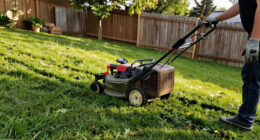
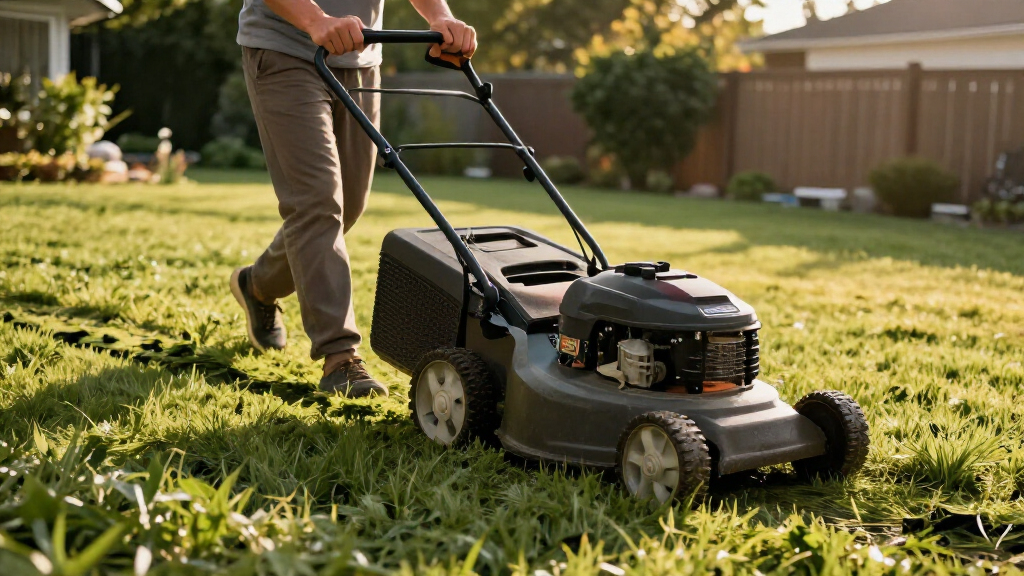
In an interview with Hunker, Clayton said homeowners mowing a hill themselves should consider a push mower. A walk-behind machine lets the operator steer it directly across the ground, he said, while a riding mower’s weight and wheels may make it harder to control on a slope. Uneven ground, holes and debris can add hazards by catching a wheel or affecting traction.
Clayton advised checking the yard’s gradient and the mower’s own incline guidance before cutting. The article describes estimating a slope over a 10-foot distance, including with a smartphone inclinometer app or a tape measure and yardstick. It says that above 20 degrees, homeowners should consider moving away from a riding mower, but that number should not replace the limits specified for a particular machine.
For a walk-behind option, Clayton recommended a mid-grade push mower and said a self-propelled model can reduce the physical effort. He also suggested a 22-inch deck. For large properties where a residential riding mower may not suit the hill and a push mower would take too long, he pointed to used professional walk-behind mowers as another option.
Best mower for sloped yards Control the hill safely
GreenPal CEO Bryan Clayton recommends a push mower for homeowners mowing slopes. The right choice still depends on your machine’s limits, the terrain and your ability to stay in control.
Match mower to terrain
Walking behind a mower can give the operator more direct control on a hill.
Push mower
Consider a mid-grade model; self-propelled drive can reduce effort.
Professional walk-behind
A used professional model may suit a large yard where a push mower would take too long.
Other options
Consider specialized slope equipment or landscaping that reduces routine mowing.
Check before you mow
A slope reading alone cannot capture every hazard on uneven ground.
- Check the mower’s rated incline limit and operating instructions.
- Assess footing, traction, holes, debris and changing slopes.
- If you cannot maintain control or the hill exceeds the mower’s limits, choose another option.
Mowing direction matters
The interview gives general guidance; follow the instructions for your specific mower.
- Drive up and down the slope, according to the article.
- Clayton warns residential riding mowers may be difficult to control on hills.
- Move across or perpendicular to the grade, according to the article.
- Manage footing, fatigue and control on uneven ground.
Choosing Equipment for Hills
The choice affects both operator control and rollover risk. Riding mowers may save time on flat land, but losing traction or striking an obstacle on a hill can create a dangerous situation. A push mower can offer more direct control, though it still requires the operator to manage footing, fatigue and the machine on uneven ground.
Cost and yard size also shape the decision. Push mowers generally cost less than riding models, while self-propelled versions can ease some of the workload. Clayton said professional walk-behind equipment can cover a wider area faster, but new models can cost more than $10,000; he said a used mower with about 1,000 hours may be available for roughly half that price. Those figures are his estimates, not a guarantee of current prices or condition.
For a homeowner, the practical takeaway is not that one mower suits every hillside. It is to match equipment and mowing method to the terrain, manufacturer guidance and the operator’s ability to control the machine safely.
Popular right now

Vitamix 5-Speed Immersion Blender, 625-Watt, Stainless Steel/Black

Dyson V15 Detect Cordless Stick Vacuum

Dyson Airwrap i.d. 6-in-1 Multi-Styler and Dryer
As an affiliate, we earn on qualifying purchases.
How Slope Changes Mowing
The advice distinguishes between riding and walk-behind equipment. The article says riding mowers should be driven up and down a slope, while push and walk-behind mowers should be moved across or perpendicular to the grade to reduce the risk of slipping underneath the machine. These are general recommendations presented in the interview; users should follow the operating instructions for their particular mower.
The article also refers to occupational safety guidance for professional work, saying that hills at or above 22 degrees call for push mowers or specialized equipment such as string trimmers or slope mowers. That reference is not a substitute for residential mower instructions or a site-specific safety assessment. Clayton’s interview focuses on homeowner choices, where the terrain’s roughness and the equipment’s stated limits also matter.
Where a hill is too steep or difficult to mow safely, the article mentions replacing grass with groundcover as a way to reduce or remove the need for routine mowing. It does not identify particular groundcover plants or give landscaping instructions.
“As a homeowner mowing your yard yourself, your safest bet is just going with a push mower.”
— Bryan Clayton, GreenPal CEO, in an interview with Hunker
Limits of the Advice
The interview does not identify a specific mower model, provide test results comparing machines, or establish a single safe gradient for all yards and equipment. Incline limits vary by mower, and the article directs readers to check the label or manufacturer instructions. Its approximate 20-degree warning is Clayton’s assessment, not a universal threshold.
It is also unclear how the slope-measuring method described applies to every irregular or uneven yard. A single gradient reading may not capture holes, loose ground, wet grass, obstacles or changes in slope. The interview does not provide a full safety checklist or establish that a push mower is safe on every hill.
Prices and used-equipment availability can vary, and the article does not specify a market, seller or date for its price estimates. It also does not detail the condition, maintenance history or safety features of any used professional mower.
Check Before Mowing
Before mowing, homeowners should check the manufacturer’s incline limit and operating instructions for their specific machine, then consider the slope, footing, ground conditions and any obstacles. If the hill exceeds the equipment’s limits or the operator cannot maintain control, using a different tool or arranging professional help may be safer than proceeding.
For a large or steep yard, the options raised in the interview include a suitable professional walk-behind mower, specialized slope equipment or landscaping that reduces the need to mow. The article does not announce a new product or rule; it reports Clayton’s recommendations. No further development or follow-up guidance was provided.
Source: rss
Key Questions
What type of mower does Bryan Clayton recommend for a sloped yard?
Clayton recommends a push mower for homeowners mowing a hill themselves. He also suggests considering a self-propelled walk-behind model to reduce effort, while stressing that equipment must suit the slope.
Are riding mowers safe on every slope?
No universal safe limit is established in the interview. Clayton warns about residential riding mowers on slopes above about 20 degrees, but homeowners should follow the incline limit and instructions for their specific mower and account for ground conditions.
How should a push mower be moved across a hill?
The article says to move a push or walk-behind mower across or perpendicular to the grade. It contrasts that with riding mowers, which it says should be driven up and down the slope. Follow the mower’s operating instructions.
What can homeowners do if a hill is too large for a push mower?
Clayton points to used professional walk-behind mowers for larger areas. The article also mentions specialized tools or replacing grass with groundcover. Suitability depends on the terrain, equipment and operator.
Source: hunker.com