
TL;DR

Get business pricing on tools and workshop supplies
- Business-only prices and quantity discounts
- Tax-exempt purchasing
- Multiple users, one account, clear invoices
There is no reliable universal figure for amp-hours per inch of snow. Measure your driveway, convert battery capacity to watt-hours, compare it with a condition-matched clearing test, and add at least a 20–30% reserve for cold, wet snow, slopes, and the packed berm at the street.
Five amp-hours can mean 200 Wh or 400 Wh, depending on battery voltage. That gap can decide whether you finish your driveway or hear the blower fade to silence beside a gray, concrete-heavy plow berm. The amp-hour number printed in large type on the pack tells only half the energy story.
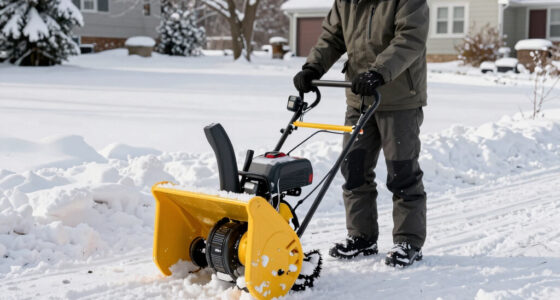
You need to match the battery system to driveway area, snowfall depth, and snow density. A six-inch layer of powder may roll from the chute like white smoke, while six inches of wet snow can hit the auger like cold oatmeal. The same driveway and the same depth can produce very different battery demand.
This guide gives you a practical sizing method based on watt-hours, tested clearing capacity, and a 20–30% reserve. You will see how to calculate your workload, compare voltage platforms, account for cold weather, and plan around the dense ridge at the street. The goal is simple: choose enough energy to finish a demanding, common storm without buying a mountain of costly battery capacity you rarely use.
Convert every pack to watt-hours using nominal voltage × amp-hours; a 5 Ah pack can represent about 200 Wh at 40 V or 400 Wh at 80 V.
Measure driveway square footage and size around a demanding storm that occurs regularly, not the average snowfall.
Use condition-matched clearing tests and compare them through Wh per 1,000 square feet per inch of snowfall.
Add at least a 20–30% energy reserve, with more capacity for wet snow, steep grades, severe cold, long throws, and plow berms.
Confirm whether a multi-battery blower draws packs together, uses them sequentially, or requires matching batteries before buying extras.
Amp-Hours per Inch of Snow
There is no reliable universal Ah-per-inch figure. Size your battery supply around driveway area, watt-hours, snow condition, tested clearing capacity and enough reserve to finish the cold, concrete-heavy berm at the street.
Five amp-hours is only half the story.
Amp-hours measure electrical charge, not total stored energy or clearing work. Convert every pack to nominal watt-hours before comparing voltage platforms. When available, use the manufacturer-supplied Wh rating rather than a maximum-voltage marketing label.
Equal Ah does not mean equal range.
The large number on the carton can hide a two-to-one energy gap. Electronics also preserve a cell-safety reserve, so nominal watt-hours are not guaranteed usable output.
| Battery rating | Nominal energy | Versus 40 V example | What it tells you |
|---|---|---|---|
| 40 V × 5 Ah | 200 Wh | Baseline | Smaller-platform energy reference |
| 56 V × 5 Ah | 280 Wh | +40% | More nominal energy at the same Ah |
| 60 V × 5 Ah | 300 Wh | +50% | About 100 Wh above the 40 V pack |
| 80 V × 5 Ah | 400 Wh | +100% | Roughly twice the nominal energy |
Six inches can be three very different jobs.
The auger feels density, water content, crusting and compaction—not depth alone. The same driveway can clear in smooth ribbons one day and demand half-width bites the next.
Dry powder
Light snow moves quickly, permits fuller-width passes and usually throws with less resistance.
Wet or crusted
Near-freezing snow loads the auger, sticks in the chute and may require slower, partial-width passes.
Street-end berm
Plow deposits combine dense road snow, grit, salt and ice chunks—often where the battery is already depleted.
A 1,000 ft² driveway under six inches of snow holds about 500 cubic feet. Powder may roll from the chute like smoke; wet snow can strike the auger like cold oatmeal. Volume is fixed, but the energy needed to move it is not.
A practical workload method.
Start with a condition-matched clearing test, normalize it to watt-hours per 1,000 square feet per inch, scale it to your demanding common storm, then add reserve.
Measure area
Driveway length × average width = square feet to clear.
Define the storm
Choose a demanding event that occurs regularly—not the average snowfall.
Normalize a test
Convert tested packs to Wh and divide by area and snow depth.
Add reserve
Multiply the estimate by at least 1.20–1.30 before choosing packs.
Worked clearing test
Battery architecture changes the answer.
Confirm how the blower uses its bays before adding pack capacities. Two batteries in the machine do not always mean one working pack plus one automatic spare.
Both packs work together
Two 300 Wh packs form one 600 Wh operating set. Matching capacity and charge level is usually the cleanest configuration.
One pack, then the next
The machine empties one bay before switching. Total energy may add cleanly, but verify that automatic switching is supported.
Efficiency is system-wide
Auger geometry, traction, electronics, throwing distance and operating technique can outweigh the voltage badge.
Keep usable energy available.
Cold lithium-ion packs provide less useful energy and can suffer greater voltage sag. Start warm, follow the charging limits and plan the route so your hardest snow does not meet your weakest battery.
Store packs indoors
Keep batteries at moderate temperatures instead of overnight in an unheated shed or vehicle.
Install immediately before clearing
A room-temperature start improves power delivery; operating current will then warm the cells.
Warm before charging
Allow a very cold pack to reach an approved temperature and follow the maker’s charging limits.
Clear the berm strategically
Reserve sufficient charge for the street ridge or tackle part of it while the batteries are strongest.
The finish-the-driveway rule
Use watt-hours per 1,000 square feet per inch as condition-specific sizing language—not as a universal constant. Base the estimate on a credible test, scale cautiously, and carry at least a 20–30% reserve.
Area + storm condition + tested Wh + reserve = defensible pack plan
Why Amp-Hours Alone Can Leave You Stranded
Amp-Hours per Inch of Snow is not a reliable universal sizing rule because amp-hours measure charge, not total stored energy or clearing work. Your actual demand depends on driveway area, battery voltage, snow density, temperature, slope, throwing distance, blower design, and the way you make each pass.
Think of amp-hours like the size of a fuel tank without knowing the fuel pressure or engine. A 5 Ah pack at 40 V holds about 200 nominal watt-hours, while a 5 Ah pack at 80 V holds about 400 nominal watt-hours. Calling both packs 5 Ah hides a two-to-one energy difference.
The basic conversion is nominal watt-hours = voltage × amp-hours. Use the manufacturer-supplied watt-hour figure when available, especially when packaging highlights a maximum fully charged voltage rather than nominal voltage. The blower also protects its cells by shutting down before every rated watt-hour leaves the pack, so the label describes nominal stored energy, not guaranteed usable output.
Use watt-hours to compare battery energy. Use clearing tests to estimate the work that energy will perform.
Suppose your neighbor clears a short 600-square-foot apron with a 40 V, 5 Ah pack. That success does not mean the same pack will clear your 1,800-square-foot sloped driveway, even if both properties receive four inches. Your blower must move roughly three times the area, climb a grade, and perhaps throw snow farther over a retaining wall.
According to Outdoor Pro Masters sizing guidance [1], a more useful metric is watt-hours per 1,000 square feet per inch of snowfall. It connects battery energy with the physical job instead of treating every driveway and storm as interchangeable. It remains condition-specific, but it gives you reliable universal sizing language for comparing real tests without pretending one fixed Ah figure fits every property.
As an affiliate, we earn on qualifying purchases.
What a 5 Ah Battery Actually Gives You
Amp-Hours per Inch of Snow cannot compare voltage platforms because equal amp-hour ratings can store sharply different amounts of energy. Multiply nominal voltage by amp-hours before comparing packs, then check whether the blower needs one battery, two batteries together, or multiple packs used in sequence.
| Nominal battery rating | Approximate energy | What the number tells you |
|---|---|---|
| 40 V × 5 Ah | 200 Wh | Baseline energy for a smaller platform |
| 56 V × 5 Ah | 280 Wh | 40% more nominal energy than 40 V at the same Ah |
| 60 V × 5 Ah | 300 Wh | About 100 Wh more than the 40 V example |
| 80 V × 5 Ah | 400 Wh | Roughly twice the nominal energy of 40 V at 5 Ah |
Imagine two cartons sitting under bright hardware-store lights. Both announce 5 Ah in bold lettering, but one contains a 40 V pack and the other an 80 V pack. If you shop by amp-hours alone, the labels look equal; once you calculate watt-hours, the energy difference becomes obvious.
Voltage still does not predict the complete machine. A higher-voltage blower can reduce current for a given power level, but auger shape, impeller speed, traction, electronics, and battery discharge capability control what happens when the chute fills with dense snow. System design beats the voltage badge when you compare actual clearing performance.
Check the battery architecture before adding capacities. Some two-battery machines require both packs to start and draw from them together; others empty one bay and then switch to the next. If a blower needs two 300 Wh packs at once, you have a 600 Wh operating set, not one working pack plus one automatic spare.
Mixed capacities can create another snag. A warm 6 Ah pack paired with a cold 4 Ah pack may face limits set by the weaker battery, depending on the machine’s controls. Follow the maker’s pairing rules, avoid unapproved adapters, and treat matching packs with similar charge levels as the cleanest setup for a machine that draws from batteries simultaneously.
high capacity snow blower battery pack
As an affiliate, we earn on qualifying purchases.
As an affiliate, we earn on qualifying purchases.
Why Six Inches of Snow Can Be Two Different Jobs
Amp-Hours per Inch of Snow misses the variable your auger feels most: snow condition. An inch of dry powder asks for far less energy than an inch of wet, compacted snow, so depth alone cannot describe workload. Density, water content, crusting, tire compaction, and plow deposits all change the job.
Start with the physical volume. Multiply driveway length by average width to find area, then multiply area by snow depth. A 1,000-square-foot driveway under six inches, or half a foot, holds about 500 cubic feet of snow. The volume stays the same whether the snow squeaks like dry sugar or slumps like soaked concrete, but the weight does not.
- Dry powder moves easily and usually permits faster, full-width passes.
- Wet snow loads the auger, sticks inside the chute, and demands shorter throws.
- Compacted tracks make the scraper and auger chew rather than sweep.
- Refrozen crust causes repeated impacts and slower travel.
- Plow berms combine depth, density, road grit, salt, and chunks of ice.
For a real example, take a 40-by-25-foot parking pad. Six inches of fluffy 15°F snow may clear in smooth ribbons, with the motor humming steadily and white powder drifting beyond the pavement. At 33°F, the same depth can clog the chute, force half-width passes, and make the electronics feed more power into each heavy bite.
The driveway entrance often consumes a disproportionate share of battery energy. Municipal plows fold street snow into a dense ridge that may stand two feet deep even when only six inches fell. Hit that berm with a nearly empty pack and the blower may sag or shut down just where you need its hardest push.
Classify your regular storms as dry, average, wet, or compacted before sizing batteries. If your property sits near freezing temperatures, receives lake-effect powder, or gets frequent plow piles, choose the category that matches what you actually shovel. A depth forecast tells you how high the snow will sit; its texture tells you how hard the blower must work.
snow blower battery watt-hour calculator
As an affiliate, we earn on qualifying purchases.
As an affiliate, we earn on qualifying purchases.
Use This 8-Step Method to Size Your Battery Supply
The most defensible sizing method starts with measured driveway area and a credible clearing test, then converts the tested packs to watt-hours and adds a reserve. This process gives you an evidence-based battery target while leaving room for colder cells, wetter snow, longer throws, slopes, and the street-end berm.
- Measure the driveway. Multiply length by average width, splitting odd shapes into rectangles when needed.
- Choose a design storm. Use a demanding snowfall that occurs regularly, not the mild seasonal average or a once-in-20-years blizzard.
- Classify the snow. Decide whether your common workload is dry, average, wet, or compacted.
- Find a condition-matched test. Look for area, depth, snow type, temperature, blower type, and battery configuration.
- Convert the tested packs. Multiply nominal voltage by amp-hours or use the listed watt-hour rating.
- Calculate energy intensity. Divide watt-hours used by the driveway area in thousands of square feet multiplied by snow depth in inches.
- Scale the result cautiously. Apply the test rate to your area and chosen depth without assuming very deep snow behaves in a perfectly straight line.
- Add at least 20–30% reserve. Add more for wet snow, severe cold, grades, long throws, or a large plow berm.
Here is the math in action. An independent test clears 1,500 square feet of six-inch moderate snow with two nominal 300 Wh packs. The 600 Wh battery set divided by 1.5 × 6 produces an observed intensity of about 67 Wh per 1,000 square feet per inch.
Now apply that rate to a 2,000-square-foot driveway under eight inches of similar snow. The estimate is 67 × 2 × 8, or about 1,072 Wh. Adding a 25% reserve raises the target to roughly 1,340 Wh of nominal battery capacity.
This is an illustration, not a promise. Deep snow may force slower travel, overlapping passes, or several layers, so battery demand may not rise in a straight line. If your driveway climbs steeply and ends at a thick plow ridge, round upward or keep a fully charged spare operating set.
Manufacturer clearing claims help when they disclose test conditions. A bare claim that a blower clears a multi-car driveway says little because parking layouts vary wildly. Look for square feet, depth, temperature, and battery configuration; treat vague up-to language as a favorable-case comparison rather than a completion guarantee.
cold weather snow blower battery reserve
As an affiliate, we earn on qualifying purchases.
As an affiliate, we earn on qualifying purchases.
Pick the Blower Design That Matches Your Hardest Snow
Your battery target changes with the blower because single-stage and two-stage machines spend energy differently. Single-stage models usually offer lower weight and efficient pavement clearing, while two-stage machines trade more battery consumption for traction, deeper-snow control, and better handling of dense piles. Match the design to your hardest regular workload.
| Feature | Single-stage blower | Two-stage blower |
|---|---|---|
| Best fit | Paved surfaces and moderate snow | Deep snow, grades, and dense berms |
| Energy use | Generally lower | Generally higher |
| Traction | Lightweight, often operator-guided | Usually self-propelled |
| Extra electrical loads | Often limited | Drive motor, lights, heated grips, and chute controls |
| Battery setup | Often one or two packs | Frequently two or more packs |
On a flat, 900-square-foot paved driveway, a single-stage machine can move four inches of powder quickly. The rubber-edged auger skims close to the black pavement, and the lighter chassis turns neatly beside parked cars. Put that same blower into a wet 18-inch plow ridge, and you may need narrow bites that drain the battery much faster.
A two-stage cordless machine attacks that ridge more like a compact conveyor. The front auger gathers snow while a separate impeller throws it, and powered wheels keep the machine moving. That capability costs energy because traction and snow movement share the battery supply, especially when heated grips, lights, and powered chute controls run at the same time.
Clearing width does not settle the choice. A broad bucket may cover more pavement per pass, but it also gathers more snow at once. Auger geometry, motor controls, travel speed, and throwing distance can make a narrower machine surprisingly productive, so compare tested area and conditions instead of judging by width alone.
Recent cordless machines use brushless motors and electronic load management to raise output when snow thickens. That gas-like response helps, but it cannot erase battery cost, recharge time, or cold-weather limits. If you manage a steep driveway in a heavy-snow belt, the right answer may be a two-stage machine with multiple matched packs; for a small paved apron, that setup may be expensive overkill.
Keep Cold, Charging, and the Plow Berm From Ruining the Plan
A well-sized pack can still fall short if it starts frozen, waits for a slow charger, or reaches the plow berm nearly empty. Build your plan around warm starting batteries, realistic charging time, and reserve energy. These practical details often decide whether you finish in one clean session or stop beside a blocked driveway.
- Store packs indoors at moderate temperatures, following the manufacturer’s storage instructions.
- Install batteries immediately before clearing rather than leaving them in an unheated shed or vehicle.
- Let a very cold pack warm before charging, and stay within the maker’s charging-temperature range [2].
- Keep a charged spare when the driveway must remain open for work, school, medical access, or deliveries.
Cold lithium-ion cells show greater voltage sag and provide less useful energy under heavy load. There is no honest fixed percentage that applies to every pack because chemistry, pack design, age, battery temperature, and discharge rate vary. Starting with a room-temperature battery is more dependable than subtracting a guessed cold-weather percentage from the label.
Suppose an overnight storm ends at 5 a.m. and the batteries sat in a detached garage at 10°F. The blower may start, then lose punch when the auger hits dense snow. Bring the packs indoors beforehand, carry them out when you are dressed in gloves, eye protection, warm footwear, and hearing protection, and the cells start the job warmer.
Charging logistics deserve the same attention as capacity. Two small packs can offer redundancy and easier handling, but a single slow charger may leave the second set waiting for hours. Check charger wattage, available circuits, port behavior, and pack temperature; some multi-port chargers fill packs sequentially instead of charging every battery at full speed.
Plan your route as well. Clear the required exit lane and dense street end while the batteries have a strong charge, then finish lower-priority parking edges. Never put your hand into a clogged chute: switch the blower off, remove the batteries, wait for all moving parts to stop, and use the clearing tool supplied with the machine.
Battery packs also age. After several winters, a pack may reach low-voltage cutoff sooner and sag harder under a wet-snow load even though its label still shows the original rating. If an older set barely completed last season’s storms, add a spare or replace weak packs before the next heavy, wind-packed snowfall.
Frequently Asked Questions
How many amp-hours do I need per inch of snow?
There is no universal amp-hour figure because voltage, driveway area, snow density, temperature, slope, and blower design change the workload. Convert packs to watt-hours, find a clearing test that resembles your conditions, and add a 20–30% reserve. An amp-hours-per-inch shortcut can miss by a wide margin when snow turns wet or compacted.
Is one 5 Ah battery enough for my driveway?
It depends on battery voltage, driveway size, snow depth, and snow type. A 40 V, 5 Ah pack stores about 200 nominal Wh, while an 80 V, 5 Ah pack stores about 400 nominal Wh. Check the blower’s tested clearing capacity and pack requirements before treating 5 Ah as enough.
Should I size batteries for the average storm or the worst storm?
Size for a demanding storm that occurs regularly, then keep a spare-pack or staged-clearing plan for rare extremes. Average-based sizing can leave you short during the heavy storms when driveway access matters most. Designing for the largest storm ever recorded can saddle you with costly packs that spend most winters sitting idle.
Do two snow-blower batteries double the runtime?
Only some battery systems work that way. A blower may use packs sequentially, draw from both at once, or require two batteries merely to supply its operating power. Read the battery-bay instructions and confirm whether extra slots add runtime, power capability, or both.
Can I mix different battery capacities in a cordless snow blower?
Some machines accept mixed capacities, but a smaller, colder, or less-charged pack may limit performance when batteries operate together. Use combinations approved by the manufacturer, and avoid battery adapters that bypass communication or safety features. Matched packs at similar charge levels give multi-battery machines the most predictable behavior.
Does a higher-Ah battery make the snow blower more powerful?
A higher-Ah pack mainly provides more stored energy and runtime. It may sustain heavy current better if its cells and electronics support that load, but motor output also depends on the blower controller, voltage, battery discharge capability, and machine design. Do not treat a larger Ah label as an automatic power upgrade.
Conclusion
The number to remember is not a fixed quota of amp-hours per inch. Measure the driveway, compare battery sets in watt-hours, anchor your estimate to a realistic clearing test, and add enough reserve for the ugly part of the storm. For many properties, that means planning around the wet six-to-eight-inch event and its packed street-end ridge rather than a polite dusting of powder.
Do that math before buying into a battery platform, then keep the packs warm and charged. When the plow rolls past at dawn and leaves a gray wall across your driveway, you want the auger to bite, the chute to roar, and the battery gauge to stay comfortably out of the red.
Columbus Day / Indigenous Peoples' Day Picks
long weekend sales
As an affiliate, we earn on qualifying purchases.