
TL;DR

Get business pricing on tools and workshop supplies
- Business-only prices and quantity discounts
- Tax-exempt purchasing
- Multiple users, one account, clear invoices
Pressure washer pulsing and surging usually starts with inadequate water flow, trapped air, a clogged nozzle, an inlet restriction, or a small leak; the unloader valve comes later in the diagnostic order. Bleed the system, confirm supply flow, clean the nozzle, inspect connections, and use a pressure gauge before touching an adjustable unloader.
Your pressure washer should sound steady, not cough like an engine running out of fuel. When the spray kicks against your hands, fades, and returns with a sharp thump, the machine is telling you that water flow or pressure control has become unstable. Keep running it that way and a minor restriction can become an expensive pump repair.
This guide helps you separate pressure washer pulsing from normal engine vibration, identify the likely cause, and work through the checks in a sensible order. You will learn what the unloader valve actually does, how trapped air creates a jerking spray, and why a garden hose that looks perfectly adequate can still starve a 2.5 GPM pump.
The goal is not to turn you into a pump rebuilder. It is to help you fix safe, accessible problems such as a blocked nozzle, kinked hose, dirty inlet screen, or loose connection—and know when to stop. Before opening any fitting, shut the machine down, disconnect its power source, close the water tap, squeeze the trigger to release stored pressure, and put on eye and hand protection.
Measure water at the washer end of the hose and aim for about 20% more GPM than the machine consumes.
Bleed the system with the machine off and the trigger open until water runs smoothly for at least 30 seconds.
Clean the inlet screen and correct-size nozzle before adjusting or replacing an unloader valve.
Use a rated pressure gauge and the model-specific service procedure for any unloader adjustment.
Stop immediately for milky pump oil, grinding, internal leaks, damaged electrical parts, or repeated cycling that basic checks do not cure.
Pressure Washer Pulsing and Surging
A spray that kicks, fades and returns is a warning that water delivery or pressure control has become unstable. Start with supply flow, trapped air, the nozzle, inlet restrictions and leaks. The unloader valve comes later.
Read the spray before reaching for tools.
Pulsing and surging are both repeating changes in spray force, but their rhythm and timing narrow the search. A healthy washer produces a dense, even fan and a continuous hiss.
Fast pulsing
Repeated tapping through the gun usually starts the investigation at trapped air, a clogged nozzle or an inlet restriction.
Pressure surging
Large rises and falls under load suggest weak supply flow, changing pump load or an unloader that is sticking after basic checks pass.
Electric cycling
A total-stop motor that repeatedly restarts without the trigger being pulled may be responding to a downstream or internal leak.
Flattening inlet hose
A hose that softens or collapses as pressure drops points toward restricted inlet flow—not automatically an engine or fuel problem.
Striped cleaning
Alternating clean and dirty bands on concrete reveal that the fan is not receiving steady pressure through the entire pass.
Speed hunting
If engine speed rises and falls with the spray, test water delivery first. A changing pump load can imitate fuel or governor trouble.
Match the symptom to the first safe check.
This is a diagnostic starting point, not permission to adjust every screw. Two faults can coexist: a partially blocked nozzle may increase load while a weak tap struggles to refill the inlet.
| What you observe | Likely starting point | First safe check | Unloader now? |
|---|---|---|---|
| Fast pulsing with the trigger held open | Air, clogged nozzle or inlet restriction | ✓Bleed the hose and clean the nozzle | ~No—finish basic checks first |
| Slow rise and fall under load | Weak water supply or sticking control | ✓Run a timed bucket-flow test | ~Only after flow is verified |
| Electric motor cycles with trigger released | Gun, hose, coupler or internal leak | ✓Inspect for drips and wet fittings | ✗Do not adjust to hide a leak |
| Pressure improves with a larger nozzle | Nozzle is too small or partly blocked | ✓Confirm the specified nozzle size | ✗No |
| Engine speed hunts with the spray | Changing pump load, governor or fuel delivery | ✓Verify water flow before engine service | ~Gauge diagnosis may follow |
| Steady inlet flow but weak, uneven output | Worn pump seals or check valves | ✓Arrange a rated gauge test | ~Use the service procedure |
Pulsing
Rapid, frequent tapping or jerking while the trigger remains open.
Surging
Slower, more pronounced rises and falls in pressure and cleaning force.
Stop the pulse with seven checks in the right order.
Estimated first pass · 15–30 minutesMake it safe
Power off, isolate the energy source, close the tap and squeeze the trigger.
Test flow
Fill a marked container from the washer end of the inlet hose.
Straighten supply
Uncoil the hose and correct kinks, crushed sections and restrictive couplers.
Clean screen
Remove grit, algae, rust and mineral scale. Replace a torn screen.
Bleed air
Machine off, water on, trigger open until flow is smooth for 30 seconds.
Clean nozzle
Back-rinse and use the maker-approved pin. Never enlarge the opening.
Short test
Run for 30–60 seconds while watching the inlet hose and listening.
The timed bucket test
Disconnect the inlet hose at the washer. Open the tap fully and time a known volume. Test through the same hose, reel and fittings used during operation.
5 gallons ÷ 2 minutes = 2.5 GPM
Supply margin matters more than appearance.
A hose can look adequate and still starve the pump. Length, diameter, reels, narrow couplers and a soft section that collapses under demand all reduce the flow arriving at the inlet.
Follow the fault from source to symptom.
The spray is the end of a connected system. A restriction at the tap can travel through the inlet, pump and pressure-control circuit before appearing as a jerking gun.
Tap flow, hose diameter, hose length and open valves.
Screen, couplers, seals, trapped air and collapsing hose.
Check valves and seals must move water consistently.
The unloader regulates working and bypass conditions.
Gun, hose and correct-size nozzle deliver the final fan.
These signs need professional inspection.
- Milky pump oil or oil contaminated with water
- Grinding, knocking or harsh mechanical noise
- Visible internal pump leaks or cracked components
- Damaged plugs, cords, switches or other electrical parts
- Repeated cycling that returns after the seven basic checks
- Pressure that requires an unloader adjustment without a rated gauge
Five rules for a steady, safer spray.
Measure at the machine.
Test the actual hose path and target about 20% more GPM than the washer consumes.
Bleed before starting.
With the machine off, hold the trigger open until water runs smoothly for at least 30 seconds.
Clear restrictions first.
Clean the inlet screen and correct-size nozzle before blaming the pump or control valve.
Gauge the unloader.
Follow the model-specific procedure and use equipment rated for the washer’s pressure.
Respect stored pressure.
Never search for pinhole leaks with your hand. Shut down, depressurize and inspect safely.
What the Rhythm of the Spray Tells You
Pressure washer pulsing and surging are repeating changes in spray force, but their rhythm points toward different faults. Pulsing feels like rapid tapping through the gun, while surging produces slower, larger rises and falls in pressure. Either symptom means the pump is not receiving, moving, or controlling water steadily.
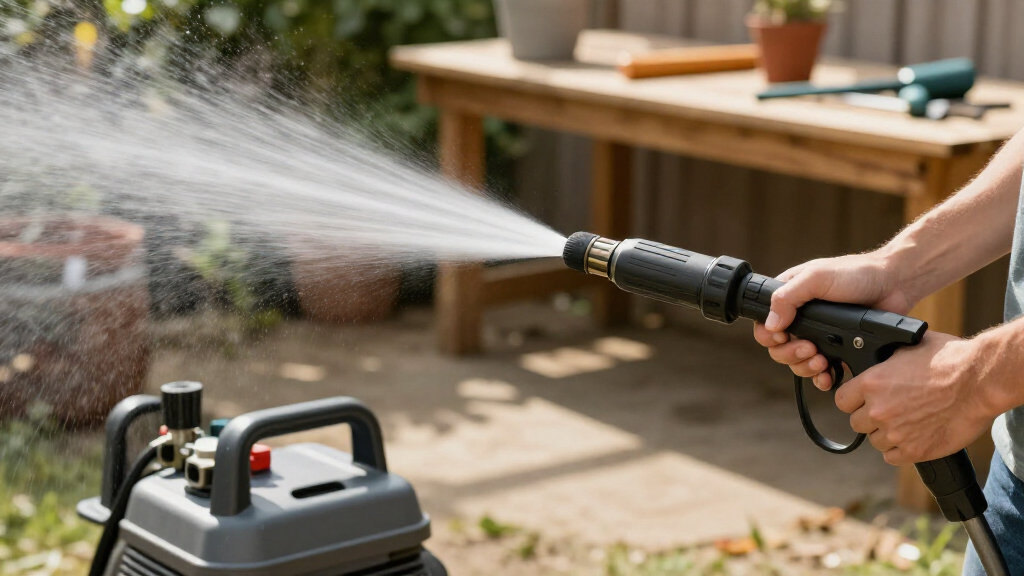
A healthy washer gives you a dense, even fan that sounds like a long hiss. A pulsing unit spits visible bands through that fan, almost like someone is pinching and releasing the hose every second. On a concrete driveway, you may see alternating clean and dirty stripes instead of one uniform pass.
Watch when the symptom occurs. If pressure rises and falls while you hold the trigger open, start with water supply, trapped air, nozzle condition, inlet restrictions, and pump valves. If an electric washer repeatedly starts and stops while the trigger stays released, look for a downstream leak that makes its pressure switch cycle.
The distinction matters because normal bypass behavior can sound odd without being a spray fault. On many gas machines, releasing the trigger sends water through the pump’s bypass circuit while the engine keeps running. On total-stop electric units, releasing the trigger normally stops the motor; repeated restarting without your hand on the trigger is not normal operation.
For example, a homeowner cleaning 300 feet of fence noticed the spray weakening every three seconds. The engine stayed smooth, but the hose flattened slightly near the reel each time pressure dropped. That visible clue pointed to restricted inlet flow, not fuel trouble or a failed unloader.
pressure washer inlet screen replacement
As an affiliate, we earn on qualifying purchases.
As an affiliate, we earn on qualifying purchases.
Match the Symptom to the Most Likely Fault
Pressure washer pulsing and surging can be narrowed down by noting when it happens, how the engine or motor behaves, and whether the inlet hose changes shape. Trigger-open pulsing usually points toward water flow or pump problems. Trigger-closed cycling more often points toward leaks, pressure switches, or bypass control.
| What you observe | Likely starting point | First safe check |
|---|---|---|
| Fast pulsing with the trigger held | Air, clogged nozzle, inlet restriction | Bleed the hose and clean the nozzle |
| Slow rise and fall under load | Weak water supply or sticking unloader | Run a timed bucket-flow test |
| Electric motor cycles with trigger released | Gun, hose, fitting, or internal leak | Inspect for drips and wet couplers |
| Pressure improves with a larger nozzle | Nozzle too small or partly blocked | Confirm the specified nozzle size |
| Engine speed hunts with the spray | Engine governor, fuel delivery, or changing pump load | Test water flow before servicing the engine |
| Steady inlet flow but weak, uneven output | Worn pump seals or check valves | Arrange a gauge test or pump inspection |
This table gives you a diagnostic starting point, not permission to adjust every screw in sight. Two faults can appear together. A partially clogged nozzle may raise pump load while a weak tap struggles to refill the inlet, producing a confusing mix of pulsing and engine hunting.
Take a common acreage job: you run 150 feet of garden hose from a barn tap to a 3.0 GPM washer. The supply seems strong at the building, yet the long, narrow hose steals flow before water reaches the pump. A short 5/8-inch or 3/4-inch supply hose, where the manual permits it, may restore a solid spray without any mechanical repair.
Warning: Never use your hand to search for a pinhole leak. A concentrated high-pressure stream can cut skin and drive dirty water into tissue. Shut down, release pressure, and inspect with cardboard or dry paper instead.
As an affiliate, we earn on qualifying purchases.
Stop the Pulse With Seven Checks in the Right Order
The fastest safe route to a steady spray is to check water supply, air, restrictions, and leaks before touching pump controls. This order handles the cheap, common faults first and protects you from masking a supply problem with an unsafe adjustment. Plan on 15 to 30 minutes for a careful first pass.
- Make the machine safe. Switch it off, unplug mains-powered units or remove the battery, disconnect the spark-plug lead on gas equipment, close the tap, and hold the trigger until pressure disappears.
- Check supply flow. Disconnect the inlet hose from the washer and time how long it takes to fill a marked container. Five gallons in two minutes equals 2.5 GPM, which leaves no headroom for a 2.5 GPM washer.
- Straighten the inlet path. Uncoil the hose fully, open the tap, inspect quick-connects, and remove any crushed or soft section that collapses under suction.
- Clean the inlet screen. Rinse away grit, rust flakes, algae, or pale mineral scale. Replace a torn screen rather than operating without it.
- Bleed trapped air. With the machine off and water connected, hold the gun trigger open until the stream runs smoothly for at least 30 seconds.
- Inspect and clean the nozzle. Remove it, rinse it backward, and use the maker-approved cleaning pin. Never enlarge the opening with a drill bit or nail.
- Run a short test. Reconnect everything, start the unit as directed, and test for 30 to 60 seconds while watching the inlet hose and listening to the pump.
Suppose a 2.3 GPM electric washer pulses after sitting in a shed all winter. The bucket test shows 3.1 GPM, but the first trigger pull produces white, foamy water followed by hard jolts. A 60-second bleed with the motor off clears the air, and the spray becomes smooth without opening the housing.
If the symptom remains, note exactly what changed. A clean nozzle that makes no difference moves the diagnosis toward the unloader, pump check valves, seals, or drive system. Written observations save time when you speak with a repair shop, especially when the problem appears only after 10 or 15 minutes of operation.
pressure washer nozzle cleaning kit
As an affiliate, we earn on qualifying purchases.
As an affiliate, we earn on qualifying purchases.
Know When the Unloader Valve Is Really at Fault
Pressure washer pulsing and surging can come from an unloader valve that sticks, wears, or sits outside its specified setting. The valve controls pump load by directing water through a bypass path when the gun closes. It is a pressure-control and pump-protection part, not a casual power knob.
Inside a typical bypass-style unit, a spring and piston respond to pressure changes. Dirt, corrosion, a damaged O-ring, or hardened lubricant can keep that piston from moving freely. The result may feel like full pressure, sudden collapse, and full pressure again, accompanied by a sharp change in pump tone.
Do not diagnose the unloader from the symptom alone. First confirm the correct nozzle, adequate inlet flow, a bled system, and leak-free fittings. According to Outdoor Pro Masters [1], premature unloader adjustment often hides the real restriction while raising pump stress.
If your model has an adjustable unloader, use a pressure gauge rated above the machine’s maximum PSI and follow its service procedure. Never exceed the pressure stamped on the pump, hose, gun, or fittings; the lowest rating governs the system. A 3,200 PSI pump paired with a 3,000 PSI hose remains a 3,000 PSI system.
Here is the real-world trap: a contractor notices weak output from a 4 GPM washer and tightens the unloader until the gauge reads higher. The true fault is a mineral-clogged inlet filter, so the pump now runs starved and overloaded. More spring tension did not create more water; it converted a service issue into heat and wear.
High pressure is not the same as healthy flow. An unloader setting should match the pump and nozzle specification, not compensate for a thirsty pump or blocked water path.
As an affiliate, we earn on qualifying purchases.
Give the Pump Enough Water and Clear Every Air Pocket
Pressure washer pulsing and surging often disappears when the pump receives a solid, bubble-free supply with enough gallons per minute. A pump cannot compress air and move water with the same smooth rhythm. Each pocket acts like a tiny spring, compressing, expanding, and kicking the spray gun.
Use a bucket test at the hose end that will connect to the washer, not at a nearby tap. Divide the container volume by the fill time: five gallons collected in 100 seconds equals 3.0 GPM. For a washer rated at 2.5 GPM, that delivers the practical 20% flow cushion recommended by Outdoor Pro Masters [1].
Flow can change during the job. An irrigation valve may open, someone may start a shower, or a livestock trough may refill while you clean the patio. A tap that supplied 3.2 GPM at dawn can fall below 2.5 GPM during household demand, creating a surge that seems to arrive from nowhere.
Air often enters through the inlet rather than remaining from startup. Check the hose washer, threaded adapter, filter bowl, and quick-connect for looseness or cracked seals. A fitting may draw air without leaking much water, leaving no obvious puddle but sending a necklace of small bubbles toward the pump.
For example, a rural user feeding a washer from a storage tank sees pulsing whenever the tank drops below half full. The long suction hose and dirty filter add resistance, while a loose clamp admits air. Cleaning the filter, shortening the run, and resealing the connection restores a clear, continuous inlet stream.
Do not connect a standard consumer washer to an unpressurized tank unless its manual permits gravity feed or suction use. Some pumps need positive inlet pressure. Running one dry for even a short spell can score seals and valves, turning a simple supply problem into internal damage.
Catch the Small Restrictions and Leaks That Mimic Pump Failure
Pressure washer pulsing and surging can start with a restriction or leak small enough to escape a quick glance. The usual hiding places are the nozzle, inlet screen, trigger gun, hose couplers, detergent injector, and O-rings. One grain of grit can disturb a precisely sized nozzle opening.
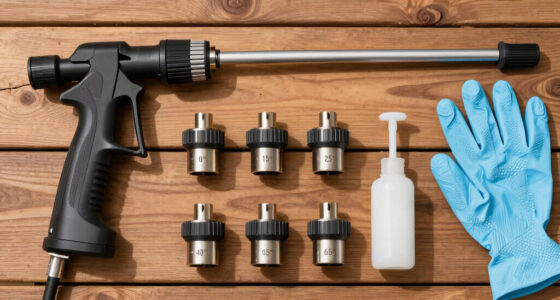
Inspect the nozzle against a light background. Rust looks orange-brown, hard-water scale looks chalky white, and paint chips may appear as thin colored flakes. Back-flush the nozzle and use only the specified cleaning tool; scratching or enlarging the orifice changes pressure and spray shape.
Nozzle size matters as much as cleanliness. A nozzle that is too small forces pressure upward and may make the unloader cycle, while one that is too large drops working pressure. Match orifice size, spray angle, GPM, and rated PSI to the manufacturer’s chart [2], especially after replacing a lost tip.
Now follow the wet trail. A worn O-ring may leave only a cold mist around a quick-connect, but that leak can make a total-stop electric washer restart every few seconds. The motor’s repeated buzz sounds like a refrigerator cycling too fast, and each restart adds heat to the switch and motor.
Detergent injectors deserve attention after soap work. Dried cleaner can leave a sticky film in the injector ball and spring, disturbing flow even when you switch back to clean water. After washing a mossy stone wall, for example, run plain water for two to three minutes to flush chemical residue from the hose, injector, gun, and pump path allowed by the manual.
Replace cracked hoses, damaged guns, and distorted fittings rather than patching high-pressure parts. Tape, clamps, and general-purpose sealant are not suitable for a hose carrying thousands of PSI. If a leak sits inside a mains-powered machine, unplug it and call a qualified repair technician; water and exposed electrical parts are a bad pairing.
Know When to Stop Troubleshooting and Book Pump Service
You should stop home troubleshooting when steady inlet flow, a clean correct nozzle, a bled system, and sound external fittings fail to cure the surge. Continued use can overheat the bypass water or damage seals, pistons, check valves, and bearings. Grinding, oil leaks, and metallic knocking call for immediate shutdown.
Worn pump check valves often create uneven delivery because one cylinder no longer fills or discharges cleanly. Damaged seals can leak water into the oil case or let pressure escape internally. Milky pump oil, water dripping from the crankcase area, or persistent low pressure points toward internal pump service, not another nozzle cleaning.
Many gas washers keep circulating water when you release the trigger. That bypass loop heats quickly because fresh cool water is not moving through the pump. Many manufacturer instructions limit bypass operation to roughly two minutes, though your model’s manual sets the actual limit [2].
Electrical faults also belong with a qualified professional. If a cord, switch, capacitor, motor, or pressure-control circuit looks burned, wet, or damaged, unplug the unit, keep the area dry, and use a licensed electrician or authorized service technician. Run outdoor mains equipment through the protection specified by the manufacturer, commonly a GFCI-protected outlet, and never handle plugs with wet hands.
For example, a gas unit may run smoothly cold but begin surging after 12 minutes, with dark pump oil turning cloudy. That pattern suggests heat-related seal trouble or water contamination. Shut it down before finishing the driveway; the remaining 400 square feet costs far less than a seized pump.
Battery and corded electric washers often hide more controls inside sealed housings, while gas machines make the unloader and pump easier to reach. Electric units run quieter and avoid exhaust, but electronic pressure switches can complicate diagnosis. Gas models offer higher sustained GPM for acreage work, yet they add fuel, governor, exhaust, and bypass-heat variables.
Keep the Spray Steady From One Job to the Next
A short routine before and after each job prevents most repeat surging: verify flow, inspect filters and seals, bleed air, and flush the water path. Maintenance here means keeping a predictable supply from tap to nozzle. It is less about polishing the machine and more about controlling grit, air, heat, and storage damage.
- Before every job: inspect the inlet screen, hose washers, nozzle, gun, and couplers.
- At startup: connect the water, open the tap fully, and bleed the gun with the machine off.
- During long jobs: watch for changing household water demand and avoid extended bypass operation.
- After detergent: flush with clean water for the time stated in the manual.
- Before freezing weather: drain and protect the pump with the storage product approved for your model.
- Once a year: inspect the unloader and pump condition, or have a service shop do it if access requires disassembly.
On a two-acre property, those checks matter because your washer may sit for months and then run for several hours on fences, equipment pads, and outbuildings. A flattened hose washer that costs little can admit air for an entire afternoon. Replacing it before startup prevents hours of jerking spray and stop-start diagnosis.
Keep a simple record of nozzle size, measured supply GPM, running pressure, service dates, and symptoms. When a 4 GPM machine that once received 5 GPM now receives only 3.6 GPM, the numbers reveal the change. Good diagnosis is comparison over time, not guesswork beside a noisy engine.
Source notes: [1] Outdoor Pro Masters pressure-washing maintenance guidance supplied for this article. [2] Model-specific pressure washer and pump manufacturer operating and service instructions; always follow the ratings and procedures for your exact unit. These references cover the key aspects and common fixes, while your machine’s manual controls model-specific limits.
Frequently Asked Questions
Why does my pressure washer pulse only when I pull the trigger?
Trigger-open pulsing usually points to restricted inlet flow, trapped air, a clogged or incorrect nozzle, a sticking unloader, or worn pump valves. Start with a bucket-flow test, bleed the gun for at least 30 seconds, and clean both screens and nozzle before opening the pump.
Can a garden hose cause pressure washer surging?
Yes. A hose that is too long, narrow, kinked, soft, or partly blocked can starve the pump even when the tap looks strong. Measure flow at the machine end and target roughly 20% more GPM than the washer’s rated consumption; a 2.5 GPM unit should receive about 3.0 GPM.
Can I adjust the unloader valve without a pressure gauge?
Do not adjust an unloader by feel. You need a properly rated gauge, the correct nozzle, adequate supply flow, and the service procedure for that pump [2]. Blind adjustment can exceed the rating of the hose or gun while hiding the original water-flow problem.
Why does my electric pressure washer switch on and off by itself?
A total-stop electric washer commonly cycles because pressure is leaking downstream through the gun, hose, coupler, O-ring, or internal valve. Disconnect power, release pressure, and inspect for drips or mist. If water has entered the electrical housing, leave it unplugged and use a qualified repair technician.
Will trapped air damage a pressure washer pump?
Persistent air reduces lubrication and cooling while making the pump load uneven. A brief startup bubble is common, but repeated foamy flow or hammering needs attention. Bleed the line with water on, machine off, and trigger open, then check inlet fittings for places that can draw air.
How long can a gas pressure washer sit with the trigger released?
Many manuals limit bypass operation to around two minutes because recirculating water heats rapidly, but the exact limit comes from your model’s instructions [2]. For a longer pause, shut the engine off, release stored pressure, and let the pump cool rather than leaving it churning hot water.
Conclusion
Start with water, not the adjustment screw. Confirm supply flow, remove trapped air, clean the inlet screen and nozzle, and inspect every seal before blaming the unloader. That sequence fixes the everyday causes of surging while protecting the pump from dry running, excess pressure, and needless disassembly.
If those checks do not produce a steady fan, shut the machine down and get a gauge test or professional pump inspection. A good washer should settle into one smooth mechanical note, with the spray pressing evenly against your hands. When it starts hammering like a loose gate in the wind, listen early—the machine is asking for water, service, or both.
Halloween Picks
halloween
As an affiliate, we earn on qualifying purchases.