
TL;DR

Get business pricing on tools and workshop supplies
- Business-only prices and quantity discounts
- Tax-exempt purchasing
- Multiple users, one account, clear invoices
Choosing the right pressure washer nozzle tip—ranging from 0° to 65°—is key to effective cleaning. Wide-angle tips are safe for delicate surfaces and soap, while narrow tips deliver high pressure for tough stains. Using the correct tip prevents damage and improves results.
Pressure washer nozzle tips are the secret weapon behind every successful clean. They control the spray pattern, pressure, and even how much soap you can apply. Get these right, and you’ll save time, protect your surfaces, and avoid costly mistakes. Get them wrong, and you risk damage or wasted effort.
Whether you’re washing a car or blasting grime off concrete, understanding the differences between these tips can turn a good job into a great one. This guide breaks down the angles from 0° to 65°, plus tips on soap application, so you can pick the perfect tool for every task.
Always match nozzle angles to your cleaning task—0° for focused power, 65° for soap and rinsing.
Wide-angle tips like 40° and 65° reduce risk of surface damage and are ideal for delicate surfaces and soap application.
Material quality impacts nozzle longevity—brass tips are the most durable and safest for high-pressure use.
Regularly inspect and maintain your tips to prevent wear and ensure consistent spray patterns.
Using the right nozzle prevents damage, saves time, and boosts cleaning efficiency.
Pressure Washer Nozzle Tips Explained
From the pinpoint force of 0° to the wide, soap-ready spread of 65°, the nozzle controls pressure, coverage and risk. Match the angle to the surface and you will clean faster—without gouging wood, lifting paint or wasting detergent.
More angle means less concentrated force
The same machine can behave like a cutting needle or a gentle fan. Start wide, test an inconspicuous area and move narrower only when the surface can tolerate more concentrated pressure.
0°
A laser-like jet with maximum concentration. It can strip paint and attack rust—but can also cut skin, gouge wood and scar softer materials.
Best for: precise, specialist removal work. Extreme risk15°
Still forceful, with enough spread to cover more ground. Useful for heavy grime on hard, durable surfaces when controlled carefully.
Best for: concrete and stubborn buildup. High risk25°
The practical all-rounder. It offers meaningful cleaning power while spreading force enough for many household surfaces.
Best for: siding, fences, decks and vehicles. Moderate risk40°
A softer fan that reduces the chance of lifting finishes or marking fragile surfaces. Ideal for controlled rinsing.
Best for: glass, paint and delicate wood. Lower risk65°
A very wide, low-pressure pattern designed to distribute detergent evenly and rinse broad areas gently.
Best for: soap application and soft rinsing. Gentle outputPick the surface before the tip
A stain may look tough, but the material underneath determines how aggressive you can safely be. Distance, pressure rating and technique also affect the real impact.
| Surface or task | 0° | 15° | 25° | 40° | 65° / soap | Working note |
|---|---|---|---|---|---|---|
| Paint or rust removal | ✓ Targeted | ✓ Strong | ~ Finish | ✗ Weak | ✗ Soap only | Use only on material intended to be stripped. |
| Concrete | ~ Spot only | ✓ Heavy grime | ✓ General | ~ Rinse | ✓ Pre-soak | Keep the wand moving to avoid visible lines. |
| Car or truck | ✗ Avoid | ✗ Avoid | ~ Careful | ✓ Preferred | ✓ Soap | Stay back from trim, seals and damaged paint. |
| Siding or fence | ✗ Avoid | ~ Durable only | ✓ General | ✓ Gentle | ✓ Soap | Spray downward to reduce water intrusion. |
| Windows or painted wood | ✗ Avoid | ✗ Avoid | ~ Test first | ✓ Preferred | ✓ Gentle | Use distance and a wide fan to protect finishes. |
✓ Recommended use ✗ Avoid ~ Conditional: test first, increase distance and use the washer’s lowest suitable setting.
Apply wide. Let chemistry work. Rinse safely.
The 65° black tip is commonly used to trigger low-pressure detergent delivery. Its broad fan coats large areas evenly, helping reduce wasted soap and harsh mechanical force.
The widest standard tip is the efficient choice for soap application and gentle coverage. It is a coating tool—not the tip for blasting away stubborn dirt.
The right angle still needs the right hardware
Material quality affects wear, corrosion resistance and safety. The orifice size and pressure rating must also match the washer—angle alone does not make a tip compatible.
Brass
Durable, corrosion-resistant and widely used for demanding pressure-washer components. A dependable option when quality and service life matter.
Best balance: longevity + high-pressure useStainless steel
Strong and resistant to corrosion, with good performance under repeated use. Quality varies, so pressure and fit specifications still matter.
Strong choice: repeated outdoor usePlastic
Lightweight and inexpensive, but more likely to crack, deform or wear under demanding pressure. Inspect it often and replace at the first sign of damage.
Tradeoff: lower cost + shorter lifeA safer sequence from setup to finish
Good results come from a chain of small decisions. This workflow uses chemistry for loosening, controlled pressure for cleaning and a wide fan for the final rinse.
Look for wear, cracks and vulnerable finishes.
Use an inconspicuous area before committing.
Cover evenly without letting detergent dry.
Use the gentlest angle that removes the grime.
Overlap strokes and keep the wand moving.
Control the spray, protect the surface
- Reserve 0° for specialized, targeted work on surfaces that can take it.
- Use 25° as a versatile starting point and 40° for delicate finishes.
- Choose 65° or a dedicated soap nozzle for even detergent distribution.
- Match PSI, orifice size and quick-connect specifications before use.
- Inspect tips regularly and replace worn parts when the spray becomes uneven.
What Each Nozzle Angle Does — From Focused Power to Gentle Spray
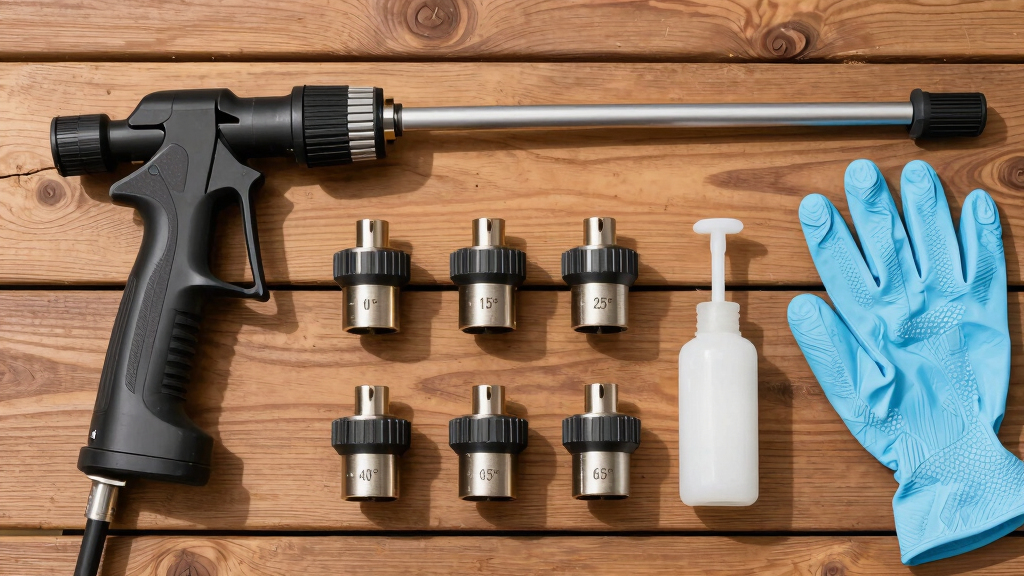
0-degree nozzles create a laser-like jet, perfect for tough jobs like stripping paint or rust. Think of it as a tiny, high-pressure needle that concentrates force into a pinpoint area. This extreme focus means it can cut through heavy grime or coatings but also makes it highly dangerous if misused, as it can easily gouge or damage softer surfaces. The implication is that users must exercise caution, reserving this nozzle for specialized, targeted tasks where precision outweighs the risk.
15-degree tips still deliver substantial power but provide a slightly broader spray, making them suitable for concrete or heavy-duty cleaning. They strike a balance—powerful enough to dislodge stubborn dirt but less likely to cause immediate damage if used carefully. The tradeoff is that they require more control to avoid harming delicate surfaces, emphasizing the importance of understanding the task’s demands and choosing the appropriate nozzle accordingly.
25-degree tips are versatile, offering a good mix of pressure and coverage. They are ideal for cleaning cars, siding, and fences, where you need enough force to remove grime but also want to avoid damage. The broader spray pattern reduces the risk of gouging surfaces, making them a safe default for many household cleaning tasks. The key is that this angle provides a practical compromise—powerful enough for most jobs without the high risk associated with narrower angles.
40-degree tips soften the pressure further, making them suitable for more delicate surfaces like glass or painted wood. This spray pattern disperses water over a wider area, reducing the chance of surface damage. The implication is that these tips are best for rinsing or cleaning surfaces that can be harmed by high-pressure jets, emphasizing the importance of matching spray angles to surface fragility to prevent costly repairs.
65-degree tips spread the spray out widely, greatly reducing pressure. They are essential for applying soap evenly over large, flat surfaces or rinsing delicate materials. Think of this as a gentle breeze that coats surfaces uniformly, minimizing the risk of damage while ensuring thorough coverage. The tradeoff is that they lack the power needed for stubborn stains, so they are best used in conjunction with higher-pressure tips for tough dirt, highlighting their role in finishing or gentle cleaning stages.
pressure washer nozzle tips 0 to 65 degrees
As an affiliate, we earn on qualifying purchases.
As an affiliate, we earn on qualifying purchases.
How Material and Compatibility Impact Your Nozzle Choice
Most nozzles are made from brass, stainless steel, or plastic. Brass is the gold standard—durable, corrosion-resistant, and versatile. Its ability to withstand high pressure makes it suitable for most tasks, reducing the risk of failure during demanding jobs. Plastic tips, while cheaper, often wear out faster and may crack or deform under high pressure, which can lead to safety hazards or inconsistent spray patterns. The material choice directly impacts your safety, efficiency, and the longevity of your equipment.
Matching your nozzle to your pressure washer’s specifications is crucial. An incompatible tip can cause damage—such as cracking or deformation—and pose safety risks. For example, using a nozzle rated for 3000 PSI on a 4000 PSI washer can result in the nozzle failing under pressure, risking injury or equipment damage. Properly rated and compatible nozzles ensure reliable performance and safeguard your investment. The tradeoff is that selecting the right material and compatibility may require more careful consideration but ultimately leads to safer, more effective cleaning.
Quick-connect tips simplify changing spray patterns but double-check that your model supports the specific size and type. This compatibility check is vital to avoid mishaps and ensure optimal performance, emphasizing the importance of understanding your pressure washer’s requirements before purchasing or swapping nozzles.
As an affiliate, we earn on qualifying purchases.
Trends and Tech: What’s New in Pressure Washer Nozzles?
Newer nozzles are more versatile and longer-lasting, thanks to advances in materials and design. Adjustable nozzles allow users to change the spray angle on the fly, eliminating the need to switch tips manually. This feature saves time, reduces clutter, and minimizes the risk of losing or damaging separate tips. For example, some models now let you go from 0° to 40° with a simple twist, giving you a broad range of pressure and spray patterns at your fingertips. This flexibility enables more precise control, enhancing both safety and efficiency during various cleaning tasks.
Durability has also improved, with tips now built from advanced alloys that resist wear and corrosion, extending their lifespan even under demanding conditions. Eco-friendly designs focus on soap efficiency, ensuring even distribution and reducing soap waste, which saves money and minimizes environmental impact. Additionally, smart pressure washers equipped with sensors can automatically adjust nozzle performance based on the surface being cleaned. This technology protects delicate surfaces from damage while still delivering enough power to remove stubborn grime, representing a significant leap forward in user safety and cleaning effectiveness.
As an affiliate, we earn on qualifying purchases.
Key Facts You Need to Know Before You Spray
Using the correct nozzle isn’t just about achieving the best cleaning results; it’s a critical safety measure. For example, a 0° nozzle can cut through paint or gouge wood if used improperly, which can lead to costly repairs or safety hazards. Therefore, always opt for wider spray angles—such as 25° or 40°—for softer surfaces to prevent accidental damage. Recognizing the implications of spray angles helps you make informed decisions, balancing power and safety based on the surface and task at hand.
The spray angle directly affects pressure and cleaning efficiency. Narrower angles, like 0° and 15°, concentrate force into a small area, making them excellent for stubborn stains or stripping paint but risky for delicate surfaces. Conversely, wider angles—such as 65°—disperse water over a larger area, reducing the force and making them ideal for soap application and rinsing. Understanding these tradeoffs allows you to optimize your cleaning process—using high-pressure tips for tough grime and wide-angle tips for gentle rinsing—saving time and preventing damage. Regular inspection and maintenance of your tips are essential; cracks or wear can diminish spray quality and pose safety risks. Proper upkeep ensures consistent performance and extends the lifespan of your equipment, emphasizing the importance of routine checks and care.
pressure washer spray tips for delicate surfaces
As an affiliate, we earn on qualifying purchases.
As an affiliate, we earn on qualifying purchases.
Your Burning Questions About Nozzles — Answered
- What nozzle is best for washing my car? A 25° or 40° nozzle is safest, offering enough pressure to clean without risking damage to paint or delicate surfaces. These angles provide a balanced spray that effectively removes dirt while minimizing the chance of stripping paint or causing scratches.
- Can I use a 0° nozzle for everything? No, the 0° nozzle is designed for very specific, tough jobs like stripping rust or paint. Its concentrated jet can quickly damage soft surfaces, paint, or glass. Using it indiscriminately can lead to costly repairs or safety hazards, so reserve it for targeted, heavy-duty tasks only.
- How do I choose the right soap nozzle? A 65° or specialized soap tip ensures even coverage and minimizes waste. These wide angles allow soap to be distributed uniformly across surfaces, enhancing cleaning efficiency and reducing soap consumption, which benefits both your wallet and the environment.
- Are all tips interchangeable? Most are, but always verify compatibility with your pressure washer model. Using incompatible tips can cause poor performance, damage, or safety risks. Checking specifications before swapping tips ensures you maintain safe and effective operation.
- When should I replace my tips? Replace them if they crack, become clogged, or lose spray quality. Over time, wear and tear diminish their effectiveness, which can lead to uneven cleaning or damage to surfaces. Regular inspection and timely replacement keep your pressure washer functioning optimally and safely.
Using the wrong nozzle or neglecting maintenance can cause damage, reduce cleaning effectiveness, or pose safety hazards. Always match your nozzle to the specific task and your equipment’s specifications to ensure the best results and long-term safety.
Conclusion
Getting familiar with your pressure washer’s nozzle tips turns a simple spray into a precision tool. Remember, choosing the right angle—especially for soap and delicate surfaces—makes all the difference. It’s about working smarter, not harder, with less risk of damage.
Next time you prep your washer, visualize that 65° tip spreading soap evenly or a 15° blast tackling stubborn stains. Master these choices, and your cleaning game will never be the same.
Fall yard work Picks
leaf blowers
As an affiliate, we earn on qualifying purchases.