TL;DR

Get tools and workshop supplies delivered free — and shop member deals
- Fast, free delivery on millions of items
- Access to Prime Big Deal Days deals on October 6–7
- Prime Video, Amazon Music and more included
Pressure washing vinyl siding is safe when you keep water pressure low, maintain proper distance, and spray at an angle. Modern equipment and gentle techniques prevent water from seeping behind siding, protecting your home’s structure.
Imagine blasting away dirt and mold from your home’s exterior—quick, satisfying, and really effective. But too much pressure or the wrong angle can push water behind your vinyl siding, causing damage and costly repairs.
In this guide, you’ll learn how to pressure wash your siding safely—using the right tools, techniques, and even cleaning solutions—so your home looks great without risking water intrusion. Whether you’re a DIY enthusiast or just want advice from someone who’s been in the trenches, this will give you the real scoop on doing it right.
Keep pressure between 1,300 and 1,500 PSI to avoid forcing water behind siding.
Maintain a distance of at least 8-12 inches from the siding surface.
Use a wide-angle nozzle (25° or more) and spray at a slight downward angle.
Employ gentle, overlapping strokes and avoid concentrated jets.
Apply mild cleaning solutions to loosen dirt, reducing the need for high pressure.
How to Pressure Wash Vinyl Siding Without Forcing Water Behind It
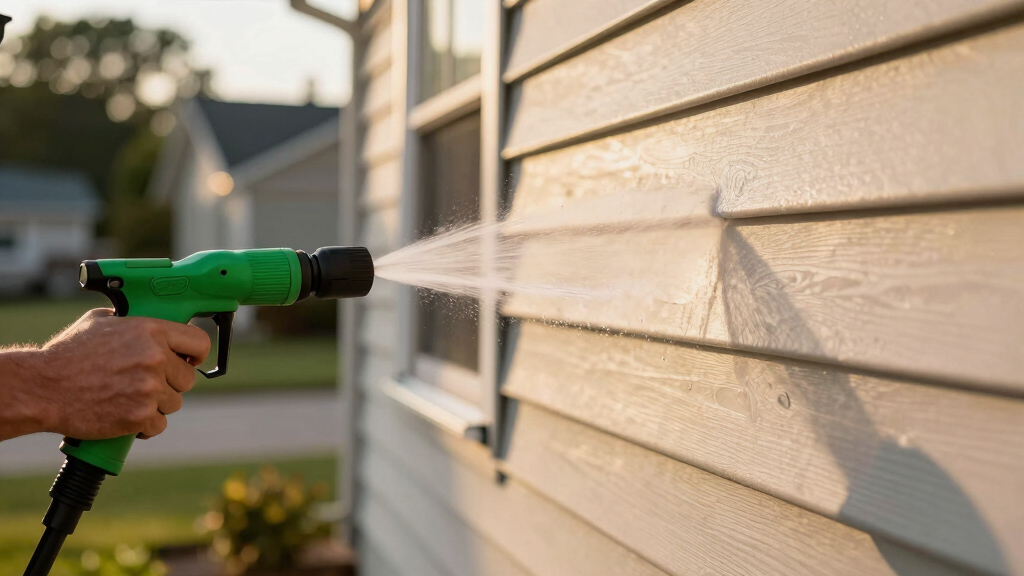
The goal is controlled cleaning—not brute force. Low pressure, proper distance, a wide nozzle and a slight downward spray angle remove grime while keeping water outside the siding envelope.
Pressure, distance and angle work as one system.
Changing one variable changes the force reaching the wall. A wide nozzle is not enough if the wand is four inches away; low pressure is not enough if water is aimed upward into panel laps. Keep all three controls in the safe zone.
Use the lowest setting that lifts the soil.
Start near 1,300 PSI and test an inconspicuous area. Increase cautiously only when detergent and a second gentle pass are insufficient.
Keep the nozzle at arm’s-length range.
An 8–12 inch gap balances cleaning power and safety. Avoid leaning closer at seams, corners, window trim or loose panels.
Let water travel down and across.
A slight downward angle follows the siding’s drainage path. Never aim upward beneath overlapping courses or directly into joints.
Cleaning power rises quickly—and so does intrusion risk.
Modern adjustable washers make control easier, but the operator still determines the outcome. Stay inside the recommended range and let cleaner dwell time do work that pressure should not.
Relative pressure setting
The safest setting is the lowest pressure that produces a clean rinse—not the maximum pressure the machine can deliver.
A controlled wash from inspection to dry-down.
Work methodically. Preparation eliminates vulnerable entry points; detergent loosens buildup; a low-pressure rinse carries contamination away without driving moisture into the wall assembly.
Repair loose panels, gaps, cracked caulk and damaged trim before water is introduced.
Cover outlets, fixtures and plants. Close windows and isolate exposed electrical points.
Apply mild siding cleaner with a garden sprayer or foam cannon at low pressure.
Use overlapping sweeps, a 25°+ nozzle and steady 8–12 inch spacing.
Check seams, stains and damp areas, then allow the siding to dry completely.
Safe choices spread force. Risky choices concentrate it.
Use this matrix as a setup check before pulling the trigger. Manufacturer instructions take priority, especially when warranty coverage specifies a cleaning method.
| Variable | Recommended setup | Use with caution | Avoid | Why it matters |
|---|---|---|---|---|
| Pressure | ✓1,300–1,500 PSI | ~Increase gradually | ✗Above 2,000 PSI | Excess force can breach laps and damage the panel surface. |
| Nozzle | ✓25° or wider fan | ~15° only at greater distance | ✗Zero-degree jet | A broader fan disperses energy across more siding. |
| Distance | ✓8–12 inches | ~Adjust after testing | ✗Four inches at seams | Closer placement sharply increases impact at the wall. |
| Direction | ✓Slightly downward | ~Level across open panels | ✗Upward into laps | Downward flow follows the siding’s intended drainage path. |
| Movement | ✓Smooth overlapping sweeps | ~Brief spot treatment | ✗Stationary blasting | Continuous motion prevents concentrated force and streaking. |
Loosen the grime before you rinse it away.
A mild pretreatment breaks down dirt, mold and organic buildup. That means fewer passes and less pressure. Apply gently, follow product directions and never let cleaner dry on the wall.
Siding-safe options
Choose non-corrosive products intended for exterior vinyl. Protect landscaping and test the solution on a discreet area before treating the full elevation.
Post-wash inspection
Every safe choice protects the wall behind the wall.
Gentle technique is not merely cosmetic. It helps preserve the siding system, reduces trapped moisture and lowers the likelihood of hidden rot, mold and expensive repairs.
Peeling paint
Interior or exterior paint failure near a washed wall can indicate persistent moisture.
Mold growth
New musty odors or recurring mold deserve prompt investigation rather than another wash.
Water staining
Discoloration around seams, openings or interior walls may reveal an entry path.
Why Using the Right Pressure Keeps Water Out of Your Walls
Pressure washing vinyl siding isn’t about brute force. It’s about control. Using too high a PSI or holding the spray too close can force water behind the panels. This can lead to hidden issues like mold growth, wood rot, or peeling paint, which often develop slowly but cause significant damage over time. Maintaining the correct pressure—around 1,300-1,500 PSI—and keeping a safe distance ensures the water’s energy is enough to clean without compromising the siding’s integrity. The tradeoff here is between cleaning power and safety; too low pressure might not remove stubborn dirt, but too high can cause damage and water intrusion. Proper control minimizes these risks, preserving your home’s structural integrity and appearance in the long run.
For example, a homeowner in Georgia learned this the hard way. They used a pressure washer at 2,000 PSI and held the nozzle 4 inches from the siding. Water seeped behind, leading to mold and peeling paint. A simple adjustment to 1,400 PSI and a proper distance fixed the issue instantly, illustrating why understanding and controlling pressure and distance are crucial to prevent unseen damage.
As an affiliate, we earn on qualifying purchases.
How to Choose the Perfect Nozzle and Keep Water Out
- Select a 25-degree or wider nozzle. These spread the water over a larger area, reducing the impact of the force and decreasing the likelihood of water forcing its way behind the siding. Narrower nozzles concentrate pressure, increasing penetration risk. The wider spray disperses energy, making cleaning safer for delicate siding joints.
- Maintain a steady distance of 8-12 inches from the siding surface. This distance balances cleaning effectiveness with safety. Too close, and the concentrated jet can breach seams; too far, and cleaning becomes inefficient. Using your arm as a guide helps maintain consistency, but also consider the spray pattern—closer may be necessary for stubborn stains, but always monitor the spray’s behavior to avoid unintended penetration.
- Angle the spray slightly downward. This technique directs the water flow away from seams and edges, which are more vulnerable points where water could seep behind panels. Spraying downward also helps dislodge dirt and debris without forcing water into vulnerable areas. The tradeoff is that improper angles can still cause water intrusion if not carefully managed; thus, consistent practice and awareness of your spray angle are key to avoiding damage.
For instance, a pro using a wide-angle nozzle and keeping the wand at arm’s length can clean a large, two-story home in half the time with no water behind the siding. It’s all about gentle control and understanding how each variable influences water movement and pressure — the right nozzle, distance, and angle work together to prevent water from sneaking behind your siding.
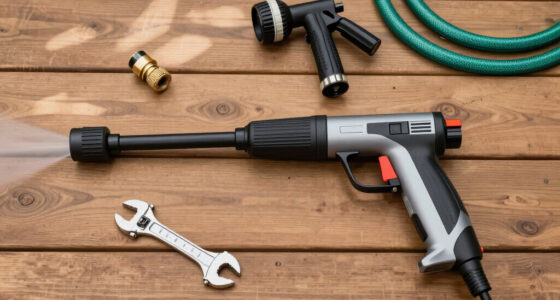
adjustable pressure washer with wide-angle nozzle
As an affiliate, we earn on qualifying purchases.
As an affiliate, we earn on qualifying purchases.
The Best Way to Spray: Gentle, Consistent, and Smart
Pressure washing vinyl siding isn’t about blasting. It’s about a gentle, overlapping spray pattern that effectively cleans while minimizing water intrusion risk. Using a sweeping motion from bottom to top or side to side helps distribute the cleaning effort evenly and prevents focusing too much pressure on one spot, which could force water behind the panels. The key is maintaining a steady, controlled movement—think of it like painting—so that the water flow remains consistent and doesn’t suddenly increase in force or direction.
Imagine you’re painting with broad strokes—avoid concentrated jets that can dig into the siding or push water into seams. The tradeoff here is that aggressive or inconsistent spraying can create weak points allowing water behind panels, leading to damage over time. A smooth, controlled motion ensures dirt is lifted without compromising the siding’s seal. Also, employing a lower pressure setting for the initial pass allows you to assess how the siding responds; if stubborn dirt remains, you can cautiously increase pressure, but never beyond recommended limits. This approach balances effective cleaning with the preservation of your siding’s integrity, ensuring water stays outside where it belongs.
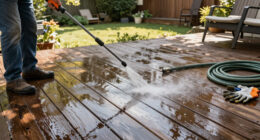
low pressure power washer for home exterior
As an affiliate, we earn on qualifying purchases.
As an affiliate, we earn on qualifying purchases.
Using Cleaning Solutions to Save Your Pressure Washer and Siding
Applying cleaning solutions helps loosen dirt, mold, and grime, reducing the need for aggressive spraying that could force water behind the siding. Using mild, siding-safe cleaners—such as vinegar-based solutions or biodegradable detergents—allows you to chemically break down stubborn stains and buildup at lower pressures. This chemical pre-treatment softens dirt, making it easier to rinse away with a gentle spray, thereby decreasing the risk of water intrusion and damage.
For example, a homeowner applying a gentle detergent with a foam cannon found that dirt lifted easily, needing just a quick rinse. This method reduces the need for high-pressure jets, which can sometimes be more damaging or cause water to penetrate seams. The tradeoff is that relying solely on pressure can lead to overuse of force, whereas using cleaning solutions strategically allows for safer, more effective cleaning. Remember, always thoroughly rinse after applying soap or foam to remove residue that could attract dirt or hold moisture—residue left behind can compromise the siding’s protective barrier and invite future issues.
As an affiliate, we earn on qualifying purchases.
Post-Wash Checks and Maintenance to Keep Water Out
After washing, inspecting your siding for signs of water behind it—like mold, peeling paint, or damp patches—is essential. These issues can indicate that water has penetrated seams or that previous damage has worsened. Addressing these problems promptly by drying the area thoroughly and resealing seams prevents further water intrusion and structural damage. It’s also important to allow your siding to dry completely—preferably on a sunny, breezy day—to ensure no residual moisture remains that could foster mold or rot. Regular maintenance, such as resealing or inspecting for cracks and gaps, extends the lifespan of your vinyl siding and maintains its protective barrier.
The implications of neglecting these steps can be severe: trapped moisture can lead to hidden rot, mold growth, and costly repairs down the line. Conversely, diligent post-wash care preserves the integrity of your siding, prevents water-related issues, and keeps your home looking its best for years to come. For instance, a homeowner caught minor water stains after washing. They dried the siding with a leaf blower and reapplied sealant to suspect seams, avoiding future leaks—highlighting the importance of proactive inspection and maintenance.
Latest Tech and Tips for Safe, Effective Siding Cleaning
Modern pressure washers now feature adjustable PSI, better spray nozzles, and safety controls that allow for precise control over pressure and spray pattern. These innovations make it easier to tailor your cleaning process to delicate siding, significantly reducing the risk of forcing water behind panels. Additionally, advancements in nozzle design—such as wide-angle or turbo nozzles—help distribute water more evenly, minimizing concentrated force points that could breach seams.
Eco-friendly, biodegradable cleaning agents are also trending—these formulations are designed to be tough on mold and dirt but gentle on siding and the environment. Many manufacturers now emphasize low-pressure cleaning methods that preserve warranties and the siding’s protective coating. For example, newer models with automatic pressure regulation and ergonomic triggers provide enhanced control, reducing fatigue and mistakes during lengthy jobs. These features collectively contribute to safer, more efficient cleaning, and help homeowners avoid costly mistakes that can lead to water behind the siding.
Questions Homeowners Usually Ask About Pressure Washing Vinyl Siding
- Can I pressure wash vinyl siding myself? Yes, with proper technique—using low pressure, wide nozzles, and correct distance. For large or heavily stained homes, a professional might be safer, especially for hard-to-reach areas or stubborn stains that require experience to avoid damage.
- What PSI is safe for vinyl siding? Keep it between 1,300-1,500 PSI. Starting at the lower end and gradually increasing allows you to assess how your siding responds, reducing the risk of forcing water behind panels.
- How do I prevent water behind the siding? Use a wide-angle nozzle, spray at a downward angle, and maintain a safe distance—these techniques work together to direct water away from seams and prevent infiltration. Consistent application of these methods is critical for avoiding long-term damage.
- What cleaning solutions are safe? Mild detergents, vinegar mixes, or commercial siding cleaners designed for low pressure work well. Always test on a small area first to ensure compatibility with your siding.
- How often should I clean? Once a year or when dirt, mold, or mildew build up—regular cleaning helps maintain siding integrity and appearance, but over-cleaning can sometimes cause unnecessary wear if not done properly.
Conclusion
Pressure washing vinyl siding works best when you treat it like a delicate task. Control your pressure, keep your distance, and use the right angle. That’s the secret to a clean home without water behind your panels.
Remember, a little patience and proper technique pay off. Your siding will thank you—looking fresh, staying dry, and lasting longer.
Halloween Picks
halloween
As an affiliate, we earn on qualifying purchases.