TL;DR

Get business pricing on tools and workshop supplies
- Business-only prices and quantity discounts
- Tax-exempt purchasing
- Multiple users, one account, clear invoices
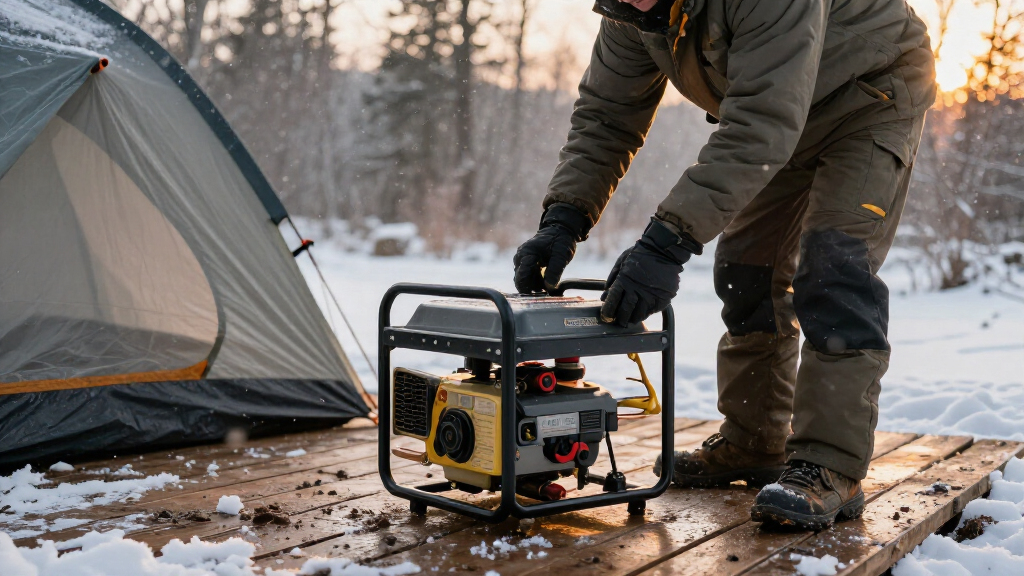
Running a generator in rain and snow requires a purpose-built operating cover or enclosure that keeps water off the machine without trapping heat or carbon monoxide. Place the generator outdoors at least 20 feet from occupied buildings when manufacturer instructions allow, direct the exhaust away from openings, keep every connection dry, and check the warranty before using an aftermarket shelter.
A wet generator can turn a routine outage into an electrocution, fire, or carbon-monoxide emergency. The danger does not start only when water pours through the receptacles. Wind-driven drizzle, melting snow, and damp plugs can reach live electrical parts while a sagging tarp quietly traps engine heat and exhaust.
You will learn how to choose a purpose-built running cover, place the machine where exhaust cannot drift indoors, and manage cords, snow, fuel, and runoff. You will also see why a product labeled weatherproof may still conflict with the generator manual and leave you paying for water or heat damage.
Think about a January outage on a two-acre property. The well pump needs power, wet snow is blowing sideways, and the garage looks like the easiest shelter. That familiar shortcut is the dangerous one: the correct setup keeps the generator fully outdoors and well away from the house, while a compatible enclosure shields the equipment without choking its cooling air.
Place a portable generator fully outdoors, follow its manual, and use at least 20 feet of separation from occupied buildings when applicable, with exhaust aime…
Use only a purpose-built running cover that permits operation with your generator’s dimensions, exhaust layout, cooling path, and operating temperature.
Raise the generator and all cord connections above rain runoff, drifting snow, meltwater, and ice; GFCI protection does not make wet equipment safe.
Use a licensed electrician for a transfer switch, interlock, or power inlet, and never backfeed household wiring through a wall or appliance outlet.
Save manuals, receipts, maintenance records, written compatibility guidance, and photographs because water, overheating, misuse, and unapproved accessories com…
Running a Generator in Rain and Snow
Covers, tents, and warranty limits matter because weather protection is only safe when it keeps water out without trapping heat or carbon monoxide. The generator must remain fully outdoors, dry, ventilated, and correctly connected.
Weatherproof does not always mean run-safe
A storage cover protects a cold machine. An operating enclosure must simultaneously resist precipitation, release engine heat, preserve cooling airflow, and keep the exhaust path completely open.
Storage cover
May block cooling air, touch hot parts, and seal heat around the engine. Use only after shutdown and complete cooling.
Unsafe while runningTarp or tent
Can sag with collected water, flap into the exhaust, admit sideways rain, soften, melt, or create a pocket of contaminated air.
Unsafe while runningRunning cover
Acceptable only when designed for operation and compatible with the machine’s size, vents, exhaust, heat, and required clearances.
Conditional approval| Cover type | Safe while running? | Primary problem | Correct use |
|---|---|---|---|
| Fitted storage cover | ✗ No | Blocks cooling and may touch hot parts | Only after shutdown and full cooling |
| Ordinary tarp or plastic | ✗ No | Sags, redirects runoff, flaps, and may melt | Never place over an operating machine |
| Camping or pop-up tent | ✗ Generally no | Not engineered for heat, exhaust, or driven rain | Use for people or gear, not an engine |
| Purpose-built running cover | ✓ If compatible | Fit and exhaust routing vary by model | Follow both manuals exactly |
| Engineered permanent enclosure | ~ Model dependent | Poor vent design can cause heat and CO buildup | Require approval and qualified installation |
Control every hazard in sequence
Moving the generator closer to keep it dry solves the wrong problem. Safe operation depends on outdoor placement, exhaust control, compatible sheltering, dry power connections, and continuous reassessment.
Choose open ground
Use a firm, level, noncombustible platform fully outdoors.
Measure separation
Start at least 20 feet away and obey any greater manual requirement.
Aim the exhaust
Point it toward open ground and away from every opening.
Keep power dry
Raise outdoor-rated cords, plugs, and connections above runoff.
Recheck conditions
Watch wind, drains, snow depth, water levels, and shelter stability.
Neither a box fan nor a partially open shelter can reliably prevent carbon-monoxide accumulation. If the only available location is enclosed or attached, leave the generator off.
Winter adds hidden pathways for water
Powder can enter vents, drifting snow can choke airflow, and exhaust heat can create meltwater that later refreezes beneath the generator or around cables.
Keep the generator and connections above expected snow, runoff, meltwater, and ice.
Clear drifting snow from intakes, cooling vents, and exhaust clearances.
Select grounded, undamaged, outdoor-rated cords with adequate wire gauge for the load and distance.
Never handle plugs while wet or while standing in water, slush, or snow.
Stop and cool the engine before clearing snow or working near moving and hot components.
Compatibility must exist on paper
A marketing label such as “weatherproof” may describe fabric, not safe engine operation. Water intrusion, overheating, misuse, and unapproved accessories are common grounds for disputed coverage.
Match the exact machine
Confirm dimensions, control-panel position, exhaust side, cooling path, operating-temperature range, anchoring method, wind limits, and refueling access. Do not buy by wattage alone.
Read both instruction sets
The cover must expressly permit operation, and the generator manual must allow the intended enclosure and weather conditions. One approval does not override the other.
The complete protection chain
Each control supports the next. Removing one link can turn ordinary storm operation into a shock, fire, overheating, or carbon-monoxide emergency.
The Safe Setup That Keeps Water and Exhaust Outside
Running a generator in rain and snow is safe only with a manufacturer-permitted operating shelter, dry connections, unrestricted airflow, and outdoor placement away from occupied buildings. These protections work as a system: moving the generator outdoors controls carbon monoxide, while the shelter and dry electrical path address weather exposure. Solving only one hazard can intensify another, as happens when someone moves a generator closer to the house to keep it dry.
Portable generators should never be operated in garages, sheds, basements, carports, covered porches, or any spot where exhaust can collect or enter a door, window, or vent. Partial walls and roofs can create pockets of contaminated air even when the space looks open. The engine may continue running normally while invisible exhaust follows pressure differences through soffits, foundation gaps, or an attached doorway.
According to CDC generator safety guidance, you should place a portable generator at least 20 feet from the home and point the exhaust away from the building [1]. Follow the owner’s manual if it requires more distance. Treat 20 feet as a starting separation rather than a guarantee: nearby windows, a neighbor’s home, terrain, fences, and wind can still put exhaust in a dangerous path. A breeze can reverse direction after sunset, so check where the exhaust travels instead of trusting the wind you felt during setup.
Carbon monoxide has no color and no smell, and symptoms such as headache, dizziness, weakness, or nausea can resemble fatigue or illness during a storm. An open garage door does not make a garage safe, and neither does a box fan aimed toward the driveway. Install battery-powered or battery-backed CO alarms on every level and near sleeping areas; CPSC guidance treats alarms as backup protection, not permission to run an engine near the house [2]. An alarm warns that prevention has failed—it does not make a marginal placement acceptable.
For example, suppose your refrigerator and sump pump need power during a hard spring rain. Set the generator on a firm, level, noncombustible pad outside the 20-foot zone, fit its approved running shelter, and aim the exhaust toward open ground. Route the cords away from puddles and confirm that rain and runoff cannot reach the receptacles. Then reassess the site after the storm changes: a blocked drain, rising water, or a wind shift can make a safe afternoon setup unsafe at night.
Never trade carbon-monoxide safety for a dry machine. If the only available location is a garage, porch, shed, or enclosed tent, leave the generator off and use another power source.
As an affiliate, we earn on qualifying purchases.
See Which Covers Can Stay On While the Engine Runs
Running a generator in rain and snow calls for a running cover, not a storage cover, blue tarp, camping tent, or improvised plywood box. The distinction is functional, not cosmetic. A storage cover assumes a cold, silent machine; an operating enclosure must manage cooling airflow, exhaust clearance, service access, and heat separation while resisting water and wind.
| Cover type | Safe while running? | Main issue | Proper use |
|---|---|---|---|
| Fitted storage cover | No | Blocks cooling and may touch hot parts | Only after shutdown and full cooling |
| Ordinary tarp or plastic sheet | No | Sags with water, flaps into exhaust, and may melt | Do not place over an operating generator |
| Camping or pop-up tent | Generally no | Traps exhaust and allows wind-driven rain through open sides | Use for people or gear, not engine operation |
| Purpose-built running cover | Only when compatible | Fit, exhaust routing, and clearances vary by model | Follow both manuals exactly |
| Engineered permanent enclosure | Model dependent | Poor vent design can cause heat and CO buildup | Use manufacturer approval and qualified installation |
A loose tarp looks harmless until its center fills with several gallons of cold rainwater. The added weight changes the tarp’s shape, so a clearance that looked adequate at setup may disappear during the storm. The fabric can sag toward the muffler, a corner can snap in the wind, and runoff can pour beside a live cord connection. Plastic may soften against hot metal, while a tight wooden box can recirculate heated air until the engine loses cooling capacity or shuts down.
A suitable running shelter uses heat-resistant materials, stays stable in wind, and leaves the exhaust path completely open. It also protects the control panel from sideways rain without sealing moisture around the receptacles. Those demands compete with one another: more fabric may improve rain protection but restrict ventilation, while a larger opening may improve cooling but admit wind-driven water. A tested, model-compatible design resolves that tradeoff through deliberate vent and exhaust placement rather than simply adding more coverage.
The instructions must expressly allow operation under the cover; a vague marketing claim does not carry the same weight. Terms such as “weatherproof” or “all-season” may describe the cover material without confirming safe engine operation. Compatibility requires agreement between both sets of instructions, including clearances, ambient-temperature limits, exhaust direction, anchoring, refueling access, and any restrictions on snow or high wind.
Measure the generator rather than buying by wattage alone. Two 7,500-watt machines can place their mufflers, fuel caps, cooling intakes, and frames in different locations. A cover that fits one can redirect hot exhaust across the fuel tank or block the cooling intake on the other. Compare the exact model number and physical layout, not only the advertised size range, because a cover can fit around the frame yet remain functionally incompatible.
Consider maintenance access as well. If checking oil, operating the fuel valve, or reaching the emergency controls requires loosening a wet cover near hot parts, the enclosure creates a new handling hazard. The safest design lets you perform required checks without disturbing its anchoring or placing your hands near the exhaust path.
As an affiliate, we earn on qualifying purchases.
Keep Snow, Meltwater, and Ice From Closing In
Running a generator in rain and snow requires an elevated, dry, level base plus open space around every intake, vent, and exhaust outlet. Snow causes more than surface moisture: drifting powder can choke airflow, exhaust heat can create meltwater, and that water can refreeze into slick ice beneath the frame and cords. The conditions therefore change while the generator runs, so a site that was safe at startup may not remain safe through the night.
Set the machine on a stable, noncombustible platform above the expected snow depth and runoff path. Do not balance it on loose blocks or place it directly on a white crust that may collapse as the engine warms. The platform must support the full fueled weight without rocking under vibration. Elevation matters because it separates the generator from both standing water and accumulating snow, but excessive or makeshift elevation increases the chance of tipping, fuel leakage, and damaged connections.
Imagine starting with six inches of powder at dusk. By midnight, wind has built an 18-inch drift against the enclosure’s intake side, while exhaust warmth has carved a wet hollow near the opposite wheel. The intake restriction can reduce cooling and engine performance even though the top of the cover remains clear. Meanwhile, meltwater can run downhill toward plugs and freeze cords into place. Check the area regularly, but shut the generator down before clearing close-packed snow near hot surfaces, moving parts, or the shelter.
Powdery snow behaves like pale smoke. It curls through narrow openings, sticks to warm metal, and melts where a heavier raindrop might simply bounce away. That makes blowing snow capable of reaching recessed controls and connectors that appear protected from vertical precipitation. Keep the controls, receptacles, fuel cap, air intake, and cord connections protected from blowing snow and freezing spray.
- Mark cord routes with bright stakes so a shovel or snow blower does not find them first.
- Keep plugs and couplings raised above snow and runoff on a listed outdoor connection support.
- Brush accumulation away from the shelter perimeter before it reaches cooling openings.
- Wear insulated work gloves, eye protection, and slip-resistant boots during shutdown and snow clearing.
- Let frozen controls thaw according to the manual; do not pour hot water over the engine or control panel.
Inspection frequency should follow conditions rather than a fixed clock. Light, steady snowfall may accumulate slowly, while gusting powder can block one side of a shelter within minutes. Look for changing engine sound, unstable voltage, exhaust discoloration, water tracks, or ice forming beneath connections. If keeping the site clear would require working close to the running machine in poor visibility, shut it down and wait for safer conditions.
Cold also cuts starting performance. Thick oil increases cranking resistance, a weak starter battery loses capacity, and a stiff recoil rope can turn a clean first pull into ten frustrating attempts. Repeated starting attempts can drain the battery or flood the engine without fixing the underlying problem. Use the manufacturer’s specified winter oil grade and cold-weather accessories, and keep fresh fuel stored in approved containers away from ignition sources. The goal is not merely easier starting; correct cold-weather preparation reduces unnecessary handling and refueling during the worst part of the storm.
As an affiliate, we earn on qualifying purchases.
Protect Every Cord and Connection From Shock
Wet-weather generator wiring stays safer when every cord is outdoor-rated, correctly sized, fully grounded, undamaged, and raised away from water. Each feature addresses a different failure mode: the jacket resists outdoor exposure, adequate conductor size limits heat and voltage drop, the grounding path supports protective devices, and elevated connections avoid runoff. GFCI protection can reduce shock risk, but it does not make a wet generator safe or excuse handling a plug with wet hands or while standing in water or snow.
Choose cord gauge for both the load and distance. Electrical resistance increases with cord length, and an undersized conductor turns part of the available energy into heat. Under a heavy pump load, the cable may feel warm, the motor may struggle to start, and low voltage may damage the appliance even when the generator itself is large enough. For exact sizing, follow the generator, appliance, and cord manufacturer charts rather than guessing from the cord’s thickness. The relevant load includes a motor’s starting surge, not only the lower running wattage printed on its label.
Before starting, run your fingers along each unplugged cable while wearing dry gloves. Look for cuts, flattened insulation, loose blades, missing ground pins, and scorched ends. These defects matter more in wet conditions because moisture can enter small openings, while a missing grounding pin can prevent fault current from following its intended path. Replace a damaged cord instead of wrapping the split with household tape and placing it back in wet grass; tape does not restore the cord’s jacket rating, strain relief, or mechanical strength.
- Place the generator and approved shelter on a dry, stable base.
- Route cords where tires, doors, pets, and snow-removal tools cannot crush or cut them.
- Raise connections off the ground under listed weather protection that does not trap condensation.
- Start the generator with loads disconnected, then connect appliances within the rated running and starting wattage.
- Shut down immediately if a breaker trips repeatedly, a plug becomes hot, or water reaches electrical components.
The order matters. Starting without connected loads reduces the initial demand on the engine, while adding appliances deliberately makes it easier to identify an overload or failing connection. A repeatedly tripped breaker is a warning of excess current, a short, or equipment trouble—not an inconvenience to defeat with another adapter or repeated resets.
Never seal plugs inside plastic sandwich bags or homemade containers. Temperature changes around loaded connectors can create condensation inside the bag, leaving beads of water exactly where you meant to keep things dry. A listed outdoor connection cover manages splash while allowing the assembly to sit in its intended position. It should protect the coupled connection without putting strain on the blades or creating a low pocket where water collects.
Grounding and bonding requirements vary with the generator design and whether it supplies cord-connected loads or a building transfer system. Do not assume that driving a separate ground rod automatically makes the setup safer; an incorrect arrangement can interfere with the intended fault path. Follow the generator manual and have the transfer installation evaluated for the applicable electrical code.
Do not connect a generator to household wiring through a dryer outlet or a double-male cable. That setup can energize utility lines from the wrong direction, injure a lineworker, and bypass the coordinated protection of a proper transfer system. Use a listed transfer switch or approved interlock with a power inlet, installed by a licensed electrician with the power off, proper PPE, permits, grounding checks, and local electrical-code compliance. A proper system does more than provide a convenient plug: it mechanically or electrically prevents the generator and utility supply from feeding the home at the same time.
As an affiliate, we earn on qualifying purchases.
Protect Your Warranty Before the Storm Arrives
Running a generator in rain and snow can affect warranty coverage when water intrusion, overheating, misuse, or an unapproved enclosure contributes to the failure. An aftermarket running cover does not automatically void a warranty, but its marketing claims cannot override the generator manufacturer’s written operating limits and exclusions. The practical issue is causation: the closer the accessory or setup is to the failure, the more likely its compatibility and installation will be scrutinized.
Common exclusions cover operation against the manual, flooding, excessive moisture, blocked ventilation, improper wiring, neglected maintenance, and damage from an incompatible accessory. The deciding question is usually not whether a cover was present. It is whether your setup caused or worsened the damaged stator, control board, receptacle, engine, or fuel system. For example, a cover unrelated to a defective recoil starter presents a different warranty question from a cover that directed water into the failed control panel.
Say a generator shuts down during sleet and later shows a burned control board. If photographs show the approved cover fitted correctly, the platform dry, and every clearance maintained, you have a much stronger record than a single receipt. Those records help distinguish a possible product failure from environmental damage or misuse. If a melted tarp is stuck to the muffler and water marks cross the outlet panel, the claim may meet several exclusions at once.
Keep the owner’s manual, cover instructions, purchase receipts, serial number, maintenance log, and setup photographs. Photograph the full placement as well as the exhaust clearance, control panel, platform, and cover attachment points. Records made before a failure are more persuasive than a reconstructed explanation because they show how the equipment was actually configured when no claim was pending.
Save written confirmation from the generator maker or an authorized service provider when the manual does not address your proposed enclosure. Ask a specific question that names the generator model, cover model, exhaust orientation, and intended operating weather. A general reply that “covers are acceptable” may not resolve whether your exact combination is permitted in blowing snow, high wind, or freezing temperatures.
Warranty coverage and insurance coverage answer different questions. A warranty generally concerns defects and specified exclusions in the equipment agreement; homeowners or renters insurance may address resulting property loss subject to deductibles, policy terms, and causes of loss. Homeowners and renters policies may handle generator fires, water damage, equipment loss, and carbon-monoxide incidents differently. Coverage can turn on the cause, local codes, installation quality, and policy exclusions. Ask the insurer for a written answer before storm season, especially if you have a permanently connected generator, stored fuel, or a custom enclosure.
Documentation does not make an unsafe arrangement acceptable, and manufacturer approval does not replace local installation requirements. Its value is preventive: checking the details early can reveal a compatibility problem before you spend money on a cover or discover during an outage that the proposed location cannot meet both weather and exhaust clearances.
Approval must come from the instructions or manufacturer, not from a weatherproof label on a sales page. Document the setup while everything is clean, dry, and easy to inspect.
Choose the Power Option That Fits the Weather and Load
Your best storm-power setup depends on the load, outage length, property layout, and safe outdoor space available. The useful comparison is not simply generator versus battery; it is whether each option can deliver the required power and energy without creating an operating problem at your site. A gasoline or dual-fuel generator delivers long runtime with refueling, while a battery power station works indoors without engine exhaust but stores far less energy than several fuel cans.
Separate watts from watt-hours when planning. Watts describe how much power an appliance needs at a moment, including startup surges; watt-hours describe how long stored energy can support that demand. For a short outage, a charged battery unit may quietly run phones, lights, a router, and selected medical equipment without sending you into freezing rain. It still needs dry handling, ventilation required by its manual, and enough watt-hours for the job. A 1,000-watt-hour battery cannot supply a steady 1,000-watt load for a full hour after inverter losses, and its maximum output may be too low to start a pump even when the stored energy appears sufficient.
A portable engine generator makes more sense when you must cycle a well pump, keep freezers cold, or support a larger rural property through a multi-day outage. Refueling effectively extends its energy supply, but that advantage depends on having safely stored fuel and being able to shut down and cool the engine before each refill. The tradeoff is noise, fuel handling, maintenance, and the need for a safe outdoor operating zone. On a half-acre lot, finding a full 20-foot separation from your home and a neighbor’s openings may take planning.
Load prioritization can reduce the size and risk of either system. A refrigerator and freezer do not necessarily need continuous power, and large loads can sometimes be scheduled rather than run together. However, cycling equipment requires temperature monitoring and disciplined operation; it is not suitable when uninterrupted power is medically or mechanically essential. Calculate starting loads and verify any critical equipment with its manufacturer instead of relying on optimistic runtime estimates.
Permanently installed standby generators are different. Their factory housings are built for outdoor operation, so do not add a tarp, tent, or homemade roof that changes cooling or exhaust flow. Their weather capability does not eliminate placement and maintenance requirements. Keep snow, leaves, tall grass, and stored materials clear according to the installation manual because blocked louvers or recirculated exhaust can undermine the design of the factory enclosure.
A standby unit also involves fixed electrical wiring and often natural gas or propane. It offers automatic operation and avoids carrying a portable generator into a storm, but it costs more, commits the property to a fixed location, and depends on correct fuel and electrical sizing. Have a licensed electrician handle the transfer equipment and electrical work, with circuits de-energized, tested, and permitted as required. Use a qualified, licensed gas professional for fuel-line work, leak testing, regulator sizing, and applicable permits.
A hybrid plan can be more resilient than expecting one source to do everything. A battery unit can handle lights, communications, and low-power medical needs during the first hours of an outage, while an engine generator can run outdoors later for pumps, refrigeration, or battery recharging if its instructions permit. This approach reduces nighttime fuel handling and engine runtime, but it requires compatible charging equipment and enough stored battery capacity to cover the quiet periods.
Build your plan before gray clouds stack over the property. Test CO alarms, inspect cords, confirm fuel age, photograph the approved cover, and mark a dry generator location. Add the running watts, starting watts, and expected daily energy of the loads you truly need. A ten-minute rehearsal on a clear afternoon beats reading a rain-soaked manual by flashlight while the sump pit rises.
Frequently Asked Questions
Can I run a generator in light rain?
Do not run it uncovered, even in light rain. Fine droplets can reach receptacles, wiring, and engine components, especially when the wind shifts. Use only a purpose-built operating shelter permitted by the generator instructions, with the unit outdoors and exhaust directed away from buildings.
Can I put a tarp or pop-up canopy over a running generator?
Do not drape an ordinary tarp over a running generator. It can collect water, block cooling air, touch the muffler, or redirect carbon monoxide. A pop-up canopy still leaves the machine exposed to sideways rain, pooling water, wind failure, and exhaust buildup, so use a model-compatible operating shelter instead.
Can a generator run in an open garage during snow?
No, an open garage is not a safe operating location. Carbon monoxide can build inside the garage and seep into living spaces through doors, ceilings, and wall gaps. Move the machine fully outdoors at the manufacturer’s required distance, commonly at least 20 feet from the home, and aim exhaust away from openings.
Will a running cover void my generator warranty?
A running cover does not automatically void the warranty, but damage linked to blocked airflow, trapped heat, water intrusion, or an unapproved accessory may be excluded. Check both manuals and request written compatibility confirmation when the generator maker does not clearly permit that cover.
What should I do if my generator gets wet?
Do not start or touch the generator while you are standing in water. Disconnect loads only if you can do so safely, then let the machine dry in line with its manual. If water entered receptacles, controls, the engine, or the fuel system, have a qualified service technician inspect it; flood-submerged electrical equipment may require replacement.
Conclusion
Treat dry electricity and clean exhaust paths as one safety system. Put the generator outdoors at the required distance, fit only a compatible operating shelter, keep cords above water, and stop the engine before refueling, clearing close snow, or changing the cover. If weather can reach the machine or exhaust can reach the house, the setup is not ready.
Do the measuring, manual reading, and electrical work before the forecast turns ugly. When the lights blink out and sleet rattles against the windows, your generator should already have a dry platform, clear airflow, safe wiring, and documented cover waiting for it.
Fall yard work Picks
leaf blowers
As an affiliate, we earn on qualifying purchases.