
TL;DR

Get business pricing on tools and workshop supplies
- Business-only prices and quantity discounts
- Tax-exempt purchasing
- Multiple users, one account, clear invoices
A Family Handyman report says level length can affect how reliably you check a surface: a short tool may miss uneven areas, while a long one can be awkward in confined spaces. The right size depends on the project, steady contact and checking multiple points when the level does not span the full surface.
A Family Handyman report says choosing the wrong length of spirit level can make it harder to spot uneven areas or keep the tool steady, potentially affecting home projects such as shelving, cabinetry and framing. Its guidance recommends matching the level to the job and checking several points when a shorter tool does not cover the full surface.
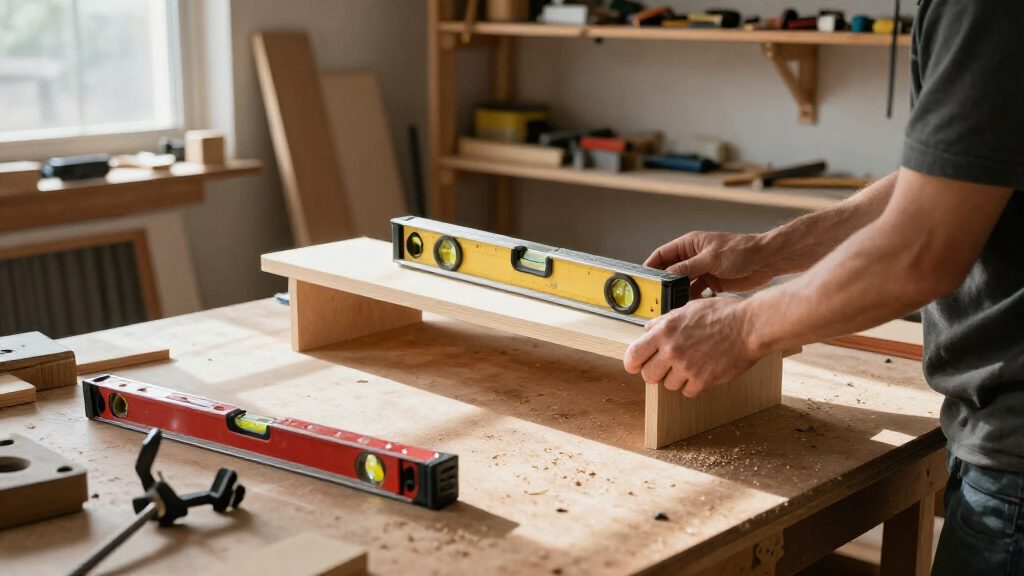
The report says a longer level is generally more useful for checking a broad surface because a short one may show that the middle of a board is level while missing a problem nearer either end. But the tool does not have to span the entire surface: a 24-inch level can be used on a four-foot shelf if the user checks multiple positions along it.
It groups common sizes by use. Levels of 6 to 12 inches, often called torpedo levels, fit tight spaces such as cabinets and areas around pipes. A 24-inch level is suited to many household tasks, including shelves and smaller cabinets; 48-inch models can check longer boards, countertops and framing. Levels of 72 inches or longer are more useful for large projects, including walls and tall door frames, but may be cumbersome in smaller rooms.
Accuracy also depends on how the tool sits. The report advises cleaning both the level and the material, since sawdust or dirt beneath the tool can affect its reading. The level should rest firmly without rocking. Some overhang is acceptable if the tool remains supported and stable; if it tips or rocks, a shorter level may be a better fit.
How Level Length Affects Accuracy
A level is only useful when its contact with the work surface gives a dependable reading. A tool that is too short for the task may fail to reveal a dip, bow or other uneven area beyond the section it covers. That can matter when installing shelves, cabinets or framing, where an uneven result may affect fit or appearance.
At the other extreme, a long tool can be difficult to position in a cramped area and may not sit securely. The practical takeaway is not to use the longest level available in every situation, but to choose one that is long enough to check the relevant area and manageable in the space. For a surface longer than the level, taking readings at several positions helps cover more of it.
The report does not quantify how often an incorrect level size causes problems or measure the effect on finished projects. Its value is practical guidance: tool length, stable placement and clean contact all matter when interpreting the bubble.
Popular right now

Samsung 75-Inch The Frame Pro 4K Neo QLED Smart TV (QN75LS03FW)

Samsung 65-Inch The Frame Pro Neo QLED 4K TV (2026) Bundle with Modern Brown Bezel, HDMI Cables, and Home Theater Guide

Roborock Q7 M5+ Robot Vacuum and Mop with Self-Emptying Dock
As an affiliate, we earn on qualifying purchases.
Common Level Sizes by Job
The source material draws on guidance from Johnson Level & Tool, STABILA and The Home Depot, alongside Family Handyman’s project recommendations. The sizes it lists range from compact torpedo levels for restricted spaces to long models for walls and larger work.
The Home Depot advises using a four-foot carpenter’s level for framing when there is enough room. Its cited guidance says warps or waves in boards can throw off a shorter carpenter’s level. This is a recommendation for framing rather than a universal size rule: Family Handyman says there is no set rule for how much of a surface a level must cover.
For longer runs, the report offers alternatives to a single long level. A smaller level can be placed on a long, straight board to check a wider area, and a laser level may help align points across a room. The source does not provide a detailed method for verifying the straight board or comparing these tools, so users should follow the instructions for the tool they choose.
“Use a 4-foot carpenter’s level for framing whenever you have room for its length.”
— The Home Depot, in guidance cited by Family Handyman
Limits of the Sizing Guidance
The source does not specify a publication date, give independent test results or set a minimum level length for each type of surface. Its size recommendations are general project guidance, not measurements establishing that a particular level will be accurate for every material or installation.
It also does not give a numerical limit for safe overhang. The stated condition is practical: the level must stay supported and must not rock or tip. The report says the bubble need not sit directly above the material for a reading, but it does not discuss tool calibration, manufacturer-specific instructions or how to resolve conflicting readings. Those details remain dependent on the equipment and task.
Check Fit Before You Measure
For a project, the next step is to choose a level that fits the working space and covers enough of the surface to stay stable. Clean the contact areas, place the tool firmly and check multiple points if it does not span the full length. If the level overhangs, confirm that it remains supported without rocking.
For long framing members or room-wide alignment, a longer carpenter’s level or a laser level may be more practical, according to the report. The supplied material does not identify a forthcoming policy, product launch or scheduled update; it is how-to guidance rather than a report of a new industry development.
Key Questions
Does a level have to cover the entire surface?
No. Family Handyman says a shorter level can work on a longer surface if you check several positions along it. Its example is a 24-inch level used on a four-foot shelf.
Which level size works for most household jobs?
The report describes a 24-inch level as useful for common tasks such as hanging shelves or installing smaller cabinets. The best choice still depends on the work area and the size of the surface.
Can a level hang over the edge of a surface?
Some overhang is acceptable if the tool has enough support to stay steady and level. If it tips or rocks, use a shorter level or reposition it.
What can make a level reading unreliable?
The report identifies dirt or sawdust beneath the tool and a level that rocks rather than resting firmly as possible sources of an affected reading. Clean both contact surfaces and check that the tool sits securely.
When is a longer level preferable?
A longer level can help check longer boards, countertops, framing and large surfaces. The Home Depot guidance cited in the report recommends a four-foot carpenter’s level for framing when there is room to use it.
Source: familyhandyman.com