
TL;DR

Get business pricing on tools and workshop supplies
- Business-only prices and quantity discounts
- Tax-exempt purchasing
- Multiple users, one account, clear invoices
This article provides detailed guidance on hunting old swamp bucks, emphasizing scouting, terrain analysis, and strategic timing. It explains why swamps are ideal habitats for mature deer and offers practical tips for successful hunts.
Hunting mature swamp bucks requires specialized knowledge and tactics, as these deer often inhabit hard-to-access wetland areas. According to recent expert insights, successful hunters focus on pre-season scouting, terrain analysis, and strategic stand placement to improve their odds of success in these challenging environments. Swamps serve as prime refuge for old bucks, making them a key target for experienced hunters seeking trophy-sized deer.
Swamp bucks are highly elusive due to their preference for remote, water-rich habitats that are difficult for most hunters to access. These areas often feature high ground islands, thick cover, and water barriers that provide safety and security for mature deer. Successful hunting in these environments begins with thorough pre-season scouting, utilizing aerial and topo maps to identify dry high-ground spots and bedding areas. Hunters should look for signs such as rubs, scrapes, and trails leading into these refuges, focusing on locations with limited access to avoid spooking the deer.
Accessing swamp habitats typically requires special equipment like small boats, waders, and patience. Once on site, hunters should identify high ground within the swamp, as deer prefer to bed on dry, elevated spots surrounded by water. Transition zones or edges where swampy areas meet higher ground are especially productive, as deer tend to forage and travel along these boundaries. Understanding wind direction and using terrain features to mask scent and noise are critical for approaching these wary animals. Timing hunts during dawn and dusk increases success, as bucks are more active during these periods, especially when approaching bedding areas or staging near food sources.
How To Hunt Swamp Bucks
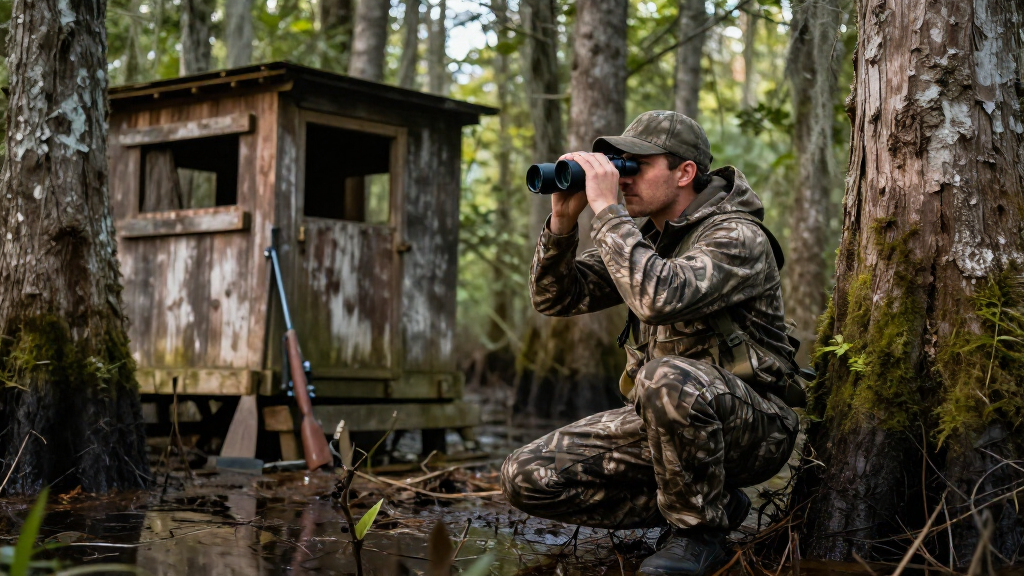
Old swamp bucks live where few hunters dare to go — water-rich refuges of high-ground islands, thick cover, and flooded timber. This guide breaks down the scouting, terrain analysis, and timing tactics that turn inaccessible wetlands into your best shot at a mature trophy.
Why Swamps Are a Game-Changer for Trophy Hunters
Swamp habitats naturally filter out less-experienced hunters. The payoff: bucks that grow older, larger, and more wary than their upland counterparts — and skills you can carry into any tough terrain.
Mature by Default
Difficult access means low hunting pressure, letting bucks reach trophy age classes rarely seen on easily reached land.
Built-In Barriers
Water, thick cattail marsh, and flooded timber shield deer from human approach, creating confidence zones for old bucks.
Master the Craft
Terrain analysis, scent control, and timing mastery in swamps sharpen your hunting everywhere else you pursue deer.
The Swamp Buck Method, Step by Step
Map It
Study aerial and topo maps to find dry islands, ridges, and seasonal water patterns before season opens.
Scout Sign
Locate rubs, scrapes, and trails leading into the refuge — focus on spots with the most limited access.
Access Quietly
Use small boats, canoes, and waders to slip in with patience, masking noise and movement.
Set Up on Edges
Hunt transition zones where swamp meets high ground — the travel and feeding corridors bucks use.
Time It Right
Hunt dawn and dusk when bucks move between bedding islands and food sources.
Where to Focus Your Effort
Reading the Swamp: Feature by Feature
| Swamp Feature | Why Bucks Use It | Huntability | Best Tactic |
|---|---|---|---|
| High-Ground Islands | Dry bedding surrounded by water — maximum security | ~ Difficult | Boat/wader access; set up downwind before dawn |
| Transition Zones / Edges | Foraging and travel where swamp meets upland | ✓ Prime | Stand placement on entry/exit trails at dawn & dusk |
| Flooded Timber | Cover and concealment from predators | ✗ Very Hard | Avoid entering; hunt the perimeter instead |
| Cattail Marsh | Thick bedding security cover | ~ Moderate | Identify trails in; intercept at the marsh edge |
| Nearby Food (Acorns / Fields) | Staging areas before evening feeding | ✓ Productive | Evening sits on staging zones near bedding islands |
Swamp Hunting FAQ
What equipment do I need?
Essentials: a small boat or canoe, waders, scent control gear, waterproof boots, camouflage, and a climbing or ladder stand suited to uneven terrain.
When is the best time to hunt?
Dawn and dusk, when deer are most active — especially early fall and late season as bucks move to and from bedding areas.
How do I identify good spots?
Look for high-ground islands, dry ridges, and transition zones. Use aerial maps and scout for rubs, scrapes, and trails leading into the refuge.
How do I approach without spooking deer?
Approach from downwind, move slowly and quietly, avoid direct routes, and use natural cover to minimize scent and noise.
Why Hunting Swamp Bucks Is a Game-Changer for Trophy Seekers
Successfully hunting swamp bucks offers significant advantages for trophy hunters, as these deer tend to be older, larger, and more cautious than their upland counterparts. The difficulty of accessing swamp habitats naturally filters out less experienced hunters, increasing the likelihood of encountering mature deer. This makes swamp hunting a strategic pursuit for those seeking high-quality trophies. Moreover, understanding swamp ecosystems and deer behavior enhances overall hunting skills, as it involves mastering terrain analysis, scent control, and timing. The knowledge gained from hunting swamp bucks can be applied to other challenging habitats, expanding a hunter’s skill set and success rate.
Popular right now
Dyson Car+Boat Cordless Handheld Vacuum

Apple AirPods Pro 3 Wireless Earbuds with Active Noise Cancellation

LG C2 Series 65-Inch OLED evo 4K Smart TV (OLED65C2PUA, 2022)
As an affiliate, we earn on qualifying purchases.
Understanding the Unique Habitat of Swamp Bucks
Swamp bucks are predominantly found in wetland areas where water levels fluctuate seasonally, creating a complex mosaic of dry high-ground islands, cattail marshes, and flooded timber. These areas provide security for mature deer, who avoid open or heavily accessible terrain. Historically, hunters have found it difficult to pursue these elusive animals due to the terrain’s inaccessibility and the deer’s wariness. Recent advances in scouting technology, such as aerial imagery and GPS mapping, have improved hunters’ ability to locate promising sites. Prior research indicates that mature bucks prefer bedding on dry islands or ridges within swamps, especially near food sources like acorns or agricultural fields, making these spots prime targets during the hunting season.
Uncertainties Surrounding Effective Swamp Hunting Techniques
While the general strategies for hunting swamp bucks are well-established, specific details remain uncertain. For instance, the exact timing of peak activity for mature bucks in different swamp regions can vary based on local conditions. Additionally, the impact of weather patterns, water levels, and human disturbance on deer movement in swamps is still being studied. There is also ongoing debate about the best methods for approaching bedding areas without alerting the deer, especially during daylight hours. More research and field testing are needed to refine these techniques and develop universally effective tactics.
Next Steps for Hunters Targeting Swamp Bucks
Hunters planning to pursue swamp bucks should focus on detailed pre-season scouting, utilizing modern mapping tools to identify promising high-ground and bedding sites. During the season, they should tailor their approach based on weather and wind conditions, using small boats or waders to access remote areas quietly. Continued research into deer movement patterns within wetlands will help refine timing and stand placement strategies. Sharing successful techniques and experiences within hunting communities can also accelerate the development of best practices. Ultimately, consistent effort and adaptation will improve success rates in these challenging environments.
Key Questions
What equipment do I need for swamp hunting?
Essential equipment includes a small boat or canoe, waders, scent control gear, and possibly a climbing or ladder stand suitable for uneven terrain. Good waterproof boots and camouflage are also recommended.
When is the best time to hunt swamp bucks?
The optimal times are during dawn and dusk when deer are most active, especially in the early fall and late season when they are moving to and from bedding areas.
How do I identify good swamp hunting spots?
Look for high ground islands, dry ridges, and transition zones between water and upland habitat. Use aerial maps and scout signs like rubs, scrapes, and trails leading into these areas.
How can I approach a bedding area without spooking the deer?
Use wind direction to your advantage, approach from downwind, and move slowly and quietly. Avoiding direct routes and using cover can help minimize scent and noise.
Source: rss