
TL;DR

Get business pricing on tools and workshop supplies
- Business-only prices and quantity discounts
- Tax-exempt purchasing
- Multiple users, one account, clear invoices
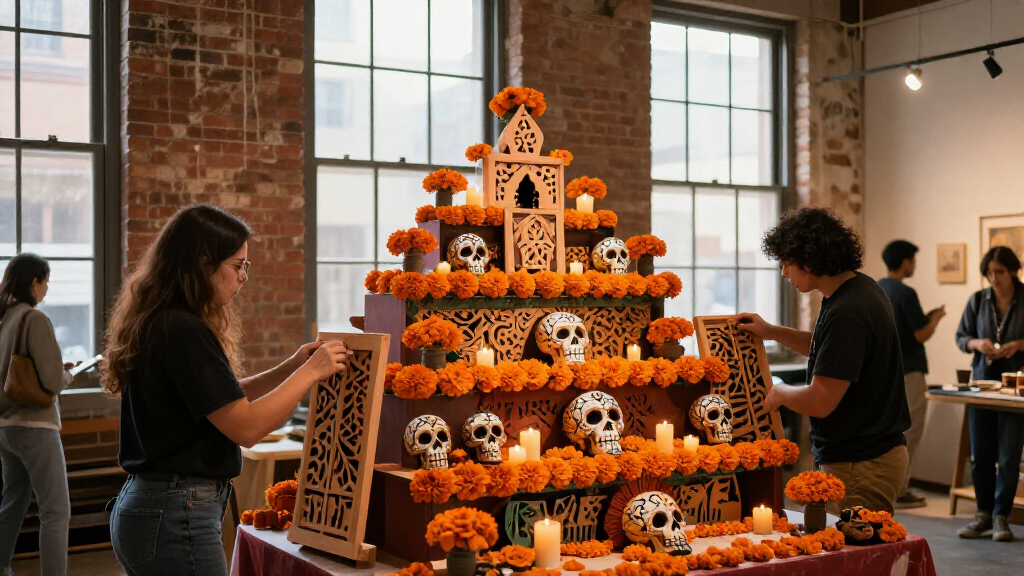
Artist and designer Daniel Valero’s studio, Mestiz, has created Twenty Petal Flower, a seven-tier woven altar for Día de Muertos in Manhattan’s Flatiron North Plaza. Commissioned by the Flatiron NoMad Partnership and made with Brooklyn’s Powerhouse Arts, the installation is open to visitors through Nov. 3, 2026, and is designed to be disassembled and used again.
Mestiz, the design studio led by Mexican artist and designer Daniel Valero, has installed a seven-tier Día de Muertos altar in Manhattan’s Flatiron North Plaza. Titled Twenty Petal Flower, the public artwork was commissioned by the Flatiron NoMad Partnership and made with Brooklyn-based Powerhouse Arts; visitors are invited to approach it and leave remembrances of loved ones who have died.
The installation is on view through Nov. 3, 2026. Its oversized orange flowers are handwoven mainly from wicker, using traditional techniques, and arranged across seven tiers. Warm, candle-like lighting adds to the altar’s appearance. The work adapts the ofrenda, or offering altar, into a public gathering place rather than a private household display.
Mestiz developed and produced the woven elements at its fiber workshop in Tequisquiapan, Mexico. To prepare the structure for an outdoor Manhattan plaza, the studio worked with Powerhouse Arts on a supporting frame. Powerhouse Arts says the project involved exchanges on cut samples, surface textures and paint colors so the support would fit Valero’s design.
The frame is made of steel and color-matched to the flowers, according to Brittni Collins, Powerhouse Arts’ director of public art. Stainless steel zip ties secure the woven pieces, which Collins said were selected to withstand wind and weather. The resulting structure is modular, she said, and can be taken apart, stored and installed again for future celebrations.
A Public Place for Remembrance
The altar brings a Día de Muertos practice into a busy public plaza and gives passersby a place to pause, remember someone and leave an offering. Its open invitation makes participation part of the artwork, rather than positioning it only as an object to view. The organizers describe that public access as a way for people familiar with the tradition to honor it and for others to encounter its meaning.
Valero says the work also recognizes the labor behind the tradition, including the people who grow cempasúchil, the marigold associated with Día de Muertos, and those who turn it into an ofrenda. The partnership between a Mexico-based studio and a Brooklyn fabrication organization also shaped the installation’s design and construction. Its planned reuse may allow the work to return for later celebrations, although the source does not identify a confirmed future location or date.
Popular right now

Shark Rotator Lift-Away Upright Vacuum, White/Red (NV501)

Vitamix 5200 Professional-Grade Blender, 64 oz. Container, Black

Dyson Airwrap i.d. Multi-Styler for Straight and Wavy Hair
As an affiliate, we earn on qualifying purchases.
From Marigold to Monument
The title, Twenty Petal Flower, refers to cempōhualxōchitl, a Nahuatl word meaning “20-petal flower,” from which the Spanish name cempasúchil is derived. In the tradition described by the project’s designer, the flower’s color and scent are associated with guiding the spirits of loved ones home. The installation’s orange woven forms trace the flower’s journey from fields in Michoacán, Mexico, to the arrangements made for Día de Muertos.
Valero said his design challenge was to translate a delicate, temporary flower into a large structure while retaining its handmade quality and cultural significance. The Flatiron NoMad Partnership commissioned the work for Flatiron North Plaza, a setting it said offered room for an immersive installation within the neighborhood’s everyday activity. The project combines that public setting with a familiar form of remembrance: an altar where visitors can leave personal mementos.
“This time, I wanted to honor the many hands behind the cempasúchil, from the people who grow it to those who transform it into an ofrenda.”
— Daniel Valero, artist and designer
Future Installations Not Yet Scheduled
The project account says the modular structure can be stored and reinstalled, but it does not give a confirmed future location or schedule. It also does not specify whether there will be formal programming at the altar, how many visitors are expected, or what will happen to any offerings after the installation closes. The confirmed public viewing period runs through Nov. 3, 2026.
Visit Before November 3
Visitors can see Twenty Petal Flower at Flatiron North Plaza through Nov. 3, 2026, and are invited to leave remembrances at the altar. The installation’s modular design leaves open the possibility of future use, but no next presentation has been announced in the source material.
Key Questions
Where is the Mestiz Día de Muertos altar?
Twenty Petal Flower is installed in Flatiron North Plaza in New York City’s Flatiron District.
How long will the installation be on view?
The altar is scheduled to remain on view through Nov. 3, 2026.
Can visitors leave something at the altar?
Yes. The installation is presented as a public ofrenda, and visitors are invited to approach it and leave mementos honoring loved ones.
Who made the installation?
Artist and designer Daniel Valero’s Mestiz studio made the woven elements in Tequisquiapan, Mexico, in collaboration with Brooklyn-based Powerhouse Arts, which helped develop the outdoor support structure.
Will the altar return in a future year?
Powerhouse Arts says the structure can be disassembled, stored and reinstalled. However, no future date or location has been announced in the available project information.
Source: design-milk.com