
TL;DR

Get business pricing on tools and workshop supplies
- Business-only prices and quantity discounts
- Tax-exempt purchasing
- Multiple users, one account, clear invoices
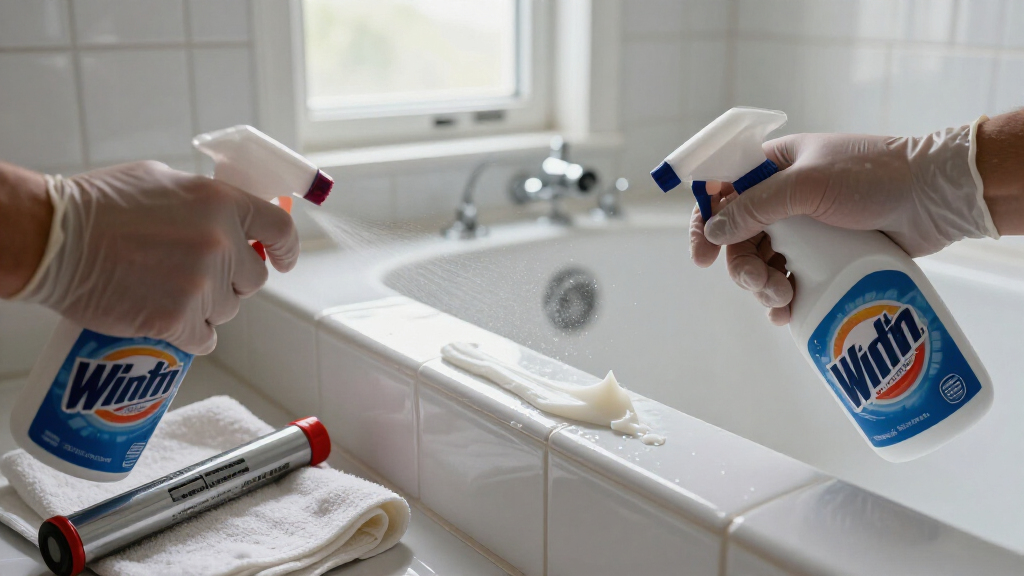
A Hunker report describes a DIY technique: lightly spray ammonia-free Windex on a fresh silicone bead, or on the finishing tool, before smoothing it. The cleaner helps reduce sticking during tooling; it is not a caulk cleaner or an adhesion aid, and contact with an uncaulked spot may interfere with bonding.
A Hunker report describes a home-improvement technique in which DIYers lightly spray ammonia-free Windex on freshly applied silicone caulk before smoothing it. The glass cleaner can help a finger or finishing tool glide over the sticky bead, but it is a tooling aid, not a cleaner or a way to improve adhesion.
Silicone caulk can cling to a finger or caulk-finishing tool as it is worked, making it harder to form an even bead. Hunker says the cleaner’s slippery surface can reduce that sticking and help produce a smoother finish. The report favors an ammonia-free version because it is considered less likely to compromise the caulk; it does not provide product testing or quantify that risk.
The sequence matters: first apply the silicone bead, then lightly spray it and smooth it promptly with a finger or tool. The report also suggests spraying the finishing tool instead, which can limit cleaner reaching nearby surfaces. Silicone begins to form a skin as it cures, so the report advises working quickly and tackling longer joints in sections.
Windex should not be used to prepare a joint for caulk. Hunker cautions that if cleaner reaches a gap where silicone has not yet been applied, it could prevent the caulk from adhering properly there. The report recommends removing old caulk and cleaning and drying the joint before applying a new bead. It describes acrylic latex caulk as generally easier to tool and clean with water, so this technique is less necessary for that type.
A Smoother Bead Without Better Bonding
For people working with silicone, the technique addresses a specific finishing problem: the material’s stickiness can pull at a finger or tool and leave an uneven surface. A small amount of cleaner may make the bead easier to shape, but the distinction between finishing and bonding matters. Cleaner on the bead after application may help tooling; cleaner on an untreated joint may interfere with adhesion, according to the report.
That makes application order and control important. Applying a continuous bead before spraying, or spraying the tool instead, can reduce the chance that cleaner reaches a spot that still needs caulk. The report presents this as a DIY tip rather than a tested guarantee, and it does not establish that every glass cleaner or caulk formulation will behave the same way.
Popular right now

Samsung 48-Inch S90H OLED 4K Smart TV (2026)

De’Longhi Classic Matte Black Espresso Machine with Milk Frother

Ninja Flip Toaster Oven and Air Fryer, 8-in-1, Stainless Steel, SP151
As an affiliate, we earn on qualifying purchases.
Why Silicone Takes More Tooling
Caulk fills joints and seams, and its surface is often smoothed after application. Hunker’s report focuses on silicone caulk, which it describes as stickier and more difficult to smooth and clean up than acrylic latex caulk. A bead that is applied unevenly can be harder to correct once the material begins curing.
The report recommends ordinary preparation before applying new caulk: remove old silicone with mineral spirits or rubbing alcohol, clear away paint, dirt, grease and debris, then clean and dry the joint. It also advises cutting the nozzle at a 45-degree angle and moving steadily while applying consistent pressure. Painter’s tape along the edges is offered as another way to guide the bead and limit cleanup.
““The natural slip of the glass cleaner helps keep the silicone from sticking to your finger or tool.””
— Hunker report
Limits of the Windex Technique
The supplied report does not cite controlled tests comparing ammonia-free Windex with other finishing methods, specify how much cleaner to use, or identify compatible products across silicone brands. Its warning about possible adhesion problems is presented as practical guidance, without measurements or a discussion of specific formulations. Readers should follow the caulk manufacturer’s instructions for the product they are using; the report does not establish that the technique is suitable for every sealant or joint.
Check the Caulk Label Before Tooling
For anyone considering the method, the next step is to check the instructions for the chosen silicone caulk and glass cleaner. If using the tip, apply the bead to a clean, dry joint, then lightly spray the bead or the finishing tool and smooth the silicone promptly. Work in manageable sections so the material does not begin skinning over before it is tooled. Keep cleaner away from any area that still needs caulk to bond.
Key Questions
Why do some DIYers spray Windex on silicone caulk?
Hunker says the cleaner can reduce sticking as a finger or finishing tool smooths a fresh silicone bead, helping it glide over the surface.
Should Windex be applied before or after the caulk?
The report describes spraying lightly after the silicone bead is applied, then smoothing it immediately. It also suggests spraying the tool instead of the bead.
Can Windex help caulk adhere?
No. The report says it does not improve adhesion. If cleaner gets onto a spot where silicone has not yet been applied, it could interfere with proper bonding there.
Is the technique needed for acrylic latex caulk?
Hunker says acrylic latex caulk is generally easier to tool and cleans up with water, so there is usually less need for this smoothing method.
Source: rss