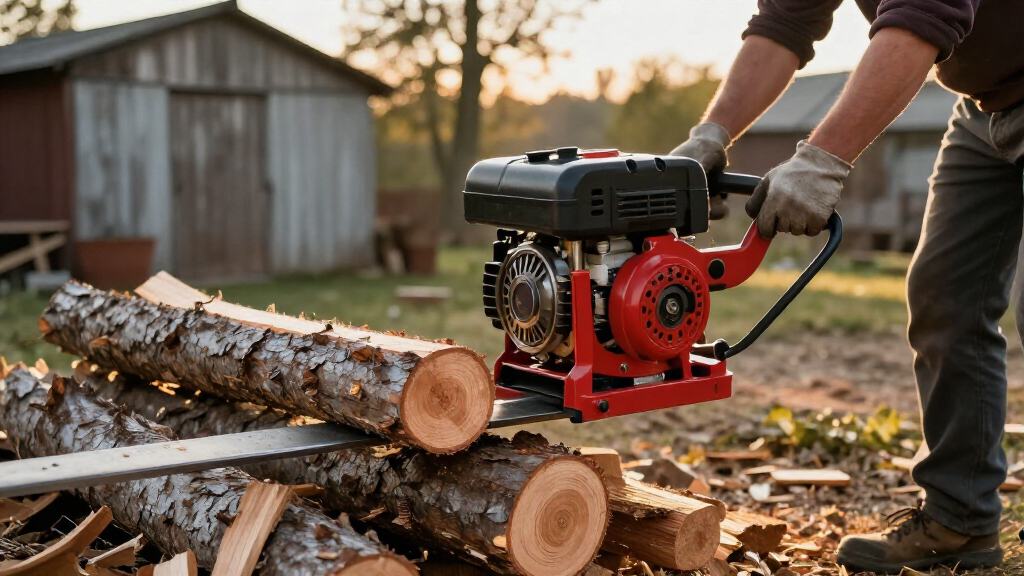

Gas-powered wood splitters offer the mobility and force for firewood work away from an outlet, but choosing one means balancing splitting capacity against size, handling, and cost of ownership. My best overall pick is the SuperHandy 27-Ton, which pairs substantial force with horizontal and vertical operation and towable mobility. For tougher, larger-scale jobs, the Full Boar 33-Ton stands out for added splitting capacity, while the Landworks Portable 20-Ton suits buyers who put maneuverability first. I compared these 13 options by power class, operating flexibility, and workload fit, since a larger rating is not automatically the best match for every woodpile. Continue reading for the full breakdown and a guide to choosing the right splitter for your work.

Get business pricing on tools and workshop supplies
- Business-only prices and quantity discounts
- Tax-exempt purchasing
- Multiple users, one account, clear invoices
Complete the kit



Key Takeaways
- The SuperHandy 27-Ton is the strongest all-around balance in this lineup: its horizontal/vertical setup and towable design add flexibility beyond its splitting force.
- Splitting capacity separates occasional-use models from heavier-workload picks: the 20-ton group favors portability and simpler jobs, while the 30- to 40-ton models suit buyers facing larger or more demanding rounds.
- Vertical operation can matter more than another few tons: it lets buyers split heavy rounds without lifting them onto a beam, a practical advantage for repeated work.
- Premium features target labor and handling, not just force: the BILT HARD 35-ton model adds a log lift and multi-way wedges for buyers processing high volumes.
- Portable 20-ton options serve a different priority than towable heavy machines: Landworks and SuperHandy compact picks suit buyers focused on moving and staging equipment rather than maximum capacity.
| BILT HARD 18-Ton Gas Log Splitter, 7 HP 209cc |  | Best for Lighter, Frequent Batches | Splitting force: 18 tons | Engine: 7 HP, 209cc OHV | Engine torque: 9.6 ft-lb | VIEW LATEST PRICE | See Our Full Breakdown |
| SuperHandy 27-Ton Gas-Powered Log Splitter, 223cc, Horizontal/Vertical, Towable |  | Best for Large Logs and Vertical Splitting | Splitting force: 27 tons | Engine: 223cc gas-powered, recoil-start | Log capacity: Up to 24 inches in diameter and 24 inches long | VIEW LATEST PRICE | See Our Full Breakdown |
| Full Boar 33-Ton Gas-Powered Log Splitter with 223cc Engine |  | Best for Maximum Splitting Force | Splitting force: 33 tons | Engine: 223cc OHV | Cycle time: 14.3 seconds | VIEW LATEST PRICE | See Our Full Breakdown |
| SuperHandy 25-Ton Gas-Powered Log Splitter |  | Best for Basic Property and Forestry Work | Splitting force: 25 tons | Power source: Gas | Wedge material: Steel | VIEW LATEST PRICE | See Our Full Breakdown |
| 20-Ton Gas-Powered Horizontal Log Splitter, 209cc |  | Best Lightweight Pick with Auto-Return | Splitting force: 20 tons | Engine: 209cc, 4-stroke | Engine power: 7 HP | VIEW LATEST PRICE | See Our Full Breakdown |
| Ezasin 20-Ton Gas Log Splitter, 209cc 7hp |  | Best for Repeated Mid-Size Batches | Engine: 209cc, 7hp gas | Splitting force: 20 tons | Cycle time: 8 seconds | VIEW LATEST PRICE | See Our Full Breakdown |
| SuperHandy 20-Ton Portable Gas Log Splitter with 7 HP Engine |  | Best for Faster Portable Splitting | Engine: 7 HP gas | Splitting force: 20 tons | Pump: Two-stage Bucher hydraulic gear pump | VIEW LATEST PRICE | See Our Full Breakdown |
| Full Boar 20-Ton Gas Log Splitter with 209cc Engine |  | Best for Low-Maintenance Transport | Engine: 209cc, EPA-certified | Splitting force: 20 tons | Pump: 10.5 GPM two-stage | VIEW LATEST PRICE | See Our Full Breakdown |
| BILT HARD 30-Ton Gas-Powered Horizontal/Vertical Hydraulic Log Splitter |  | Best for Large Logs and Towable Work | Engine: 223cc, 7.5 HP single-cylinder OHV | Splitting force: 30 tons | Operating positions: Horizontal and vertical | VIEW LATEST PRICE | See Our Full Breakdown |
| BILT HARD 40-Ton Gas-Powered Log Splitter, Horizontal/Vertical, 389cc Engine |  | Best for Maximum Splitting Force | Engine: 389cc, 13 HP, single-cylinder OHV, 4-cycle | Splitting force: 40 tons | Torque: 16.96 ft-lb | VIEW LATEST PRICE | See Our Full Breakdown |
| BILT HARD 35-Ton Gas Log Splitter with Log Lift and 4-Way and 6-Way Wedges |  | Best for Heavy, Repetitive Splitting | Splitting force: 35 tons | Engine: 306 cc, 10 HP | Hydraulic pump: 18 GPM Bucher two-stage pump | VIEW LATEST PRICE | See Our Full Breakdown |
| 20 Ton Gas Log Splitter, 209CC 7HP Hydraulic Splitter with Auto Return Ram, 8 Second Cycle Time, Heavy Duty Steel Wedge, Handles Large Logs up to 20.5″ x 16″ for Forestry Harvesting |  | Best for Fast, Repeated Cycles | Splitting force: 20 tons | Engine: 209 cc, 7 HP | Stated log capacity: 20.5 x 16 inches | VIEW LATEST PRICE | See Our Full Breakdown |
| Landworks Portable 20-Ton Gas Log Splitter with 7 HP Engine and Rapid Auto Return |  | Best Portable 20-Ton Pick | Power source: Gas | Engine power: 7 HP | Splitting force: 20 tons | VIEW LATEST PRICE | See Our Full Breakdown |
| gas powered wood splitter | Splitting force | Cycle time | Engine | Weight |
|---|---|---|---|---|
| BILT HARD 18-Ton Gas Log Split | 18 tons | 7.5 seconds | 7 HP, 209cc OHV | 52 pounds |
| SuperHandy 27-Ton Gas-Powered | 27 tons | 11 seconds | 223cc gas-powered, recoil-start | 502 pounds |
| Full Boar 33-Ton Gas-Powered L | 33 tons | 14.3 seconds | 223cc OHV | 473 pounds |
| SuperHandy 25-Ton Gas-Powered | 25 tons | — | — | 245 pounds |
| 20-Ton Gas-Powered Horizontal | 20 tons | 8 seconds with automatic return | 209cc, 4-stroke | — |
| Ezasin 20-Ton Gas Log Splitter | 20 tons | 8 seconds | 209cc, 7hp gas | 135 pounds |
| SuperHandy 20-Ton Portable Gas | 20 tons | 7.5 seconds | 7 HP gas | 130 pounds |
| Full Boar 20-Ton Gas Log Split | 20 tons | 8.5 seconds | 209cc, EPA-certified | 147.7 pounds |
| BILT HARD 30-Ton Gas-Powered H | 30 tons | 11 seconds | 223cc, 7.5 HP single-cylinder OHV | 533 pounds |
| BILT HARD 40-Ton Gas-Powered L | 40 tons | 16 seconds | 389cc, 13 HP, single-cylinder OHV, 4-cycle | — |
| BILT HARD 35-Ton Gas Log Split | 35 tons | 15 seconds | 306 cc, 10 HP | 1,035 lb |
| 20 Ton Gas Log Splitter | 20 tons | 8 seconds | 209 cc, 7 HP | 135.2 lb |
| Landworks Portable 20-Ton Gas | 20 tons | 7.5 seconds | — | 148.7 lb |
More Details on Our Top Picks
BILT HARD 18-Ton Gas Log Splitter, 7 HP 209cc
The BILT HARD 18-ton suits buyers who want a gas engine and a brisk 7.5-second cycle without stepping up to a heavy towable machine. Its stated capacity—logs up to 20 inches long and 16 inches in diameter—covers routine firewood work, while 10-inch tires help move the splitter around a property. Against the 20-Ton Gas-Powered Horizontal Log Splitter, this model gives up some splitting force and has a lower stated maximum diameter, but it weighs far less at 52 pounds. That weight makes it easier to reposition, though it is not a reason to overlook setup needs: engine oil and hydraulic fluid are not included. I’d choose it for manageable logs and portability, not for large rounds that call for the 27- or 33-ton options.
Pros:- 7.5-second cycle supports a brisk pace for repeated splitting.
- Stated capacity covers logs up to 20 inches long and 16 inches in diameter.
- 52-pound listed weight is far below the 245- to 502-pound alternatives.
- 10-inch tires aid movement around a property.
Cons:- 18 tons of force is less suited to demanding rounds than the 27- and 33-ton options.
- Engine oil and hydraulic fluid are not included.
- Gas engine requires outdoor operation in a well-ventilated area.
Best for: Property owners splitting routine firewood from logs within the stated 20-by-16-inch capacity who want a lighter machine to reposition.
Not ideal for: Buyers tackling large, knotty rounds or expecting a ready-to-run package; it has less force than the 27- and 33-ton models, and fluids must be supplied separately.
- Splitting force:18 tons
- Engine:7 HP, 209cc OHV
- Engine torque:9.6 ft-lb
- Hydraulic flow:10.5 GPM
- Cycle time:7.5 seconds
- Maximum log capacity:20 inches long; 16 inches in diameter
- Tire size:10 inches
- Weight:52 pounds
- Fluids:Engine oil and hydraulic fluid not included; AW32 hydraulic fluid recommended
Our verdict“Choose this BILT HARD for lighter firewood batches and easy repositioning, but pick a higher-tonnage model for larger or tougher logs.”
SuperHandy 27-Ton Gas-Powered Log Splitter, 223cc, Horizontal/Vertical, Towable
For large rounds, the SuperHandy 27-ton has a practical advantage over lighter horizontal machines: it switches between horizontal and vertical operation, reducing the need to lift heavy logs onto the beam. Its stated capacity reaches 24 inches in both length and diameter, exceeding the 20-inch length limit listed for the BILT HARD 18-Ton. The 11-second cycle is slower than that BILT HARD’s 7.5 seconds, so this is a capacity-and-handling choice rather than the pick for the fastest repeated cycles. An auto-return valve rated for over 300 cycles per hour supports steady work, and the 2-inch ball coupler allows towing. At 502 pounds, though, it is not a casually portable machine; buyers need a suitable tow vehicle and should expect recoil starting and gasoline upkeep.
Pros:- Horizontal and vertical modes reduce the need to lift heavy rounds onto the beam.
- Stated capacity is up to 24 inches in diameter and 24 inches long.
- Auto-return valve is rated for over 300 cycles per hour.
- 2-inch ball coupler supports towing between work areas.
Cons:- At 502 pounds, it is difficult to move without a tow vehicle.
- Its 11-second cycle is slower than the BILT HARD 18-Ton’s 7.5-second cycle.
- Requires gasoline and recoil starting.
Best for: Firewood producers handling large, heavy rounds who want vertical splitting and have a tow vehicle for moving the machine.
Not ideal for: Small-property owners who need to carry or frequently reposition a splitter without a vehicle, or buyers who prioritize a faster cycle over log capacity.
- Splitting force:27 tons
- Engine:223cc gas-powered, recoil-start
- Log capacity:Up to 24 inches in diameter and 24 inches long
- Operation:Horizontal and vertical
- Cycle time:11 seconds
- Auto-return valve capacity:Over 300 cycles per hour
- Coupler:2-inch ball
- Dimensions:87 x 51.5 x 40 inches
- Weight:502 pounds
Our verdict“Pick the SuperHandy when large-log capacity and vertical splitting matter more than light weight or the quickest cycle.”
Full Boar 33-Ton Gas-Powered Log Splitter with 223cc Engine
The Full Boar 33-ton is the force-first choice in this group. Its 33 tons exceed the SuperHandy 27-Ton, making it the stronger fit when tough or large rounds are the main workload. A two-way wedge and 22.75-inch stroke are designed around logs up to 24 inches long, while the pivoting cylinder handle supports horizontal-to-vertical repositioning. The tradeoff is pace: its 14.3-second cycle is slower than the SuperHandy’s 11 seconds and the BILT HARD 18-Ton’s 7.5 seconds. At 473 pounds, it also needs a deliberate transport plan, though its 16-inch DOT-approved road tires and 2-inch ball hitch with safety chains support towing. I’d rank it above the lower-tonnage choices for difficult wood, not for buyers seeking a light, quick-moving splitter.
Pros:- 33 tons of force exceed the 27-ton SuperHandy and the lower-tonnage options.
- Two-way wedge and 22.75-inch stroke serve logs up to 24 inches long.
- Pivoting handle supports horizontal and vertical positioning.
- Road tires and a ball hitch with safety chains support towing.
Cons:- 14.3-second cycle is slower than the SuperHandy 27-Ton’s 11 seconds.
- 473-pound weight makes handling and transport challenging without towing.
- Gas engine requires fuel and ongoing engine maintenance.
Best for: Rural firewood cutters who regularly split demanding rounds up to 24 inches long and can tow a heavy machine to the work area.
Not ideal for: Buyers with modest firewood needs, limited towing capacity, or a preference for a faster cycle and lighter equipment.
- Splitting force:33 tons
- Engine:223cc OHV
- Cycle time:14.3 seconds
- Stroke length:22.75 inches
- Maximum log length:24 inches
- Wedge:Two-way
- Frame:Heavy-duty H-beam
- Tires and hitch:16-inch DOT-approved road tires; 2-inch ball hitch coupler with safety chains
- Weight:473 pounds
Our verdict“Choose the Full Boar for the lineup’s highest listed splitting force and tough rounds, provided its weight and slower cycle suit your workflow.”
SuperHandy 25-Ton Gas-Powered Log Splitter
The SuperHandy 25-ton is a straightforward middle-ground pick for buyers who want more stated force than the BILT HARD 18-Ton without moving to a 473- or 502-pound towable machine. Its steel wedge, wheels, and ergonomic handle suit moving between work spots, while user-friendly controls and safety features are described for operation on the ground or a workbench. That makes it a plausible fit for routine property firewood and forestry tasks, but the product details do not provide a cycle time, engine displacement, or log capacity. Buyers who need those figures to match a splitter to a workload may prefer the better-specified SuperHandy 27-Ton, which also offers vertical operation and stated 24-inch log capacity. The 25-ton model’s 245-pound weight is still substantial, so its wheels aid repositioning rather than making it easy to lift or carry.
Pros:- 25 tons of stated force sit above the BILT HARD 18-Ton’s rating.
- Steel wedge is intended for a range of log sizes.
- Wheels and ergonomic handle support repositioning between work areas.
- Controls and safety features are described for ground or workbench operation.
Cons:- At 245 pounds, it remains heavy to handle despite its wheels.
- Cycle time, engine displacement, and maximum log capacity are not provided.
- No horizontal-to-vertical capability is specified, unlike the SuperHandy 27-Ton.
Best for: Property owners and small-scale forestry workers seeking a wheeled 25-ton gas splitter for varied work areas and who do not need published cycle-time or log-capacity figures.
Not ideal for: Buyers who must confirm maximum log size, cycle time, engine details, or vertical operation before choosing; those specifications are not provided here.
- Splitting force:25 tons
- Power source:Gas
- Wedge material:Steel
- Dimensions:50.6 x 26.6 x 42.8 inches
- Weight:245 pounds
- Model:GUO096-NEW-FBA
- Manufacturer:SuperHandy
Our verdict“Consider this SuperHandy for general property work if its unspecified capacity and cycle details fit your needs; choose the 27-ton model when published log limits and vertical splitting matter.”
20-Ton Gas-Powered Horizontal Log Splitter, 209cc
This 20-ton horizontal splitter pairs a 209cc four-stroke engine with an 8-second cycle and automatic ram return, giving it a useful speed advantage over the heavier SuperHandy 27-Ton and Full Boar 33-Ton models. At 130 pounds, it is also far easier to reposition around a property than either towable option, with handles and pneumatic tires to help. Its limits are clear: it works horizontally only, and its listed maximum diameter conflicts between the title and description—the title says 16 inches, while the description says 18 inches. I would not base a purchase on the larger figure without confirming it. Compared with the BILT HARD 18-Ton, it offers more stated force and an automatic return, but remains a lower-force choice than the 25-, 27-, and 33-ton machines.
Pros:- 8-second cycle with automatic ram return supports repeated splitting.
- 20 tons of stated force exceed the BILT HARD 18-Ton.
- 130-pound weight, handles, and pneumatic tires support moving it around a property.
- Two-stage gear pump and hardened steel wedge are specified.
Cons:- Horizontal-only operation does not offer the vertical handling available on the SuperHandy 27-Ton and Full Boar 33-Ton.
- Maximum log diameter is inconsistent: 16 inches in the title and 18 inches in the description.
- Its 20-ton rating is below the 25-, 27-, and 33-ton alternatives.
Best for: Home firewood cutters who want a relatively light gas splitter with a quick cycle and automatic return for logs within a verified capacity.
Not ideal for: Buyers splitting heavy rounds that need vertical handling, or anyone who needs a confirmed maximum diameter before purchase.
- Splitting force:20 tons
- Engine:209cc, 4-stroke
- Engine power:7 HP
- Cycle time:8 seconds with automatic return
- Pump:Two-stage gear pump
- Orientation:Horizontal
- Maximum log length:20 inches
- Maximum log diameter:16 inches in title; 18 inches in description
- Weight and tires:130 pounds; 10-inch pneumatic tires
Our verdict“Choose this model for lighter, faster-moving horizontal work, but verify the diameter limit and look to a vertical-capable splitter for heavy rounds.”
Ezasin 20-Ton Gas Log Splitter, 209cc 7hp
The Ezasin pairs a 20-ton ram with an 8-second cycle and automatic return, making it a practical fit for steady rounds of firewood without stepping up to a heavier 30-ton machine. Its 20.5-inch log-length limit is slightly more generous than the SuperHandy 20-Ton, which tops out at 20 inches, while both are rated for logs up to 16 inches across. The dual-stage pump is intended to balance splitting pressure with quicker operation, and pneumatic tires help move its 135-pound frame around a yard. The tradeoff is preparation: it needs hydraulic oil, engine oil, and gasoline before use. Buyers handling logs beyond its size limits or especially demanding workloads should look toward the BILT HARD 30-Ton instead.
Pros:- 20-ton splitting force is suited to hardwood and knotty logs within its capacity.
- Automatic ram return and an 8-second cycle support repeated work.
- Dual-stage pump is designed to balance pressure and cycle speed.
- Pneumatic tires aid movement around a property.
Cons:- Hydraulic oil, engine oil, and gasoline must be supplied before operation.
- The 20.5-inch log-length and 16-inch width limits rule out larger rounds.
Best for: Homeowners splitting regular batches of firewood from logs no longer than 20.5 inches who want gas power and wheeled yard mobility.
Not ideal for: Buyers processing logs longer than 20.5 inches or seeking a ready-to-run setup without separately supplying oils and gasoline.
- Engine:209cc, 7hp gas
- Splitting force:20 tons
- Cycle time:8 seconds
- Maximum log size:20.5 inches long x 16 inches wide
- Hydraulic pump:Dual-stage aluminum gear pump
- Ram return:Automatic
- Weight:135 pounds
- Tires:10-inch pneumatic
Our verdict“Choose the Ezasin for repeated yard-scale splitting when its 20-ton force and 20.5-inch log limit are enough.”
SuperHandy 20-Ton Portable Gas Log Splitter with 7 HP Engine
For buyers who value pace and portability over extra log length, the SuperHandy is a sharp 20-ton option. Its 7.5-second cycle is quicker than the Ezasin 20-Ton’s 8-second cycle, and the rapid auto-return system keeps the ram moving back between rounds. The two-stage Bucher gear pump and 7 HP gas engine give it a self-contained setup for outdoor work where an electrical connection is unavailable. Its rated capacity—logs up to 20 inches long and 16 inches in diameter—is close to the Ezasin’s, though that model accepts logs half an inch longer. This splitter weighs 130 pounds and has transport wheels, but the hydraulic fluid is not included. It suits routine yard work better than oversized rounds or enclosed spaces, since operation calls for outdoor ventilation.
Pros:- 7.5-second cycle and rapid auto-return support a brisk working rhythm.
- Two-stage Bucher hydraulic gear pump pairs with a 7 HP gas engine.
- Transport wheels and 130-pound weight support moving it around a property.
- Operates without an electrical connection.
Cons:- Hydraulic fluid is not included.
- Outdoor operation with proper ventilation is required.
- 20-inch maximum log length is slightly shorter than the Ezasin 20-Ton’s limit.
Best for: Firewood cutters who want a portable, gas-powered splitter for outdoor batches of logs up to 20 inches long.
Not ideal for: Buyers who need to split longer rounds, work indoors, or want hydraulic fluid included with the machine.
- Engine:7 HP gas
- Splitting force:20 tons
- Pump:Two-stage Bucher hydraulic gear pump
- Cycle time:7.5 seconds
- Maximum log size:20 inches long x 16 inches in diameter
- Weight:130 pounds
- Transport wheels:10 inches
- Recommended hydraulic fluid:AW32; not included
Our verdict“Pick the SuperHandy when a faster cycle and portable gas operation matter more than handling logs over 20 inches.”
Full Boar 20-Ton Gas Log Splitter with 209cc Engine
The Full Boar’s standout distinction among these 20-ton machines is its flat-free tires: they avoid punctures, a useful advantage when moving a splitter over rough yard surfaces. Its 209cc EPA-certified engine and 10.5 GPM two-stage pump serve logs up to 20 inches long and 16 inches in diameter, matching the SuperHandy 20-Ton’s stated log capacity. It gives up some speed, with an 8.5-second cycle compared with the SuperHandy’s 7.5 seconds and the Ezasin’s 8 seconds. A wide-angle wedge is designed to reduce log lift and splitting effort, while the compact beam-and-tank layout aids storage. The compromises are substantial for some buyers: it is not towable, weighs 147.7 pounds, and arrives without hydraulic oil.
Pros:- Flat-free 10-inch tires avoid punctures during routine yard transport.
- 10.5 GPM two-stage pump supports the 20-ton splitting system.
- Wide-angle wedge is designed to reduce log lift and splitting effort.
- Auto-return valve includes an adjustable detent.
Cons:- The splitter is not towable.
- Hydraulic oil is not included.
- Its 8.5-second cycle is slower than the SuperHandy 20-Ton’s 7.5-second cycle.
Best for: Property owners who move a 20-ton splitter around a yard and want flat-free tires for less tire upkeep.
Not ideal for: Buyers who need a towable splitter, a faster cycle, or a machine supplied with hydraulic oil.
- Engine:209cc, EPA-certified
- Splitting force:20 tons
- Pump:10.5 GPM two-stage
- Cycle time:8.5 seconds
- Maximum log size:20 inches long x 16 inches in diameter
- Hydraulic capacity:1.45 gallons
- Tires:10-inch flat-free
- Weight:147.7 pounds
- Towable:No
Our verdict“Choose the Full Boar if puncture-resistant yard mobility matters more than towing or the quickest cycle.”
BILT HARD 30-Ton Gas-Powered Horizontal/Vertical Hydraulic Log Splitter
When 20-ton portable models reach their limits, this BILT HARD steps up to 30 tons of force and logs up to 24 inches long. Its horizontal/vertical operation is the bigger practical difference: large rounds can be split in the vertical position rather than lifted onto a beam, a capability the Ezasin and SuperHandy 20-Ton lack. It also arrives equipped for towing, with DOT-certified tires, a 2-inch ball coupler, and safety chains, so it is better suited to moving between work areas than the non-towable Full Boar 20-Ton. The tradeoffs are bulk and pace: at 533 pounds, it is far heavier than those compact machines, and its 11-second cycle is slower than their roughly eight-second cycles. This is a worksite-oriented choice, not a light yard tool.
Pros:- 30-ton force and 24-inch log capacity exceed the listed 20-ton models.
- Horizontal and vertical positions help process heavy rounds without lifting them onto the beam.
- Tow-ready hardware includes DOT-certified tires, a 2-inch coupler, and safety chains.
- Includes a 6-gallon hydraulic oil system.
Cons:- At 533 pounds, it is much heavier and bulkier than portable 20-ton options.
- The 11-second cycle is slower than the SuperHandy 20-Ton’s 7.5-second cycle.
- Gas engine and hydraulic system require fuel and ongoing maintenance.
Best for: Firewood operators handling large rounds who need vertical splitting and tow-ready mobility between work areas.
Not ideal for: Homeowners seeking a compact, quick-cycling splitter for small batches or lacking a suitable towing vehicle and storage space.
- Engine:223cc, 7.5 HP single-cylinder OHV
- Splitting force:30 tons
- Operating positions:Horizontal and vertical
- Maximum log length:24 inches
- Cycle time:11 seconds
- Hydraulic flow rate:14 GPM
- Hydraulic system capacity:6 gallons
- Weight:533 pounds
- Towing equipment:16-inch DOT-certified tires, 2-inch ball coupler, and 24-inch safety chains
Our verdict“Choose this BILT HARD for larger rounds and towable, vertical-capable work rather than lightweight or fast-cycle yard splitting.”
BILT HARD 40-Ton Gas-Powered Log Splitter, Horizontal/Vertical, 389cc Engine
This BILT HARD is the lineup’s high-force choice, delivering 40 tons from a 389cc, 13 HP engine. That extra capacity suits demanding hardwood work better than the BILT HARD 30-Ton, while both offer horizontal and vertical positions and a 24-inch log limit. The 40-ton model’s major compromise is speed: its 16-second cycle is five seconds slower than the 30-ton model’s 11-second cycle, so it favors force over throughput. It is also equipped for towing with DOT-certified tires, a ball coupler, and safety chains. The product data lists a 76-pound item weight, a figure that merits verification before planning transport, especially beside the substantial 7-gallon hydraulic capacity and heavy-duty framing implied by its design. Gas operation also brings fuel and engine upkeep.
Pros:- 40-ton splitting force exceeds the BILT HARD 30-Ton’s 30-ton rating.
- Horizontal and vertical modes help with large rounds.
- Tow-ready setup includes DOT-certified tires, a 2-inch ball coupler, and safety chains.
- Hydraulic and engine oil are included.
Cons:- The 16-second cycle is slower than the BILT HARD 30-Ton’s 11-second cycle.
- The listed 76-pound item weight should be verified before planning handling or transport.
- Gas engine operation requires fuel and engine maintenance.
Best for: Operators splitting demanding hardwood or large rounds up to 24 inches who prioritize maximum force and vertical operation.
Not ideal for: Buyers whose main concern is fast batch processing, a light portable unit, or avoiding gas-engine maintenance.
- Engine:389cc, 13 HP, single-cylinder OHV, 4-cycle
- Splitting force:40 tons
- Torque:16.96 ft-lb
- Cycle time:16 seconds
- Maximum log length:24 inches
- Operating modes:Horizontal and vertical
- Hydraulic oil capacity:7 gallons
- Hydraulic flow:14 GPM
- Towing equipment:16-inch DOT-certified tires, 2-inch ball coupler, and 24-inch safety chains
Our verdict“Choose the 40-ton BILT HARD when maximum force for tough, large rounds matters more than cycle speed.”
BILT HARD 35-Ton Gas Log Splitter with Log Lift and 4-Way and 6-Way Wedges
The 35-ton force, 700 lb log lift, and interchangeable 4-way and 6-way wedges make this the lineup’s strongest fit for processing heavy rounds in batches. The lift reduces the need to raise bulky logs onto the beam by hand, while the multiway wedges can split each round into several pieces per cycle. Compared with the Landworks Portable 20-Ton, this BILT HARD is built for larger, tougher work rather than easy transport: it handles logs up to 24 inches long and weighs 1,035 pounds. Its 15-second cycle is slower than the Landworks’ 7.5 seconds, though, and its scale brings real storage and towing demands. I’d choose it for a fixed work area with a suitable tow vehicle, not occasional splitting or frequent solo moves.
Pros:- 35-ton splitting force and capacity for logs up to 20 inches in diameter
- 700-pound log lift helps reduce manual handling of heavy rounds
- Interchangeable 4-way and 6-way wedges suit different splitting jobs
- Towable setup includes DOT-approved tires and safety chains
Cons:- At 1,035 pounds, moving and storing it can require substantial space and equipment
- Requires a tow vehicle with a 2-inch ball hitch
- 15-second cycle is slower than the portable Landworks model’s stated 7.5-second cycle
Best for: Owners processing large hardwood rounds in substantial batches who have space to store a heavy splitter and a tow vehicle with a 2-inch ball hitch.
Not ideal for: People who need a splitter they can move and store easily, or buyers without a compatible tow vehicle; its 1,035-pound weight is a major constraint.
- Splitting force:35 tons
- Engine:306 cc, 10 HP
- Hydraulic pump:18 GPM Bucher two-stage pump
- Cycle time:15 seconds
- Log lift capacity:700 lb
- Wedges:Interchangeable 4-way and 6-way, 12 inches
- Maximum log size:24 inches long, 20 inches in diameter
- Weight:1,035 lb
- Towing:2-inch ball coupler; maximum stated towing speed 45 mph
Our verdict“Choose this BILT HARD for high-force batch work and reduced log lifting, provided its weight and towing requirements fit your setup.”
20 Ton Gas Log Splitter, 209CC 7HP Hydraulic Splitter with Auto Return Ram, 8 Second Cycle Time, Heavy Duty Steel Wedge, Handles Large Logs up to 20.5″ x 16″ for Forestry Harvesting
The Ezasin’s standout is its stated 8-second cycle paired with an auto-return ram, a combination aimed at keeping repeated splitting work moving. Its 20-ton force and stated capacity of 20.5 by 16 inches put it in the same general class as the Landworks Portable 20-Ton, but the Landworks has a slightly quicker 7.5-second cycle and a specified two-stage Bucher pump. Ezasin instead emphasizes a steel frame and pneumatic tires for moving the 135.2-pound machine around a work area. That weight is manageable compared with the 1,035-pound BILT HARD 35-ton, but it is still not a lightweight carry. The provided details do not specify towing hardware or maximum log length separately, so buyers needing those figures should verify them before choosing.
Pros:- 20-ton hydraulic force for substantial splitting work
- Stated 8-second cycle and auto-return ram support repeated operation
- 209 cc, 7 HP gas engine works without an electrical connection
- Steel frame and pneumatic tires support movement around the work area
Cons:- At 135.2 pounds, it may be difficult to load or transport without help or a vehicle
- Its stated cycle is slower than the Landworks model’s 7.5 seconds
- The supplied product details do not specify towing hardware or maximum log length
Best for: Firewood makers who want a 20-ton gas splitter with auto return for repeated cycles and can move a 135.2-pound machine using its tires.
Not ideal for: Buyers who need the fastest stated cycle among these three picks, a log lift for heavy rounds, or confirmed towing and log-length specifications.
- Splitting force:20 tons
- Engine:209 cc, 7 HP
- Stated log capacity:20.5 x 16 inches
- Cycle time:8 seconds
- Ram:Auto return
- Frame and wheels:Steel frame with pneumatic tires
- Weight:135.2 lb
- Dimensions:34.1 x 26.1 x 34.1 inches
Our verdict“Pick the Ezasin if repeated 20-ton splitting and auto return matter more than the Landworks’ slightly faster stated cycle.”
Landworks Portable 20-Ton Gas Log Splitter with 7 HP Engine and Rapid Auto Return
Among these three, the Landworks is the clearest choice when portability and a quick stated cycle matter more than maximum force. Its 20-ton rating covers logs up to 20 inches long and 16 inches in diameter, while the 7.5-second cycle and rapid auto return are geared toward steady work without the BILT HARD 35-ton’s heavy towable footprint. It also edges the Ezasin’s stated 8-second cycle, though that small difference should not outweigh capacity, setup, or handling needs. At 148.7 pounds, it is still a substantial piece of equipment; the 10-inch wheels aid rolling, not effortless lifting. Buyers must also supply hydraulic fluid, with AW32 recommended, and operate it outdoors with proper ventilation. This is a practical fit for moving between nearby work spots, not a featherweight splitter.
Pros:- 20-ton splitting force for logs up to 20 inches long and 16 inches in diameter
- Stated 7.5-second cycle with rapid auto return
- 10-inch transport wheels support movement between work areas
- Gas engine allows operation without access to electricity
Cons:- Hydraulic fluid is not included; AW32 is recommended
- At 148.7 pounds, it remains heavy to lift or load into a vehicle
- Recommended for outdoor use with proper ventilation
Best for: Firewood makers who need 20-ton gas-powered splitting and want to roll the machine between outdoor work areas.
Not ideal for: Buyers splitting logs larger than 20 inches long or 16 inches in diameter, or anyone who wants a ready-to-run package with hydraulic fluid included.
- Power source:Gas
- Engine power:7 HP
- Splitting force:20 tons
- Maximum log size:20 inches long, 16 inches in diameter
- Cycle time:7.5 seconds
- Hydraulic pump:Two-stage Bucher hydraulic gear pump
- Transport wheels:10 inches
- Weight:148.7 lb
- Hydraulic fluid:Not included; AW32 recommended
Our verdict“Choose the Landworks for portable, quick-cycle 20-ton splitting if you can supply the hydraulic fluid and handle its weight.”
How We Picked
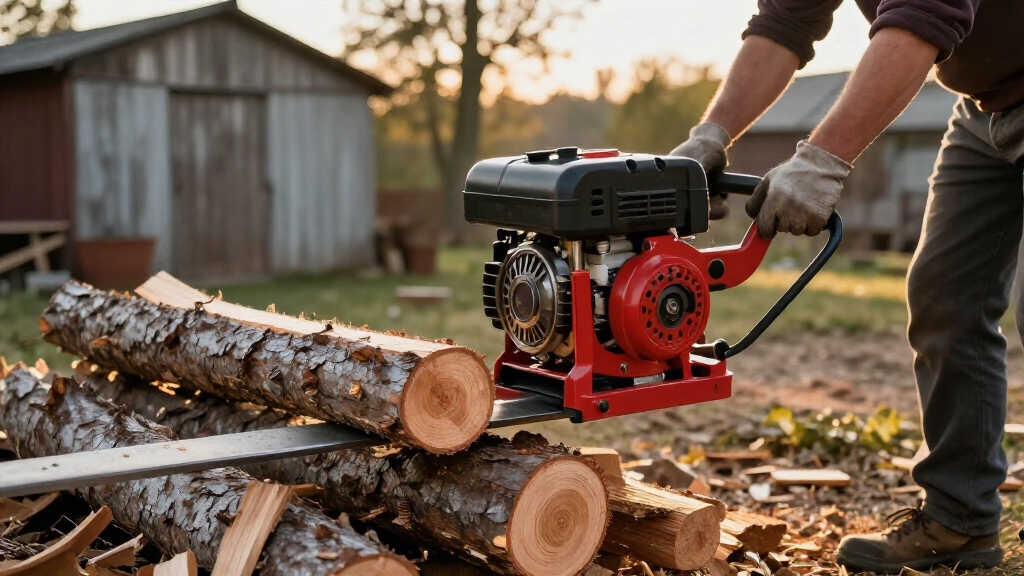
I compared the 13 gas-powered wood splitters by splitting-force class, engine size, operating position, mobility, and workload fit. I also weighed details that can change how much physical effort a job takes, including auto-return systems, log lifts, and multi-way wedges. Since advertised tonnage alone does not describe a complete buying experience, I treated handling and setup features as meaningful differences rather than minor extras.
The ranking favors useful capability across a range of firewood jobs, not the highest force rating by itself. The SuperHandy 27-ton leads for its combination of force, vertical operation, and towable format; higher-capacity machines rank better for demanding work but make more sense for buyers who can use that extra capability. Portable 20-ton models remain compelling for lighter workloads and tighter storage, while similarly specified options are separated by their stated features and intended role. Where the product details do not establish a clear advantage, I avoid treating a small specification difference as proof of better performance.
Factors to Consider When Choosing Gas Powered Wood Splitters
Before choosing a splitter, match the machine to the wood you actually process and the place where you process it. Capacity, handling, and transport affect one another: a more powerful machine may reduce difficulty with challenging rounds, but it can also take more space and effort to move. These broader checks can help you avoid paying for capability your firewood routine will not use.
Match Splitting Force to Your Wood, Not a Guess
Think about the toughest rounds you regularly split, rather than the easiest logs in the pile. Knots, grain direction, species, and seasoning can make two rounds of similar size behave very differently. A higher tonnage class can provide more headroom for stubborn wood, but a large rating does not remove the need to work within the machine’s stated log limits. If your supply is mostly manageable rounds for home heating, a 20-ton machine may be a better fit than a heavier model. Buyers processing mixed, knotty, or large wood more often may prefer a higher-capacity option. Avoid choosing on the largest number alone; the extra force is useful only when your woodpile calls for it.
Treat Horizontal and Vertical Modes as a Handling Choice
Horizontal operation is familiar and can work well when rounds are small enough to lift onto the beam comfortably. Vertical mode lets you bring heavier rounds to the wedge and split them without hoisting each one into position. That can reduce a major source of strain during a long session, although the operator still needs room to position wood safely. Consider the heaviest round you expect to handle, not just what the splitter can technically accept. A machine with both orientations gives you more ways to manage varied logs, while a horizontal-only model may be simpler for lighter material. Do not mistake vertical capability for a substitute for safe lifting and stable placement.
Plan for Transport, Storage, and Where You Will Split
A gas engine makes a splitter useful away from electrical outlets, but it does not make every machine easy to move. Towable models suit buyers who need to relocate equipment between a storage area and a work site, while portable designs favor shorter moves and compact staging. Check the route to your splitting area for soft ground, slopes, gates, and tight turns before selecting a larger frame. Storage space matters too: a high-capacity machine can be difficult to park or protect if the shed is already crowded. Confirm how the product is intended to be moved rather than assuming that a transport feature makes it suitable for every road or vehicle. Choose around your actual work area, not an idealized one.
Decide Whether Labor-Saving Features Earn Their Place
Auto-return, log lifts, and multi-way wedges can change work pace and effort, but their value depends on how much wood you split. Auto-return can reduce repeated ram handling; it does not eliminate the need to position and clear each round. A log lift may matter to buyers working with heavy pieces in volume, while a multi-way wedge can reduce repeated passes on suitable logs. These features add moving parts and may call for more attention during setup and maintenance. For occasional firewood preparation, a simpler machine may be easier to justify and manage. For sustained processing, a labor-saving feature can matter more than a small increase in rated force.
Compare the Whole Ownership Routine, Not Just the Engine
Gas models need a plan for fuel, engine upkeep, storage, and safe operation, so consider where those tasks fit into your routine. Engine displacement is one specification, but it does not by itself tell you how quickly a splitter will handle every type of wood. Read the product manual for the recommended maintenance schedule, hydraulic-fluid requirements, and operating limits before buying. Also check the frame, wedge, controls, and access to service items; dependable upkeep matters more over time than a headline number. Buyers who split only a small seasonal pile may value straightforward maintenance and storage above added features. A machine used regularly may justify more capability if its upkeep and setup suit the owner.
Use Log Size and Work Volume to Set Your Budget
Estimate both the diameter of your rounds and how many you process in a typical session. A machine that handles the largest occasional round may be unnecessary if most of the workload is smaller, easy-splitting wood. Conversely, a lower-capacity pick can turn a large, knotty pile into a slow, tiring job if it is routinely pushed beyond its comfort zone. Log lifts and multi-way wedges are most relevant when volume makes repeated handling a burden; they are less persuasive for a few rounds each year. Check stated maximum log dimensions alongside tonnage, since both shape what the splitter can accept. Spend for a real bottleneck in your work, not a feature that sounds impressive on paper.
Frequently Asked Questions
Is a 20-ton gas splitter enough for heating a home with firewood?
It can be enough when your rounds are within the machine’s stated size limits and are not regularly knotty or difficult to split. The 20-ton choices in this lineup emphasize portable, practical setups, making them plausible for routine home firewood work. Wood species, grain, moisture, and knots all affect how a round splits, so tonnage alone cannot promise a particular result. If your supply includes many large or stubborn rounds, a higher-capacity class gives you more headroom. Check your typical round dimensions before deciding.
Should I choose a vertical-capable splitter if I work alone?
Vertical capability can help when rounds are too heavy or awkward to lift onto a horizontal beam. You can position a heavy round at the splitting point instead of raising it to beam height, which may reduce strain during repeated work. It does not remove the need to move, steady, and clear rounds safely, and the work area must allow stable positioning. Buyers who mostly split smaller pieces may not gain enough from the feature to make it a priority. Consider your heaviest regular rounds and how you currently move them.
Does a higher tonnage rating always mean a faster splitter?
No. Tonnage describes rated splitting force, not the complete pace of a work session. Cycle time, log handling, return operation, and how easily you can position the wood also affect how much work gets done. A lower-rated machine with a useful auto-return feature may feel more efficient for repeated manageable rounds, while a higher-capacity model is aimed at tougher wood. Compare the specifications that match your work instead of using tonnage as a speed shortcut.
When is a log lift or multi-way wedge worth choosing?
These features make the most sense when you process a high volume of wood and repeated lifting or multiple passes slow the job. A log lift targets the effort of raising heavy rounds, while a multi-way wedge can split suitable pieces in more than one direction. Their benefit depends on the shape and size of your wood and how often you work. For occasional small piles, a simpler splitter may be easier to store and maintain. Check the operating instructions and safety requirements for each attachment or wedge before relying on it.
How should I decide between a portable 20-ton model and a towable higher-capacity splitter?
Start with where you split and how often the machine needs to move. A portable 20-ton option suits buyers who prioritize compact handling and work with manageable rounds; a towable higher-capacity model is a better match for demanding wood and relocation between work areas. Consider access, storage, ground conditions, and the method you will use to move the splitter. Towable does not mean suitable for every vehicle or public road, so follow the maker’s transport instructions. If your work is mostly in one spot, paying for mobility you rarely use may not help.
Conclusion
For the broadest mix of capability and flexibility, I recommend the SuperHandy 27-Ton as best overall, especially for buyers who value vertical operation and towable mobility. For best value, look first at the 20-ton gas models if your rounds are manageable and portability matters more than extra force; the BILT HARD 18-ton is another lower-capacity option for lighter workloads. Buyers seeking a best premium fit for demanding work should compare the BILT HARD 40-ton with the Full Boar 33-ton, while the BILT HARD 35-ton’s log lift and multi-way wedges suit high-volume processing. For beginners, I would favor a manageable 20-ton model that fits the wood and work area rather than starting with the largest machine. If compact mobility is the specific need, the Landworks Portable 20-Ton stands out; if heavy rounds and reduced lifting are the priority, choose a vertical-capable model. Match the splitter to your wood, moving needs, and work volume before deciding.