TL;DR

Get business pricing on tools and workshop supplies
- Business-only prices and quantity discounts
- Tax-exempt purchasing
- Multiple users, one account, clear invoices
A Hunker report describes changing a bench grinder’s standard abrasive wheel for a wire wheel before cleaning rust from tools. It recommends matching the brush material to the metal and wearing hand and eye protection; the report does not provide a date or independently verify the method’s results.
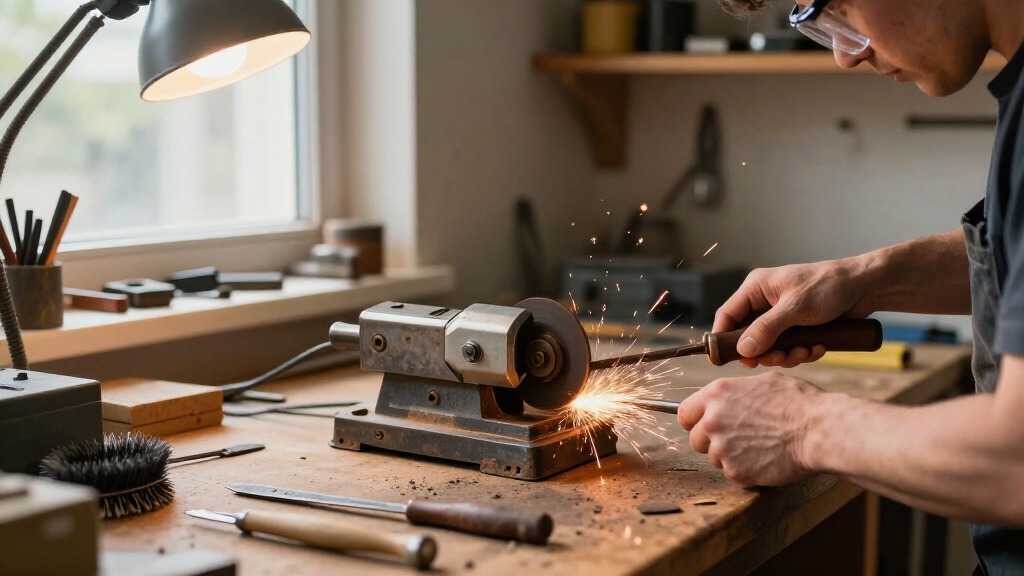
Hunker has published instructions for removing rust from metal tools with a bench grinder, advising users to replace the machine’s standard abrasive wheel with a wire-wheel attachment before starting. The method matters because a grinder’s ordinary wheel is designed for cutting and sharpening, while the report says a wire wheel can brush rust from the tool’s surface; it also warns users to wear eye and hand protection.
The report says a typical bench grinder uses a motor to spin two wheels and is commonly used to sharpen tools such as chisels, shovels and garden hoes. For rust removal, it says the standard wheel should first be removed. The described process is to take off the wheel cover, loosen the nuts and washers securing the wheel to the spindle, and install a compatible wire wheel. Users should follow the grinder and attachment manufacturers’ instructions for installation and operation.
Hunker identifies steel, nylon and brass as common wire-brush materials, but they are not interchangeable for every job. Its guidance associates steel brushes with hard metals such as iron and brass with softer metals such as copper or aluminum. It says nylon is suited to materials including wood, furniture or shoes, rather than presenting it as a metal-rust brush. The correct attachment depends on the tool’s material and the manufacturer’s specifications.
Once the attachment is fitted, the report says to start the grinder and move the rusty tool gently from side to side against the wheel, keeping it level. It warns that small pieces of wire can break off and fly from the wheel. The duration depends on the amount of rust, and the report does not give a specific speed, pressure, or time. Users should not assume that brushing will restore metal that has been deeply corroded or weakened.
Why The Wire Wheel Matters
Using the wrong wheel can change the job from surface cleaning to material removal. Hunker says standard abrasive grinder wheels are intended for cutting and sharpening, while a wire wheel’s bristles are meant to scrub away rust. Choosing an attachment suited to the metal may help avoid unnecessary abrasion, but the report does not establish that every wire wheel is safe for every tool or grinder.
Rust is more than a cosmetic issue when it progresses: the report explains that iron reacts with water and oxygen to form iron oxide, and says unchecked corrosion can damage a tool’s structural integrity. Removing surface rust may help maintain a tool, but inspection remains necessary. A tool with deep pitting, cracks, or substantial metal loss may not be made safe or serviceable simply by cleaning its surface.
The safety warning is also material to the decision to use a grinder. A powered wheel can throw debris, and the report specifically calls for eye and hand protection. Operators should use the guards and other safety measures specified by the machine and attachment makers, keep loose items away from rotating parts, and stop if the wheel or tool behaves unexpectedly.
bench grinder wire wheel attachment
As an affiliate, we earn on qualifying purchases.
As an affiliate, we earn on qualifying purchases.
Choosing A Brush For The Metal
The source is a Hunker how-to report, not a product test or a safety standard. It contrasts bench grinders with angle grinders, describing bench grinders as less mobile but useful for sharpening and rust removal when fitted with an appropriate wheel. The article also notes that vinegar is another commonly used rust-removal option, but it does not compare the cost, effectiveness, or risks of chemical and mechanical methods.
The distinction between a grinding wheel and a wire wheel is central to the instructions. Hunker describes standard wheels as compressed fiberglass and abrasive grains, designed to cut and sharpen rather than remove only a fine surface layer. Its suggested wire-brush choices are material-based: steel for iron, brass for softer metals such as copper or aluminum, and nylon for nonmetal surfaces such as wood or shoes. Before purchase or installation, users need to check that the wheel is compatible with their grinder’s spindle, speed rating and guards.
“You’ll want to use a wire wheel instead to remove rust from your tools.”
— Hunker report
rust removal wire brush for bench grinder
As an affiliate, we earn on qualifying purchases.
As an affiliate, we earn on qualifying purchases.
Limits Of The Rust Removal Advice
The report does not specify a grinder speed, a minimum distance or pressure, or a test for deciding when the rust has been removed. It also does not provide a detailed procedure for checking wire-wheel condition, securing different tool shapes, or protecting a tool’s cutting edge and finish. Those details can vary by grinder and attachment, so users should consult the relevant manufacturer instructions rather than infer settings from the general description.
There is no independent test or evidence in the source showing how much rust the method removes, how long a particular job takes, or whether a cleaned tool is safe to use afterward. The report’s suggestion that a tool may look like new is not a guarantee of restoration. The extent of corrosion, the tool’s metal and its condition after cleaning remain case-specific.
As an affiliate, we earn on qualifying purchases.
Check Compatibility Before Grinding
Before using the method, identify the tool’s material and select a wire wheel approved for both that metal and the grinder. Check the wheel’s rated speed and fit, reinstall required guards, and follow the grinder maker’s directions for changing attachments. Wear eye and hand protection as the source advises, and stop if the wheel is damaged or the tool cannot be held securely.
After brushing, inspect the tool for remaining corrosion, pitting, cracks or loss of metal. If its structural condition is uncertain, do not rely on surface cleaning alone to make it fit for use. The source gives no follow-up testing schedule or additional treatment procedure, so those steps depend on the tool and its manufacturer’s guidance.
bench grinder accessories for rust cleaning
As an affiliate, we earn on qualifying purchases.
As an affiliate, we earn on qualifying purchases.
Key Questions
Can I use a bench grinder’s standard wheel to remove rust?
Hunker recommends replacing the standard abrasive wheel with a wire wheel. It describes ordinary grinder wheels as intended for cutting and sharpening, not rust brushing.
Which wire wheel should I use on a metal tool?
The report associates steel brushes with iron and brass brushes with softer metals such as copper or aluminum. Check the tool and attachment specifications before use; the article does not list a wheel for every metal or grinder.
What safety equipment does the report recommend?
It calls for eye and hand protection because pieces of wire can fly from the rotating wheel. Also follow the grinder and wheel manufacturers’ operating and guarding instructions.
Will wire-brushing make a badly rusted tool safe again?
The source does not establish that. It says unchecked rust can harm a tool’s structural integrity, but provides no test for determining whether a corroded tool is safe. Inspect for pitting, cracks and metal loss after cleaning.
Source: rss
Fall yard work Picks
leaf blowers
As an affiliate, we earn on qualifying purchases.