
TL;DR

Get tools and workshop supplies delivered free — and shop member deals
- Fast, free delivery on millions of items
- Access to Prime Big Deal Days deals on October 6–7
- Prime Video, Amazon Music and more included
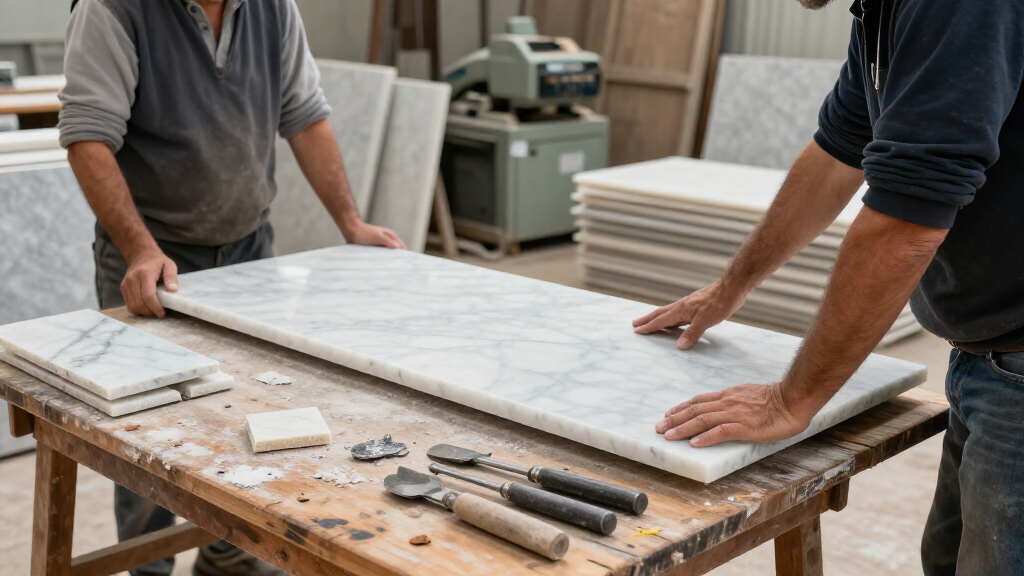
A Livingetc report describes how visiting local stone yards can give renovators access to leftover marble and other stone for smaller home projects. Designers cited in the report used offcuts for floor repairs, shelves, mirror trims and decorative details, though availability, costs and suitability vary.
Livingetc has highlighted the use of stone-yard offcuts—leftover pieces from other jobs—as an alternative to buying full slabs for home renovations. The report describes homeowners and designers using small amounts of marble and other stone for features such as shelves, mirror trims and floor repairs, a practical option for people seeking natural-stone details without covering large areas.
The report’s author says local stone yards may have small or irregular remnants left over from larger projects. These pieces can be cut to suit a particular use, although stone yards often cater primarily to trade customers. The article advises prospective visitors to call ahead if they are unsure whether a yard sells to the public or can accommodate a small order.
Examples in the report show a range of applications. In a renovation by Australian practice Other Architects, colorful marble offcuts were used to patch areas of flooring rather than resurfacing an entire apartment. The article also describes stone used for floating bathroom shelves and custom mirror trims in a small apartment designed by SMAC Studio, and as a detail in a bespoke joinery project by Sally Caroline.
The author says they have bought offcuts in several materials, including marble, granite, travertine and quartz, for uses ranging from windowsills and shelves to a kitchen-island counter and coffee tables. Those are personal examples, not a guarantee that every yard will have suitable pieces or offer cutting and finishing services.
Smaller Stone Details, Less Material
For renovators, the approach may make natural stone usable in smaller, targeted applications where the cost or scale of a full slab would not make sense. A remnant can provide a focal point or practical surface without requiring a large quantity of material, though the actual savings depend on the stone, dimensions, preparation and installation.
There is also a potential reuse benefit. The report describes pieces that would otherwise be discarded being incorporated into new work. That is a reuse opportunity, but the article does not quantify how much material is diverted from waste or compare the environmental impact of offcuts with other options. Stone still needs to be transported, cut and installed.
Design director Sally Knibbs of Sally Caroline says smaller applications can have an effect without extensive coverage. She describes natural stone used with restraint as a way to add depth and contrast. That is a design perspective rather than a measurable outcome, and the examples show how appearance depends on the particular project and material.
As an affiliate, we earn on qualifying purchases.
How Designers Put Remnants to Use
The report frames stone-yard visits as an alternative to sourcing only through showrooms or ordering a full slab. Yards may store pieces left after other projects, including shapes that are awkward to use elsewhere. The writer says these spaces can be welcoming to homeowners, while noting they are often oriented toward trade buyers; checking access and services before visiting can save a wasted trip.
The featured projects illustrate different reasons to use a remnant. Other Architects used assorted marble pieces to mark and repair floor areas. At a Bondi Beach-adjacent office project by Alexander & CO, a small feature in green, gray and blush marble was chosen to set the tone of an entryway. In the SMAC Studio apartment, shelves and mirror trims connect a small bathroom to its existing tile scheme. These are project-specific examples, not a standard recipe for every home.
“We believe natural stone can be equally impactful when used with restraint.”
— Sally Knibbs, design director of Sally Caroline
As an affiliate, we earn on qualifying purchases.
Availability and Costs Vary by Yard
The source does not identify specific yards, prices, typical savings or the availability of particular stone types. It also does not say whether each yard sells remnants directly to homeowners, or whether cutting, edge finishing and delivery are included. Stock and services will vary, so readers would need to check with local suppliers before planning around a particular piece.
The report offers design examples and the author’s experience, not a comparison of durability, maintenance or environmental impact across stone types. Whether an offcut suits a countertop, wet area or other use depends on the material and its condition, along with the fabrication and installation required.
As an affiliate, we earn on qualifying purchases.
Check Stock Before Planning
The practical next step for anyone interested is to contact nearby stone yards and ask whether they sell offcuts to the public, what sizes and materials are currently available, and whether they provide cutting or finishing. Taking measurements and explaining the intended use can help establish whether a remnant is suitable. Availability is likely to change as yards’ leftover stock depends on other projects.
Homeowners should confirm the full cost of fabrication and installation before committing, rather than comparing only the price of a stone piece. The Livingetc report does not announce a new industry program or a change in supplier policy; it presents offcuts as a sourcing idea supported by the author’s experience and the cited design projects.
As an affiliate, we earn on qualifying purchases.
Key Questions
What is a stone-yard offcut?
An offcut is a leftover or irregularly shaped piece of stone from another job. A yard may have remnants in materials such as marble, granite, travertine or quartz, but its stock changes over time.
Can homeowners buy directly from a stone yard?
Some yards may sell to homeowners, but the report says many are oriented toward trade customers. Call before visiting to ask about public access, minimum orders and available services.
What can marble offcuts be used for?
The report gives examples including shelves, windowsills, mirror trims, floor repairs and decorative features. Suitability depends on the piece’s size, condition, material and intended use.
Are offcuts always cheaper or more sustainable?
The report does not provide price comparisons or environmental measurements. Reusing a leftover piece may avoid discarding it, but total costs and environmental effects depend on sourcing, cutting, transport and installation.
Source: rss
Fall yard work Picks
leaf blowers
As an affiliate, we earn on qualifying purchases.