
TL;DR

Get business pricing on tools and workshop supplies
- Business-only prices and quantity discounts
- Tax-exempt purchasing
- Multiple users, one account, clear invoices
Felling a backyard tree safely hinges on precise notch cuts, proper hinge control, and clear escape routes. Planning ahead and understanding these key steps reduces risks significantly, especially for small to medium trees.
Always plan your escape routes before making the final cut. Two paths at 45 degrees, at least 1.5 times the tree’s height, keep you safe.
A 70-degree notch cut on the fall side and a hinge about 10% of the tree’s diameter give you control and predictability.
Hinges act like safety leashes, guiding the fall and preventing sudden kicks or branches snapping unexpectedly.
Don’t rush the cuts. Precise, clean cuts and proper angles reduce accidents and ensure a smoother fall.
For large or leaning trees, hire a certified arborist. Safety’s not the place to cut corners.
How to Make the Perfect Notch Cut to Control the Fall
Making the right notch cut sets the tone for a safe, controlled fall. It’s the first step that guides the tree’s descent.
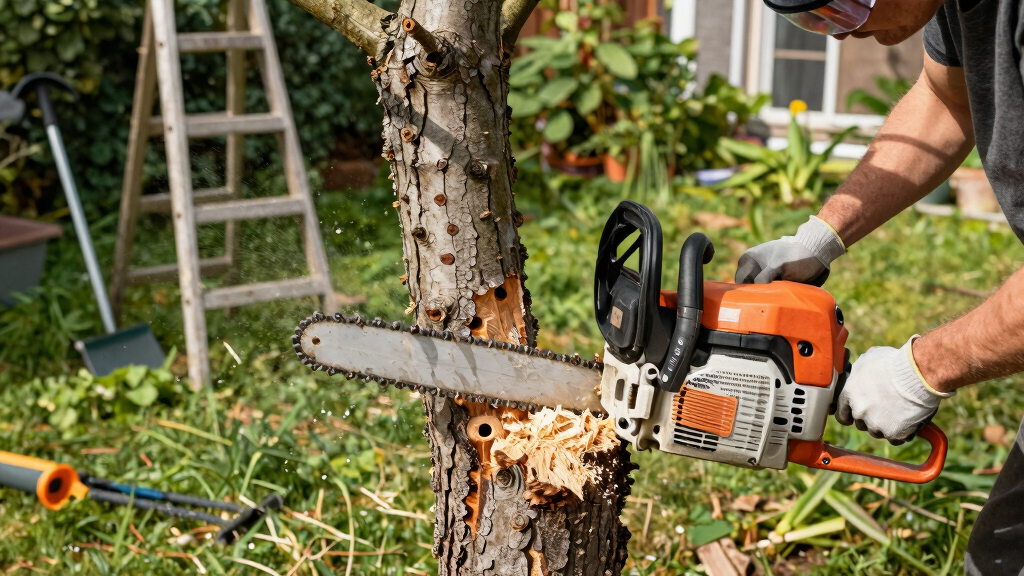
The most common notch is a 70-degree wedge cut on the side facing your fall direction. This creates a clean wedge that directs the tree where you want it to go. For example, if the tree leans slightly toward the backyard, your notch should be on that side, cutting about a quarter to a third of the tree’s diameter deep. This wedge acts like a guiding ramp, gently tipping the tree in the right direction.
Imagine a 24-inch diameter oak—your notch should be roughly 6 to 8 inches deep, cut at a 70-degree angle. Use a sharp chainsaw, and don’t rush it. Take your time to make a smooth, precise cut. Remember, a clean notch ensures predictable movement, which is critical for safety.
Why does this matter? A well-formed notch creates a predictable path for the tree’s fall, reducing the chance of unexpected kicks or branches snapping off unpredictably. It also minimizes the risk of the tree splitting or falling in an unintended direction, which could cause property damage or injury. The tradeoff is that if your notch is too shallow or too steep, it might not guide the tree properly, leading to uncontrolled movement and increasing danger. So, precision in this step is crucial for safety and control.
As an affiliate, we earn on qualifying purchases.
Why Hinges Are Your Best Friend in Tree Felling
The hinge is the uncut wood between your notch and the back cut. It acts like a hinge on a door, controlling how and when the tree tips over. For safety and control, aim for a hinge width of about 10% of the tree’s diameter. This means if your tree is 20 inches across, your hinge should be about 2 inches thick.
A good hinge holds the tree until the moment you want it to fall, preventing sudden, unpredictable movement. It also helps guide the fall gently, reducing the risk of branches snapping off unexpectedly or the tree kicking back. To make a hinge, cut about 80% of the way through the tree from the back side, just below the notch. This leaves a strip of wood that acts like a spring, releasing energy smoothly when the tree tips.
Why is this important? The hinge controls the speed and direction of the fall. If the hinge is too thin, the tree may fall too quickly or unpredictably, increasing risk of injury or property damage. Conversely, if it’s too thick, the tree might not fall at all, leaving you stuck. Achieving the right hinge thickness is a balance—too little can cause dangerous kicks, too much can prevent the fall altogether. This is why understanding hinge control is fundamental; it’s your safety leash that ensures a controlled, predictable fall. Practice and experience help perfect this skill, making it a critical component of safe tree felling.
professional tree felling notch kit
As an affiliate, we earn on qualifying purchases.
As an affiliate, we earn on qualifying purchases.
Plan Your Escape Routes Before You Make the Final Cut
Escape routes are your safety nets. They’re clear paths you move to immediately after cutting the tree, at a 45-degree angle away from the fall direction.
Picture the tree leaning slightly toward an open field. You should have two routes—diagonally to the left and right, away from the fall line. Make sure these routes are free of debris, branches, or obstacles. A good rule: your escape route should be at least 1.5 times the height of the tree to give you enough space to clear the fall zone.
Why is this important? Having well-planned escape routes minimizes the risk of injury if the tree falls unexpectedly or if the fall doesn’t go as predicted. It also ensures you’re not caught off guard or trapped in a dangerous position. For example, if a 30-foot-tall tree is falling, your escape routes should extend at least 45 feet away from the base, giving ample space to move quickly and safely. Moving swiftly and calmly to these routes once the final cut begins is critical; hesitation can be dangerous. Remember, the goal is to be out of the fall zone before the tree hits the ground, reducing the chance of injury or entrapment.
As an affiliate, we earn on qualifying purchases.
Step-by-Step: Making the Final Cut and Watching It Fall
The final cut releases the tree, so precision and timing matter. Start by ensuring your escape routes are clear and everyone is in position.
Cut the back of the tree just above the hinge, about 1/10th of the diameter from the hinge. This cut should be smooth and controlled, as it’s the moment of release. Watch for cracks, creaks, and listen for popping sounds—these signals the tree is about to fall. Once the cut is complete, step back along your escape route immediately.
Why is this important? The timing of this cut determines how predictably the tree falls. If the hinge and notch are correctly formed, the tree should fall in a controlled manner, minimizing risks. If the tree begins to lean unexpectedly or crack loudly, it indicates instability. In such cases, do not try to stop the fall—move quickly to your escape routes. Never turn your back on a falling tree. The safety of everyone involved depends on your ability to act swiftly at this critical moment.
As an affiliate, we earn on qualifying purchases.
Frequently Asked Questions
Can I fell a tree myself without professional help?
Yes, for small, manageable trees with proper knowledge and equipment. For large or complex trees, hiring a professional is the safest choice. Never underestimate the risks involved with big or leaning trees.What are the biggest risks involved in tree felling?
Unexpected tree movement, falling branches, equipment failure, and misjudging the fall direction are common dangers. Proper planning, safety gear, and precise cuts minimize these risks.How do I determine the safest direction for the tree to fall?
Assess the tree’s natural lean, wind direction, and surrounding obstacles. Aim for an open space where the tree can fall without hitting structures or power lines. Always plan your notches and hinges accordingly.What if the tree is leaning toward a house or power line?
It’s best to consult a certified arborist. Attempting to fell such a tree without expertise can cause property damage or injury. Professionals have the equipment and experience for complex situations.How do I make the notch cut correctly?
Cut a 70-degree wedge on the side facing the fall, about one-quarter to one-third of the tree’s diameter deep. Use a sharp chainsaw and make smooth, controlled cuts for best results.Conclusion
Felling a backyard tree is a mix of science and skill. Focus on making precise notch cuts, controlling the hinge, and planning your escape routes. When in doubt, call in the pros—your safety and your property depend on it. A calm, deliberate approach turns a risky job into a manageable one. Remember, a safe fall beats a dangerous accident every time.Fall Picks
fall essentials
As an affiliate, we earn on qualifying purchases.