TL;DR

Get business pricing on tools and workshop supplies
- Business-only prices and quantity discounts
- Tax-exempt purchasing
- Multiple users, one account, clear invoices
Choose a chainsaw bar length at least 1.5 times the tree’s diameter for safe, effective cutting. Longer bars cut larger logs but require more skill. Match your gear to the task for best results.
Picture this: you’re standing in your yard, eyeing a thick, 12-inch oak branch. You grab your chainsaw, but aren’t sure if your 16-inch bar is enough. Choosing the right bar length isn’t just about convenience — it’s about safety, power, and making clean cuts.
In this guide, you’ll learn how to match your chainsaw’s bar to the tree diameter, so every cut feels smooth and controlled. Whether you’re pruning, felling, or bucking logs, knowing the right size makes all the difference.
Always measure the tree or log diameter before choosing your bar length.
Use the 1.5x rule: bar length should be at least 1.5 times the tree’s diameter.
Longer bars are better for big trees but require advanced skills and safety precautions.
Match your chain tension and lubrication to your bar size for optimal performance.
Stay updated on new safety features and tech to improve your cutting experience.
Why Bar Length Matters More Than You Think
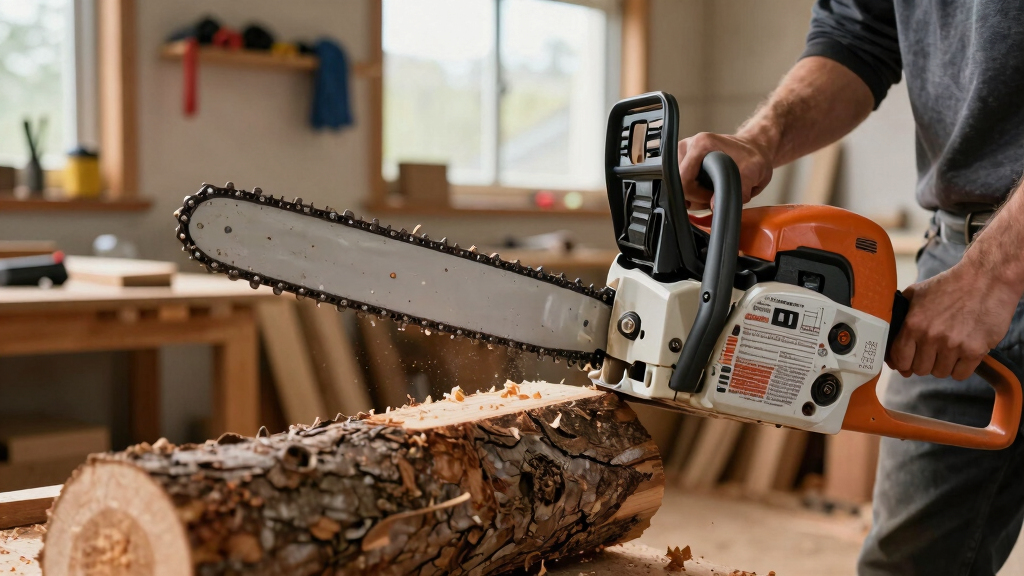
Ever tried to cut a log with a tiny saw? It’s frustrating. A chainsaw’s bar length directly impacts how big a tree or log you can handle. The longer the bar, the larger the diameter you can cut in a single pass. This isn’t just about convenience; it influences safety, control, and the quality of your cuts.
Longer bars allow you to cut through larger logs without repositioning the saw multiple times, saving time and effort. However, they also demand greater control and physical strength. An ill-matched bar can cause binding, kickback, or loss of control, leading to accidents. Think of it like trying to cut a tree with a butter knife — it’s inefficient and dangerous.
For example, a 14-inch bar is suitable for small branches and logs up to 8 inches in diameter, providing good maneuverability. But for a 20-inch oak trunk, you’ll need at least an 18-20 inch bar to handle the size safely and effectively. Choosing the right length balances the need for reach with your ability to control the saw.
Understanding this balance is crucial: a longer bar offers greater reach but requires more skill and strength, increasing the risk of accidents if you’re inexperienced. Conversely, a shorter bar is easier to handle but limits the size of logs you can process efficiently. Recognizing these tradeoffs helps you select the optimal tool for your specific needs and skill level.
As an affiliate, we earn on qualifying purchases.
How to Match a Chainsaw Bar to Tree Diameter in 3 Steps
- Measure the tree or log diameter. Use a tape measure or calipers to get an accurate size, from bark to bark. Measure at chest height or just below the branches, as this provides a consistent reference point. This measurement is critical because it determines the maximum log size you can handle safely and efficiently. An underestimated diameter might lead you to choose a bar that’s too short, causing multiple cuts and increasing fatigue. Overestimating can make control difficult and unsafe. Accurate measurement ensures you select a bar that matches the actual size, optimizing safety and productivity.
- Apply the 1.5x rule. Multiply that diameter by 1.5. For a 12-inch tree, you’re looking at a bar length of around 18 inches. For 6 inches, a 9-inch bar might suffice, but most saws don’t come that small, so choose the closest larger size. This rule provides a safety margin, ensuring the bar is long enough to handle the log’s size comfortably. It also accounts for the fact that a longer bar can reach around or into the log more effectively, reducing the need for awkward repositioning. However, going significantly beyond this ratio can make the saw harder to control, especially for less experienced users. The goal is to find a balance where the bar length is sufficient without compromising safety or maneuverability.
- Select the right bar. Choose a bar that matches or exceeds that size, but doesn’t go overboard. For safety and control, don’t push beyond 20 inches unless you’re experienced with heavy-duty saws. Larger bars are more powerful but demand greater skill, strength, and safety precautions. If you select a bar that’s too long for your experience level, you risk kickback and loss of control. Conversely, a bar that’s too short might require multiple cuts, increasing time and effort, and possibly causing more wear on your equipment. Always consider your skill, the typical size of logs you work with, and the safety margin when choosing the appropriate bar length.
For instance, if you’re felling a 10-inch tree, a 15-inch bar is perfect. It gives you enough reach without sacrificing maneuverability. Remember, choosing the right size isn’t just about measurement — it’s about understanding your own skills and the specific task at hand. A well-matched bar enhances safety, reduces fatigue, and improves cutting efficiency.
As an affiliate, we earn on qualifying purchases.
Compare Common Bar Lengths and What They’re Best For
| Bar Length | Best For | Tree Diameter Range |
|---|---|---|
| 14 inches | Small pruning, light-duty cutting | Up to 8 inches |
| 16 inches | General yard work, small logs | Up to 10 inches |
| 18 inches | Versatile, medium logs | Up to 12 inches |
| 20 inches | Felling larger trees, bucking | 12-16 inches |
| 22 inches and above | Heavy-duty felling, large logs | 16 inches and more |
Imagine trying to fell a 15-inch oak with a 14-inch saw. It’s like trying to saw through a brick wall with a butter knife. Larger bars make big jobs easier but demand more skill and strength. The choice of bar length should be aligned with the typical size of logs or trees you work with, but also consider your experience level and the control you need. An overly large bar for small tasks can be unwieldy and dangerous, while a too-small bar for big jobs can lead to inefficient work and increased fatigue. Striking this balance is key to efficient, safe operation.
As an affiliate, we earn on qualifying purchases.
Safety Tips When Using Longer Bars
Longer bars cut bigger logs, but they also come with added risks. More leverage, more kickback, and more control needed. Always wear PPE — helmet, gloves, eye protection, and steel-toed boots. Longer bars amplify the forces involved in cutting, which increases the potential for kickback — a sudden and forceful force back toward the operator. Proper safety gear acts as your first line of defense against injuries, especially because longer bars can cause larger, more unpredictable kickbacks if not handled correctly.
Maintain a firm stance. Keep your feet shoulder-width apart, and never lean into the saw. This stance provides stability and helps absorb the shock of kickback or sudden movements. Make sure your chain is sharp and properly lubricated; a dull chain requires more force, increasing kickback risk and reducing control. Practice on smaller logs first to develop confidence and technique with longer bars, gradually increasing complexity as your skills improve. Remember: a longer bar doesn’t mean more safety — it means more responsibility. Proper safety gear, correct technique, and experience are essential to mitigate the increased risks associated with longer bars.
As an affiliate, we earn on qualifying purchases.
Latest Tech and Trends in Chainsaw Bars
Modern bars use lightweight materials like aluminum alloys and composites, reducing fatigue during long cuts. Some chainsaws now include electronic safety features like chain brakes and anti-kickback systems. Electric and battery-powered models are closing the gap with gas saws, offering bars up to 20 inches or more.
Eco-friendly chainsaws with low emissions are becoming more common, with new bar and chain systems designed for efficiency and durability. These innovations make it easier to handle larger logs safely and with less effort.
For example, a recent electric chainsaw with a 20-inch bar offers impressive power without the noise and fumes of a gas engine — perfect for residential work.
Staying informed about these technological advances helps users select equipment that enhances safety, efficiency, and ease of use. As technology evolves, so do the possibilities for safer, more effective cutting, especially for larger or more demanding projects.
Frequently Asked Questions
How do I accurately measure tree diameter for my chainsaw?
Use a tape measure or calipers to measure the tree at chest height or just below the branches. Wrap it around the trunk to get the widest point. This measurement helps you pick the right bar length for safe, efficient cuts.
Can I safely cut a tree larger than my bar length?
Yes, but only if you make multiple cuts from different angles. It’s safer and more efficient to match or slightly exceed the 1.5x rule, rather than forcing a small bar on a big job. For large trees, consider renting or using a heavier-duty saw.
Is it okay to use a longer bar for pruning small branches?
No, longer bars are harder to control and unnecessary for small, delicate cuts. Stick to shorter bars for pruning and small jobs, and reserve longer ones for felling and bucking larger logs.
How often should I replace my chainsaw chain?
Inspect your chain regularly. Replace or sharpen it when you notice dullness, slow cutting, or a lot of sawdust instead of chips. Proper maintenance keeps your bar and chain in top shape and extends their lifespan.
What safety gear is essential when using a chainsaw with a long bar?
Always wear a helmet, eye protection, gloves, steel-toed boots, and hearing protection. Long bars require more control, so proper PPE and training are key to avoiding accidents.
Conclusion
Matching your chainsaw’s bar length to the tree diameter isn’t just a guideline — it’s the foundation of safe, effective cutting. Think of it as choosing the right tool for the job, not the biggest or smallest, but the one that fits perfectly.
Remember, a well-matched bar makes every cut smoother, safer, and more satisfying. So next time you’re about to tackle a big log, double-check that your gear is up to the task. Your safety and your saw will thank you.
Fall yard work Picks
leaf blowers
As an affiliate, we earn on qualifying purchases.