
TL;DR

Get business pricing on tools and workshop supplies
- Business-only prices and quantity discounts
- Tax-exempt purchasing
- Multiple users, one account, clear invoices
Nozzle orifice size controls how much water can leave a pressure washer, which sets the working balance between flow and pressure. Match the orifice to your pump’s rated GPM and desired PSI; an opening that is too large weakens impact, while one that is too small creates excessive backpressure, heat, bypass operation, and equipment wear.
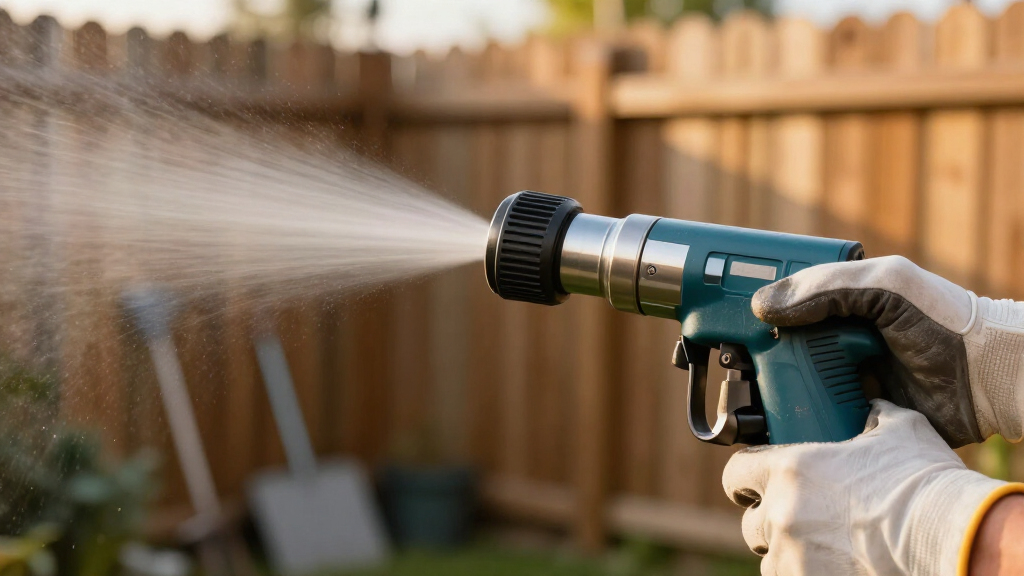
Your pressure washer can sound healthy, throw a clean-looking fan, and still lose a large share of its bite through an opening smaller than a shirt button. The engine growls, the hose stiffens, and water flashes across the concrete, yet the gray traffic film barely moves. That little opening may be quietly killing your cleaning power.
Most buyers study spray angle: red zero-degree, yellow 15-degree, green 25-degree, and white 40-degree. The overlooked number is nozzle orifice size, which controls how much water escapes and how much resistance the pump works against. According to Outdoor Pro Masters, a poor match can cut cleaning efficiency by up to 50%, depending on the machine, nozzle, surface, and soil load [1].
This guide gives you an overview of the pressure-and-flow relationship, along with a practical way to size, test, and replace nozzles. You will see why a tiny opening is not a free PSI upgrade, why worn tips make a good washer feel tired, and why a $10 nozzle check can save hours on a long driveway. The goal is simple: match the opening to the pump, then let the machine work at the output its hardware can safely sustain.
Match nozzle orifice size to both rated GPM and desired working PSI; spray color identifies angle, not hydraulic compatibility.
Treat pulsing, unloader chatter, engine lugging, rapid heating, and harsh recoil as signs that an orifice may be too small.
Replace a worn or oversized tip when pressure falls and cleaning takes repeated passes; grit can enlarge an opening even when damage is hard to see.
For a two-tip surface cleaner, divide total pump flow between both nozzles before using the manufacturer’s sizing chart.
Shut down the washer, relieve trapped pressure, wear PPE, and test a matched tip before adjusting an unloader or blaming the pump.
Nozzle Orifice Size: The Overlooked Spec That Quietly Kills Cleaning Power
A fan can look perfect while delivering a fraction of its expected bite. The hidden variable is the opening smaller than a shirt button—the metering point that balances pump flow, working pressure, heat, and impact.
Angle shapes the fan. Orifice meters the water.
Nozzle orifice size determines how much resistance water meets as it leaves the wand. Change the opening and you alter working PSI, delivered flow, recoil, heat, bypass behavior, and surface impact—even when the spray angle stays exactly the same.
A tollbooth at the end of a high-speed water highway
A correctly sized gate keeps flow moving under controlled pressure. Too wide means weak buildup; too tight means stacking pressure, heat, and diversion through the unloader.
Pump flow
Start with the machine’s rated GPM. The nozzle must be able to pass that flow at the intended operating pressure.
Target pressure
Choose usable working PSI within the ratings of the pump, engine, hose, gun, fittings, and accessories.
Spray angle
Red, yellow, green, and white identify pattern—not hydraulic compatibility. Angle and orifice are separate choices.
Surface risk
Wood, paint, seals, and soft masonry can be scarred by excessive local force even when the washer remains stable.
Pump sends flow
The pump moves water toward the nozzle at its designed delivery rate.
Orifice adds resistance
The opening meters escape and helps establish the system’s working pressure.
Jet delivers work
Balanced pressure and flow lift soil, carry debris, and reduce repeat passes.
Smaller is not a free PSI upgrade.
Restriction can raise pressure only until the system reaches its limits. Beyond that point, added resistance becomes bypass operation, heat, unstable regulation, and equipment wear—not useful cleaning force.
Too small
Harsh recoil, pulsing, engine lugging, or unloader chatter signal excessive resistance. The pump may divert more water and heat rapidly.
Correctly matched
A steady fan, stable engine note, predictable recoil, and rated flow near the selected pressure indicate a healthy hydraulic match.
Too large
The spray looks wet and full but lands like heavy rain. Pressure falls below target while stubborn traffic film remains in the pores.
One spray angle. Three very different machines.
A green 25-degree tip can be correctly matched, dangerously restrictive, or disappointingly soft. The color only describes the fan. The stamped orifice number determines whether the tip fits the pump’s flow-and-pressure requirement.
| Orifice choice | What you notice | What the machine experiences | Typical job result | Verdict |
|---|---|---|---|---|
| Too small | Harsh recoil, pulsing, lugging, or chatter | Excess backpressure, added bypass, rising heat | Narrow, risky impact that may scar surfaces or stress seals | ✗ Stop & verify |
| Correct match | Steady fan, stable note, predictable recoil | Rated flow near the chosen working pressure | Fast, even cleaning with controlled overlap | ✓ Best balance |
| Too large | Soft recoil and a wet but weak spray | Available flow with pressure below target | Slow removal, repeated passes, extra water use | ~ Replace tip |
Half the cleaning efficiency can disappear
A poor nozzle match may reduce cleaning efficiency by up to 50%, depending on the washer, tip, surface, and soil load.
Wet is not the same as clean.
A large tip can soak a 2,000-square-foot driveway while tire marks remain planted. Three weak passes use more time and water than one balanced pass.
Five signs the nozzle is stealing performance
These symptoms can resemble pump failure. Compare the installed tip with the manufacturer’s GPM-and-PSI chart, inspect for clogging or wear, and test a known matched nozzle before adjusting the unloader.
Weak impact
The spray wets dirt but will not lift it from your normal working distance.
Pressure pulsing
The gun kicks in a repeating rhythm instead of producing steady thrust.
Engine strain
The engine or motor note drops, surges, or changes sharply under trigger load.
Hot bypass water
The pump heats quickly because the unloader repeatedly diverts restricted flow.
Uneven results
Pale stripes, dark bands, and stubborn islands remain despite consistent overlap.
Grit turns the opening into a moving target.
Sand, rust flakes, and mineral particles act like liquid sandpaper. The opening grows almost invisibly, pressure slips, and a two-hour job drifts toward an afternoon.
Turn pump specs into a nozzle number.
Under the common pressure-washer sizing convention, the nozzle number represents flow capacity at a reference pressure. It is not automatically the physical hole diameter in millimeters.
Worked example: 4.0 GPM at 3,000 PSI
Use the equipment or nozzle manufacturer’s chart to select the nearest approved size without exceeding component ratings.
Split total flow before sizing multiple tips.
A two-tip surface cleaner does not give each nozzle the full pump output. Divide the total GPM across the two tips, then size each tip for its share.
Read the pump plate
Record rated GPM and maximum working PSI.
Choose working PSI
Stay within every component and surface limit.
Consult the chart
Match flow and pressure to the maker’s nozzle number.
Relieve pressure
Shut down, disconnect safely, and wear appropriate PPE.
Test the matched tip
Check fan stability, engine note, recoil, heat, and results.
From a tiny specification to the final clean
Know What the Tiny Orifice Actually Controls
Nozzle orifice size is the size or rated flow capacity of the opening that meters water leaving your pressure-washer wand. It directly controls flow resistance, which helps determine working PSI, delivered GPM, and how hard the water strikes a surface. Change that opening, and you change the machine’s entire hydraulic balance.
Think of the orifice as a tollbooth at the end of a highway. Your pump sends cars toward the booth at a fixed pace; a properly sized gate keeps traffic moving under controlled pressure. Make the gate too wide and cars drift through without much buildup; pinch it too tightly and traffic stacks up, heat rises, and the relief route starts carrying the load.
The label can cause confusion. Some cleaning nozzles list a physical diameter, often in millimeters, while standard pressure-washer tips commonly use a nozzle number based on flow at a reference pressure. A tip stamped 4.0 does not automatically have a 4.0 mm hole, so never measure or shop by the stamped number without checking its sizing system.
Imagine a 4 GPM gas washer fitted with the correct 25-degree tip. You squeeze the trigger and hear a steady hiss as a dense fan peels green algae from a retaining wall. Swap in a much larger orifice with the same spray angle, and the fan still looks right, but it lands like heavy rain rather than a sharp scraper.
The key aspects of nozzle selection are pump flow, target pressure, spray angle, and surface risk. Spray angle shapes the fan, while the orifice meters its water. You need both numbers because a 25-degree pattern can be suitable for a stained driveway at one orifice size and disappointingly soft at another.
pressure washer nozzle orifice size
As an affiliate, we earn on qualifying purchases.
As an affiliate, we earn on qualifying purchases.
See Why Smaller and Larger Openings Fail Differently
Nozzle orifice size changes cleaning performance in two opposite ways: an oversized opening drops working pressure, while an undersized opening forces excessive resistance against the pump. Neither mismatch gives you free cleaning power. The correct size lets the washer deliver its intended PSI and GPM together without constant bypassing, pulsing, or overheating.
| Orifice choice | What you notice | What the machine experiences | Typical job result |
|---|---|---|---|
| Too small | Harsh recoil, pulsing, engine lugging, or unloader chatter | Excess backpressure, more bypass operation, and added heat | A narrow, risky stream that may scar wood or damage seals |
| Correctly matched | Steady fan, stable engine note, and predictable recoil | Rated flow near the chosen working pressure | Fast, even cleaning with controlled overlap |
| Too large | Soft recoil and a wet but weak spray | High available flow with pressure below the target | Slow removal, repeated passes, and extra water use |
A smaller opening can raise pressure only until the pump, engine, unloader, hose, and fittings reach their limits. After that point, the extra restriction becomes heat and mechanical stress rather than useful impact. You may hear chatter-chatter from the unloader or feel the gun pulse in your hands as the system struggles to regulate itself.
A larger opening causes the opposite frustration. On a 2,000-square-foot driveway, you may watch the surface turn dark with water while black tire marks stay planted in the pores. Instead of one slow pass, you make three, burn another half hour, and send many extra gallons down the gutter.
More PSI is not always more cleaning. Effective cleaning comes from usable pressure, enough water flow to carry loosened dirt away, the right detergent, and safe dwell time.
The tradeoff matters when you compare electric and gas machines. A compact electric unit may advertise high peak PSI but deliver roughly 1.2 to 1.8 GPM, while a contractor-style gas washer may move 4 GPM or more. Fit both with random hardware-store tips, and the lower-flow machine usually shows the mismatch first.
pressure washer replacement nozzles
As an affiliate, we earn on qualifying purchases.
As an affiliate, we earn on qualifying purchases.
Catch the Five Signs Your Nozzle Is Stealing Performance
Nozzle orifice size is probably wrong or worn when your washer produces a weak fan, unstable pressure, unusual engine load, excessive bypass heat, or cleaning times that keep growing. These symptoms can resemble pump trouble, so compare the installed tip with the manufacturer’s GPM-and-PSI chart before buying expensive parts.
- Weak impact: The spray wets dirt but will not lift it at your normal distance.
- Pressure pulsing: The gun kicks in a repeating rhythm instead of pushing steadily.
- Engine or motor strain: The machine note drops, surges, or changes sharply when you pull the trigger.
- Hot bypass water: The pump heats quickly because the unloader keeps diverting flow.
- Uneven results: You leave pale stripes, dark bands, or stubborn islands despite consistent overlap.
Consider a homeowner cleaning 600 feet of vinyl fence. Last spring, each panel needed one detergent pass and one rinse; this year, the same washer leaves a dusty green shadow. A worn or oversized orifice can explain that before-and-after contrast because gradual wear lets more water escape and lowers working pressure.
Nozzle wear often creeps in quietly. Sand, rust flakes, and mineral grit act like liquid sandpaper, shaving the opening wider each time water races through it. The change may be too small to see, but your cleaning pace slides from 80 square feet per minute to 50, and a two-hour job drifts toward an afternoon.
Do not blame the nozzle before checking basic restrictions. A clogged inlet screen, kinked garden hose, undersized water supply, air leak, or blocked chemical injector can also weaken the spray. Start with a clean water source and a known-good tip, then change one variable at a time so you can identify the real fault.
A pressure gauge makes the diagnosis clearer. Install a properly rated gauge at the pump outlet or gun inlet, follow the equipment instructions, and compare trigger-open pressure with the machine specification. If the pressure returns when you install the correct new tip, you have found the cheap fault that was pretending to be a tired pump.
As an affiliate, we earn on qualifying purchases.
Choose the Right Size Without Guessing at the Parts Bin
The right nozzle matches your pump’s rated GPM to the working PSI you want without exceeding any component rating. Use the machine data plate and a manufacturer sizing chart, not the color alone. A measured calculation gives you a starting point, while the equipment manual sets the final approved range [2].
- Read the pump rating. Find rated flow in GPM and maximum operating pressure, not a short-lived peak claim on the carton.
- Choose a safe working PSI. Base it on the surface, detergent, distance, and every hose, coupler, gun, and accessory rating.
- Calculate the nozzle number. Under the common 4,000-PSI convention, multiply GPM by the square root of 4,000 divided by target PSI.
- Check the manufacturer’s chart. Select the approved available size closest to the calculated target without pushing the pump above its rated pressure.
- Test with a gauge and scrap area. Confirm stable trigger-open pressure, an even fan, and safe surface impact before starting the full job.
For a 4.0 GPM pump targeting 3,000 PSI, the calculation is 4.0 × √(4,000 ÷ 3,000), which equals about 4.62. That result points you toward a charted size near 4.5 or 5.0, but the manual and measured pressure decide which one fits the machine. Never treat the formula as permission to exceed the pump’s rated pressure.
Surface cleaners add another layer. A two-nozzle bar divides total flow between two tips, so a 4 GPM machine usually needs roughly 2 GPM per nozzle at the selected pressure. Install two tips sized for the full pump output and the bar may spin with a lazy whup-whup, leaving dark arcs across the slab.
Imagine preparing to wash an old cedar deck. The chart may say the machine can support a high-pressure tip, but soft grain and raised fibers call for lower pressure, a wider fan, more distance, and a test under a step. Machine compatibility sets the hydraulic limit; the material in front of you sets the cleaning limit.
Never drill a nozzle by hand to chase a custom size. A slightly off-center hole can distort the fan, create a cutting edge, and weaken the nozzle body. Buy a properly manufactured tip made from hardened stainless steel, ceramic, or another rated material.
pressure washer flow and pressure matching
As an affiliate, we earn on qualifying purchases.
As an affiliate, we earn on qualifying purchases.
Restore Lost Power With a Ten-Minute Nozzle Check
You can test a suspect nozzle in about 10 minutes by inspecting the opening, flushing the system, checking flow, and comparing pressure with a known-good matched tip. Shut the machine down before touching the nozzle, relieve trapped pressure, and let hot components cool. A simple comparison often separates nozzle wear from pump trouble.
- Stop and isolate the machine. Switch it off, disconnect electric power or close the engine fuel control as directed, turn off the water, and squeeze the trigger until pressure is gone.
- Inspect the tip. Look for a chipped edge, rusty scale, distorted fan slot, or debris caught behind the opening.
- Flush safely. Remove loose debris from the inlet side using the maker’s cleaning tool; never aim compressed air or wire toward your face.
- Run a timed bucket test. Measure supply flow for 60 seconds and confirm the tap can feed more water than the pump demands.
- Fit a known-good nozzle. Compare trigger-open pressure, engine sound, recoil, and cleaning speed on an inconspicuous test patch.
Wear eye protection, gloves, hearing protection, sturdy boots, and long trousers. Keep your hands away from a live spray because pressure-washer injection injuries can look like tiny cuts while driving water and contamination deep into tissue. Seek urgent medical care after any injection injury.
Suppose your 3 GPM washer suddenly leaves soap on brick after rinsing. You find a grain of mineral scale in the tip, hear a soft click as it clears, and the fan returns to a crisp, even sheet. That is a better outcome than turning the unloader screw and masking a simple blockage with unsafe pressure.
Never adjust a factory-set unloader solely to compensate for a weak or mismatched nozzle. Excess pressure can burst a hose, damage the pump, or turn a loose fitting into a fast-moving projectile.
Keep electricity out of the spray path. Use a working GFCI with an electric washer, keep plugs dry, and switch off power at the breaker before inspecting damaged outlets or wiring. Ask a licensed electrician to repair electrical faults; water, improvised connections, and mains voltage make a bad combination.
Turn the Correct Spec Into Faster, Safer Cleaning
A correctly matched nozzle gives you stable pressure, useful water volume, predictable chemical removal, and repeatable cleaning speed. It will not make a small pump behave like a commercial skid, but it lets every available gallon do productive work. On acreage or long fence lines, that reliability matters more than a flashy peak-PSI claim.
Take a one-acre property with 3,500 square feet of concrete, a barn apron, and several hundred feet of fencing. A weak oversized tip can add repeated passes until daylight fades and the engine tank needs another fill. The correct tip produces a steady fan, clears loosened grit in one controlled sweep, and leaves a pale, even slab instead of striped concrete.
Battery and corded electric washers make sense for patio furniture, cars, bins, and short cleanup jobs. You get quick starts, low noise, and no gasoline smell, but limited GPM means you cannot compensate for a bad orifice with raw flow. A gas machine brings longer runtimes and stronger rinsing power for broad acreage work, though it adds fuel handling, exhaust, noise, and more maintenance.
For delicate surfaces, reducing pressure through approved nozzle selection can protect the material while preserving useful flow. Vinyl siding, painted trim, softwood, roof coverings, and aging mortar can suffer under a tight jet. Keep both feet on the ground, use extension equipment where approved, and hire a qualified exterior-cleaning or roofing professional for roof work rather than climbing with a recoiling wand.
Adjustable nozzles offer convenience, and sensor-equipped systems can show pressure or flow in real time. Yet moving parts wear, settings can drift, and a dial does not replace the pump chart. For repeat commercial work, fixed precision tips often make it easier to record orifice, angle, PSI, detergent mix, and production rate for the next visit.
According to Outdoor Pro Masters, pressure-washer nozzle openings commonly fall around 1.5 mm to 4.0 mm when specified by physical diameter, though rated nozzle-number systems vary [1]. Match like with like when ordering parts. Source markers: [1] Outdoor Pro Masters — Pressure Washing; [2] the equipment manufacturer’s model-specific pump and nozzle chart.
Frequently Asked Questions
How do I find the correct nozzle orifice size for my pressure washer?
Read the pump’s rated GPM and working PSI, then use the model-specific nozzle chart in the manual. Under the common 4,000-PSI convention, nozzle number equals GPM × √(4,000 ÷ target PSI), but you should confirm the result against manufacturer limits and a pressure-gauge test.
Does a smaller nozzle always produce more cleaning power?
No. A smaller nozzle raises resistance, but once the system reaches its safe limit, extra restriction causes backpressure, bypass heat, pulsing, and wear. Cleaning power comes from a balanced combination of pressure, flow, detergent, distance, and dwell time.
Can the wrong orifice size damage a pressure washer?
Yes. An undersized opening can overload the pump and unloader, while an oversized opening can encourage long runtimes and repeated passes that waste water and fuel. Stop if you hear unloader chatter, feel heavy pulsing, or notice rapid pump heating.
Is the nozzle number the same as its diameter in millimeters?
Usually not on standard pressure-washer quick-connect tips. A number such as 4.0 often represents rated flow under a nozzle-sizing convention rather than a 4.0 mm physical hole. Check the packaging or data sheet before comparing products that use different systems.
How often should I replace a pressure-washer nozzle?
Replace it when the fan becomes uneven, measured pressure falls, cleaning speed drops, or the opening shows visible wear. Commercial users who run gritty water may consume tips quickly, while a homeowner using filtered water may get several seasons from one. Keep a known-good matched spare for comparison.
What nozzle sizes do I need for a two-nozzle surface cleaner?
Divide the pump’s total GPM between the two nozzles, then size each tip for its share at the desired working pressure. A 4 GPM pump sends about 2 GPM to each tip when the bar uses two equal nozzles. Confirm the surface cleaner’s pressure and flow ratings before operation.
Conclusion
Match the nozzle to the pump before you chase more PSI. Read rated GPM, choose a surface-safe working pressure, use the maker’s sizing chart, and confirm the result with a gauge and test patch. That short routine protects your pump, cuts wasted water, and gives you an honest measure of what the machine can do.
The right spray has a particular feel: a steady push at the gun, a clean shhh across the surface, and one even pass where three muddy passes used to be. Keep a labeled spare tip in your kit and check the tiny opening before every large job. Small hole, big consequences.
Columbus Day / Indigenous Peoples' Day Picks
long weekend sales
As an affiliate, we earn on qualifying purchases.