
TL;DR
For a 100-foot driveway, a 24-28 inch wide two-stage snow blower typically offers the best balance of power and efficiency, especially in heavy snow. Match the blower’s capacity to your snow load and frequency for smooth winter clearing.
Snow removal can turn into a battle of strength, timing, and equipment. You don’t want to be stuck with a blower that’s too small or too big for your 100-foot driveway. Picking the right size isn’t just about guessing; it’s about matching the machine to your driveway’s size, typical snowfalls, and snow type.
In this guide, you’ll learn how to pick the perfect snow blower based on real-world needs. We’ll break down the key factors — from width and power to recent tech upgrades — so you can make an informed decision that keeps your driveway clear without wasting money on overkill or risking getting stuck in heavy snow.
A 24-28 inch wide two-stage snow blower strikes the best balance for a 100-foot driveway, especially in snowy, wet conditions.
Match your snow blower’s capacity to your typical snowfall — heavy snow needs a more powerful, wider machine.
Electric models are suitable for light snow or smaller driveways; gas-powered blowers handle heavy, frequent storms better.
Upgrading to newer tech can cut your snow removal time and reduce physical effort.
Always consider safety: wear PPE, follow manufacturer instructions, and choose the right size for your snow load.
How to Size a Snow Blower for a 100-Foot Driveway
The practical sweet spot is a 24–28 inch two-stage snow blower. It combines useful coverage, enough capacity for wet snow, and manageable handling without paying for unnecessary commercial-scale bulk.
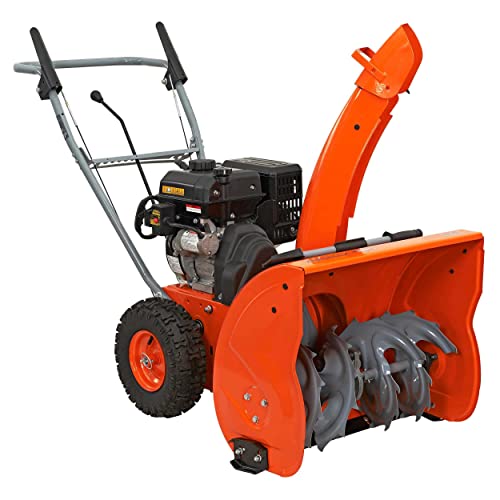
YARDMAX YB6270 24 in. 212cc Two-Stage Self-propelled Gas Snow Blower with Push-Button Electric Start
Electric Start, high performance snow engine
As an affiliate, we earn on qualifying purchases.
As an affiliate, we earn on qualifying purchases.
Width alone does not tell the whole story
A 100-foot run creates a substantial clearing area. Start with snowfall conditions, then select the narrowest machine that handles that load without bogging down or multiplying your passes.
20–24 inches
Suitable when snowfall is generally dry, under 6 inches, and infrequent. A single-stage or capable battery model keeps ownership simple.
24–28 inches
The balanced choice for most 100-foot driveways. Two-stage operation handles deeper accumulation and denser end-of-driveway piles.
28+ inches
Worth considering for driveways over 12 feet wide, frequent heavy storms, or large parking aprons. Expect more weight and turning effort.
Clearing-width effect
Approximate side-by-side passes across a 12-foot-wide driveway, allowing modest overlap.
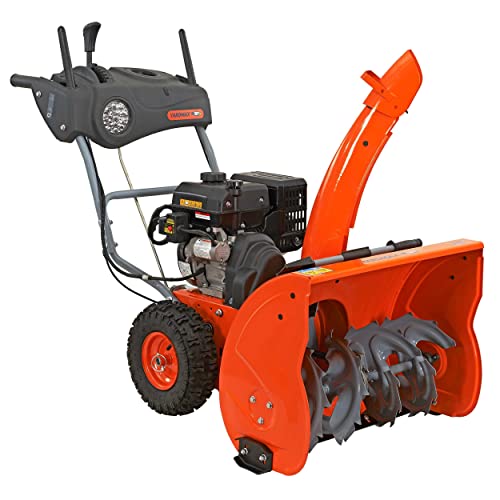
YARDMAX YB6770 26 in. 212 cc Two-Stage Self-propelled Gas Snow Blower with Push-Button Electric Start and Headlight
Electric start, high performance snow engine
As an affiliate, we earn on qualifying purchases.
As an affiliate, we earn on qualifying purchases.
Let your worst routine storm make the decision
A machine sized only for average snowfall may fail when you need it most. Wet snow puts greater strain on the motor, auger, impeller, and drive system than the same depth of powder.
Measure the driveway
Confirm its width, slope, apron size, tight turns, parked vehicles, and other obstacles.
Rate typical snow
Separate shallow powder from wet, packed snow and plow-built roadside berms.
Select the stage
Use single-stage for light accumulation; choose two-stage for deeper or denser snow.
Choose power and width
Balance fewer passes against weight, storage, maneuverability, and maintenance.

VEVOR Corded Electric Snow Blower, 23-inch 15A Snow Thrower with Dual LED Headlights & 180° Rotating Chute, 25FT Throwing Distance, 12" Depth Clearing, Walk-Behind Snowblower for Driveway Sidewalk
Wide Snow Clearing Path: Equipped with a powerful 15A, 2200W motor, this snow thrower easily tackles wet and…
As an affiliate, we earn on qualifying purchases.
As an affiliate, we earn on qualifying purchases.
Capacity matched to real conditions
The strongest choice is not automatically the largest machine. The right blower clears reliably while remaining comfortable to turn, store, start, and maintain all winter.
| Driveway / snow profile | Single-stage 20–24″ | Two-stage 24–28″ | Two-stage 28+″ |
|---|---|---|---|
| Up to 12 ft wide · snow under 6 in | ✓ GOOD FIT | ~ EXTRA CAPACITY | ✗ USUALLY OVERKILL |
| Up to 12 ft wide · snow over 6 in | ✗ MAY STRUGGLE | ✓ BEST BALANCE | ~ CONSIDER FOR WET SNOW |
| Over 12 ft wide · heavy, frequent snow | ✗ TOO LIMITED | ✓ CAPABLE | ✓ FASTEST COVERAGE |
| Tight turns and many obstacles | ✓ EASY TO HANDLE | ✓ MANAGEABLE | ~ BULKIER |
| Wet plow pile at street | ✗ LIMITED | ✓ RECOMMENDED | ✓ HIGH CAPACITY |
Power-source spectrum
Convenience leads at the left; sustained heavy-snow capacity increases toward the right.

AMERISUN 24-Inch Gas Snow Blower with 212cc 4-Cycle OHV Engine, Recoil Start, 40Ft Snow Throwing for Decks, Driveways, and Sidewalks
24-Inch Clearing Width: The 24-inch wide auger allows you to clear a large path in a single pass,…
As an affiliate, we earn on qualifying purchases.
As an affiliate, we earn on qualifying purchases.
Features that reduce time and effort
Modern batteries, efficient augers, improved drive systems, and lighter materials are narrowing the convenience gap. Choose features that solve your actual winter pain points.
LED headlights
Useful for early mornings, short winter days, and low-visibility snowfall.
Quick chute adjustment
Redirects discharge without repeated stops or awkward manual repositioning.
Heated handles
Reduce hand discomfort during long clearing sessions in severe cold.
Power steering and drive
Make a heavier two-stage machine easier to turn and control on a long route.
The decision chain
What size snow blower actually handles a 100-foot driveway?
The sweet spot for a 100-foot driveway is a snow blower with a width of 24 to 28 inches. This size balances coverage and maneuverability, letting you clear the entire space efficiently.
For example, a 24-inch model can cover about 2 feet in a single pass, meaning roughly 50 passes for a 100-foot stretch. A 28-inch blower reduces that to about 3.5 passes, saving time during winter storms.
Think of it this way — a blower too narrow will force you to make dozens of passes, tiring you out. Too wide, and it feels bulky and hard to control, especially around edges or obstacles. The goal is to find a size that maximizes coverage without sacrificing ease of use. A wider blower can cut down your total clearing time, but it also needs sufficient power to handle the snow load, especially in wet or heavy snow conditions. Conversely, a narrower model offers better maneuverability but may extend your clearing time significantly. Balancing these considerations ensures you choose a machine that works efficiently for your specific driveway and typical snow conditions.
How snowfall type and amount shape your snow blower choice
Heavy, wet snow is like trying to shovel concrete — it demands a more powerful machine. Light, fluffy snow is easier to handle and requires less capacity.
For a 100-foot driveway, if your snowfall is mostly under 6 inches and dry, a single-stage blower with a 20-inch width might do. But if you get frequent 12-inch storms with wet snow, a two-stage model with 24-28 inches width is a smarter choice.
Understanding your typical snow conditions is crucial because it directly impacts the efficiency and durability of your equipment. Wet snow exerts more strain on your blower’s motor and auger system, increasing wear and tear if the machine isn’t designed for heavy loads. Choosing a blower that matches your snow type prevents premature equipment failure and ensures you clear snow safely and effectively. For example, a homeowner who regularly faces heavy, wet snow benefits from a larger, more robust two-stage blower, which can handle the increased load without bogging down. Conversely, in areas with light snow, a smaller, single-stage model reduces cost and maintenance while still providing effective clearing. Recognizing these tradeoffs helps you avoid overinvesting in unnecessarily powerful equipment or underestimating your snow removal needs, which can lead to frustration and extra effort during winter storms.
Choosing between electric and gas-powered snow blowers
Electric snow blowers are quiet, clean, and low-maintenance. They work well for small driveways with light snow. Gas models pack more punch, making them better for heavy snow or larger areas.
For your 100-foot driveway, if snow is light and infrequent, an electric model with a 20-inch width could suffice. But if winter dumps heavy snow regularly, a gas-powered blower with a 24-28 inch width offers the muscle you need.
Imagine clearing a 10-inch snowstorm. A gas blower with 6-10 HP can clear that in a few passes, while an electric might struggle or require multiple passes, which eats up your time. The choice depends not only on the power but also on your willingness to perform regular maintenance and handle fuel management. Electric models are more convenient but may lack the raw power needed for heavy, wet snow or larger areas. Gas models, while requiring more upkeep, provide the capacity to tackle tougher snowfalls efficiently. The tradeoff involves balancing convenience versus performance based on your typical winter conditions and personal preferences. For instance, if you prioritize quiet operation and minimal maintenance, electric might be attractive, but for more demanding storms and larger driveways, gas will likely serve you better over the long term.
Matching blower capacity to driveway width and snow depth
| Driveway Width | Snow Depth | Recommended Snow Blower Size |
|---|---|---|
| Up to 12 feet | Up to 6 inches | Single-stage, 20-24 inches |
| Up to 12 feet | More than 6 inches | Two-stage, 24-28 inches |
| Over 12 feet | Heavy, frequent snow | Two-stage or larger, 28+ inches |
This table shows how to match your driveway’s size and typical snow level with the right blower. Larger, heavier snow calls for wider, more powerful machines. Choosing the appropriate size ensures efficient clearing, reduces the number of passes, and minimizes strain on your equipment. While a bigger machine can handle more snow faster, it also requires more horsepower and can be more difficult to maneuver, especially around obstacles or edges. Conversely, a smaller blower might struggle with heavy, wet snow, leading to clogging or excessive wear. By understanding your typical snow load and driveway dimensions, you can select a blower that balances power, ease of use, and durability, ensuring reliable performance throughout the winter season.
Latest snow blower tech that saves you time and effort
Modern snow blowers aren’t just bigger — they’re smarter. Electric models now feature longer-lasting batteries and more power, making them suitable even for heavier snow. Some gas blowers include LED headlights, adjustable chutes, and heated handles — perfect for long winter nights.
For example, a homeowner with a 100-foot driveway upgraded to a newer electric model. The new battery lasted through multiple storms, and the quieter operation meant less noise pollution and less fatigue.
New auger designs and lightweight materials mean easier handling, especially for smaller or older homeowners. These innovations help clear snow faster and with less physical strain.
Key factors for choosing your snow blower — quick checklist
- Width: Match to your driveway width to avoid unnecessary passes.
- Power: More snow and wet conditions demand higher horsepower.
- Type: Single-stage for light snow, two-stage for heavy or wet snow.
- Source: Battery/electric for small areas, gas for bigger, heavier snow.
- Features: Consider chute control, headlights, and ease of use.
Frequently Asked Questions
What size snow blower do I need for a 100-foot driveway?
A 24-28 inch wide two-stage snow blower generally offers the best balance for a 100-foot driveway, especially in heavy or wet snow conditions. This size minimizes passes and maximizes efficiency.Should I choose electric or gas-powered snow blowers?
Electric models work well for light snow and small driveways. Gas-powered blowers are better suited for heavy snow, larger areas, and frequent storms due to their higher power and capacity.How much snow can a typical snow blower handle?
Most residential snow blowers comfortably clear snow depths up to 12 inches. For heavier snow or prolonged storms, a more powerful, wider machine will handle it more effectively.How do I pick the right clearing width?
Match the blower width to your driveway. A width of around 24 inches balances coverage and maneuverability for a 100-foot driveway, reducing the number of passes needed.Are there safety tips I should follow?
Always wear PPE like gloves and eye protection, follow manufacturer instructions, and operate on flat, clear surfaces to prevent accidents, especially with larger gas models.Conclusion
Choosing the right snow blower size for your 100-foot driveway isn’t about guesswork — it’s about matching capacity with your winter realities. Think about your typical snow load, driveway width, and preferred power source. Then pick a machine designed to clear snow efficiently, saving you time and effort.
Remember, a properly sized snow blower isn’t just a tool — it’s your best ally against winter’s worst. Keep it sharp, keep it safe, and you’ll breeze through snowstorms like a pro.