
TL;DR
Trimming fence lines without scarring posts or wrapping wire comes down to three moves: cut with the correct side of the head for your spin direction, let the guard ride the post as a standoff, and drop to half throttle near wood and wire. A trimmer line tip can exceed 200 mph, so even one careless pass strips bark and opens the door to decay. Long term, post guards, a 12–18 inch bare-ground or mulch strip, or grazing animals can eliminate the chore altogether.
A string trimmer line tip can exceed 200 mph — faster than a big-league fastball, with a nylon edge. One lazy pass against a fence post and you have stripped the bark clean off. Repeat that every other weekend for a few seasons and you have girdled a post that was rated to outlast your mortgage.
Here is the good news: trimming fence lines without scarring posts or wrapping wire is a skill problem, not a gear problem — and the skill takes one afternoon to learn. This guide walks you through the stance, spin direction, and throttle control that keep line off the wood, plus the equipment picks that make long fence runs easier on your back and your ears.
You will also learn how to work wire and electric fences without snapping line or frying insulators, how to protect posts you have already nicked, and how to engineer the whole chore away with strips, mulch, and grazing. Fewer passes, fewer repairs, more Saturday left in your Saturday.
Cut with the side of the head that throws debris away from the fence (left side on counterclockwise-spinning trimmers), walk right to left, and let the guard r…
A trimmer line tip exceeds 200 mph — drop to half throttle near posts and wire, because full RPM is for open cutting, not detail work.
Kill the power on electric fences before trimming; vegetation on hot wires drains voltage, and a wrapped line can short the fence or shatter insulators.
Plastic post guards cost a few dollars each and let you trim aggressively to the post base — cheaper than one replacement post, let alone a fence line of them.
A 12–18 inch bare-ground, mulch, or gravel strip eliminates the chore entirely; herbicide strips need 1–3 retreatments per season and demand strict label and d…
Trimming Fence Lines Without Scarring Posts or Wrapping Wire
This is a skill problem, not a gear problem — and the skill takes one afternoon to learn. Three moves do the work: cut with the correct side of the head for your spin direction, let the guard ride the post as a standoff, and drop to half throttle near wood and wire.
The trimmer is not the villain here; the aim is. A machine doing exactly what you tell it to, six inches too close.
Two Failure Modes, One Root Cause
Contact at 200 mph does not scuff wood — it excavates it. Bark is a post’s armor: every stripe you carve opens a door to moisture, decay fungi, and boring insects.
The real killer is a ring of wounds around the post base, renewed season after season. Girdling wounds are the main entry point for decay fungi — a post scarred every season can fail years before an unscarred one. Vinyl scratches permanently; scratched steel starts rust spots that spread under the coating.
On wire fences, the line catches a strand, wraps, and snaps — sometimes yanking the head into the fence hard enough to bend the shaft or shatter an insulator on electric fencing. Same root cause as scarring: full throttle, wrong angle, no standoff.
Two identical pressure-treated posts, set the same day — one buzzed monthly, one left alone. Field observations via Outdoor Pro Masters.
Soft and punky at the ground line in eight years — while its untouched neighbor is still solid at twenty. One lazy pass, repeated every other weekend, is all it takes.

20V Electric Weed Wacker Cordless Edger Lawn Tool 2 X 2.0Ah Battery Powered Weed Eater with Charger, 12 Inch Lightweight String Trimmer, Auto Line Feed Grass Cutter Lawn Mower for Small Yard Garden
[Compact Storage and Easy Maneuvering] Designed for modern living, the innovative shaft folds 180° in three ways for…
As an affiliate, we earn on qualifying purchases.
As an affiliate, we earn on qualifying purchases.
The Five-Move Pass That Keeps Line Off the Wood
Done right, the line never touches wood — the guard does. Run this sequence on every post, every pass.
Practice on a gate corner — the worst spot on any fence, where grass grows thick against two posts and a hinge. Walk it right to left, guard kissing each post, half throttle, and you will shave the grass to the dirt without a single mark on the wood. The first clean corner is when the technique clicks for good.
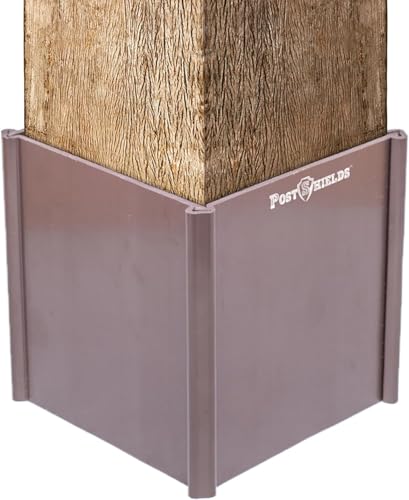
Post Shields 4×4 Post Protector – Fits Standard 3.5"x3.5" Wood or Metal Posts – 4in High – Easy Install, No Tools – Protects Mailbox, Deck and Fence Posts from Lawn Maintenance Equipment Damage
Fits Like a Shield: 4×4 Post Shields are designed to fit the standard 4×4 labeled post. The standard…
As an affiliate, we earn on qualifying purchases.
As an affiliate, we earn on qualifying purchases.
The Trimmer, Line & Head That Make Fence Work Easy
The sweet spot: a straight-shaft trimmer with .080–.095″ line and a speed-feed head. Straight shafts keep the tip visible under wire — and nearly every scar happens in the gap between where you think the line is and where it actually is.
| Factor | Battery (40V–80V) | Gas |
|---|---|---|
| Runtime | 30–60 min per charge; swap packs on long runs | All day with a fuel can |
| Noise | ✓ Quiet near livestock and neighbors | ✗ Loud; hearing protection required |
| Vibration | ✓ Low — less fatigue on long fence lines | ~ Noticeably higher |
| Thick Weeds | ~ Strong on 56V–80V platforms | ✓ Still king for woody brush |
| Best For | Most residential and rural fence runs | Acreage with dense, overgrown lines |
Size line for your worst-case contact, not your best-case cutting. Some operators keep .080 in the head just for fence detail.
Brush and tri-arc blades chew thick growth, but line forgives a lapse with a snapped string — a blade answers the same lapse with a chunk out of a 4×4 or a severed strand. Full stop.

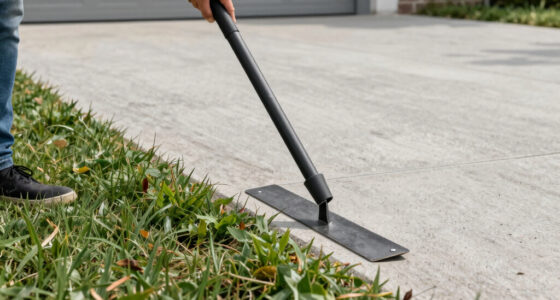
Dreamscape PRO Aluminum Landscape Edging – Easy Install Professional Landscaping Border – 15 Strips, 8ft Each (120ft Total) – Brown Painted – Metal Divider for Lawn, Garden, Flowerbed
KIT INCLUDES: Each kit includes 15 Brown Painted 8ft strips, 45 stakes, and 4 end stake adapters; Each…
As an affiliate, we earn on qualifying purchases.
As an affiliate, we earn on qualifying purchases.
Work the Wire Without Wrapping It
Grass growing up through wire is usually the reason you are out there — but one caught strand can short a fence or shatter an insulator.
Hitting a live wire can wrap the line, short the fence, or destroy insulators. Switch off the energizer before the head goes anywhere near a hot strand.
Never let vegetation lean on hot wires — every blade of grass touching the strand bleeds voltage. That drain, not looks, is the real reason for trimming electric lines.
Wire fences turn line fragments and debris into shrapnel. Eye protection, long pants, and hearing protection with gas units — every pass, no exceptions.
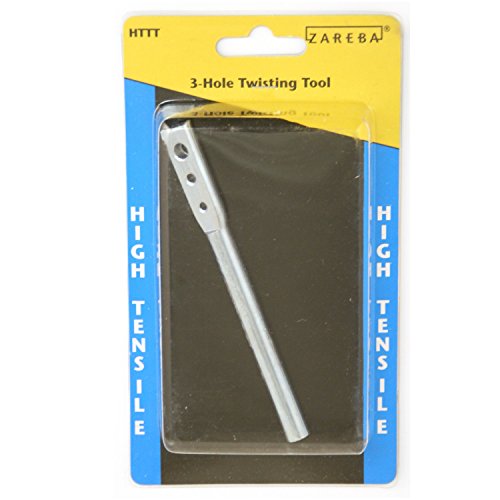
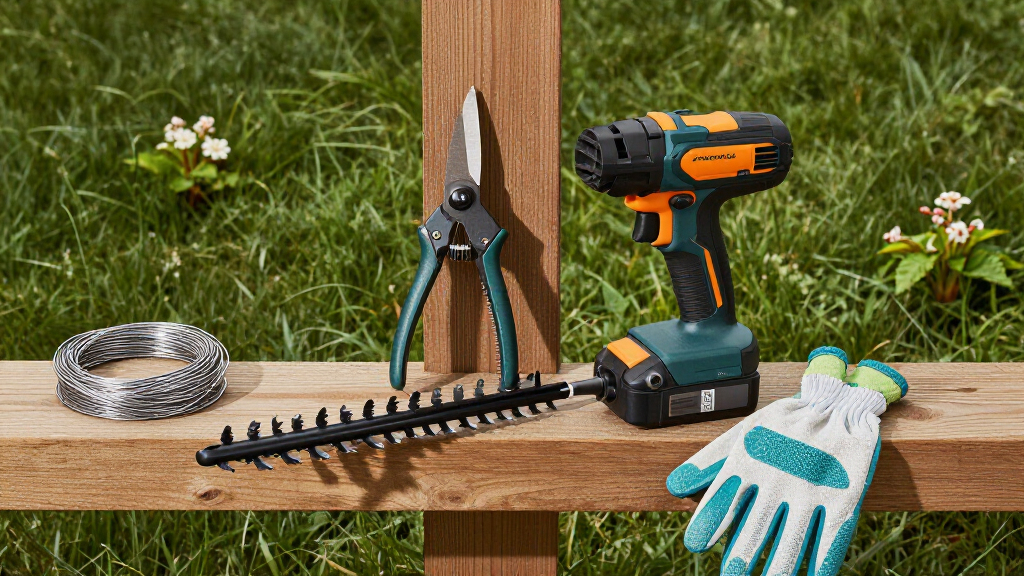
Zareba Wire Twisting Tool – High Tensile Twisting Tool for Electric Fencing – Use up to 8 Gauge Wire – HTTT
USE UP TO 8 GAUGE WIRE: This Zareba three-hole twisting tool for use with wire up to 8-gauge
As an affiliate, we earn on qualifying purchases.
As an affiliate, we earn on qualifying purchases.
Engineer the Chore Away Entirely
Fewer passes, fewer repairs, more Saturday left in your Saturday. Escalate from trimming to never trimming.
Grass and thistle wrap the wire, drain voltage, and hide the posts you keep nicking. Every weekend, same battle.
Cost · Your SaturdaysPlastic post guards cost a few dollars each and let you trim aggressively right to the base — cheaper than one replacement post.
Cost · A Few $ Per PostBare-ground, mulch, or gravel under the fence ends the chore. Herbicide strips need 1–3 retreatments per season and strict label discipline.
Cost · One Install + Touch-UpsSheep, goats, and even geese keep fence lines clean — a growing practice on farms and solar sites. Zero throttle required.
Cost · Fence-Worthy LivestockAlready nicked a post? Guard it now and let the wound dry — then pick your exit: guards, a strip, or grazers. The best fence-line trim is the one you never have to make.
Why One Careless Pass Can Wreck a Fence Post
Trimming fence lines without scarring posts or wrapping wire starts with respecting the numbers: a trimmer line tip spins fast enough to top 200 mph, so contact does not scuff wood — it excavates it. Bark is a post’s armor. Every stripe you carve through it opens a door to moisture, decay fungi, and boring insects.
The real killer is girdling — in practical terms, a ring of wounds around the post base that cuts the wood off from its protective outer layer year after year. According to field observations from Outdoor Pro Masters, girdling wounds are the main entry point for decay fungi in fence posts, and a post scarred every season can fail years before an unscarred one. Picture two identical pressure-treated posts set the same day: the one that gets buzzed monthly might be soft and punky at the ground line in eight years, while its untouched neighbor is still solid at twenty.
Wood is not the only victim. Vinyl posts scratch permanently — there is no sanding out a gouge in PVC — and scratched steel posts start rust spots that spread under the coating. The trimmer is not the villain here; the aim is. A machine doing exactly what you tell it to, six inches too close.
Wire fences add the second failure mode: the line catches a strand, wraps, and snaps, sometimes yanking the head into the fence hard enough to bend the shaft or shatter an insulator. Both failure modes have the same root cause — full throttle, wrong angle, no standoff.
Hold It Right: The Stance and Pass That Keep Line Off the Wood
The core technique for trimming fence lines clean is simple: cut with the side of the head that throws debris away from the fence, let the guard ride the post as a standoff, and feather the line in short passes at reduced throttle. Done right, the line never touches wood — the guard does.
- Check your spin direction. Most consumer trimmers spin counterclockwise, so cut with the left side of the head and walk right to left along the fence. Debris flies away from you and away from the wire. Some pro models spin the other way — check your manual before you assume.
- Tilt the head so the line tip does the cutting. The tip is the business end; the middle of the line just beats grass flat. Keep the head angled slightly away from the post.
- Use the guard as a standoff. Approach the post from the side your guard protects and let it bump gently against the wood. The guard physically holds the line off the bark — that gap is your insurance policy.
- Feather, never plunge. Short, sweeping passes that kiss the grass. Plunging the head straight in is how line wraps wire and how posts get gouged.
- Drop the throttle near posts and wire. Half throttle is plenty for detail work. Full RPM is for open cutting, not for the last three inches around a 4×4.
Try it on a gate corner — the worst spot on any fence, where grass grows thick against two posts and a hinge. Walk it right to left, guard kissing each post, half throttle, and you will shave the grass to the dirt without a single mark on the wood. The first time you finish a corner that clean, the technique clicks for good.
The Trimmer, Line, and Head That Make Fence Work Easy
For fence work, the sweet spot is a straight-shaft trimmer with .080–.095 inch line and a speed-feed head — and for most properties, a high-voltage battery unit now does the job as well as gas. Straight shafts give you the reach and sightlines to see the line tip under wire fences; curved shafts put the head where you cannot watch it. That last point matters more than anything on the spec sheet: nearly every scar and every wrapped wire happens in the gap between where you think the line is and where it actually is. A shaft that keeps the tip visible shrinks that gap, which is why experienced operators treat sightlines as a safety feature, not a comfort feature.
Line choice is a tradeoff worth understanding, because what you are really choosing is what happens on a mistake. Heavier line cuts faster but scars worse on contact — a .105 round line carries real momentum at 200 mph, and momentum is what turns a brush against bark into an excavation. The implication most buyers miss: line diameter should match your worst-case contact, not your best-case cutting. If ninety percent of a fence run is soft grass and ten percent is thistle, sizing the line for the thistle means spending the whole run carrying scar risk you only needed for fifty feet. Some operators keep .080 in the head specifically for fence detail and step up only for open-field brush. Brush blades and tri-arc blades chew through thick growth, but they are far more destructive on contact with posts or wire — line forgives a lapse with a snapped string, while a blade answers the same lapse with a chunk out of a 4×4 or a severed strand. Keep blades away from fences, full stop.
| Factor | Battery (40V–80V) | Gas |
|---|---|---|
| Runtime | 30–60 min per charge; swap packs on long runs | All day with a fuel can |
| Noise | Quiet enough near livestock and neighbors | Loud; hearing protection required |
| Vibration | Low — less fatigue on long fence lines | Noticeably higher |
| Thick weeds | Strong on 56V–80V platforms | Still king for woody brush |
| Best for | Most residential and rural fence runs | Acreage with dense, overgrown lines |
Three of those table rows are secretly about fence damage, so read them twice. Vibration is not a comfort spec — fatigue is what erodes your stance and throttle discipline, and the last two hundred feet of a long run, when your forearms are buzzing, is exactly where posts get gouged. Lower vibration is damage control. Noise decides where and when you can work: a gas unit at full cry near a horse paddock is its own hazard, and a spooked animal leaning through a fence undoes your afternoon. Runtime is really a workflow question — a spare battery pack swaps in seconds and costs less than the gas premium, but it still means a walk back to the truck, so on very long runs an all-day fuel tank keeps you in rhythm. High-voltage cordless units have largely closed the power gap for this task, and professional crews increasingly run them on rural properties. One honest caveat: if your fence line measures in miles and the growth is waist-high thistle, gas still wins on runtime and grunt. Also grab a speed-feed or auto-load head — fence work snaps line constantly, and tool-free reloading turns a ten-minute frustration into a ten-second twist. The hidden benefit is behavioral: when reloading is painless, you feed fresh line instead of stretching a too-short line by edging the head closer to the wire — which is precisely how wraps begin.
Trim Wire and Electric Fences Without Wrapping or Shorting
On wire fencing, the rule is absolute: kill the power first on electric fences, then trim parallel to the wires at reduced throttle, and never plunge the head into the strands. A live wire plus a trimmer line is a genuine hazard — the line can wrap the hot wire, short the fence, or destroy insulators in a shower of sparks and plastic.
The wrapping itself is physics doing what physics does. The line tip catches a strand, the rotation winds it tight in a fraction of a second, and the head gets yanked into the fence before you can react. On high-tensile wire the line usually just snaps. On woven wire, where strands sit close together, it can wind several loops and stall the motor. Barbed wire adds a bonus: shredded line fragments and clipped debris become projectiles flying in both directions.
Warning: Always confirm an electric fence is de-energized before the head goes anywhere near it — flip the energizer off and test the line with a fence tester, not your knuckles. Eye protection and long pants are non-negotiable on any wire fence.
Here is the irony that brings most people out to the fence in the first place: vegetation leaning on hot wires drains voltage. Most residential electric fences lose a big share of their charge the moment wet grass touches the bottom wire, and a fence reading 2,000 volts instead of 7,000 stops nothing heavier than a barn cat. So trim for the fence’s sake, not just appearances — every two to three weeks in the growing season, before growth reaches the lowest strand. A common ranch scenario: spring grass rockets up, the bottom wire greens over, and the steers start strolling through a fence that tests fine at the energizer. Ten minutes with a trimmer at half throttle fixes what a new charger never would.
Post Guards and First Aid for Posts You Have Already Scarred
Post guards — plastic or metal collars installed at the post base — let you trim right up to the wood without damage, and they cost a few dollars each. Purpose-made protectors and trim-free sleeves have become widely available and cheap, and they are the single fastest fix for a fence line full of posts. Slip one on, and the trimmer line chews on replaceable plastic instead of structural lumber.
Installation is a five-minute job per post: clear the grass, fit the collar around the base at ground line, and trim as aggressively as you like against it. On a hundred-post paddock fence, that is one weekend of work that buys back every future weekend. Vinyl fences benefit even more, since scratched PVC cannot be repaired — only covered or replaced.
Already scarred a post? First aid is straightforward. Brush away loose fibers and let the wound dry, then coat the bare wood with a wood preservative or exterior sealant to slow moisture and fungal entry. Shallow stripes on a thick post are mostly cosmetic. A deep ring of girdling on a gate post or corner brace is another matter — those carry real structural loads, and a compromised brace post can sag a whole fence line. If the damage there goes beyond surface scarring, have a fence contractor assess it; structural repairs on load-bearing posts are a job for a licensed pro, not a Saturday experiment.
One vineyard trick worth borrowing: operators there sleeve every young post at planting, before the first trimmer ever comes near it. Protection beats repair every time — the guard costs less than the post, and far less than the post plus the labor to replace it.
The Best Fence Trim Is the One You Never Do
The most reliable way to trim fence lines without scarring posts or wrapping wire is to make sure nothing grows there in the first place. A 12–18 inch bare-ground strip under the fence eliminates the chore entirely — no line, no throttle, no risk. Experienced operators generally agree the best fence-line trim is the one you do not have to repeat every two weeks. Every option below is the same bargain in different clothes: you spend money or sweat once, up front, so you stop spending Saturday afternoons and fence posts forever. The real question is not which option works — they all work — but which recurring cost you are willing to keep paying: cash, labor, or vigilance.
- Herbicide strip: Glyphosate-based products are the common choice, often paired with a residual pre-emergent to extend the effect. Expect 1–3 retreatments per season depending on product and rainfall — so this option shrinks the chore rather than eliminating it, trading a biweekly trim for a few careful spray mornings. Spray on calm mornings to avoid drift, follow the label to the letter, and check local rules — some jurisdictions restrict glyphosate, and volatile products like 2,4-D and dicamba are a genuine liability near gardens and crops, where a drifting cloud can mean dead tomato plants and a neighborhood feud, not just a warning. If spraying near edibles or ornamentals feels risky, hire a licensed applicator. Two more honest tradeoffs: a bare strip shows every missed pass, and on sloped ground bare soil can erode or turn to mud — bare ground is a maintenance choice, not the absence of one.
- Mulch or gravel strip: A 3–4 inch layer smothers growth and looks tidy — the go-to for residential fences. Gravel lasts longer; mulch is cheaper and softer underfoot. The catch is that smothering only stops what comes up from below — wind-blown seed still lands on top, so expect light hand-weeding either way. Mulch breaks down and wants topping every year or two, which means the chore returns in a gentler form. Gravel is close to permanent, but stray stones migrate into the mowing path, and the first one your mower deck finds will announce itself.
- Landscape fabric plus gravel: The longest-lasting combo, but real labor to install under an existing fence. The math favors it only on long runs you expect to keep for a decade or more — you are pre-paying ten years of trimming in one hard weekend, which is a great trade on a new fence and a punishing one on a fence you might replace soon.
- Grazing: Sheep, goats, and even geese keep fence lines spotless, and contract grazing for fence lines and utility corridors has expanded fast on farms and solar sites. A growing practice, and a fine one if you already keep animals — then the marginal cost of moving them along the fence is near zero. But understand that grazing replaces trimming work with animal work: water, minerals, shelter, predator pressure. If you do not already keep stock, buying goats to avoid a trimmer is solving a small chore by adopting a larger one.
- Flame weeding: Propane torches work, but open flame near wooden posts and dry grass is exactly as risky as it sounds — the same dry thatch you are trying to kill is fuel, and a smoldering fence bottom can flare up an hour after you have walked away. Avoid burn-ban days, keep water at hand, and skip it entirely in fire season. For most wooden-post fences, the risk profile disqualifies it outright.
- Mower attachments: Under-fence mower arms exist for tractors and some zero-turns — worth it if your fence line is measured in acres. Below that scale the capital cost never pays back; it is a solution in search of a property big enough to justify it.
Seasoned property-care pros put it plainly: the best fence-line trim is the one you never have to do. Engineer the growth away, and the two failure modes — scarred posts and wrapped wire — disappear with it.
If you keep trimming by hand, cadence is your friend, and the reason runs deeper than convenience. A weed at three inches is soft green tissue that parts at quarter throttle; the same weed at knee height has gone woody and fibrous, so it wraps the head, kicks back, and demands full RPM right against the fence. Cutting every 2–3 weeks in the growing season keeps growth in that soft stage, which is easier on the line, the machine, and the fence. Attacking a knee-high jungle once a summer is where posts get gouged and tempers get lost — at that point you are not trimming anymore, you are clearing brush, with all the throttle and none of the finesse.
Frequently Asked Questions
How do I trim right up to a fence post without hitting it?
Approach from the side your guard protects and let the guard bump the post — it acts as a standoff so the line cannot reach the wood. Tilt the head so only the line tip cuts, feather in short passes, and drop to half throttle. If you want zero risk, fit a plastic post guard and trim directly against it.
How often should I trim fence lines during the growing season?
Every 2–3 weeks in active growing season is the sweet spot. Short, soft growth cuts fast and cleanly at low throttle, which is easier on your line, your machine, and your posts. Waiting until the line is knee-high forces full-throttle work right against the fence — exactly when damage happens.
Do I really need to turn off an electric fence before trimming?
Yes, every time. A trimmer line that catches a hot wire can wrap it, short the fence, or blow apart insulators — and the shock risk to you is real. Switch the energizer off and verify with a fence tester before the head goes near the wires. While you are at it, remember that grass touching the bottom wire is already draining your voltage.
Should I use a blade attachment or string for thick fence-line weeds?
String near the fence, blades in the open. Brush and tri-arc blades destroy thick growth efficiently, but they are far more destructive than line on contact with posts or wire — one touch can take a chunk out of a 4×4. Cut the heavy stuff a foot out with a blade if you must, then finish the last stretch along the fence with line.
Is it safe and legal to spray herbicide along a fence near my garden?
It can be, with discipline. Use a glyphosate-based product per its label, spray on calm mornings to prevent drift, and keep a buffer from edibles and ornamentals. Some jurisdictions restrict glyphosate, and volatile herbicides like 2,4-D and dicamba carry strict rules near crops. When in doubt, hire a licensed applicator or switch to a mulch strip instead.
Conclusion
Remember three moves: guard on the post, tip on the grass, half throttle near the wood. That is ninety percent of trimming fence lines without scarring posts or wrapping wire, and it costs you nothing but a slower walk.
Then go look at your longest fence run and ask the real question: does anything need to grow there at all? One afternoon with post guards or a gravel strip, and next summer your trimmer stays on its hook while the fence line stays clean on its own.