
TL;DR

Get business pricing on tools and workshop supplies
- Business-only prices and quantity discounts
- Tax-exempt purchasing
- Multiple users, one account, clear invoices
Most lawn tractors can safely tow between 200-500 pounds if within their rated capacity. Always check your manual, distribute weight evenly, and operate on flat terrain to avoid damage or accidents.
Imagine hauling a full load of compost or a bunch of heavy yard debris without breaking a sweat. That’s the promise of towing with your lawn tractor. But don’t let the convenience fool you—pushing the limits can cause damage, accidents, or worse. Understanding what your mower can safely pull keeps your yard work efficient and safe.
This guide breaks down the real-world limits, best practices, and safety tips. Whether you’re hauling a simple cart or a small trailer, knowing the ins and outs helps you get the job done without risking your equipment or safety.
Always check your mower’s manual for maximum towing weight and follow it closely.
Distribute loads evenly and keep loads low to prevent tipping and damage.
Operate on flat, stable ground at slow speeds—avoid slopes and uneven terrain.
Use attachments rated for your tractor’s capacity and ensure they’re securely hitched.
Modern tractors include safety features that make towing safer, but good judgment remains key.
Towing With a Lawn Tractor: What Your Mower Can Safely Pull
A lawn tractor can turn heavy yard work into an easy haul—but only when the cart, terrain, speed, and load stay inside the machine’s limits. Use this guide to protect your transmission, preserve stability, and arrive with every load intact.
Know the whole load
Do not count cargo alone. The trailer or cart contributes to the towing load, and its empty weight may consume a meaningful share of your tractor’s rating.
Capacity scale
Illustrative reference only—confirm the exact rating for your mower.
Values are pounds. A larger-looking tractor is not automatically rated for the upper end of the range.
Cart + cargo = towing weight
A 75-pound cart carrying 225 pounds of mulch creates a 300-pound tow. Compare that total against the manufacturer’s stated capacity before moving.
A safe tow is a system
Capacity matters, but it cannot compensate for a weak hitch, a top-heavy load, wet turf, or rushed maneuvering. Each control point supports the next.
Read the manual
Find the maximum towing weight and any restrictions on attachments, slopes, ballast, or hitch use.
Match the hardware
Use a lawn-tractor cart, spreader, or small trailer with a hitch and frame rated for the full load.
Keep weight low
Center cargo from side to side and avoid tall piles that raise the center of gravity and encourage tipping.
Choose firm ground
Flat, dry terrain provides the best traction. Wet turf, ruts, and loose soil reduce braking and control.
Drive deliberately
Stay near 2–3 mph, accelerate gently, make wide turns, and avoid sudden braking or reversing.
Walk around first
Check the hitch pin, tires, fasteners, steering, brakes, and attachment structure before every job.
From manual to movement
Follow this sequence every time. If any link fails the check, stop and correct it before towing.
Use the exact model manual.
Include cart and cargo.
Pin, clip, and inspect.
Low, centered, and stable.
Wide turns, smooth stops.
Risk rises with the grade
A load that feels manageable on level ground can push, pull, or tip the tractor on a slope. Reduce weight for imperfect conditions and avoid steep or uneven routes.
Terrain risk spectrum
Conditions can shift the same load from controlled to hazardous.
Pre-tow walkaround
A sixty-second inspection can catch the failure before the load starts moving.
Correct pin, retaining clip, no cracks or looseness.
Correct pressure, usable tread, no visible damage.
Nothing loose, leaning, or stacked unnecessarily high.
No children, pets, holes, branches, steep grades, or soft ground.
Sturdy boots, gloves, eye protection, and full attention.
Modern aids help—limits remain
Safety interlocks, stability assistance, lighting, and speed governors can improve control. They do not increase the manufacturer’s rated capacity or replace sound judgment.
| Feature | Traditional lawn tractor | Safety-enhanced model |
|---|---|---|
| Typical towing capacity | ~ 200–500 lb | ~ 200–500 lb; model dependent |
| Operator interlocks | ~ Basic systems | ✓ More integrated safeguards |
| Stability assistance | ✗ Primarily operator managed | ✓ Available on select models |
| Speed management | ~ Manual throttle control | ✓ Electronic aids may assist |
| Safe judgment required | ✓ Always | ✓ Always |
Before you hook up
Four common questions settle most towing decisions. When specifications conflict with general guidance, follow the manufacturer’s instructions.
How do I find towing capacity?
Check the owner’s manual, manufacturer specifications, or a rating label on the tractor. Use the exact model and configuration.
Can it tow a full-size trailer?
Usually not. Lawn tractors are intended for compact yard carts and small trailers, commonly below 500 pounds total.
Which attachments are suitable?
Choose light-duty dump carts, spreaders, aerators, and small flatbeds designed and rated for lawn-tractor use.
Is slope towing safe?
Flat, stable ground is safest. Slopes, wet grass, and uneven terrain increase traction loss, load shift, and rollover risk.
Capacity is a ceiling, not a target.
Stay within the rated total, balance cargo low and evenly, use compatible hardware, and tow slowly on firm, level ground. When conditions feel uncertain, reduce the load—or do not tow.
How Much Weight Can Your Lawn Tractor Handle?
Your lawn tractor isn’t a mini semi. Its towing capacity ranges from about 200 to 500 pounds, depending on the model. Checking the manual is your best move—manufacturers specify the maximum load to prevent damage or accidents. For example, a typical mid-sized tractor might comfortably tow a 300-pound cart full of mulch on flat ground.
Exceeding this limit can bend or break parts, strain the transmission, or cause tipping. Always match your trailer or cart weight to your mower’s specs. Think of it like driving a car—overloading is a quick way to blow a tire or burn out the engine.
Understanding these limits is crucial because it directly impacts your safety and the longevity of your equipment. Pushing beyond the recommended capacity not only risks immediate damage but can also lead to costly repairs or dangerous accidents over time. Properly sizing your loads preserves your tractor’s lifespan and keeps your yard work smooth.
As an affiliate, we earn on qualifying purchases.
Choose the Right Attachments for Safe Towing
Not all carts or trailers are created equal. Using the correct hitch point and compatible, rated attachments makes all the difference. For example, a sturdy steel dump cart rated for 300 pounds pairs well with a garden tractor. Attach it securely, and double-check the hitch’s weight limit before loading.
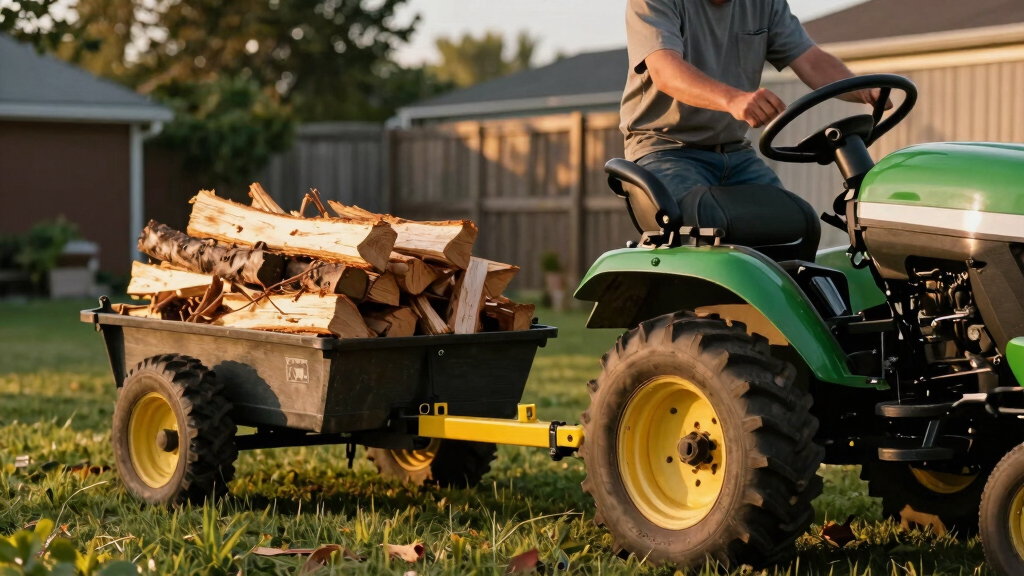
Keep the load centered and balanced. Imagine pulling a wagon full of firewood—shift the logs so the weight stays low and even on both sides. This stability keeps your tractor from tipping or veering unexpectedly.
Choosing the right attachments isn’t just about capacity; it’s about ensuring the load doesn’t interfere with your tractor’s operation. For instance, a poorly fitted or weak hitch can detach under stress, leading to accidents or damage. Investing in high-quality, rated attachments and proper installation safeguards your equipment and reduces the risk of mishaps during hauling.
yard debris trailer for lawn tractor
As an affiliate, we earn on qualifying purchases.
As an affiliate, we earn on qualifying purchases.
Distribute Weight and Maintain Balance
Imagine trying to tow a lopsided load—your tractor will struggle, and you risk tipping over. Distribute weight evenly across your cart or trailer. For instance, if hauling soil, load it from side to side rather than piling it all on one side.
This keeps your tractor stable, especially on slopes or uneven terrain. Think of it as balancing a stack of books—you want even weight to prevent toppling. Proper weight distribution also reduces stress on your tractor’s transmission and axles, which can extend its operational life and prevent costly repairs.
Furthermore, uneven loads can cause unpredictable handling, making your work more hazardous. By balancing loads carefully, you improve control, reduce strain on your equipment, and ensure safer operation in diverse yard conditions.
lawn tractor weight capacity hitch
As an affiliate, we earn on qualifying purchases.
As an affiliate, we earn on qualifying purchases.
Towing on Flat vs. Sloped Terrain: What’s Safe?
Most lawn tractors handle flat, firm ground with ease. Towing on slopes or uneven ground? That’s where risks skyrocket. For example, pulling a loaded cart up a 10-degree incline can cause the tractor to lose traction or tip.
Always prioritize flat surfaces. If you must work on slopes, go slow, keep the load light, and watch for signs of slipping or instability. When in doubt, avoid towing on steep or uneven terrain altogether. Recognizing the implications of terrain type helps prevent accidents—slopes increase the likelihood of tipping over or losing control, especially with heavier loads. Adapting your technique to terrain conditions ensures safety and preserves your equipment’s integrity.
As an affiliate, we earn on qualifying purchases.
Safe Towing: Speed, Maneuvering, and Control Tips
Keep your speed slow—think 2-3 mph. Fast pulls increase the chance of losing control or damaging your tractor. When turning, do so gradually—sudden movements can cause the load to shift or your tractor to tip.
Use wide turns, especially with heavy loads, and avoid backing up with a trailer attached. Remember: controlled, deliberate movement is your best friend here, especially when hauling heavy or bulky loads. Quick, jerky motions can destabilize the load and strain your tractor’s components, leading to potential breakdowns or accidents. Consistent, smooth operation minimizes these risks and makes towing safer and more efficient.
Safety First: Gear Up and Keep Bystanders Clear
Protect yourself with sturdy gloves, boots, and eye protection. Keep children and pets away when towing—heavy loads and moving equipment are dangerous. Regularly inspect hitch points, tires, and attachments for damage or wear.
Think of towing like driving a small truck—attention and safety gear prevent slips, trips, and accidents. A quick walkaround before each job allows you to spot potential issues—like loose bolts, worn tires, or damaged hitches—that could lead to failures during operation. Taking these precautions reduces the risk of accidents and keeps everyone safe around your working area.
Latest Tech and Safety Features Improving Towing Safety
Modern lawn tractors now come with safety interlocks, stability controls, and better lighting. Some models have electronic speed governors to prevent accidental over-speeding when towing.
For example, a recent model might automatically cut power if the tractor detects instability or if the operator attempts to go beyond safe speeds. These technological innovations are designed to mitigate human error and enhance safety during towing tasks. They act as an additional layer of protection, especially in complex yard conditions or low-light environments, helping prevent accidents before they happen.
Comparison: Manual Towing Limits vs. Modern Features
| Feature | Traditional Lawn Tractors | Modern Safety-Enhanced Models |
|---|---|---|
| Maximum Towing Capacity | 200-500 lbs | 200-500 lbs (with safety features) |
| Safety Features | Basic, manual controls | Interlocks, stability control, automatic shutoff |
| Ease of Use | Depends on operator skill | Enhanced with electronic aids |
Frequently Asked Questions
How do I know my lawn tractor’s towing capacity?
Check the owner’s manual or look for a label on the mower itself. Most have a rated towing weight listed—staying within that keeps your equipment safe and in good shape.Can I tow a full-sized trailer with my lawn tractor?
Probably not. Most lawn tractors are designed for small loads—under 500 pounds. For larger trailers, consider a utility tractor or specialized equipment.What types of trailers are safe for lawn tractors?
Light-duty carts, small dump trailers, and flatbed trailers rated for your tractor’s capacity work best. Always confirm the weight limit before hooking up.Is towing on slopes safe?
Generally, no. Towing on slopes increases the risk of tipping or losing traction. If you must, go slow, load lightly, and only on gentle slopes with flat terrain.How can I prevent damage while towing?
Stay within weight limits, distribute loads evenly, check attachments regularly, and keep your tractor well-maintained. Proper operation is key to longevity and safety.Conclusion
Pulling a load with your lawn tractor can save time and effort—if you respect its limits. Always keep loads within the rated capacity, operate smoothly, and prioritize safety. Your yard, your equipment, and your safety will thank you.
Next time you hook up that cart or trailer, remember: a well-towed yard is a safe yard. Treat your tractor like a trusted partner, not a race car, and you’ll get your chores done without a hitch.
Evergreen bestsellers Picks
bestsellers
As an affiliate, we earn on qualifying purchases.