
TL;DR

Get tools and workshop supplies delivered free — and shop member deals
- Fast, free delivery on millions of items
- Access to Prime Big Deal Days deals on October 6–7
- Prime Video, Amazon Music and more included
NRR numbers indicate how much noise reduction a hearing protector provides, but real-world effectiveness depends on fit and use. Adjust NRR down by 25% to estimate actual protection, and always wear devices properly.
Ever wonder if those high NRR earplugs or earmuffs really protect your hearing? The truth is, a lot of folks assume the number on the package is the full story. But in real life, factors like fit, movement, and environment change everything.
This guide breaks down what NRR numbers mean, how they’re calculated, and what you need to do to get true protection. Whether you’re on a construction site, shooting at the range, or working with loud machinery, understanding these ratings keeps your ears safe and your hearing intact.
Always reduce the NRR by 25% to estimate real-world noise protection.
Select hearing protectors with an NRR high enough for your loud environment—better safe than sorry.
Proper fit and consistent wear are just as crucial as the NRR number itself.
Recent standards aim to better reflect actual noise reduction, making ratings more trustworthy.
Don’t rely solely on lab ratings—practice proper fitting and use every time you’re exposed to loud noise.
Hearing Protection Ratings Explained
NRR numbers show laboratory noise reduction—not a guarantee of what reaches your ears. Fit, movement, environment and consistent wear determine how much protection you actually receive around loud equipment.
What NRR really measures
Noise Reduction Rating is a standardized decibel value established through controlled testing. A larger number signals greater potential attenuation when the protector is fitted and worn correctly.
A rating, not a force field
An NRR of 33 dB means the device achieved up to that reduction under prescribed test conditions. It does not mean every wearer automatically receives 33 dB of protection on a worksite, at a range or beside moving machinery.
Turn the package number into a field estimate
For a quick planning estimate, reduce the stated NRR by 25%, then subtract that adjusted reduction from the environmental noise level.
Lab rating versus likely reduction
The adjusted figures below are planning estimates. Individual results can be lower when plugs are shallow, earmuff seals are broken or protection is removed during exposure.
| Device type | Laboratory NRR | Estimated real-world reduction | Practical note |
|---|---|---|---|
| Foam earplugs | 33 dB | ≈25 dB | High potential; insertion quality is critical |
| Passive earmuffs | 25 dB | ≈19 dB | Easy to inspect; glasses can disrupt the seal |
| Electronic earmuffs | 20–30 dB | ≈15–23 dB | Supports awareness and communication |
Note: The 25% adjustment is a general estimate. Fit, movement, activity, wear time and the specific environment can change actual attenuation.
Fit can matter more than the number
A high-rated protector with a poor seal may provide less safety than a modestly rated device worn correctly for the entire exposure.
Roll, insert, hold
Compress foam plugs, insert them deeply according to the manufacturer’s directions and hold them while they expand. Shallow placement allows sound to leak around the plug.
Protect the seal
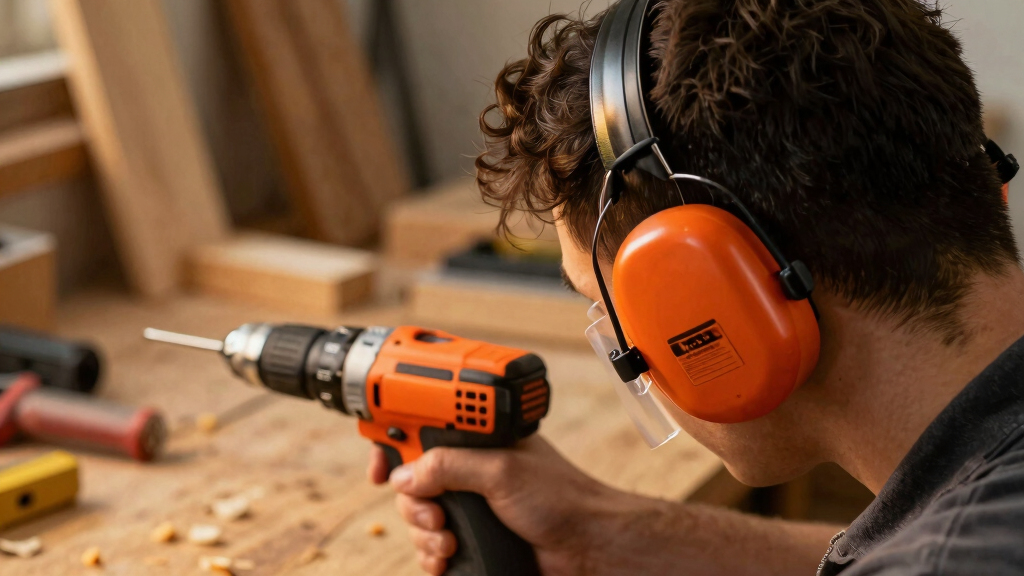
Center each cup over the ear and check for gaps. Hair, hats, safety glasses and crooked headbands can interrupt the cushion seal.
Keep protection on
Removing protection briefly in a loud area reduces overall effectiveness. Put it on before exposure begins and keep it fitted until the noise ends.
Perform a quick fit check every time.
Press earmuff cups inward or carefully check the plug seal and listen for a noticeable change. If noise drops substantially when you press the protector, the original fit may be leaking. Refit before continuing.
From laboratory test to protected hearing
The package rating is only the first link. Effective protection depends on every part of the chain remaining intact.
Updated approaches such as ANSI S12.6-2016 aim to represent real-world fitting more accurately. Electronic earmuff ratings are becoming more standardized, while Single Number Ratings and other performance metrics are being explored to make protection easier to predict.
NRR questions, clarified
Use the rating to narrow your choices, then confirm the protector fits your work, your other safety equipment and the way you move.
How do I choose the right NRR?
Identify the environmental noise level, adjust the NRR downward and choose protection that brings estimated exposure below the target level with a safety margin.
Can I rely on NRR alone?
No. NRR reflects laboratory performance. Fit, correct placement, movement, environment and continuous wear determine real-world results.
Are electronic earmuffs better?
They can amplify quiet sounds and support communication while limiting loud noise. Their protective performance still depends on rating, function and seal.
When should I consider dual protection?
Consider properly fitted plugs plus earmuffs when one device does not create enough estimated reduction, especially around exceptionally loud or impulsive noise.
The best protector is the one that is sufficient, fitted and always worn.
Treat NRR as a starting point—not a promise. Measure the noise, adjust the rating, verify the fit and maintain protection for the full exposure. Your future hearing depends on the complete system.
What is NRR and Why Should You Care?
The NRR, or Noise Reduction Rating, is a number that shows how much a hearing protector can reduce noise in a lab setting. It’s measured in decibels (dB), like the volume knob on your stereo. A higher NRR means more potential noise blocking.
For example, a pair of foam earplugs with an NRR of 33 can cut noise significantly—up to 33 dB under perfect conditions. But that’s in a controlled environment, not your noisy worksite. Remember, the real world is messier.
Knowing your device’s NRR helps you estimate whether you’re staying within safe noise exposure limits, especially when working around equipment that blasts noise over 85 dB.
earplugs with high NRR for loud environments
As an affiliate, we earn on qualifying purchases.
As an affiliate, we earn on qualifying purchases.
How to Use NRR Numbers to Pick the Right Ear Protection
Choosing the right hearing protection isn’t just about the highest NRR. You need a number that brings your noise exposure below danger levels. Here’s a simple process:
- Identify the loudest noise level in your environment. For example, a chainsaw at 110 dB.
- Subtract 25% from the NRR to estimate real protection. For a foam plug with NRR 33, 33 – 25% = about 25 dB of real-world reduction.
- Compare that to your noise level. If 110 dB minus 25 dB equals 85 dB, you’re just at the limit. You might need a higher NRR device or double protection.
- Always err on the side of caution. If you’re unsure, choose a device with a higher NRR.
Example: Working near a concrete saw at 105 dB, a device with a true reduction of about 25-30 dB (NRR 33-36) keeps you within safe limits.
As an affiliate, we earn on qualifying purchases.
Comparison Table: NRR vs Real-World Protection
| Device Type | Lab NRR | Estimated Real-World Reduction |
|---|---|---|
| Foam Earplugs | 33 dB | about 25 dB |
| Passive Earmuffs | 25 dB | about 19 dB |
| Electronic Earmuffs | 20-30 dB | 15-23 dB |
Note: The 25% reduction is a general rule; actual protection varies with fit and activity.
noise reduction hearing protection for shooting
As an affiliate, we earn on qualifying purchases.
As an affiliate, we earn on qualifying purchases.
Why Proper Fit and Consistent Use Matter More Than NRR Alone
Even the highest NRR device won’t protect your hearing if it doesn’t fit well or if you forget to wear it. A loose earplug or crooked earmuff can let noise leak in like a sieve. Think of it like wearing a helmet—you need it snug and steady.
For example, a worker with a foam earplug that’s not fully inserted could be exposed to harmful noise levels despite a high NRR rating. Consistency and correct placement are your best defenses.
Always perform a simple fit check: pinch the earplug tight or press the earmuff against your head to feel for gaps. This step makes a huge difference.
As an affiliate, we earn on qualifying purchases.
Recent Changes and Future of Hearing Protection Ratings
Standards like ANSI S12.6-2016 now push for testing that mimics real-world conditions better. This means more accurate NRR values that reflect actual use. Electronic earmuffs are also getting standardized ratings, combining amplification with noise reduction.
Some organizations advocate for a shift toward single number ratings or other metrics that better predict true safety. It’s a move toward making protection more reliable and understandable.
For you, this means choosing gear that’s tested under realistic conditions will give you better peace of mind—less guesswork, more protection.
Frequently Asked Questions
How do I choose the right hearing protection based on NRR?
Start by identifying your noise environment’s decibel level. Pick a device with an NRR that, after reducing by 25%, keeps noise below 85 dB. Remember, fit and wear are key—an NRR alone isn’t enough.Can I rely solely on the NRR number?
No. The NRR is a lab measurement. Real-world protection depends on proper fit, consistent use, and activity type. Always perform fit checks and wear protection throughout exposure.How do I properly wear earplugs or earmuffs?
Follow manufacturer instructions. For earplugs, roll and insert snugly until they expand. For earmuffs, position them firmly over your ears, ensuring a good seal. Do a quick fit test—cover and listen for leaks.Are electronic earmuffs better than passive ones?
They offer amplification of quiet sounds and communication, which passive earmuffs can’t. But their protection level still depends on proper fit and function. They’re great in noisy environments where you need awareness.What are the limitations of NRR ratings?
NRR is based on controlled lab tests, not real-world use. Factors like fit, movement, and environment can reduce actual noise reduction. Use NRR as a guide, not a guarantee.Conclusion
Think of hearing protection as a shield—no number guarantees full safety unless it’s worn correctly and consistently. The NRR is a helpful guide, but your best defense is proper fit and awareness of your environment.
Next time you gear up, remember: a high NRR combined with good fit keeps your ears safe, even in the loudest situations. Protect your hearing like your future depends on it—because it does.
Fall yard work Picks
leaf blowers
As an affiliate, we earn on qualifying purchases.