
TL;DR

Get tools and workshop supplies delivered free — and shop member deals
- Fast, free delivery on millions of items
- Access to Prime Big Deal Days deals on October 6–7
- Prime Video, Amazon Music and more included
Anti-vibration gloves can reduce some vibration at higher frequencies, but research does not support treating them as primary protection against vibration white finger. Certified gloves (ISO 10819) pass a lab screening test, not proof of clinical protection, and gloves perform poorly at the low frequencies many heavy tools produce. Effective prevention follows a hierarchy: lower-vibration tools, maintenance, limited exposure time, warm hands, and gloves last.
Your fingers going dead white on a cold morning isn’t a minor annoyance. It’s how vibration white finger announces itself — the vascular face of hand-arm vibration syndrome (HAVS), and by the time you see it, some of the damage may already be permanent. Chainsaw operators, breaker runners, and grinder jockeys know the pattern: one or two fingers blanch sharply in the cold, then flush blue and throb red as they warm back up.
So the obvious question: will a pair of padded anti-vibration gloves save your hands? The honest answer, backed by the research, is partially — and less than the packaging implies. Gloves attenuate some frequencies, do almost nothing at others, and can even amplify vibration in certain glove-tool combinations. That’s not a reason to skip them. It’s a reason to know exactly where they fit in your protection stack.
In this guide, you’ll learn what white finger actually is, what ISO 10819 certification really means, where gloves perform well and where they fail, and the eight control measures that carry the real protective load. No marketing spin. Just what the evidence supports.
Anti-vibration gloves attenuate higher-frequency vibration but provide little isolation at the low frequencies produced by breakers, chipping hammers, and othe…
ISO 10819 certification is a laboratory palm-transmission screening test; it does not prove prevention of HAVS, finger protection, or a fixed percentage reduct…
Glove attenuation generally cannot be subtracted from A(8) exposure values (action value 2.5 m/s², limit value 5 m/s²) without task-specific evidence.
Bulky gloves that kill dexterity can backfire: harder gripping increases vibration transmission and fatigue — evaluate gloves during the actual task, not by pa…
Effective prevention is hierarchical: lower-vibration tools, maintenance, shorter exposure, better technique, warm dry hands, health surveillance — with gloves…
Anti-Vibration Gloves and White Finger: What the Research Supports
Gloves attenuate some frequencies, do almost nothing at others, and can even amplify vibration in certain glove-tool combinations. This is where they truly fit in your protection stack — no marketing spin, just what the evidence supports.
What White Finger Actually Is (and Why It Doesn’t Reverse Itself)
Vibration white finger is the vascular component of hand-arm vibration syndrome (HAVS). Sustained vibration damages the small blood vessels, nerves, muscles, and joints of the hands and arms. The classic attack: one or more fingers turn sharply, unnaturally white — often with a clearly defined boundary — triggered by cold or damp. As circulation returns, fingers shift to blue, then red, sometimes with pain or tingling.
Blanching Attacks
Sharply defined whitening of one or more fingers in cold conditions, followed by blue flushing and red throbbing on rewarming. The symptom you see.
Silent Nerve Damage
Numbness, reduced touch sensitivity, fumbling with small objects, and grip loss can appear with no whitening at all. The symptom you feel — usually too late.
Potentially Irreversible
Caught early, symptoms often improve when exposure drops. Advanced HAVS stays disabling. Risk = magnitude × duration, shaped by tool condition, grip force, posture, cold, and smoking.
What ISO 10819 Tells You — and What It Doesn’t
ISO 10819 is a laboratory screening test measuring vibration transmission through a glove’s palm across specified frequency ranges. Think of it like a tread-wear rating on tires: real, standardized, comparable — but it doesn’t tell you how your truck handles in a specific mud pit.
Product Performance
A defined level of attenuation on a test bench. It separates gloves engineered with resilient, vibration-absorbing materials from ordinary padded gloves making vague marketing claims.
Clinical Protection
No proof the glove prevents HAVS or white finger. No guarantee across all tools or frequencies. No reliable percentage reduction for exposure calculations. And it says almost nothing about the fingers — testing focuses on the palm, while white finger symptoms live in the fingers, which must stay flexible to work.
“The standard is a product-performance screening test, not proof of clinical protection. And gloves wear: a two-season-old glove with flattened padding doesn’t test like it did new.”
Where Gloves Work, Where They Fail, and Where They Make It Worse
The frequency asymmetry decides everything: gloves attenuate high-frequency vibration reasonably well and low-frequency vibration poorly. Because the hand, glove, and tool form a coupled mechanical system, some combinations amplify vibration in parts of the spectrum.
| Factor | Glove Performance Impact | Verdict |
|---|---|---|
| High-frequency vibration (sanders, polishers, rotary tools) | Meaningful attenuation in many certified gloves — legitimate supplementary protection with a warm liner. | ✓ Works |
| Low-frequency vibration (breakers, chipping hammers, rock drills) | Most damaging energy of percussive tools sits exactly where gloves provide little isolation — or amplify it. | ✗ Fails |
| Finger-side exposure | Weaker protection than the palm; flexibility requirements limit isolation material on fingers. | ~ Weak |
| Hard gripping from lost dexterity | Bulky gloves kill tactile feedback; hands compensate by gripping harder, increasing transmission, fatigue, and strain. | ✗ Backfires |
| Cold, damp conditions | Warm gloves reduce cold-triggered vascular attacks — a real benefit, but a warm hand still absorbs vibration. | ✓ Thermal win |
Attenuation Across the Spectrum
“A glove that helps on a polisher can be useless — or counterproductive — on a demolition breaker.”
Where Gloves Fit in the Protection Stack
Gloves cannot make an unsafe exposure safe. Effective prevention is hierarchical — the real protective load is carried by the controls that come first, with gloves as the final supplementary layer.
What White Finger Actually Is (and Why It Doesn’t Reverse Itself)
Vibration white finger is a vascular condition caused by repeated exposure to vibrating tools, and it’s one component of hand-arm vibration syndrome. Sustained vibration damages the small blood vessels, nerves, muscles, and joints of the hands and arms. The classic attack looks like this: one or more fingers turn sharply, unnaturally white — often with a clearly defined boundary — usually triggered by cold or damp conditions. As circulation returns, the fingers shift to blue, then red, sometimes with pain, tingling, or a deep ache.
Here’s the part most people miss: the nerve damage can show up without any whitening at all. Persistent numbness, reduced touch sensitivity, fumbling with small objects, loss of grip strength — these can indicate vibration-related nerve damage even if your fingers never turn white. I’ve talked with longtime operators who brushed off numb fingertips for years because “nothing was changing color.” By the time they reported it, the dexterity loss was there to stay.
And that’s the hard truth about HAVS: damage can become irreversible. Caught early, symptoms often improve when exposure drops. Advanced cases stay disabling. Risk isn’t just about how violent the tool is, either — it’s magnitude times duration, shaped by tool condition, grip force, posture, cold, smoking, and individual susceptibility. Two workers on the same breaker, same hours, different outcomes. Bodies vary.
White finger is a symptom you see. The nerve damage is the one you feel — usually too late. Report numbness and tingling as seriously as you’d report blanching.
As an affiliate, we earn on qualifying purchases.
What ISO 10819 Certification Really Tells You (and What It Doesn’t)
ISO 10819 is a laboratory screening test that measures vibration transmission through a glove’s palm across specified frequency ranges — nothing more, nothing less. A glove bearing this mark has demonstrated a defined level of attenuation on a test bench. That’s genuinely useful information. It separates gloves engineered with resilient, vibration-absorbing materials from ordinary padded gloves making vague claims.
What it does not establish is longer — and worth reading carefully. Certification does not prove the glove prevents HAVS or white finger. It doesn’t guarantee equal performance with every tool, or attenuation across all frequencies. It doesn’t provide a reliable percentage reduction you can plug into exposure calculations. And critically, it says almost nothing about the fingers — testing focuses on the palm, while white finger symptoms live in the fingers, which must stay flexible enough to work and therefore can’t carry heavy isolation material.
Think of it like a tread-wear rating on tires. Real, standardized, comparable — but it doesn’t tell you how your truck handles in a specific mud pit with a specific load. The standard is a product-performance screening test, not proof of clinical protection. Also note: gloves wear. Cushioning compresses, materials age, moisture gets in. A two-season-old glove with flattened padding doesn’t test like it did new.
anti-vibration gloves for heavy tools
As an affiliate, we earn on qualifying purchases.
As an affiliate, we earn on qualifying purchases.
Where Gloves Work, Where They Fail, and Where They Make It Worse
Research shows anti-vibration gloves attenuate higher-frequency vibration reasonably well and low-frequency vibration poorly — and that asymmetry decides everything. Many certified gloves deliver meaningful reduction for tools whose vibration spectrum carries substantial high-frequency energy: some sanders, polishers, and small rotary tools fall in this camp. For those jobs, a good glove plus a warm liner is legitimate supplementary protection.
But many percussive and heavy tools — breakers, chipping hammers, rock drills — generate their most damaging energy at low frequencies, exactly where gloves provide little isolation. Worse, because the hand, glove, and tool form a coupled mechanical system, some glove-and-tool combinations actually amplify vibration in parts of the spectrum. A glove that helps on a polisher can be useless or counterproductive on a demolition breaker.
Then there’s the grip-force trap, the one nobody warns you about. Thick, poorly fitting gloves reduce tactile feedback and dexterity. Your hands compensate by gripping harder — which can increase vibration transmission to the hand, add fatigue, and pile on musculoskeletal strain. I’ve watched guys in bulky gloves strangle a grinder handle because they couldn’t feel the tool anymore. The glove meant to protect them was loading the dice the other way.
| Factor | Glove Performance Impact |
|---|---|
| High-frequency vibration (some sanders, polishers) | Meaningful attenuation in many certified gloves |
| Low-frequency vibration (breakers, percussive tools) | Little isolation; possible amplification |
| Finger-side exposure | Weaker protection than palm; flexibility limits material |
| Hard gripping from lost dexterity | Can increase transmission and fatigue |
| Cold, damp conditions | Warm gloves reduce cold-triggered attacks (a real benefit) |
One genuine win: thermal protection. Keeping hands warm reduces cold-triggered vascular attacks and improves comfort. That’s valuable — just don’t confuse it with preventing the underlying vibration damage. A warm hand still absorbs vibration.
hand-arm vibration protection gloves
As an affiliate, we earn on qualifying purchases.
As an affiliate, we earn on qualifying purchases.
Why Lab Numbers Don’t Transfer to Your Job Site
A glove’s certification cannot be automatically converted into a reduction factor for daily vibration exposure, because laboratory testing can’t reproduce your actual work. The variables that change everything in the field include tool type and operating speed, handle shape, feed and push force, grip strength, hand size and glove fit, wrist and arm posture, glove temperature and condition, and the direction and frequency of the vibration itself. That’s a lot of moving parts, and each one shifts the result.
Concrete example: a certified glove tested at a standardized grip force on a lab handle might attenuate 30% of a test signal. You run the same model on a worn 9-inch grinder, pushing hard into a weld seam, in 35°F drizzle, with a grip tightened by three hours of fatigue. Transmission is now a different animal entirely. The certification number and your real-world exposure are not the same quantity.
This is why safety engineers get twitchy when someone proposes deducting glove performance from calculated exposure values. The commonly referenced European and UK benchmarks use an eight-hour exposure value, A(8), with an exposure action value of 2.5 m/s² and an exposure limit value of 5 m/s². Glove attenuation generally shouldn’t be subtracted from those figures without reliable, task-specific evidence. Requirements also differ by jurisdiction — check your local occupational-safety rules rather than importing numbers.
Recent research directions acknowledge this gap: tool-specific and task-specific glove assessment, testing at realistic grip forces, better measurement through the fingers, improved materials balancing attenuation with flexibility, and wearable sensors for tracking exposure. All promising. But a sensor-equipped glove doesn’t necessarily measure the exposure quantity occupational standards require. Validate before you trust.
vibration reducing gloves for chainsaw
As an affiliate, we earn on qualifying purchases.
As an affiliate, we earn on qualifying purchases.
The 8 Controls That Actually Protect Your Hands (Gloves Are #8)
The strongest protection against vibration white finger follows a hierarchy of controls, and anti-vibration gloves sit at the bottom of it — a supplementary measure, not a foundation. Here’s the order the evidence supports:
- Eliminate or substitute the vibrating process. Non-vibrating methods, remote operation, automation, or lower-vibration alternatives where practical. The tool that never runs can’t hurt anyone.
- Select genuinely lower-vibration tools. Compare tools under representative operating conditions, not headline manufacturer values.
- Maintain tools and consumables. Worn bearings, blunt cutters, damaged mounts, unbalanced components, and wrong accessories all raise vibration and the force needed to control the tool. Sharp chains, fresh abrasive discs, tight mounts.
- Reduce exposure time. Redesign tasks, rotate work, break up long uninterrupted vibration periods. Rotation only helps if it truly cuts each person’s total exposure — shuffling the same hours around doesn’t.
- Improve technique and ergonomics. Avoid excessive grip, push, and feed force while keeping safe control of the tool.
- Manage cold and wet conditions. Warm hands, warm body, dry gloves.
- Use health surveillance. Symptom education and periodic assessment for anyone with meaningful exposure.
- Add anti-vibration gloves as a supplementary measure. Selected for the specific tool and task, with attention to fit, dexterity, warmth, durability, and other safety requirements.
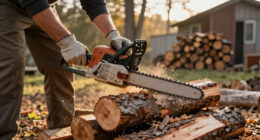
Notice what’s at the top: buying a better tool or sharpening a chain does more for your hands than any glove purchase. A dull chain on a chainsaw forces higher feed force, longer cuts, and more transmitted vibration — fixing that is a control, not a chore. And per point 7, know the symptoms worth reporting.
Symptoms You Report Today, Not Next Year
Seek medical or occupational-health assessment if your fingers turn white during cold exposure, or if numbness, tingling, reduced sensitivity, or grip loss shows up and sticks around. The specific list: fingers whitening in cold, recurrent numbness or tingling, reduced sensitivity to touch or temperature, loss of grip strength or dexterity, difficulty handling small objects, painful color changes as fingers warm, and symptoms that persist after tool use or interfere with sleep. Early reporting is the difference between symptoms that improve when exposure drops and damage that’s permanent.
One caution on self-diagnosis: similar symptoms come from primary Raynaud’s phenomenon, carpal tunnel syndrome, nerve compression, circulation disorders, and medication effects. Diagnosis requires proper clinical and exposure assessment — don’t assume, and don’t let a supervisor assume for you.
When an attack hits, go with gentle rewarming. Avoid very hot water or surfaces, because reduced sensation means you can burn yourself without feeling it. Persistent, severe, or unusual attacks warrant a medical visit, not toughing it out. And if you smoke, know that it constricts blood vessels and can worsen cold-triggered symptoms — quitting helps circulation, though it’s no substitute for cutting vibration exposure.
Gentle rewarming, not rapid heat. Numb fingers burn easily, and a burn on top of HAVS compounds the damage.
What This Looks Like on Three Real Job Sites
Abstract frequency curves only go so far. Here are three scenarios that show how the same glove logic plays out differently depending on the tool, the task, and the conditions.
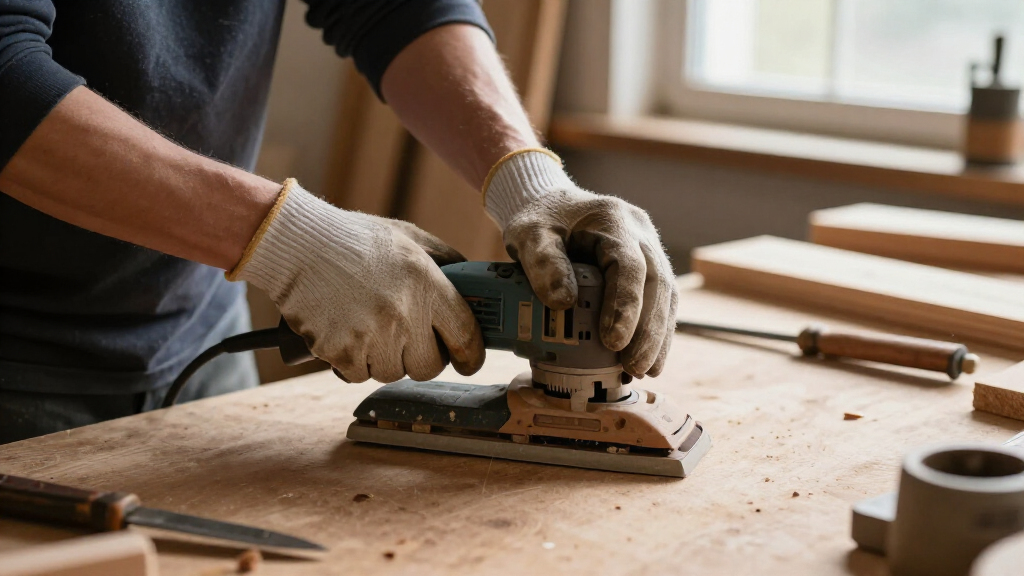
Scenario 1: The furniture restorer. Maria runs a random-orbit sander six hours a day refinishing oak doors. Her tool’s spectrum leans high-frequency — exactly where certified gloves attenuate well. Add a thin liner for warmth in her cold workshop, and gloves here are legitimate backup. Her bigger win was switching to a newer low-vibration sander and replacing abrasive discs before they dull, which cut her tool’s emission value far more than any glove could.
Scenario 2: The demolition crew. Dev spends his shifts on a 60-pound concrete breaker, breaking out a slab. The dominant energy sits at the low frequencies where gloves offer little isolation — and where some glove-tool combinations can even amplify transmission. His protections that actually matter: a modern low-vibration breaker on a job rotation that caps his trigger time, serviced mounts and sharp points, and warm, dry gloves mainly to keep his hands warm and prevent cold-triggered attacks. The padded gloves are comfort and thermal layers, not his shield.
Scenario 3: The fabrication shop grinder. Tom wears extra-thick gloves “for protection” while grinding welds, but the bulk kills his feel for the tool, so he chokes the handle — harder grip, more transmission, more fatigue, and a near-miss when the grinder kicked and he couldn’t react quickly. The fix wasn’t more padding; it was a correctly sized, slimmer certified glove, a well-maintained tool with fresh discs, and scheduled break periods to cut his A(8) exposure.
The pattern across all three: the glove’s job changes with the tool’s frequency profile and the task’s demands — sometimes a real supplementary layer, sometimes mostly a warm mitt, sometimes an active problem when it destroys dexterity. Match the glove to the job, and never let it substitute for the controls above it in the hierarchy.
Frequently Asked Questions
Do anti-vibration gloves prevent vibration white finger?
There is insufficient evidence to claim they reliably prevent it. Certified gloves may reduce certain vibration components — mainly higher frequencies — but they should supplement, not replace, engineering controls and exposure reduction. Treat them as one layer in a hierarchy that starts with the tool itself.
Does thicker glove padding mean better vibration protection?
No. Thickness alone doesn’t determine attenuation — material properties, vibration frequency, fit, grip force, and tool interaction all matter. Excessive bulk can actually backfire by impairing control and forcing a harder grip, which increases vibration transmission and fatigue.
Can I deduct glove performance from my calculated vibration exposure?
Usually not without reliable, task-specific evidence. ISO 10819 certification results aren’t a universal real-world reduction factor, and lab tests can’t reproduce your grip force, posture, tool condition, or handle geometry. Use the raw tool exposure values for A(8) calculations.
Which tools are most associated with HAVS?
Frequently cited examples include breakers, grinders, impact wrenches, chipping hammers, rock drills, chainsaws, compactors, sanders, polishers, and powered cutting tools. Actual risk depends on the tool’s vibration magnitude and how long and how often you use it — a mild tool run all day can out-damage a violent one used briefly.
Can vibration white finger be cured?
There’s no guaranteed cure for established occupational damage. Reducing or stopping exposure can prevent progression and may improve symptoms, particularly when caught early. Medical management can help some people control symptoms, which is exactly why early reporting matters.
How should I choose and replace anti-vibration gloves?
Look for certified performance, correct sizing, good finger mobility, adequate grip, thermal protection for your conditions, and compatibility with other hazards — then trial them on the actual task. Replace gloves when cushioning is compressed, damaged, hardened, contaminated, or no longer fits; there’s no universal replacement interval.
Conclusion
Here’s the whole thing in one line: anti-vibration gloves are the last layer of protection, not the foundation. They buy you some high-frequency attenuation and welcome warmth — real benefits, worth having on the right tools — but the research firmly puts the protective load on lower-vibration equipment, sharp consumables, maintained mounts, controlled exposure time, and warm hands. No glove makes an unsafe exposure safe.
So next time you’re loading the truck for a day of breaking concrete or grinding welds, ask the harder question first: is this the lowest-vibration way to do this job, and how long am I actually on the tool? Answer those two honestly, and the gloves become what they should be — backup, not bodyguard.
Fall Picks
fall essentials
As an affiliate, we earn on qualifying purchases.