
TL;DR

Get tools and workshop supplies delivered free — and shop member deals
- Fast, free delivery on millions of items
- Access to Prime Big Deal Days deals on October 6–7
- Prime Video, Amazon Music and more included
For all-day yard work, UPF clothing plus broad-spectrum, water-resistant SPF 30–50 sunscreen is more reliable than sunscreen alone. Clothing provides continuous protection on covered skin, while sunscreen protects your face, ears, neck, scalp, hands, and gaps around cuffs or collars.
Sunscreen can lose the yard-work battle before lunch, especially when sweat runs under your earmuffs and a dusty forearm wipes across your face. You may start the morning evenly coated, yet mowing two acres, dragging brush, or pushing a pressure washer can leave streaks, missed patches, and bare skin within hours.
The dependable answer is not choosing one side. For long outdoor jobs, UPF clothing plus sunscreen on exposed areas is generally more reliable than sunscreen alone. Fabric handles the broad acreage of your shoulders, arms, back, and legs, while sunscreen works the awkward fence lines: your ears, temples, hands, scalp, and the narrow gaps around a collar.
You still need to manage heat. A thick dark work shirt that feels like wet carpet by 11 a.m. can create its own hazard, so breathable fabric, shade breaks, water, and airflow belong in the same plan. This guide shows you how UPF ratings work, where sunscreen fails, what to wear, and how to stay protected through a full shift of sun, sweat, dust, and noise.
Use a loose UPF 30–50+ shirt and long trousers as the main UV barrier during extended yard work.
Apply broad-spectrum, water-resistant SPF 30–50+ sunscreen about 15 minutes before exposure and reapply at least every two hours.
Protect the ears, neck, temples, hairline, scalp, lips, hands, wrists, and shifting clothing edges instead of stopping at the obvious areas.
Treat 40- or 80-minute water-resistance claims as reapplication guidance, not a promise of all-day protection.
Balance coverage with breathable fabric, shaded breaks, hydration, and immediate action when heat-illness symptoms appear.
Field Guide · Full-Shift UV Protection
UPF Clothing vs Sunscreen for All-Day Yard Work
For a long day of mowing, trimming, hauling, and washing, the dependable answer is a layered system: tested UPF clothing over broad areas, plus broad-spectrum sunscreen wherever skin remains exposed.
01 · The winning system
Build protection in layers
UPF clothing and sunscreen solve different parts of the same problem. Fabric gives stable, repeatable protection where it remains intact and positioned; sunscreen covers the irregular places fabric cannot.
Cover the acreage
Choose a loose, lightweight UPF 30–50+ long-sleeved shirt and long trousers. Test the fit while reaching, bending, and steering so the fabric does not stretch thin or expose your waist.
Seal the gaps
Apply broad-spectrum, water-resistant SPF 30–50+ to every exposed area. Lotion or cream makes even coverage easier to judge, especially around ears, temples, hairlines, and hands.
Keep the system wearable
Use breathable fabric, airflow, water, and shaded breaks. Heavy, saturated clothing can add heat burden and undermine a protection plan that looked sensible at sunrise.
02 · What UPF means
A tested number beats a hopeful guess
UPF measures how much UVA and UVB passes through fabric. UPF 50 allows about one-fiftieth of ultraviolet radiation through; UPF 30 allows about one-thirtieth.
Dense, dark, tightly woven material generally blocks more UV than pale, thin, loosely woven fabric.
Wetness, stretching, wear, damage, and tight contact with skin can reduce fabric protection.
A tested UPF label provides greater certainty than ordinary clothing with unknown performance.
03 · Side-by-side
Different strengths, different failure points
Clothing is more reliable on covered skin. Sunscreen remains essential on exposed and irregular areas—but its real-world performance depends heavily on application, sweat, wiping, and timing.
| Factor | UPF clothing | Sunscreen |
|---|---|---|
| Reliability | ✓High while intact and properly positioned | ~Depends on amount, coverage, and reapplication |
| Duration | ✓Usually continuous during wear | ✗Must be renewed at least every two hours |
| Heavy sweat | ✓Does not wash away like lotion | ✗Can thin, move, or wipe off |
| Coverage | ✓Excellent beneath the fabric | ✓Best for face, hands, scalp, and gaps |
| Heat load | ~Varies with weight, fit, color, and airflow | ✓Adds little insulation, but may feel greasy |
| Cost and mess | ~Higher initial cost, then reusable | ~Recurring cost; may attract dust |
| Main failure | ✗Gaps, wet or stretched fabric, worn material | ✗Too little product, missed skin, late renewal |
04 · Make sunscreen survive the shift
The clock starts before the mower
A morning application is not an all-day shield. Sweat under hearing protection, dust on greasy skin, toweling, and a forearm wiped across the face can create bare patches long before lunch.
Apply before exposure
Use broad-spectrum, water-resistant SPF 30–50+ about 15 minutes before going outside.
Apply enough
Adults need roughly one ounce for a fully exposed body. With protective clothing, coat every remaining exposed area generously and evenly.
Renew during breaks
Reapply at least every two hours—and sooner after heavy sweating, wiping, or toweling.
05 · The overlooked zones
Protect the fence lines
Fabric protects the broad surface area. Sunscreen must handle the awkward edges, moving gaps, reflected UV, and exposed skin that a hat or shirt cannot fully shade.
06 · Shift-ready sequence
From setup to cleanup
Make protection part of the work plan. The best system is visible, scheduled, easy to repeat, and compatible with eye protection, hearing protection, gloves, sturdy footwear, and equipment guards.
Do not trade UV protection for overheating. Choose lightweight, breathable coverage; take frequent shaded breaks; maintain airflow and hydration; and stop work immediately if heat-illness symptoms appear.
Why UPF Clothing Carries More of the Load
UPF clothing vs sunscreen for all-day yard work has a clear winner on covered skin: tested clothing. A UPF 50 shirt lets about 1/50 of ultraviolet radiation reach your skin, blocking roughly 98%, and it keeps working while you mow, trim, haul brush, or lose track of the clock [1].
UPF measures protection against UVA and UVB passing through fabric. SPF focuses mainly on sunburn-producing UVB, although a broad-spectrum sunscreen also protects against UVA. That distinction matters during an eight-hour cleanup because UVA contributes to skin aging and long-term damage even when your shoulders never turn lobster red.
Think of clothing as the roof over the main building and sunscreen as flashing around the edges. A loose UPF 30–50+ long-sleeved shirt protects a large, predictable area without asking you to stop every two hours. If you spend Saturday clearing a fence line, that shirt keeps covering your back while sweat, sawdust, and repeated bending test every sunscreen application.
Ordinary clothing can help, but its protection varies. Dense, dark, tightly woven fabric usually blocks more UV than a pale, thin shirt that glows when held against a window. Stretching, wear, holes, and moisture can lower protection, so a tested UPF label gives you a known performance number rather than a hopeful guess.
As an affiliate, we earn on qualifying purchases.
See the Tradeoffs Before You Start the Mower
UPF clothing vs sunscreen for all-day yard work comes down to reliability, coverage, sweat, and heat. Clothing wins where it stays properly positioned, while sunscreen wins on exposed or irregular areas. Your strongest setup uses each tool where its practical strengths beat its weak points.
| Factor | UPF clothing | Sunscreen |
|---|---|---|
| Reliability | High while intact and in position | Depends on amount, coverage, and reapplication |
| Duration | Continuous during wear | Reapply at least every two hours |
| Heavy sweat | Does not wash off like a lotion | Can move, thin out, or wipe away |
| Coverage | Excellent beneath the fabric | Best for faces, hands, scalp, and clothing gaps |
| Heat load | Depends on weight, fit, color, and ventilation | Adds little insulation but may feel greasy |
| Main failure | Wet, stretched, damaged, or shifted fabric | Thin application, missed skin, or late reapplication |
Suppose you start a zero-turn mower at 8 a.m. wearing a UPF shirt and sunscreen on your face. By noon, the shirt still protects your shoulders, but the sunscreen near your temples may have mixed with sweat and the foam seal of your hearing protection. That is why your break schedule needs a sunscreen touch-up, even though the shirt needs no fresh coating.
The comfort tradeoff deserves an honest look. A heavy cotton shirt may block plenty of light but hold warm moisture against your skin like a shop rag, while a lightweight, loose UPF shirt can move air around your torso. Sunscreen feels cooler, yet dust can stick to a greasy film and tempt you to wipe it away.
water-resistant broad-spectrum sunscreen SPF 50
As an affiliate, we earn on qualifying purchases.
As an affiliate, we earn on qualifying purchases.
Build a Sun-Protection Kit That Lasts Until Cleanup
A dependable yard-work kit combines covered skin, protected gaps, planned reapplication, and heat control. Set it out before you fuel the mower or load batteries. If every item has a clear job, you are less likely to discover a scorched neck while shower water stings it that evening.
- Start with breathable UPF 30–50+ clothing. Choose a loose long-sleeved shirt and durable trousers that let you squat, reach, and steer without stretching the fabric paper-thin. For example, test the shirt while reaching overhead as if you were using a pole saw; your waist should remain covered.
- Add a wide-brimmed hat and UV-protective sunglasses. A baseball cap shades your forehead but leaves your ears and neck exposed. A broad brim or neck flap throws a larger shadow, which helps when you spend an hour walking slow passes behind a spreader.
- Apply broad-spectrum, water-resistant SPF 30–50+ sunscreen. According to the American Academy of Dermatology, SPF 30 or higher is the practical minimum for outdoor use [1]. Apply it about 15 minutes before exposure so it can settle before sweat starts rolling.
- Pack SPF lip balm and a usable refill. A lotion bottle stored in a shaded cooler pocket is more dependable than one baked all summer on a truck dashboard. Put the refill beside your water so the sight of one reminds you to use the other.
- Schedule shade and water breaks. Reapply sunscreen at least every two hours and sooner after heavy sweating or toweling. Pair that stop with a drink, a pulse check, and a few minutes where moving air can pull heat from your shirt.
This system should fit the actual property. A 20-minute trim around a townhouse needs less planning than mowing three rolling acres, clearing storm limbs, and washing a gravel-streaked driveway at 2,500 PSI. Match your water supply, sunscreen quantity, clothing, and break timing to the job’s real runtime.
Your sun kit does not replace other PPE. Keep using eye protection, hearing protection, gloves, sturdy footwear, and equipment-specific guards. Sun protection is one layer in the stack, not permission to trade away protection from flying gravel, hot mufflers, sharp blades, or chemical splash.
breathable UV protection clothing for yard work
As an affiliate, we earn on qualifying purchases.
As an affiliate, we earn on qualifying purchases.
Make Sunscreen Hold Up Through Sweat, Dust, and Wiping
UPF clothing vs sunscreen for all-day yard work exposes sunscreen’s biggest weakness: it depends on your technique. Use a broad-spectrum, water-resistant SPF 30 or higher, apply it generously about 15 minutes before going outside, and renew it at least every two hours or sooner when sweat and wiping disturb the film.
According to FDA labeling rules, water resistant means 40 or 80 minutes under a standardized test; it does not mean waterproof, sweatproof, or good until supper [2]. During a humid hedge-trimming job, sweat can track down your cheeks in silver lines while your glove repeatedly brushes your brow. Treat that physical wiping as a reason to reapply.
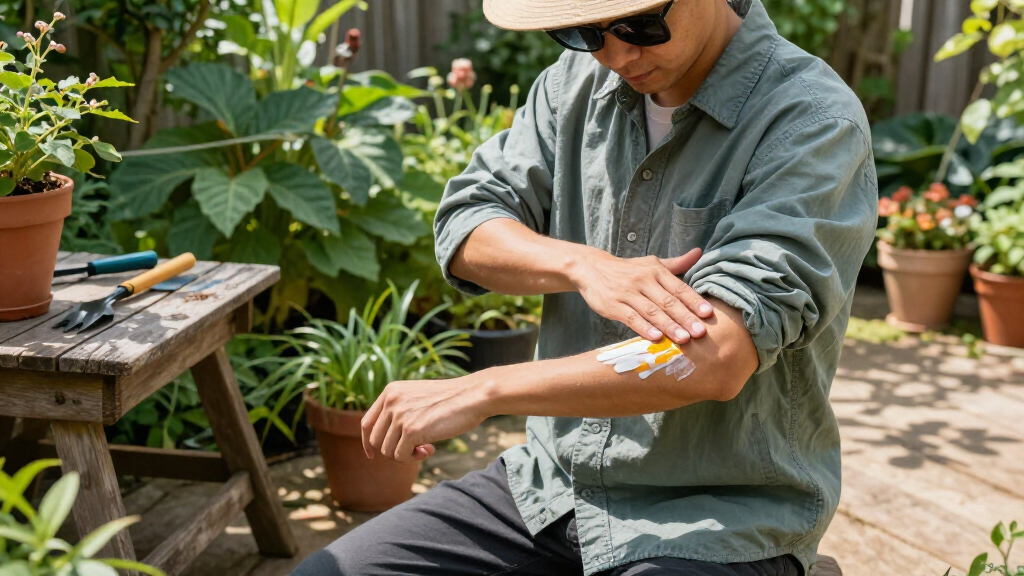
Adults need roughly one ounce for a fully exposed body, though long clothing reduces the area you must coat. Cover the ears, back and sides of the neck, temples, hairline, scalp part, lips, hands, and the skin beside sunglasses or cuffs. One practical check: turn your head in a mirror and look for dry strips below the ears, where hurried applications often stop.
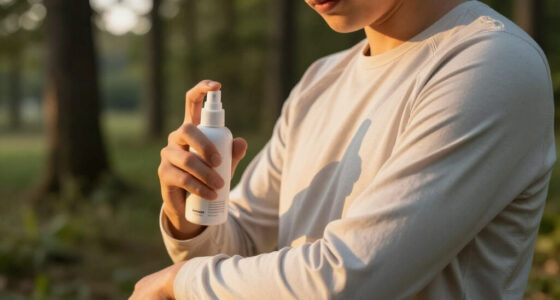
Lotions and creams make complete coverage easier to see. Sprays can work, but wind may carry the mist past your skin; spray generously into your hand or onto the target area, rub it in, avoid breathing the cloud, and never spray directly at your face. Sticks suit noses and cheekbones, but you need several overlapping passes, not one quick racing stripe.
If mosquitoes join the crew, apply sunscreen first, let it dry, and then add insect repellent. Combination products can be awkward because sunscreen needs more frequent renewal than many repellents. Also check the expiration date and avoid sunscreen repeatedly cooked in extreme heat, since a swollen, separated bottle is poor insurance for an exposed afternoon.
long sleeve UPF clothing for outdoor work
As an affiliate, we earn on qualifying purchases.
As an affiliate, we earn on qualifying purchases.
Stay Covered Without Cooking Inside Your Shirt
You can reduce UV exposure without trapping dangerous heat by choosing loose, lightweight, breathable UPF clothing and building shaded recovery into the job. Fabric should block sun while allowing air to move, and your schedule should give your body time to shed the heat produced by walking, lifting, and running equipment.
A tightly fitted dark shirt may test well for UV protection yet feel like plastic wrap once it becomes soaked. Look for vented panels, room through the shoulders, and fabric that does not cling when damp. During midsummer brush clearing, a loose shirt can pump warm air out through the collar each time you swing a lopper.
Timing has teeth. UV often peaks around midday, but meaningful exposure can build earlier and later when you stay outside for hours. Use the cooler morning for high-output jobs such as pushing a loaded wheelbarrow uphill, then move to shaded maintenance, cleanup, or indoor tool service when the sun turns the driveway bright white.
More coverage is not safer if heat illness is building underneath it. Confusion, faintness, vomiting, loss of coordination, stopped sweating, or very high body temperature calls for urgent medical help, rapid movement to a cooler place, and active cooling.
Clouds and cool air can fool you. A gray morning may feel harmless while scattered UV still reaches your skin, and a steady breeze can hide how much you are sweating. Keep sun protection and hydration tied to exposure time, not to how hot the sun feels on your face.
If you have very fair skin, a history of skin cancer, a transplant, a photosensitivity disorder, or medicine that increases sun sensitivity, ask your clinician or dermatologist for personal guidance. You may need shorter exposure windows, stricter coverage, or a higher protection margin than a neighbor doing the same job.
Catch the Small Gaps That Cause Big Burns
UPF clothing vs sunscreen for all-day yard work is often decided by the gaps between them. Clothing provides continuous protection only where it covers you, so inspect your collar, cuffs, waist, face, scalp, and hands in the same working positions you will use outside.
A shirt can look fully protective while you stand straight, then climb above your belt when you bend over a garden bed. Apply sunscreen around moving clothing edges, including the wrists, neckline, and lower back when your shirt tends to ride up. For a kneeling weeding job, check whether your trouser legs expose a bright strip above each sock.
Your head has several sneaky failure points. A baseball cap leaves the ears, sides of the face, and much of the neck open to direct and scattered UV. Use a wide-brimmed UPF hat, protect exposed scalp and hair parts, and add UV-protective sunglasses; reflected light from pale concrete or gravel can still reach beneath a brim.
Gloves help, but short cuffs may separate from your sleeves when you reach into a hedge. Either overlap the cuffs or place sunscreen on the exposed band of skin. The same inspection applies to neck gaiters and hooded sun shirts: stretched material, gaps, and fabric pulled tightly across the shoulders may protect less than relaxed fabric.
Finish with a bright-light check. Hold older workwear toward a window and look for thin patches, pinholes, frayed seams, or areas polished almost translucent by years of washing. Some UPF protection comes from permanent construction, while some garments use treatments with a rated wash life, so follow the care label and retire pieces that are worn, damaged, or permanently stretched.
Frequently Asked Questions
Do you need sunscreen underneath a UPF 50 shirt?
You usually do not need sunscreen beneath intact, properly fitting UPF 50 fabric. Apply it near collars, cuffs, waistlines, or any place where the shirt rides up, stretches tightly, becomes transparent when wet, or leaves a moving gap during work.
Is UPF 30 enough for a full day outside?
UPF 30 blocks about 96.7% of ultraviolet radiation, so it gives strong protection when the garment fits well and stays intact. UPF 50+ adds margin for prolonged exposure, intense sun, highly sun-sensitive skin, or jobs where fabric stretches across your shoulders and back.
Can a normal long-sleeved work shirt replace UPF clothing?
A normal shirt may provide substantial protection, but its rating is unknown. Dense, dark, tightly woven material usually performs better than thin, pale fabric; hold the shirt against bright light, and if it glows like a lampshade, choose a tested UPF garment for long exposure.
How often should you reapply sunscreen while sweating?
Reapply at least every two hours and sooner when heavy sweat, toweling, gloves, or hearing protection rubs the sunscreen away. Follow the product’s 40- or 80-minute water-resistance rating, and use shade and water breaks as automatic reapplication reminders [2].
Is SPF 100 better than SPF 50 for yard work?
SPF 100 adds some UVB protection, but it does not repair thin application, missed skin, or late reapplication. A generously applied, broad-spectrum, water-resistant SPF 50 sunscreen renewed on schedule is more dependable than a patchy coat of higher SPF left untouched all afternoon.
Conclusion
Your working rule is simple: let UPF clothing carry the acreage and let sunscreen patrol the fence lines. Add a wide-brimmed hat, UV-protective glasses, SPF lip balm, water, and scheduled shade, then inspect the small gaps that open when you reach, kneel, sweat, or wipe your face.
Set your gear beside the mower keys the night before, and put the sunscreen beside your water bottle. When the engine is humming, the gravel is flashing white, and the afternoon heat starts pressing against your shoulders, your protection should already be working—quietly, continuously, and without depending on luck.
Fall yard work Picks
leaf blowers
As an affiliate, we earn on qualifying purchases.