
TL;DR

Get tools and workshop supplies delivered free — and shop member deals
- Fast, free delivery on millions of items
- Access to Prime Big Deal Days deals on October 6–7
- Prime Video, Amazon Music and more included
Surface cleaners can cut cleaning time by up to 50% and provide more uniform results than manual sweeping. Modern technology and proper technique are key to achieving a smooth, even clean on concrete, especially in large or textured areas.
Imagine a sprawling concrete driveway or a warehouse floor — manually sweeping might seem like the easiest way to clean. But in reality, it’s slow, uneven, and leaves dirt embedded in textured finishes. That’s where surface cleaners come into play. They promise faster, more consistent results, especially on large or rough surfaces.
In this guide, you’ll learn the real differences between surface cleaners and wand sweeping. We’ll explore their strengths, weaknesses, and what recent tech advances mean for your next project. Whether you’re a DIYer or a property-care pro, understanding these tools helps you get the job done right — quickly, safely, and with results that truly impress.
Surface cleaners can cut cleaning time by up to 50% over manual sweeping, especially on large or textured concrete surfaces.
Proper pressure, nozzle choice, and overlapping passes are critical for achieving even, streak-free results.
Recent technological advances, like adjustable nozzles and IoT sensors, make modern surface cleaners more efficient and surface-safe.
Manual sweeping remains useful for initial debris removal or small, delicate areas but can’t match the speed or consistency of power cleaning equipment.
Combining sweeping and surface cleaning offers the best results: sweep first, then power wash for a smooth, uniform finish.
Surface Cleaners vs Wand Sweeping
Getting even results on concrete comes down to controlled pressure, consistent coverage, and the right sequence. Surface cleaners deliver faster, more uniform deep cleaning across large areas; manual sweeping remains valuable for debris removal, delicate zones, and preparation.
Two Tools, Different Jobs
A surface cleaner uses rotating pressure-washer nozzles or brushes to deliver repeatable coverage. Manual sweeping uses a broom or push broom to move loose debris, but it cannot extract grime lodged inside concrete pores.
Uniform by Design
A fixed cleaning head holds the nozzles at a consistent height, helping distribute pressure evenly across smooth, stamped, and textured concrete.
Beyond Loose Debris
Pressurized water removes embedded dirt, grime, moss, and many surface stains that a broom simply passes over.
Combine the Methods
Sweep away stones and loose material first. Then use calibrated power cleaning to produce a brighter, more even finish.
The Big Difference
For large or textured areas, surface cleaners lead on speed, cleaning power, and consistency. Sweeping wins on simplicity, low initial cost, and control around small or sensitive spaces.
| Feature | Surface Cleaner | Manual Sweeping |
|---|---|---|
| Speed | +Up to 50% faster on large areas | ~Slower as area and texture increase |
| Coverage | +Consistent nozzle height and overlap | ~Dependent on effort and technique |
| Cleaning power | +Targets embedded grime and stains | –Mainly removes loose surface debris |
| Large textured concrete | +Strong match when correctly calibrated | –Missed pockets and streaks are common |
| Initial cost | ~Higher equipment investment | +Basic, inexpensive tools |
| Ideal role | +Primary deep-cleaning stage | +Preparation, touch-ups, delicate zones |
Symbols indicate relative advantage (+), limitation (–), or project-dependent performance (~).
Choose by Surface and Scale
Neither method is universally correct. Match the tool to the size of the area, the required cleanliness, the sensitivity of the finish, and the kind of contamination present.
Scale and Consistency Matter
Think driveways, patios, warehouse floors, commercial walkways, and broad textured slabs where repeating the same cleaning action matters.
- Embedded grime or organic growth is visible
- The finish must look even from edge to edge
- Operator time and fatigue affect project cost
- Repeatable professional results are required
Control and Simplicity Matter
Sweeping is effective for loose debris, small patches, edges, sensitive finishes, and spaces where water or powered equipment cannot be used.
- Removing gravel, leaves, and loose dirt first
- Working around delicate joints or details
- Cleaning a small area or quick touch-up
- Preparing the slab for pressure cleaning
Sweeping moves material sitting on top of the slab. It does not reliably remove oil, moss, stains, or dirt embedded in porous and textured concrete.
Speed Meets Smarter Technology
Modern equipment adds finer control, lower water demand, improved ergonomics, and automated monitoring. Those advances help operators clean efficiently without applying unnecessary pressure.
Relative Project Inputs
Indexed comparison: baseline manual project time and conventional water use = 100.
What Newer Machines Add
The Five-Step Even-Finish System
Uniformity is not created by pressure alone. It comes from preparation, calibration, repeatable movement, and a final inspection while the entire slab is still visible.
Clear Debris
Sweep stones, leaves, and loose dirt.
Test Pressure
Begin low in an inconspicuous area.
Set the Nozzle
Match pressure and width to the finish.
Overlap Passes
Keep speed steady and lanes connected.
Inspect and Rinse
Correct missed edges before drying.
What Should You Use?
Start with the desired outcome. Loose debris calls for sweeping. Deep, even cleaning calls for powered equipment. Most complete projects benefit from using both in sequence.
Sweep First
Use a broom for minor touch-ups, loose debris, sensitive edges, and spaces where water or pressure could cause problems.
Power Clean
Use a calibrated surface cleaner for broad slabs, textured concrete, embedded dirt, moss, and visible staining.
Combine Both
Sweep first, test the pressure, make overlapping passes, rinse thoroughly, and inspect before the concrete dries.
Can a surface cleaner damage concrete?
Yes. Excess pressure or poor technique can etch delicate finishes. Start low and test a hidden area before cleaning the full slab.
How do you prevent streaks?
Maintain steady pressure and walking speed, select the correct nozzle width, and overlap each pass rather than leaving gaps.
Are eco-friendly models worthwhile?
They can reduce water use and support biodegradable detergents while still producing strong results when correctly configured.
What maintenance matters most?
Clean the nozzles, inspect rotating parts for wear, address pressure irregularities, and store the unit properly after use.
What Are Surface Cleaners — And Why Do They Matter?
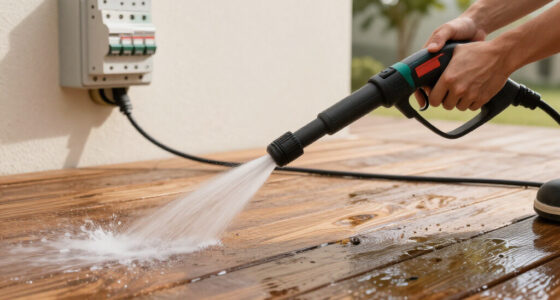
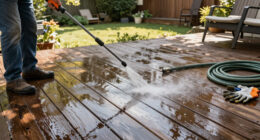
Surface cleaners are attachments or devices that use rotating nozzles or brushes powered by pressure washers. They’re designed to cover large areas quickly, removing dirt, grime, and stains uniformly. Think of them as the power tools of concrete cleaning—like a lawnmower for your driveway.
For example, a 3000 PSI pressure washer with a surface cleaner attachment can clean a 20-foot driveway in about 10 minutes, leaving a bright, streak-free finish. That’s a stark contrast to manual sweeping, which might take 30 minutes or more and still leave streaks or embedded dirt.
This efficiency isn’t just about speed; it’s about consistency. When you use a surface cleaner correctly, the entire surface gets the same pressure and coverage, avoiding the uneven patches common with manual work. This consistency is crucial because uneven cleaning can lead to visible streaks, missed spots, and uneven surface wear over time, which affects the aesthetic and longevity of the concrete. Properly leveraging surface cleaners ensures a uniform appearance that enhances curb appeal and reduces the need for repeat cleaning, saving time and effort in the long run.
As an affiliate, we earn on qualifying purchases.
How Manual Wand Sweeping Falls Short (And When It Still Works)
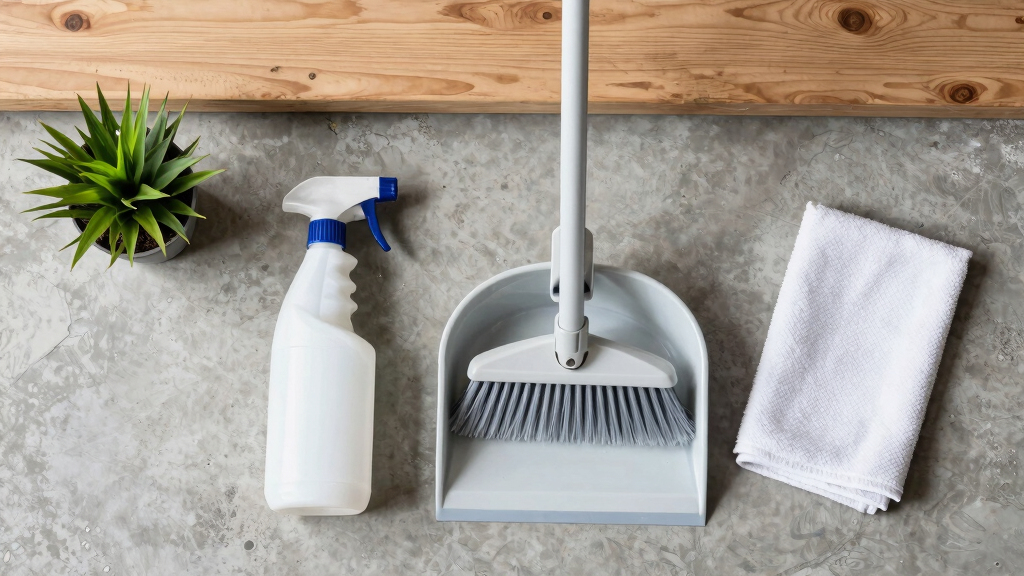
Wand sweeping is the classic, low-tech method: a broom or push broom, pushing loose debris off the surface. It’s simple, cheap, and quiet. But it’s also slow, labor-intensive, and prone to unevenness—especially on textured or stained concrete.
Picture trying to sweep a 50-foot driveway. You’ll notice streaks, missed spots, and a sore back. Plus, sweeping only moves surface debris; it doesn’t clean embedded dirt, oil stains, or moss that’s seeped into the pores. This means that even after sweeping, the surface might still harbor dirt and stains that can cause slipping hazards or degrade the concrete over time.
That said, manual sweeping still has its place. For delicate surfaces, small patches, or initial debris removal before pressure washing, it’s quick and effective. However, it’s a tradeoff: manual sweeping is limited by physical effort and technique, which can result in inconsistent cleaning, especially on large or uneven surfaces. It’s best used as a preparatory step rather than a comprehensive cleaning method. Recognizing these limitations helps you decide when manual sweeping is sufficient and when it’s better to switch to power cleaning for more uniform results.
As an affiliate, we earn on qualifying purchases.
The Big Difference: Speed, Uniformity, and Effectiveness
| Feature | Surface Cleaners | Wand Sweeping |
|---|---|---|
| Speed | Up to 50% faster on large areas | Much slower, especially for big surfaces |
| Coverage | Very uniform, even across textured surfaces | Uneven, streaky results common |
| Cleaning Power | Removes embedded dirt, stains, grime | Mostly surface debris |
| Cost | Higher initial investment | Low-cost, minimal tools needed |
As an affiliate, we earn on qualifying purchases.
Recent Tech That Boosts Surface Cleaning Power
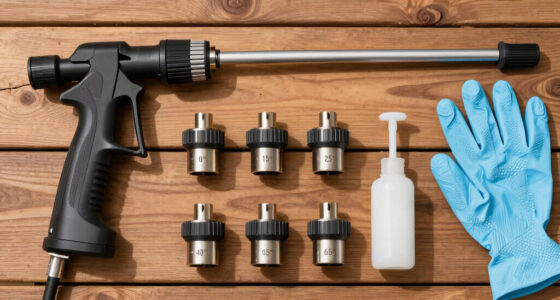
New developments make surface cleaners smarter and more efficient. For example, adjustable nozzles allow you to control pressure precisely, protecting delicate finishes. Some units now include oscillating brushes that scrub stubborn stains without extra chemicals.
Eco-friendly models use less water—sometimes cutting consumption by 30%—and incorporate biodegradable detergents. Plus, IoT-enabled cleaners send maintenance alerts and optimize cleaning cycles with sensors, saving time and extending lifespan.
An example? A recent model from an outdoor equipment manufacturer uses a sensor to measure surface roughness, adjusting pressure automatically. It’s like giving your machine a brain, making sure you get even results without damaging the surface.
These technological advancements are significant because they enhance efficiency, reduce environmental impact, and improve safety. For instance, adjustable nozzles prevent over-pressurizing delicate surfaces, minimizing damage risks. IoT features enable real-time monitoring, allowing for proactive maintenance and consistent performance, which ultimately saves money and ensures reliable results over time. Recognizing these tradeoffs and benefits helps users select equipment that best matches their specific needs, balancing cost, complexity, and performance.
adjustable nozzle concrete cleaner
As an affiliate, we earn on qualifying purchases.
As an affiliate, we earn on qualifying purchases.
Frequently Asked Questions
Can surface cleaners damage delicate concrete finishes?
Yes, if set to too high a pressure or used improperly, surface cleaners can cause surface etching or damage. Always start with lower pressure and test in a small area first.Is manual sweeping ever better than power cleaning?
For small patches, delicate surfaces, or initial debris removal, sweeping is quick and effective. But for large, textured, or stained areas, power cleaning produces more even, professional results.How do I prevent streaks or missed spots when using a surface cleaner?
Use overlapping passes, maintain consistent pressure, and choose the right nozzle width. Pre-clean loose debris and keep equipment well-maintained to ensure even coverage.Are eco-friendly pressure washers worth it?
Yes. Many newer models use less water—sometimes 30% less—and biodegradable detergents, making them safer for the environment while still delivering great results.How often should I service my surface cleaner?
Regularly clean nozzles, check for wear, and store the equipment properly after each use. Proper maintenance extends the lifespan and keeps results consistent.Conclusion
When it comes to concrete cleaning, don’t settle for streaky, uneven results. Modern surface cleaners, with proper technique, deliver speed, efficiency, and that satisfying uniformity you want.
Remember: a clean, bright driveway or floor isn’t just about looks—it’s about protecting your investment and making your property stand out. So, choose your tools wisely, and don’t be afraid to combine methods for the best finish.
Fall yard work Picks
leaf blowers
As an affiliate, we earn on qualifying purchases.