
TL;DR

Get business pricing on tools and workshop supplies
- Business-only prices and quantity discounts
- Tax-exempt purchasing
- Multiple users, one account, clear invoices
A solar panel’s rated watts describe peak output under standard laboratory conditions, not the energy you can count on each day. Estimate daily charging with panel watts × peak sun hours × system efficiency: a 200 W panel at four peak sun hours and 75% efficiency yields about 600 Wh. Check the power station’s solar input limits and plan for cloudy weather, winter, and the actual watt-hours your property needs.
At noon, a panel marked 200 W can still feed your power station far less than 200 watts. A thin cloud slides over the sun, one corner sits in shade, and the input reading drops. That’s normal. The number on the label describes a controlled test, not a daily promise.
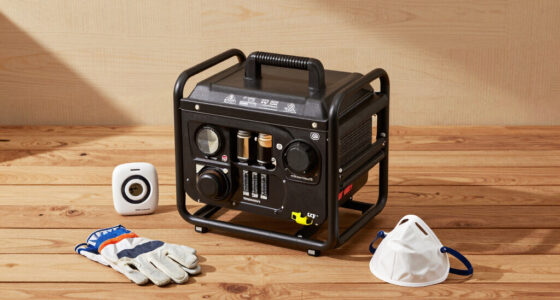
If you’re keeping a shed camera, internet gear, or a small refrigerator running on acreage, the useful question is how many watt-hours (Wh) the panel can deliver and whether your station can accept them. This guide walks through a realistic estimate, the specifications that matter, seasonal and weather limits, and a worked example for property loads.
You’ll also see where solar storage fits in a backup plan. It can quietly extend runtime and recharge small devices in daylight, but it won’t make every outage self-sufficient. Plan around conservative production, and keep another charging option available for long stretches of bad weather.
Estimate daily solar energy as panel watts × peak sun hours × system efficiency; 200 W × 4 hours × 75% gives about 600 Wh.
Check the power station’s maximum solar watts, voltage, current, and connector before connecting a panel or combining panels.
Compare daily Wh production with device Wh use, including inverter losses and startup surges for motors and compressors.
Expect lower production in shade, cloudy weather, and winter; peak sun hours are not the same as daylight hours.
Use solar as part of a backup plan and arrange another safe charging option for extended low-sun outages.
Off-grid field guide · Property energy
Solar Charging a Power Station: Realistic Panel Output for Property Use
A panel’s rated watts describe peak output in controlled test conditions, not a daily promise. Estimate the energy you can harvest, check what your station can accept, and size the setup around the devices that matter on your property.
Watts describe a moment. Watt-hours describe a day.
Rated output is measured under standard laboratory conditions. Sun angle, temperature, wiring, dirt, shade, and the charge controller all affect real-world production.
Use equivalent sun hours
Peak sun hours represent the equivalent hours of strong sunlight, not every hour between sunrise and sunset. Local weather, latitude, orientation, and season change the total.
Allow for ordinary losses
The 75% efficiency assumption accounts broadly for panel angle, heat, wiring, conversion, and controller losses. It is a planning aid, not a guarantee.
100 W can still be useful
At three peak sun hours and 70% efficiency, a 100 W panel yields about 210 Wh—useful for phones and a small radio, but not a large refrigerator.
Your station sets the charging ceiling.
Battery capacity and solar input answer different questions: stored energy is measured in Wh; the rate the station accepts power is measured in W.
Match every electrical limit
Read the station’s maximum solar watts, permitted voltage range, current limit, connector requirements, and supported panel configuration. Compare them with the panel’s specifications, including open-circuit voltage (Voc). Follow manufacturer wiring guidance for series or parallel arrays.
Plan for more than ideal arithmetic
A 1,000 Wh battery receiving a steady 200 W needs at least five hours at full input in an ideal calculation. Real charging usually takes longer because output fluctuates and conversion involves losses.
A station capped at 200 W will not accept 400 W just because a larger array is connected. Extra panels can also push voltage beyond the permitted range. Connector shape alone does not establish compatibility.
Daily harvest is more useful than a sunny-hour reading.
Example estimates below assume four peak sun hours and 75% efficiency. Site conditions and the station’s input cap can change the result.
| Panel rating | Estimated daily harvest | Ideal time for 1,000 Wh | Practical read |
|---|---|---|---|
| 100 W | About 300 Wh | 10 hours at rated input | Suitable for small daily top-ups |
| 200 W | About 600 Wh | 5 hours at rated input | Useful for steady small loads |
| 400 W | About 1,200 Wh | 2.5 hours at rated input | Could refill 1,000 Wh in a good day, if accepted |
The ideal-time column assumes a panel holds its full rating and the station accepts all of it. A 400 W array may be limited to 200 W by a station’s input cap. Check daily Wh totals in the station display or app; a brief midday reading does not show the day’s harvest.
Compare what you harvest with what you use.
Multiply each device’s watts by its operating hours to estimate Wh. Include inverter losses and startup surges, especially for motors and compressors.
Gatehouse example · daily use
Router and modem: 20 W × 24 h = 480 Wh
Security camera: 5 W × 24 h = 120 Wh
LED lights: 10 W × 4 h = 40 Wh
200 W panel estimate: 600 Wh/day
These example loads exceed the estimated harvest by 40 Wh, even before inverter overhead. A 1,000 Wh usable battery covers about a day and a half in ideal arithmetic; cloudy weather and conversion losses shorten that runtime.
Small electronics and efficient appliances are easier to support than heating, air conditioning, or other high-draw loads. Check both continuous wattage and startup surge requirements for anything with a motor or compressor.
Production can fall when backup matters most.
Clouds, partial shade, dirt, winter sun angle, and panel orientation reduce output. A summer setup may deliver much less energy in winter.
Build around the weaker days.
Portable panels are easier to reposition toward the sun but require setup and security. Fixed panels are convenient, though roof angle, orientation, and shade constrain their performance. Keep another safe charging option available for extended low-sun outages.
From property need to a workable setup.
Use this chain to keep the estimate grounded in the station, site, and devices you actually have.
Estimate device Wh and note startup surges.
Panel watts × peak sun hours × efficiency.
Confirm watts, voltage, current, and connectors.
Plan for shade, winter, and prolonged bad weather.
Use watt-hours to estimate a panel’s daily harvest
Solar charging a power station is easiest to estimate in watt-hours: multiply panel watts by peak sun hours and by the portion of rated output your system retains. Peak sun hours describe equivalent hours of strong sunlight, not all the hours between sunrise and sunset. A 200 W panel, four peak sun hours, and 75% system efficiency produce about 600 Wh per day in this rough estimate.
That 75% factor accounts for ordinary losses from panel angle, temperature, wiring, conversion, and the charge controller. It is a planning assumption, not a guarantee or a universal lab result. Actual output can fall below it under cloud, shade, dirt, or winter sun. Rated panel output is measured under standard laboratory conditions, so treat the label like a truck’s top speed: useful for comparison, poor as a daily work schedule. [1]
Try the same calculation on a 100 W folding panel at three peak sun hours and 70% efficiency: 100 × 3 × 0.70 = 210 Wh. That can top up phones and a small radio, but it won’t replace a large refrigerator’s daily energy. When you compare panel options, the key points for output are watts, local peak sun hours, and the efficiency assumption.
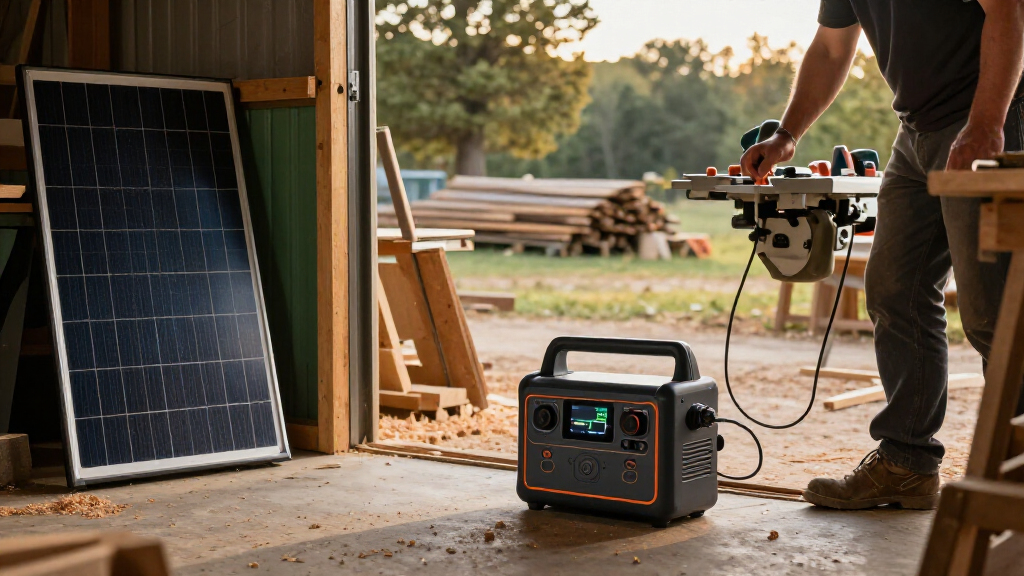
Suppose you set a 200 W panel outside a barn in June. The station may show a strong input around midday, then taper as the sun moves and the panel angle becomes less favorable. Check the daily Wh total in the station’s display or app; a single sunny-hour reading doesn’t tell you what the full day delivered.
Popular right now

Shark Clean & Empty Cordless Stick Vacuum with Auto-Empty System, BU3521

Shark PowerPro Reveal Plus Cordless Vacuum Cleaner, Charcoal, IZ376H

Sony BRAVIA 5 85-Inch Mini LED 4K HDR Smart TV (K-85XR50)
As an affiliate, we earn on qualifying purchases.
Match the panel to your station before connecting it
Solar charging a power station works only as fast as the station’s solar input limit allows. Check its maximum solar input in watts, permitted voltage range, current limit, connector, and supported panel configuration before you buy or connect panels. A panel can have plenty of rated wattage and still be a poor match if its voltage falls outside the station’s allowed range.
Battery capacity and solar input measure different things. Capacity tells you how much energy the battery stores in Wh; input power tells you how quickly it can accept energy in watts (W). A 1,000 Wh battery receiving a steady 200 W needs five hours in an ideal calculation, but in ordinary use it takes longer because input fluctuates and charging involves losses. In practice, the panel may never hold 200 W for those five hours.
Here’s a simple check before setup:
- Read the station’s solar input limits for voltage, current, and maximum watts.
- Compare those limits with the panel’s electrical specifications, including open-circuit voltage, often labeled Voc.
- Confirm the connector and wiring arrangement match the station instructions.
- Check how multiple panels affect voltage and current in series or parallel, then stay within every stated limit.
For instance, adding a second panel to a station capped at 200 W won’t make it accept 400 W. A larger array can also exceed the input voltage limit, especially when panels are wired in series. Don’t guess from connector shape alone; use the manufacturers’ specifications and wiring guidance. If they conflict or leave a limit unclear, contact the manufacturer before connecting the array. [1]
Compare panel sizes with realistic recharge estimates
Solar charging a power station takes longer than dividing battery capacity by a panel’s nameplate watts because a panel rarely supplies its rated output all day. The table below uses four peak sun hours and 75% system efficiency as a clear planning example. Your site, weather, panel angle, and station input cap can all change the result.
| Panel rating | Estimated daily harvest | Ideal time to supply 1,000 Wh | Practical read |
|---|---|---|---|
| 100 W | About 300 Wh | 10 hours at rated input | Suitable for small daily top-ups |
| 200 W | About 600 Wh | 5 hours at rated input | Useful for steady small loads |
| 400 W | About 1,200 Wh | 2.5 hours at rated input | Can refill a 1,000 Wh station in a good day, if accepted |
The ideal-time column is arithmetic, not a prediction: it assumes the panel holds its full rating and the station takes all of it. Daily harvest is a more useful planning figure, but that estimate still depends on four peak sun hours. If your station caps input at 200 W, a 400 W array may be limited to that rate during strong sun. [1]
Imagine a 1,000 Wh station at a rural gatehouse. One 200 W panel’s estimated 600 Wh daily yield may cover a few days of modest device use, but it cannot refill an empty battery in one day under those assumptions. A 400 W setup has more potential; whether it charges faster depends on the station’s input rating and the conditions at the site.
Plan around the loads you actually need to run
Solar charging a power station can support property essentials when you compare daily energy use with daily solar harvest. Start with the device’s wattage and the hours it runs. Multiply them to estimate Wh, then account for inverter losses and any startup surge. A device’s watts describe its draw at a moment; watt-hours describe energy used over time. [2]
Consider a small backup setup with a 1,000 Wh usable battery and a 200 W panel estimated to make 600 Wh on a four-peak-sun-hour day at 75% efficiency. Assume a router and modem together draw 20 W for 24 hours, a security camera averages 5 W for 24 hours, and LED lights draw 10 W for four hours. Those loads use 480 + 120 + 40 = 640 Wh per day before inverter losses. This setup falls short of the estimate by 40 Wh even on the assumed day, and its battery alone covers about a day and a half in ideal arithmetic.
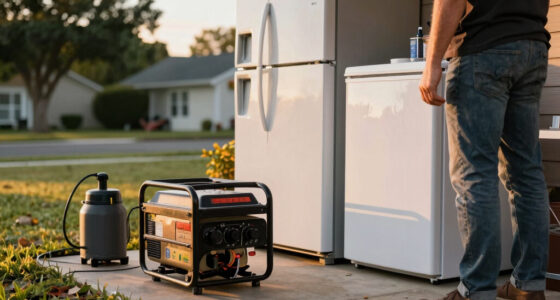
That gap may seem small, but inverter overhead and a cloudy afternoon widen it. You could reduce the shortfall by using DC outputs where suitable, shortening light use, adding compatible panel capacity, or accepting less runtime. A refrigerator’s compressor cycles, so its average Wh use matters more than its startup wattage alone; check the appliance label or measure it with a suitable energy meter. Heating elements, air conditioners, and many pumps can drain a station quickly or exceed its output rating.
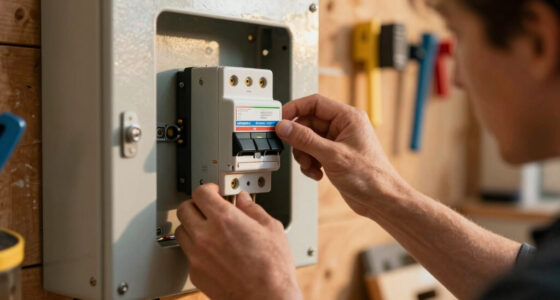
A practical load list separates what must stay on from what can wait. Keep communications, a medical device, or a sump-pump control at the top if they matter to your household, and verify each device’s running watts and startup needs. A portable power station is not automatically a whole-home backup system. Powering fixed wiring or selected home circuits calls for equipment designed for that use and installation by a licensed electrician, with required transfer equipment and permits.
Expect less output in shade, cloud, and winter
Solar charging a power station varies with sunlight, panel angle, temperature, shading, surface dirt, wiring, and the charge controller. Daylight hours and peak sun hours are not interchangeable: a long overcast day can have many hours of light but few hours equivalent to strong sun. Latitude, season, roof direction, and local weather all affect production, so summer success doesn’t predict winter performance. [1]
A narrow shadow from a fence rail can cut output more than you’d expect, especially if it crosses active cells. If you place a folding panel beside a shed, watch its input reading as the sun moves; the panel may need repositioning before the shade reaches it. Brush off dust and dry leaves with the care advised by the panel maker. Never climb onto a roof to adjust a panel without proper fall protection and training; roof work belongs with a qualified professional.
Portable panels let you chase the sun. You can angle a stand toward midday light, then move it as shade creeps across the yard. That flexibility costs setup time and can invite theft or wind damage, so secure the panel and bring it in when conditions turn rough. Fixed panels are convenient, but their permanent angle and roof constraints can leave them partly shaded or poorly oriented through a season.
For a concrete plan, use a lower peak-sun-hour estimate for winter than summer, based on a reputable local solar resource or conservative site observations. If your 200 W panel makes an estimated 600 Wh on a four-hour summer assumption, it will not hold that output in a shaded, cloudy winter spell. Keep spare battery capacity and another charging path for critical gear; solar can be weakest just when an outage is most disruptive.
Choose a backup plan that can survive cloudy days
Solar charging a power station is a strong way to extend runtime when daylight is available, but an array’s estimated daily harvest is not guaranteed during a storm or outage. Treat solar as one part of a resilience plan. For a gate camera and internet equipment, that may mean a charged station, a panel sized for ordinary conditions, and a second way to recharge when several gray days arrive.
Portable stations and foldable panels have become more capable, and some stations offer wider input ranges, faster solar charging, integrated monitoring, or lithium iron phosphate (LFP) batteries. Those features do not override the published input limits. Compare usable capacity, operating temperature, warranty, and the manufacturer’s charging guidance rather than choosing by a headline wattage alone. Product offerings change, so check current documentation for the specific unit you own.
A station can quietly run communications and small appliances, but a gasoline generator may be more dependable for sustained high loads when clouds linger and fuel is safely available. The tradeoffs are real: a generator needs outdoor operation, fuel storage, maintenance, and exhaust precautions; a battery station is quiet and produces no exhaust at the point of use, but it has finite stored energy and may recharge slowly. Never run a fuel-burning generator in a house, garage, or enclosed space. Keep it outdoors, well away from doors and windows, and follow its manual and carbon-monoxide safety guidance.
If you need to power a sump pump or refrigerator through an extended outage, estimate its daily Wh use and test the setup before a storm. Confirm the station can handle its continuous output and startup surge, and plan how you’ll recharge after a low-sun day. For a home circuit connection, hire a licensed electrician to install approved transfer equipment and meet local electrical codes and permit rules. A wall outlet is not a safe backfeed connection.
Frequently Asked Questions
How many watts of solar do I need to charge a power station?
Size the panel array by the energy you use each day and the sun your site gets. As a rough example, a 200 W panel at four peak sun hours and 75% efficiency yields about 600 Wh per day. Then check that your station supports the panel’s voltage, current, and maximum input.
How long will a 100 W, 200 W, or 400 W panel take to recharge a 1,000 Wh station?
At full rated input with no losses, the arithmetic is 10 hours for 100 W, five hours for 200 W, and 2.5 hours for 400 W. Those are ideal figures, not daily runtimes. At four peak sun hours and 75% efficiency, the same panels produce roughly 300, 600, and 1,200 Wh per day, provided the station can accept that input.
Will a solar panel charge a power station on cloudy days?
Usually it can still produce some power, but output falls when clouds reduce sunlight and varies with weather and panel design. Don’t use a clear-sky estimate to promise backup during a storm. Keep stored energy and another charging option for critical loads.
Can I connect a panel from a different brand or connect several panels?
Brand alone doesn’t determine compatibility. Compare the panel’s voltage, current, connector, and wiring arrangement with the station’s stated limits. Series wiring raises voltage and parallel wiring raises current; confirm that the combined values stay inside the station’s specifications before connecting panels.
Can a portable power station run a refrigerator, sump pump, or home circuit?
It may run some appliances if its continuous output, surge rating, and usable Wh capacity cover their needs. Check actual energy use and startup demand, since compressor motors can surge when they start. Connecting a station to fixed home wiring requires equipment intended for that purpose and installation by a licensed electrician under applicable codes and permits.
Conclusion
Plan from daily watt-hours, not the panel’s headline wattage. Estimate a conservative harvest, check that your station accepts the panel’s voltage and current, and compare the result with the devices you need to keep running. A 200 W panel can make about 600 Wh on the stated four-hour, 75% assumptions, but weather and site conditions can pull that figure down.
Before the next outage, run your essential loads for a day and watch the battery level. Better to learn in a calm afternoon than during a week of rain, with the barn quiet and the gate camera blinking out.