
TL;DR

Get business pricing on tools and workshop supplies
- Business-only prices and quantity discounts
- Tax-exempt purchasing
- Multiple users, one account, clear invoices
Transfer switches provide a dedicated, code-compliant solution for safely backfeeding your panel, while interlock kits are simpler, more affordable options. Proper installation by a professional is essential for safety and compliance.
Power outages can turn a cozy home into a dark, cold cave in minutes. You’ve got a generator, but the question is how to connect it safely to your home’s electrical system without risking electrocution or damaging your equipment.
Understanding the difference between a transfer switch and an interlock kit can mean the difference between a safe backup and a dangerous mishap. Both are designed to prevent backfeeding—where your generator energizes utility lines— but they do it in different ways. This guide will break down their pros, cons, and what you need to know to stay safe and compliant.
A transfer switch offers the safest, most code-compliant way to backfeed your home, especially for whole-house backup.
Interlock kits are a budget-friendly, retrofit option, but require careful, correct installation to be safe.
Never attempt to backfeed your panel without a certified device—risk of electrocution and damage is high.
Always hire a licensed electrician for installation, and check local codes before proceeding.
Regular testing and maintenance keep your backup system reliable and ready when needed.
Home backup power · safety field guide
Transfer Switch vs Interlock Kit
Two approved approaches can connect a portable generator to a home panel without energizing utility lines. One prioritizes dedicated control and convenience; the other delivers a compact, lower-cost retrofit. Correct equipment, sequencing and professional installation are non-negotiable.
01 · Know the hardware
Same safety goal. Different control.
Both devices prevent generator power from reaching the utility grid. The practical differences are how loads are selected, how the changeover happens and how much the system depends on manual operation.
Transfer Switch
A separate switching device disconnects utility power before connecting generator power. Manual models use a deliberate changeover; automatic models can detect an outage and transfer the load.
- Controlled, predictable source isolation
- Excellent for critical circuits or whole-house systems
- Automatic operation available
- More equipment, wiring and installation work
Interlock Kit
A panel-specific sliding plate mechanically blocks the generator breaker whenever the main breaker is on—and blocks the main whenever the generator breaker is on.
- Uses the home’s existing branch-circuit breakers
- Compact and comparatively affordable
- Manual startup and shutdown sequence
- Must match the exact panel and breaker layout
02 · Head-to-head
Choose by risk, load and routine.
The lowest purchase price is not always the lowest total cost. Panel compatibility, inlet wiring, permits, generator capacity and professional labor all affect the final project.
| Feature | Transfer Switch | Interlock Kit |
|---|---|---|
| Backfeed protection | ✓Dedicated source isolation with a controlled changeover. | ✓Mechanical breaker exclusion when correctly installed and intact. |
| Human factors | ✓Straightforward operation; automatic transfer may reduce manual steps. | ~Safe when the documented manual sequence is followed every time. |
| Typical cost | ~Often $1,000+ with professional installation. | ✓Often under $500, depending on panel work and labor. |
| Circuit access | ~Selected circuits on many manual systems; whole-house options available. | ✓Panel circuits remain available, limited by generator output and load management. |
| Installation | ~More complex equipment and wiring. | ~Simpler hardware, but precise panel compatibility and placement are essential. |
| Code status | ✓Widely accepted when listed, sized and installed as required. | ~Acceptance varies; listed or approved equipment and local authorization may be required. |
| Ideal use | ✓Permanent backup, frequent outages and convenience-focused installations. | ✓Retrofits, portable generators and cost-sensitive projects. |
03 · Safe operating sequence
Isolation before generation.
Use the manufacturer’s instructions and the operating label installed at the panel. The sequence below is a high-level reference, not a substitute for the procedure approved for your equipment.
Reduce the load
Turn off large branch loads so the generator does not start under demand.
Isolate utility power
Move the approved transfer control or main breaker to the required isolated position.
Connect and start
Operate the generator outdoors, away from openings, using the correct inlet and cable.
Engage generator supply
Transfer to generator mode or move the interlock and switch the generator breaker on.
Add loads gradually
Energize essential circuits one at a time and remain within generator capacity.
04 · Six non-negotiables
Make the safe setup repeatable.
Outages are stressful. Clear labels, documented steps and periodic practice reduce improvisation when the lights go out.
Use approved equipment
Select a listed transfer switch or a manufacturer-approved, panel-specific interlock. Never improvise a backfeed connection.
Hire a licensed electrician
Correct breaker placement, neutral treatment, grounding and conductor sizing depend on the generator and service design.
Confirm local requirements
Permits, inspections and accepted interlock configurations vary by jurisdiction and utility.
Manage generator capacity
Prioritize refrigeration, heat controls, lighting and communications. Add loads gradually to avoid overload.
Test under control
Exercise the generator and switching system periodically, inspect cords and verify the interlock moves freely.
Control carbon monoxide
Run portable generators outdoors, well away from doors, windows and vents. Maintain working CO alarms indoors.
Bottom line
The better choice is the one installed—and operated—correctly.
Neither device makes an undersized generator larger or removes the need for load planning. Both must create reliable separation between generator and utility power.
Convenience and dedicated control lead.
You want a permanent system, automatic capability, clearly selected loads or a whole-house installation designed for frequent use.
Budget and retrofit flexibility lead.
Your panel supports an approved kit, manual operation is acceptable and you can manage loads carefully during generator use.
Professional check: Ask the electrician to verify generator output, inlet rating, breaker compatibility, neutral and grounding configuration, required permits, panel labeling and the shutdown procedure.
What is a Transfer Switch and Why It’s the Gold Standard
A transfer switch is a dedicated device that automatically or manually switches your home’s power source from utility to generator. It disconnects your home from the grid when running, preventing dangerous backfeed that could harm utility workers or damage your system.
Imagine flipping a switch that safely isolates your home’s circuits. No accidental energizing of the utility line. That’s what a transfer switch does, making it the safest, most code-friendly option for whole-house backup.
For example, if your whole house runs on a 16-circuit transfer switch, you can power critical circuits—like your fridge, furnace, and lights—without risking anyone working on the power lines.
As an affiliate, we earn on qualifying purchases.
Interlock Kit: The DIY-Friendly Option That Still Keeps You Safe
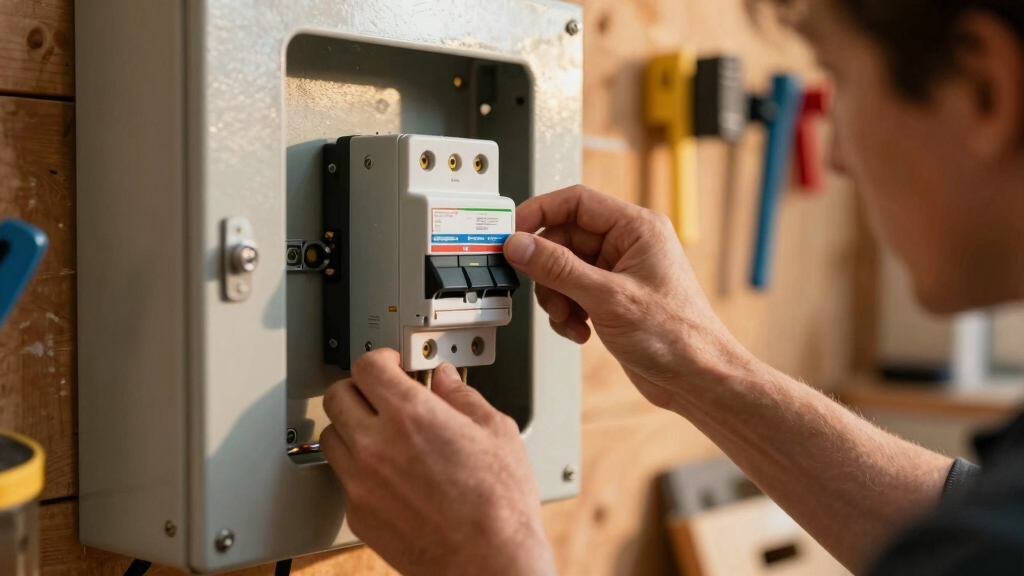
An interlock kit is a mechanical device installed on your main electrical panel. It prevents you from turning on the main breaker when your generator breaker is active. It’s manual but simple to install and more budget-friendly.
Picture a sliding plate or mechanical lever that blocks the main breaker when your generator breaker is engaged. It’s a clever, low-cost way to avoid backfeed without needing a dedicated transfer switch.
However, the safety implications depend heavily on correct installation. If misused or improperly installed, an interlock can fail to prevent backfeeding, which might energize utility lines and pose serious risks. Moreover, because it relies on manual operation, there’s a risk of human error—forgetting to switch off the main or accidentally energizing the grid. These tradeoffs mean that, while cost-effective, interlock kits require meticulous installation and strict adherence to safety procedures to be truly safe.
For example, you might retrofit your existing panel with an interlock kit for around $300. Just remember, proper installation is key—misplacing the interlock or miswiring can defeat the safety purpose.
interlock kit for electrical panel
As an affiliate, we earn on qualifying purchases.
As an affiliate, we earn on qualifying purchases.
Transfer Switch vs Interlock Kit: Here’s the Head-to-Head Comparison
| Feature | Transfer Switch | Interlock Kit |
|---|---|---|
| Safety | High; fully isolates your home from utility lines, significantly reducing risk of backfeed and protecting utility workers. It provides a controlled, predictable disconnection that minimizes human error. | Good if installed correctly, but relies heavily on proper manual operation and correct installation. Human error or miswiring can compromise safety, increasing risk of backfeed and potential electrocution. |
| Cost | Typically $1,000+ including installation, reflecting its complexity and safety features. | Under $500, often DIY-friendly, but added costs can arise if professional installation is needed to ensure safety. |
| Ease of Use | Automatic or manual, very straightforward—once installed, switching power sources is simple and reliable. | Manual operation required, which can be more prone to human error, especially under stress during outages. |
| Code Compliance | Highly compliant, often a mandatory requirement in modern electrical codes for whole-house backup. | Depends on correct installation and adherence to local codes; not inherently code-compliant without proper setup. |
| Installation Complexity | Requires professional wiring, often involving significant modification to your electrical panel and adherence to electrical standards. | Can be installed by qualified DIYers or electricians, but requires careful wiring and understanding of electrical systems to ensure safety. |
| Suitability | Designed for whole house backup, providing a permanent, reliable solution that minimizes human error. | More suited for partial backup or retrofit situations; less reliable for entire house without meticulous installation. |
As an affiliate, we earn on qualifying purchases.
How to Safely Connect Your Generator Using a Transfer Switch or Interlock
Connecting your generator safely isn’t just about plugging in; it’s about how you connect. Here’s a quick step-by-step:
- Turn off your main breaker. Safety first—no power flowing.
- If using a transfer switch, select the circuits you want powered. Follow the manufacturer’s instructions to switch to generator mode.
- If using an interlock, ensure it’s installed correctly, then turn on your generator breaker, followed by the main breaker, but never both at once. Remember, the key is to prevent any overlap that could energize the utility lines. Proper timing and sequence are critical—missteps can lead to dangerous backfeed.
- Test your system with a simple load—like your refrigerator or a few lights—to confirm everything runs smoothly.
- Always double-check that utility power is off before working on the panel or connecting your generator.
Remember, if you’re unsure or unfamiliar with electrical work, hire a licensed electrician. Mistakes cost lives and can lead to costly damage. Proper training and adherence to safety protocols are essential to prevent backfeed or electrocution risks.
As an affiliate, we earn on qualifying purchases.
Key Safety Tips Everyone Must Follow
- Always turn off utility power before connecting or disconnecting your generator. This prevents accidental backfeed and protects utility workers.
- Use only approved, UL-listed transfer switches or interlock kits designed for your setup. Using non-certified devices can compromise safety and code compliance.
- Never backfeed your panel without a device specifically designed for that purpose. Improper methods can energize utility lines, risking electrocution.
- Hire a licensed electrician for installation—don’t cut corners. Proper wiring and adherence to local codes are critical for safe operation.
- Regularly test your backup system under controlled conditions to verify functionality. This ensures readiness and safety during an outage.
- Keep a clear, accessible path to your electrical panel for quick shutdowns or emergencies. Obstructions can delay critical safety actions.
Following these safety tips can prevent accidents, protect utility workers, and ensure your backup system operates reliably when needed. Remember, safety isn’t just a guideline—it’s a necessity when dealing with high-voltage electrical systems.
Quick Facts to Keep in Mind Before You Backfeed
Here’s what every homeowner should know before attempting to backfeed:
- Size matters: Make sure your generator can handle the load, and your device matches its capacity. Overloading can cause damage or fire hazards, while undersized setups won’t power your essential appliances.
- Permits and codes: Check local regulations; some areas ban DIY backfeeding methods without proper devices. Ignoring these can lead to fines or unsafe conditions.
- Regular maintenance: Test your system at least once a year under load conditions to ensure all components function properly. A well-maintained system reduces the risk of failure during emergencies.
- Professional help: When in doubt, hire a licensed electrician—saving money and lives. Proper installation, inspection, and adherence to safety standards are vital for safe operation.
Being informed about these critical points helps you avoid dangerous mistakes, legal issues, and equipment failures that could jeopardize your safety or that of utility workers.
Frequently Asked Questions
Can I install a transfer switch myself?
While some experienced DIYers might handle it, most experts recommend hiring a licensed electrician. Proper wiring, adherence to local codes, and safety are critical to prevent accidents or violations.Are interlock kits legal everywhere?
Rules vary by location. Many areas permit interlock kits if installed correctly, but always verify with your local electrical inspector or code authority before proceeding.What happens if I backfeed without a proper device?
Backfeeding without a device can energize utility lines, risking electrocution for utility workers and damaging your electrical system. It’s a serious safety hazard.How often should I test my backup setup?
Test your system at least once a year—preferably with a load similar to your typical backup needs—to ensure everything functions correctly when needed.Is a generator size compatible with my transfer switch or interlock kit?
Always match your generator’s capacity with the device’s specifications. Consult manufacturer guidelines or a professional to avoid overloads or safety issues.Conclusion
The safest backup power setup is one that keeps you, your family, and utility workers protected. Transfer switches are the gold standard, offering a seamless, code-approved way to backfeed your home. If budget or retrofit constraints lead you to an interlock kit, remember: proper installation is everything.
Think of your backup system as a fire escape—it’s there to protect you in an emergency. Make sure it’s wired right, tested often, and installed by a pro. After all, when the lights go out, you want peace of mind, not a shocking surprise.
Halloween Picks
halloween
As an affiliate, we earn on qualifying purchases.