TL;DR

Get business pricing on tools and workshop supplies
- Business-only prices and quantity discounts
- Tax-exempt purchasing
- Multiple users, one account, clear invoices
Placing your generator outdoors at least 20 feet from your home and using CO detectors can prevent poisoning. New automatic shutoff devices and smart detectors further boost safety, making power outages less risky.
Ever hear the faint hum of a generator and wonder if it’s safe? It’s not just about noise—carbon monoxide (CO) lurking in the fumes can turn deadly in seconds. You might think a little distance helps, but how far is far enough? And what about those new smart detectors that can shut down your generator before tragedy strikes?
In this guide, you’ll learn exactly where to place your generator, how far away it needs to be, and what safety gadgets can save lives. Because when it comes to CO, a little knowledge and the right tools make all the difference.
Always place your generator outdoors, at least 20 feet from any home openings, to prevent CO buildup.
Use modern carbon monoxide detectors—preferably smart, with alarms at or below 30 ppm—and install them near sleeping areas.
Consider generators with automatic shutoff features to reduce reliance on manual operation during high CO conditions.
Secure your generator on a flat, stable surface and avoid placing it under overhangs or inside garages, even with doors open.
Stay informed on local safety regulations and follow manufacturer instructions carefully for maximum protection.
Generator Carbon Monoxide Safety
Carbon monoxide is colorless, odorless and capable of building rapidly. The winning strategy is layered: put the generator well outside, create a generous buffer from every opening, install working CO alarms and choose automatic shutoff technology where available.
Build a safer exhaust zone
A cracked window, open garage door or breezy day does not make an unsafe location safe. CO can drift, collect beneath structures and enter through small openings.
Open-air location
Place the generator fully outdoors, away from walls, decks, porches and overhangs that may hold exhaust.
Flat, firm surface
Use a dry, stable platform or concrete pad. Soft or uneven ground can allow the unit to shift or tip.
Garage or enclosure
Do not operate inside a garage, shed, basement or partially enclosed space—even when doors are open.
Think beyond the wall
The distance that matters is the route fumes could take into occupied space. Check all doors, windows, crawl-space vents and mechanical air intakes.
Know the warning signs
CO cannot be seen or smelled. Symptoms may resemble flu or fatigue, so an alarm—and a fast response—matters more than trying to sense the gas yourself.
Possible CO poisoning
If an alarm sounds
Move everyone to fresh air immediately. Leave the area, call emergency services and seek medical attention. Do not re-enter to search for or repair the source.
Detection meets automatic action
Modern safety technology reduces dependence on someone noticing danger at the right moment. It strengthens correct placement—it never replaces it.
CO alarms
Install near sleeping areas and on every level. Test regularly and replace batteries and units according to the maker’s instructions.
Smart alerts
Connected detectors may send phone notifications, add voice or light alerts and integrate with home automation.
CO shutoff
Built-in sensing can stop some newer generators when high CO is detected near the unit, reducing continued emissions.
| Safety layer | Warns occupants | Works in outage | Stops generator | Best role |
|---|---|---|---|---|
| Battery CO alarm | ✓ Yes | ✓ Yes | ✗ No | Essential home warning |
| Smart CO detector | ✓ Yes | ~ Model-dependent | ~ Integration-dependent | Remote alerts and added visibility |
| Generator CO shutoff | ~ Unit alert | ✓ Yes | ✓ Yes | Automatic source shutdown |
| Correct placement | ✗ No alarm | ✓ Always | ✗ No | Primary prevention |
The five-link safety chain
Each link addresses a different failure point. The safest setup combines location, distance, monitoring, automatic response and human action.
Move outdoors
Choose a fully open-air site.
Measure 20+ feet
Check every opening and air intake.
Direct exhaust away
Account for structures and wind.
Activate detection
Verify alarms on each home level.
Respond immediately
Fresh air first; emergency help next.
Generator safety FAQ
Use manufacturer instructions and local codes as the final authority for your specific generator, property and installation.
Can I run it in an open garage?
No. CO can rapidly accumulate and migrate into the home even when the garage door is open.
How do I check my CO alarm?
Use the test button regularly and follow the manufacturer’s schedule for batteries, maintenance and replacement.
Is 15 feet close enough?
No. Use at least 20 feet from doors, windows and vents; choose greater distance when practical.
Is automatic shutoff worth having?
Yes. It adds valuable automatic protection, but it cannot make indoor or too-close operation safe.
Where should you place your generator for real safety?
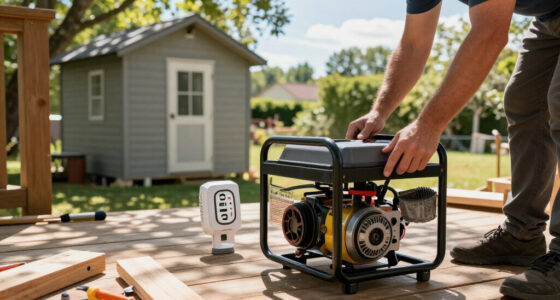
The first rule is simple: always run your generator outdoors. Think of it as a campfire—fire needs air, and so does CO. Placing a generator inside a garage, basement, or under a porch—even with the door open—can trap deadly fumes. I’ve seen homeowners run a generator just outside a window with the window cracked open. That’s like putting your face directly in a smoky fire.
Instead, set it on a flat, stable surface, away from any openings. A good rule: at least 20 feet from any window, door, or vent. For example, if your deck is 10 feet from the house wall, that’s not enough. Push it to the driveway or yard. Think of your generator as a mini exhaust pipe—keep it away from where people breathe.
Remember, uneven ground or a soft patch can cause tipping. Place it on a concrete pad or a sturdy platform. This isn’t the time for a wobbly table. Secure placement prevents accidents and keeps fumes directed away from your home.
outdoor portable generator CO detector
As an affiliate, we earn on qualifying purchases.
As an affiliate, we earn on qualifying purchases.
How far should your generator be from your home? The real answer
Generator safety experts unanimously recommend a minimum of 20 feet distance from your home’s openings. Why? Because CO is a tiny molecule that easily seeps through cracks and vents. Even a slight breeze can carry fumes back into your living space if the generator is too close.
Take a typical scenario: you set the generator on the driveway, 15 feet from your window. That might seem close enough, but CO can still drift in. Moving it to 25 or even 30 feet reduces that risk significantly. Think of it as a buffer zone—more space equals more safety.
Always check local codes and manufacturer instructions. Some areas or newer models might have different requirements. When in doubt, lean towards more distance. Your lungs will thank you.
smart carbon monoxide detector for home
As an affiliate, we earn on qualifying purchases.
As an affiliate, we earn on qualifying purchases.
What safety gadgets can stop CO poisoning before it happens?
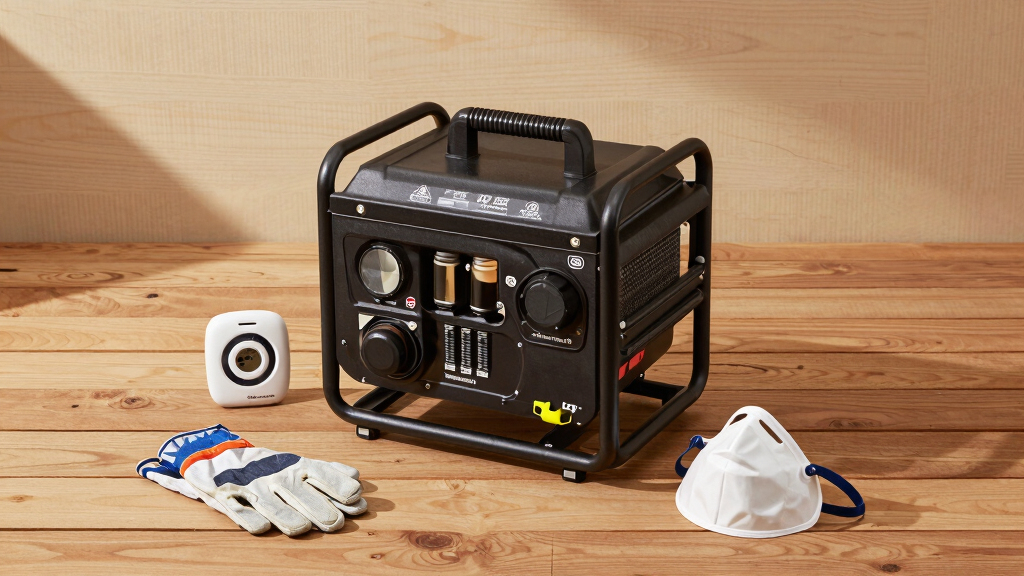
Two key tools protect you from unseen danger: carbon monoxide detectors and automatic shutoff systems. Detectors are your first line—install them near sleeping areas and on each level of your home. They alert you if CO levels spike, giving you precious seconds to act.
Modern detectors are smarter than ever. Some connect to your phone via Wi-Fi, sending alerts directly to your pocket. Others include voice alarms, blinking lights, and backup batteries. A good example: a detector that’s been tested to sound at just 30 parts per million (ppm), well below dangerous levels.
Automatic shutoff generators take safety a step further. These units monitor CO levels constantly. When dangerous levels—say above 100 ppm—are detected, they shut down immediately, halting CO production before it reaches lethal concentrations. Imagine a portable generator that senses danger and powers down on its own—that’s peace of mind in a box.
automatic generator CO shutoff device
As an affiliate, we earn on qualifying purchases.
As an affiliate, we earn on qualifying purchases.
Latest safety upgrades: what’s new in generator tech?
Recent innovations focus on reducing human error. Smart CO detectors now send alerts to your smartphone, letting you respond even if you’re not home. Some models integrate with home automation, shutting off the generator remotely if CO levels spike.
Automatic shutoff systems are also evolving. New portable generators come with built-in sensors that trigger shutdowns at safe thresholds, typically around 100 ppm. This means fewer accidental deaths caused by human oversight.
Enhanced safety regulations emphasize proper placement and the use of CO detection. States and safety agencies now recommend or require these features, especially during power outages or emergencies. It’s a sign that technology and awareness are catching up to the dangers.
Battery-powered CO detectors have improved in reliability and battery life, ensuring continuous monitoring—even during power failures. More power to you—and your safety.
As an affiliate, we earn on qualifying purchases.
Frequently Asked Questions
Can I run my generator inside my garage if the door is open?
No. Even with the door open, CO can accumulate quickly in enclosed spaces. Always operate generators outside, on a flat surface away from windows and vents.How do I know if my CO detector is working properly?
Test your detector regularly using the test button, and replace batteries at least once a year. Follow manufacturer instructions for calibration and maintenance to ensure reliable alerts.What should I do if my CO alarm goes off?
Immediately move to fresh air, leave the area, and call emergency services. Do not try to locate or fix the source yourself—get help right away.Are automatic shutoff generators worth the extra cost?
Yes. They automatically detect dangerous CO levels and shut down, reducing reliance on manual operation and providing peace of mind during emergencies.What’s the biggest mistake people make with generator safety?
Most folks place their generator too close to the house or run it inside a garage. Proper placement and reliable detection are the keys to preventing poisoning.Conclusion
Think of your generator as a powerful tool—when used correctly, it’s a friend during outages, not a silent threat. Proper placement, good distance, and modern safety tech turn a potential hazard into a safe, reliable power source.
Remember: CO safety isn’t complicated—it’s about smart placement and smart devices. Keep your generator outside, at least 20 feet away, and equip your home with reliable detectors. That’s the best way to keep your family safe and avoid tragedy.
Halloween Picks
halloween
As an affiliate, we earn on qualifying purchases.